

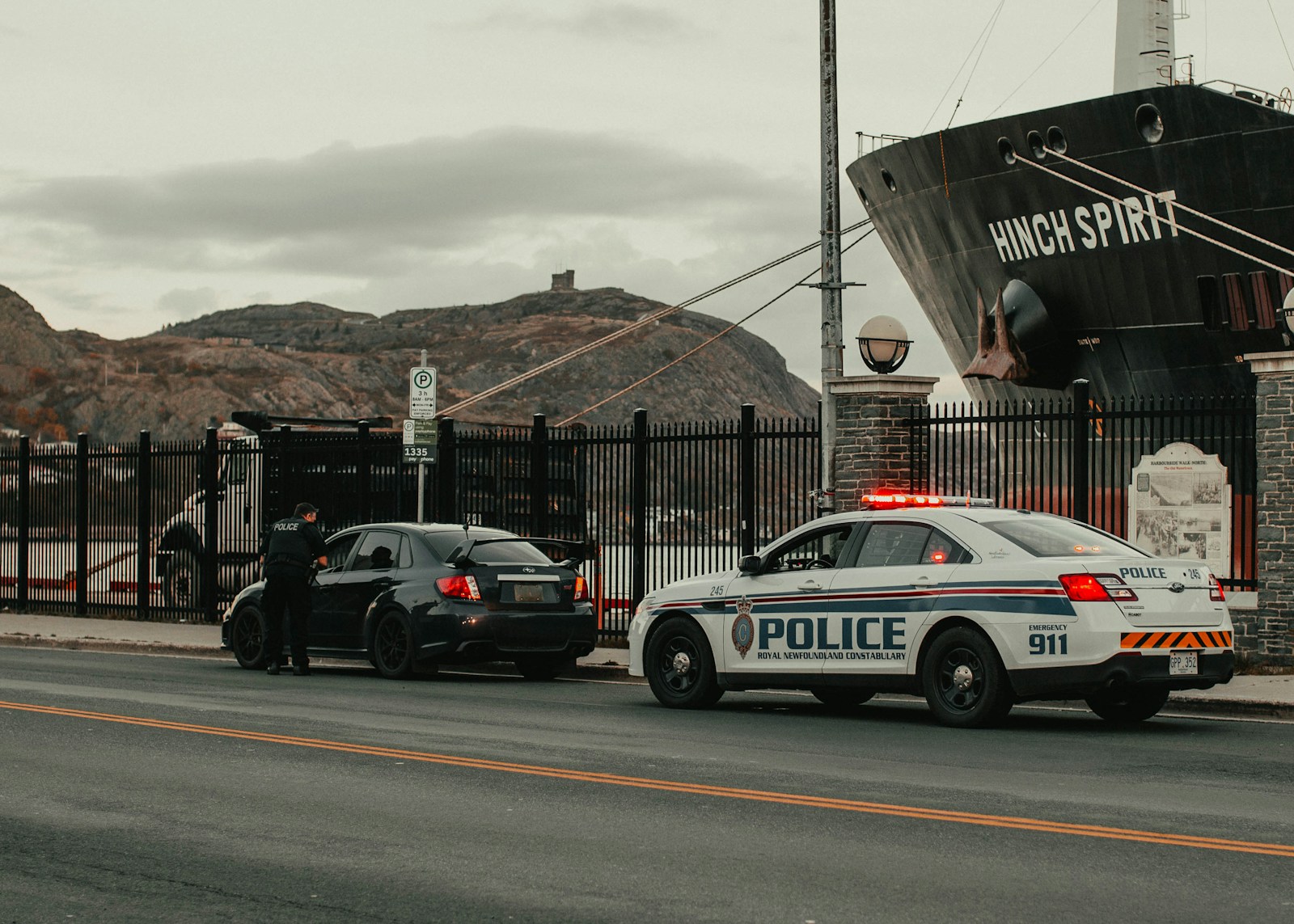
Handled well, a traffic stop is usually brief and uneventful. Handled badly, it can spiral into citations, criminal charges, or dangerous misunderstandings. Knowing the most common mistakes drivers make, and how they clash with clear safety guidance, helps you protect your rights while keeping everyone on the roadside safer.
1) Failing to Pull Over Immediately
Failing to pull over immediately is the first mistake that can make a traffic stop worse. Federal safety guidance on traffic stops is explicit that you should “pull over as soon as it is safe to do so,” because hesitation can look like evasion and force the officer into a pursuit mindset. That same logic appears in commercial driver training, where a school bus manual instructs drivers to Stop the bus and do not move it without permission from the investigating officer.
In practice, that means signaling right away, slowing in a controlled way, and choosing the first safe shoulder, side street, or parking lot. Rolling on for blocks without signaling, even if you are just looking for a “better” spot, can raise suspicion and tension. For you, the stakes include extra citations or an officer approaching with heightened caution; for the officer, delayed compliance increases uncertainty about whether you intend to flee.
2) Arguing with the Officer
Arguing with the officer is another fast track to escalation. Driver safety guidance stresses that you should remain calm and polite, warning that confrontational behavior can lead to additional citations for disorderly conduct. The key point is not that you must agree with the stop, but that raising your voice, interrupting, or making sarcastic remarks shifts the encounter from a traffic issue to a behavior issue the officer may feel compelled to address.
If you believe the stop is unfair, the safer move is to comply in the moment and contest it later through a supervisor, complaint process, or traffic court. Staying composed also helps you think clearly about what is being asked, what you are legally required to do, and what you can decline. For both sides, a calm tone lowers the risk that a simple ticket turns into handcuffs or a roadside confrontation captured on video.
3) Reaching for Items Without Permission
Reaching for items without permission is a mistake that directly affects how threatening a stop feels to an officer. A law enforcement training bulletin reports that “sudden movements increase officer stress and perceived threat levels by 40% in stop scenarios,” especially when those movements involve pockets, glove compartments, or center consoles. When your hands disappear without explanation, the officer has to assume you might be reaching for a weapon, not a wallet.
To avoid that spike in tension, keep your hands visible and narrate what you are doing before you move. Saying, “My registration is in the glove box, is it okay if I reach for it?” gives the officer a chance to prepare and grants you clear permission. That simple habit can be especially important at night or in low-visibility conditions, when even routine gestures are harder to read and misinterpretation carries higher stakes for everyone.
4) Not Having Documents Ready
Not having documents ready when asked is a quieter mistake, but it still makes a traffic stop longer and more stressful. The English 2020 California Driver Handbook states that the driver of a stopped vehicle must produce a driver license, proof of insurance, and vehicle registration when stopped by law enforcement, and that expectation is echoed in the California driver handbook more broadly. Fumbling through bags or piles of mail after the officer is at your window can look disorganized at best and suspicious at worst.
A better approach is to store your license, registration, and insurance card in a consistent, easily reachable spot, such as a slim folder in the visor or a labeled slot in the glove box. When you see emergency lights, you can slow down, signal, and, once stopped, calmly gather those items before the officer arrives. Quick, confident production of documents signals that you are prepared and cooperative, which often shortens the encounter and limits follow-up questions.
5) Exiting the Vehicle Unprompted
Exiting the vehicle unprompted is widely interpreted as a potential threat. A study from the Police Executive Research Forum found that “unauthorized exits occur in 15% of tense stops and correlate with use-of-force incidents,” underscoring how often this single behavior appears in the most volatile encounters. When a driver suddenly steps out, the officer has to decide instantly whether that person is trying to flee, confront, or attack.
Staying seated with your seat belt on until you are instructed otherwise gives the officer control over the physical space and reduces the chance of a rapid, physical response. If you need to get out for a specific reason, such as checking damage after a minor crash, ask first and wait for a clear “yes.” For drivers and passengers alike, remaining inside the vehicle until directed out is one of the simplest ways to keep a stop from turning physical.
6) Hiding Hands from View
Hiding hands from view, even unintentionally, is another behavior that raises the temperature of a traffic stop. A National Institute of Justice report notes that visible hands reduce perceived danger, while obscured hands were “noted in 25% of escalation cases” during stops. When your hands are in your pockets, under your thighs, or buried in a hoodie, the officer cannot easily tell whether you are holding something.
Placing both hands on the steering wheel, with passengers resting their hands on their laps where they can be seen, is a simple visual cue that you are not an immediate threat. At night, turning on the interior dome light can reinforce that signal. The benefit for you is a less anxious officer who can focus on explaining the reason for the stop instead of constantly scanning for hidden movements that might require a split-second defensive reaction.
7) Consenting to Unwarranted Searches
Consenting to unwarranted searches is a legal mistake that can have lasting consequences. A widely used “Know Your Rights” guide explains that you can say “I do not consent to searches” unless there is a warrant or another legal basis, and that consenting voluntarily waives Fourth Amendment protections. That same guide, shared through resources that include know-your-rights guides for transgender and LGBT people, stresses that the rule applies regardless of your identity or background.
In practice, officers may still search if they claim probable cause, but clearly stating non-consent preserves your ability to challenge the search later in court. Saying “No, I do not consent” in a calm tone is not the same as physically resisting, which you should never do. The stakes here are high: anything found in a consent search, from a forgotten pocketknife to a friend’s belongings, can be used against you, and you cannot later argue that the search was unauthorized if you agreed to it.
8) Lying About Identity or Details
Lying about identity or details during a stop is more than a bad idea, it can be a crime on its own. Federal guidance notes that “misrepresentation during stops is a federal misdemeanor in 30 states,” meaning that giving a false name, fake date of birth, or invented story can trigger an obstruction or similar charge even if the original traffic violation was minor. Once an officer suspects you are lying, the tone of the encounter changes immediately.
Honesty about your name, license status, and basic facts is usually the least damaging option, even if it feels risky in the moment. If you are unsure how to answer a question that goes beyond identification, you can say that you prefer not to answer or that you want to speak with a lawyer. For officers, accurate information is essential for safety checks; for you, avoiding misrepresentation keeps a traffic infraction from turning into a criminal case.
9) Attempting to Flee the Stop
Attempting to flee the stop is one of the most dangerous mistakes a driver can make. Data from the FBI Uniform Crime Report show that eluding stops accounts for 12% of pursuit-related fatalities annually, a stark reminder that high-speed chases often end in serious injury or death for drivers, passengers, bystanders, or officers. What might have been a citation for speeding or a broken taillight can instantly become a felony-level pursuit.
Even low-speed attempts to evade, such as turning off onto side streets after the lights come on, can be treated as fleeing. Modern patrol vehicles, dash cameras, and license plate readers make it difficult to escape accountability, and courts typically view flight as evidence of guilt. Staying put, accepting the stop, and addressing any warrants or violations through legal channels is far safer than turning a traffic encounter into a pursuit with life-or-death stakes.
10) Ignoring Basic Commands Like Turning Off the Engine
Ignoring basic commands like turning off the engine, placing the vehicle in park, or putting your phone down prolongs the stop and can be read as resistance. An advisory from the International Association of Chiefs of Police reports that compliance with basic commands de-escalates 80% of routine stops, highlighting how much these small steps matter. When you refuse or delay, the officer has to repeat instructions, move closer, or call for backup, all of which increase tension.
Simple actions such as switching off the ignition, rolling down the window, and following directions about where to place your hands show that you are engaged and cooperative, even if you plan to contest the stop later. That cooperation does not require you to waive your rights, but it does reduce the chance of misinterpretation or force. For both drivers and officers, clear, prompt compliance with straightforward commands is often the difference between a quick warning and a prolonged, stressful encounter.
More from Wilder Media Group: