

Automakers are recalling hundreds of thousands of vehicles over brake problems that could sharply increase crash risks. If you drive a popular truck or SUV, you need to know whether your model is affected and what the defect means for your stopping power. The following ten entries break down major recalls tied to brake failure risks, so you can quickly see where your vehicle fits and why prompt repair is critical.
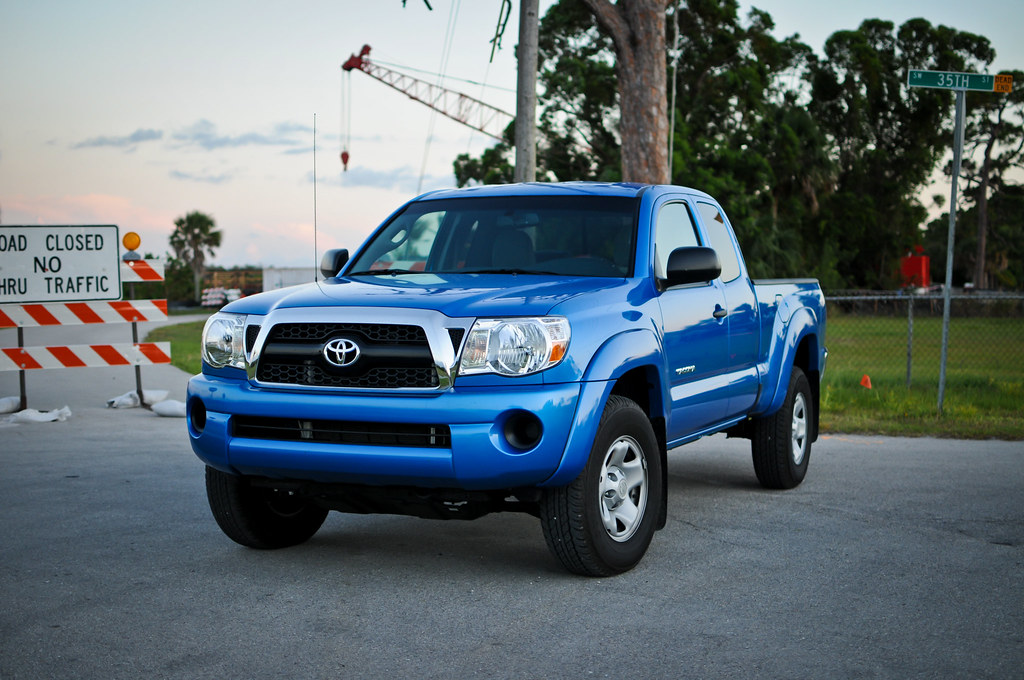
1) Toyota Tacoma Pickups recalled for brake failure risk
Toyota Tacoma Pickups have been recalled for brake failure risk, putting a spotlight on one of the most popular midsize trucks on the road. The recall centers on a defect that can compromise hydraulic pressure in the braking system, potentially lengthening stopping distances or, in the worst case, leading to a loss of braking ability. For owners who rely on the Tacoma for daily commuting, towing or off-road use, that kind of failure can turn routine driving into a serious safety hazard.
Separate reporting on a brake hose issue in certain 2024 Tacoma 4-wheel drive models with 16-inch brakes and 17-inch Toyota wheels underscores how specific hardware combinations can create unexpected vulnerabilities. Another detailed breakdown notes that 106,000 Tacoma trucks face a brake line problem that could cause brake fluid leaks leading to “Total brake failure.” For you as an owner, that means taking recall notices seriously, scheduling dealer repairs quickly and monitoring pedal feel or warning lights in case symptoms appear before service.
2) Recall alert: Nearly 500K Ford vehicles at risk of brake failure
A major recall alert warns that Nearly 500K Ford vehicles are at risk of brake failure, reflecting one of the largest recent safety campaigns tied to stopping systems. The affected vehicles span multiple nameplates, which means the odds are higher that someone in your household or workplace fleet could be driving one. The core concern is that a defect in the braking components can reduce or eliminate power assist, forcing drivers to press the pedal much harder to slow down.
When nearly half a million vehicles are recalled over brake failure risk, regulators such as the National Highway Traffic Safety agency treat it as a systemic safety issue, not an isolated glitch. For you, the scale of this recall means dealer service departments may be busy, so it is smart to book an appointment as soon as you confirm your vehicle is included. Until repairs are completed, you should leave extra following distance and be alert for any change in pedal effort or braking response.
3) Ford recalls 312K trucks and SUVs over brake failure risk
In a separate campaign, Ford recalls 312K trucks and SUVs over brake failure risk tied to a defect in the power brake assist system. The recall covers a wide mix of body-on-frame vehicles that many families and businesses use for hauling, towing and long-distance travel. If the power assist fails, you may still technically have brakes, but the pedal can suddenly feel rock hard, dramatically increasing stopping distances and catching drivers off guard in emergencies.
Additional reporting notes that 312,000 vehicles, including 2025 Lincoln Navigators, Ford Broncos and Ford trucks, are affected by a similar brake defect. Another analysis explains that 312,120 vehicles are involved in a recall that can cause a loss of power brake assist across five Ford lines. For you, that means checking your VIN against multiple recall bulletins, since similar-sounding campaigns may cover different production runs or model variants.
4) Toyota recalls more than 140,000 vehicles for seat belt, brake issues
Beyond trucks, Toyota is also confronting a broader safety problem as Toyota recalls more than 140,000 vehicles for seat belt, brake issues that affect both crash protection and stopping performance. The recall highlights that some vehicles may have braking components that do not perform as designed, while others face seat belt problems that could leave occupants less protected in a collision. When both restraint systems and brakes are in question, the overall risk profile of the vehicle rises sharply.
The same reporting stresses that these seat belt, brake issues require prompt inspection and repair at authorized Toyota dealers, at no cost to you. For owners, the dual nature of the defects means you should not assume the recall is minor or optional. If your vehicle is on the list, you are potentially facing weaker crash protection and compromised stopping power at the same time, a combination that makes timely service essential for everyday driving safety.
5) Ford recalls 312K trucks fearing brake failure: See if your car is at risk
Another major campaign spells out that Ford recalls 312K trucks fearing brake failure, urging owners to see if their car is at risk. This recall focuses on trucks where a brake system defect could suddenly reduce braking effectiveness, particularly under hard stops or when towing heavy loads. For drivers who count on these vehicles for work or long highway trips, a surprise loss of braking power can be especially dangerous.
The same coverage emphasizes that the manufacturer is “fearing brake failure,” which signals that engineers see a credible path from the defect to real-world crashes if repairs are ignored. For you, the key step is to use your VIN to confirm whether your specific truck is included, then schedule the free repair as soon as parts and appointments are available. Until then, you should be cautious about heavy towing or steep downhill driving that puts extra stress on the braking system.
6) Toyota Tacoma Pickups as a specific model recalled for brake failure risk
Because of their popularity, Toyota Tacoma Pickups deserve a second, model-specific look as a truck line recalled for brake failure risk. The recall zeroes in on particular Tacoma configurations where brake lines or hoses can leak or fail, undermining the hydraulic pressure that makes disc brakes effective. If you own a Tacoma, that means a problem you cannot see from the driver’s seat could be quietly eroding your stopping margin every time you press the pedal.
Technical discussions of the Tacoma recall point to vulnerable components in the front brake circuit, especially on 4-wheel drive models that see off-road use and higher suspension travel. When combined with the earlier figure of 106,000 Tacoma trucks facing a brake line issue that could cause “Total brake failure,” the pattern is clear. You should treat any Tacoma brake recall as urgent, avoid delaying repairs and consider having a technician inspect the entire brake system for wear or damage beyond the specific recalled part.
7) Nearly 500K Ford vehicles as a large recall group at risk of brake failure
The group of Nearly 500K Ford vehicles stands out as a large-vehicle cohort explicitly flagged as at risk of brake failure. This recall spans multiple platforms and body styles, which means the underlying defect is tied to shared components or software rather than a single niche model. For you, that breadth increases the odds that a family SUV, a work truck and even a company fleet vehicle could all be affected by the same underlying brake vulnerability.
Regulatory filings tied to this recall describe scenarios where the brake assist system may not deliver the expected boost, especially during panic stops. When that happens, drivers may misjudge how much force is needed, leading to rear-end collisions or intersection crashes. The scale of nearly half a million vehicles also hints at significant repair logistics, so you should not wait for a mailed notice. Proactively checking your VIN online can help you get ahead of the rush and secure an earlier service slot.
8) 312K Ford trucks and SUVs singled out over brake failure risk
The subset of 312K trucks and SUVs is singled out as a distinct Ford category in which Ford recalls 312K trucks and SUVs over brake failure risk. These vehicles share a power brake assist design that can malfunction, leaving drivers with only manual braking force. In real-world terms, that can turn a normal stop into a white-knuckle event, especially if you are towing a trailer, carrying passengers or descending a long grade.
Additional coverage explains that over 312,000 vehicles are being addressed through a software update or dealer service to restore reliable brake assist. For owners, this highlights how modern braking systems depend on both mechanical parts and electronic control. Ignoring the recall does not just leave a small quirk unresolved, it leaves you exposed to a sudden spike in pedal effort that could make it impossible to stop in time during an emergency.
9) More than 140,000 Toyota vehicles recalled for seat belt, brake issues
The group of more than 140,000 vehicles forms a separate Toyota entry in which Toyota recalls more than 140,000 vehicles for seat belt, brake issues. This campaign underscores that safety systems work together, and a flaw in either braking or restraints can magnify the consequences of a crash. Some of the affected vehicles may have brake components that do not meet performance expectations, while others have seat belt assemblies that might not hold occupants securely.
For you, the dual nature of this recall means you should not assume that only one system is at risk. A vehicle with both weaker brakes and compromised seat belts offers less protection before and during a collision. Because the recall covers such a large number of units, dealers may prioritize vehicles with both issues present, so it is important to describe any symptoms you notice, such as unusual pedal feel or seat belt latching problems, when you book your appointment.
10) 312K Ford trucks fearing brake failure: See if your car is at risk
The final entry focuses on 312K trucks treated as a distinct Ford group, where the headline warning is that Ford recalls 312K trucks fearing brake failure: See if your car is at risk. These trucks are central to Ford’s lineup and often used for demanding tasks, so any brake defect has outsized implications for road safety. The recall indicates that specific components or software in the braking system can fail under certain conditions, raising the possibility of a sudden loss of stopping power.
For owners, the phrase “See if your car is at risk” is not marketing language, it is a direct call to action. You should use official lookup tools to confirm whether your truck is included, then follow through with the recommended repair even if the vehicle feels normal today. Brake failures often occur without much warning, and by the time symptoms are obvious, you may already be in a dangerous situation. Acting early is the best way to keep both you and other road users safe.
More from Wilder Media Group: