


You are living through a moment when cars, climate, and data are colliding in ways that your parents never had to think about. For many students, a final research project on autos no longer stops at horsepower or fuel economy, it quickly runs into questions about carbon footprints, invasive software, and who is quietly tracking every tap of the brake pedal. When you start pulling on those threads, the picture that emerges is far more surprising, and far more personal, than a simple look under the hood.
What you uncover is that the “auto data” story is really three stories at once: how Vehicles are turning into rolling computers, how artificial intelligence behind the scenes shapes what those computers do, and how your generation’s expectations on privacy and climate are forcing the industry to respond. If you are mapping out a capstone project or just trying to make sense of your next car purchase, understanding those layers gives you a powerful head start.
When your car behaves like a computer lab
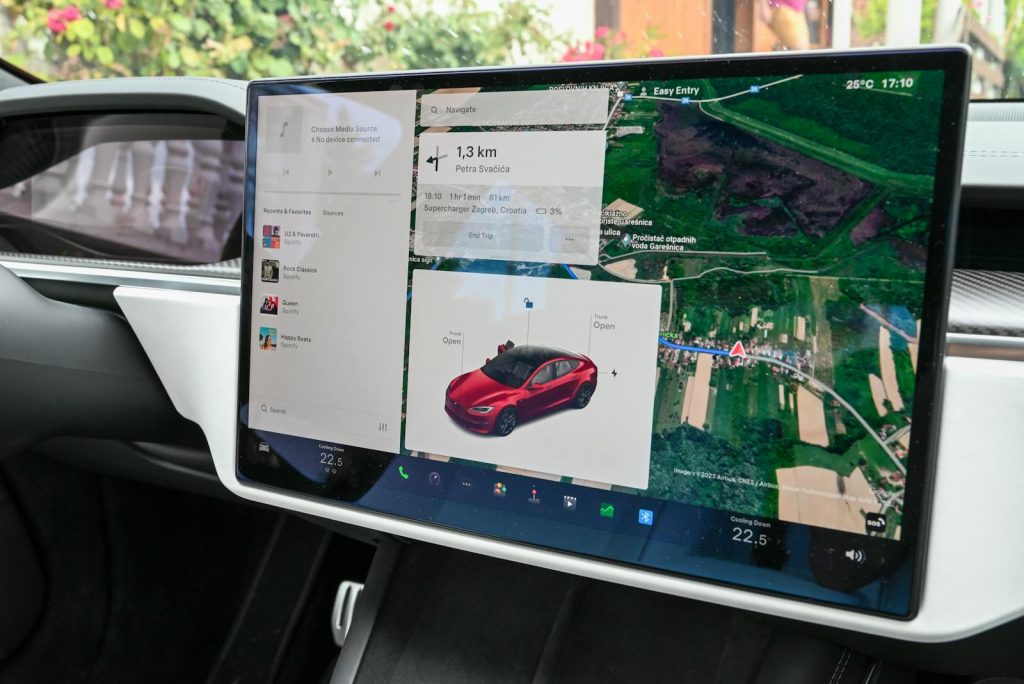
If you treat a modern dashboard like a research subject, you quickly see that you are not just driving a machine, you are riding inside a networked device. Federal scrutiny has already warned that Vehicles have effectively become computers on wheels, capable of logging location, driving history, eye movements, and other health indicators that used to stay in your own head or at your doctor’s office, not in a corporate database. When you frame your project around that reality, you can examine how steering inputs, seat sensors, and even voice commands are quietly turned into behavioral profiles.
The human impact of that data trail shows up in consumer complaints, including drivers who discovered that detailed trip histories and braking patterns had been shared with a third party like LexisNexis without their express permission, as described in a disclosure report on driving habits. When you connect that kind of real world fallout to your own experience with connected apps and insurance discounts, the research stops being abstract and starts to look like a case study in how quietly your daily routines can be monetized.
“Creepy” collection and the student privacy parallel
Once you recognize how much your car knows about you, it is hard not to hear echoes of the debates around campus technology. Investigative segments have already flagged “creepy” data collection in cars, with Spotlight on America correspondent Angie Moreski walking viewers through how infotainment systems and telematics can scoop up contacts, messages, and precise routes in ways most drivers never agreed to in plain language, a concern laid out in a Spotlight investigation. If you are building a research project, you can use that reporting as a jumping off point to compare what automakers disclose with what your own vehicle actually stores after you plug in a phone.
The same tension shows up in classrooms, where They have warned that as schools rely more on digital tools, parents and students are increasingly concerned about data privacy and how learning platforms track behavior, according to a civil rights focused look at student data privacy. When you put those two worlds side by side, your project can argue that the same generation being profiled in learning apps is also being profiled behind the wheel, and that both systems raise civil rights questions about who gets scored, how those scores are used, and whether consent is meaningful.
Climate stakes: from tailpipes to training data
If you are like many of your peers, climate is not a side note, it is the lens through which you judge every technology, including cars. A global survey found that Students, across campuses, are more urgently focused on sustainability, with a majority, exactly 52%, very or extremely concerned about the impacts of climate change and expecting businesses to help solve environmental problems like the climate crisis, a sentiment captured in research on student sustainability priorities. That level of concern naturally pushes you to look beyond fuel economy stickers and ask how the entire digital ecosystem around vehicles affects the planet.
One of the most surprising threads you can pull is the climate cost of the artificial intelligence that powers navigation, driver assistance, and predictive maintenance. Jun reporting on Artificial intelligence has highlighted that Training a single AI model can emit as much carbon as five cars in their lifetimes, a comparison that reframes the environmental impact of “smart” features in a single AI model. When you add that According to researchers at the University of Massachusetts, training AI models produces around 626,000 pounds of carbon dioxide, roughly five times what a car uses in its lifetime, as reported in an Apr commentary on creation over generation, your project can argue that the invisible servers behind the dashboard may matter as much as the exhaust pipe.
EVs, safety labs, and the tech overload problem
Automakers are not standing still while you and your classmates raise these questions, and that tension is fertile ground for research. Jan projections from Gartner estimate that EV bus, car, van and heavy truck shipments will grow 17% in 2025, and by 2030 They predict that a large share of vehicles sold by automakers will be EVs, a shift that you can anchor with data on key automotive trends. At the same time, Toyota has expanded its Collaborative Safety Research Center, announcing fifteen new research projects to advance safety for the automotive industry, a move that shows how a major brand is trying to turn data into fewer crashes and better protection through its Collaborative Center.
Yet even as safety and convenience features multiply, drivers are signaling that there can be too much of a good thing. A recent study of in car systems found that some owners feel overwhelmed by unnecessary technology, even as the convenience award went to the Toyota Sequoia for its camera rear view mirror technology, a detail that captures the split between frustration and appreciation in driver tech surveys. For your project, that tension lets you ask whether the industry is designing for real human needs or for spec sheets, and how students, as future buyers, might push for simpler, safer interfaces that still respect privacy.
From common breakdowns to carbon math
Even with all the software in the world, the physical car still breaks in familiar ways, which gives you a useful baseline for your research. A practical list of Mar Top 10 Common Car Issues still starts with Engine Overheating, Brake Issues, and the dreaded Check Engine Light, reminding you that worn pads and coolant leaks remain as real as any app glitch, as outlined in a guide to Common Car Issues. If you are designing a project survey, you can ask classmates whether they worry more about those traditional failures or about software bugs and hacked infotainment systems, then compare your findings to that long standing repair hierarchy.
On the digital side, the carbon math behind AI is becoming impossible to ignore. They found that the process of training large AI systems can emit more than 626,000 pounds of carbon dioxide, which is equivalent to approximately five times the emissions associated with a single car over its entire life, including the manufacturing of the car itself, a figure that gives you a concrete number to plug into your environmental impact calculations. When you set that side by side with the emissions from a typical internal combustion engine, your project can show that the smartest car feature might be the one that uses the least data, not the most.
Turning research into real world choices
All of these threads, from privacy to climate to maintenance, eventually come back to the choices you make as a driver and a citizen. Senatorial inquiries have already pressed 14 automakers on invasive data practices, warning that Vehicles now collect vast amounts of information on drivers, passengers, and people outside the car, including location, driving history, eye movements, and other health indicators, a concern laid out in a call for stronger consumer protections. When you fold that policy backdrop into your project, you can map how student expectations might shape future regulations, from opt in data sharing to limits on biometric tracking.
At the same time, you can use investigative work on “creepy” car tech, climate focused AI research, and long running repair data to build a toolkit for your own decisions, whether that means turning off certain app permissions, choosing a simpler trim level, or pushing your campus to teach digital literacy alongside driver education. If your final research project helps even a few classmates see that auto data is not just an engineering topic but a question of rights, responsibilities, and planetary limits, then you are not just studying the future of transportation, you are quietly helping to steer it.
More from Wilder Media Group: