

Brake-by-wire used to sound like a concept-car party trick. Now it is quietly becoming one of the most hotly contested battlegrounds in vehicle hardware, as suppliers race to replace hydraulic lines with code and electric motors. The stakes are simple: whoever nails this tech first gets a front-row seat in the shift to software-defined, electrified cars.
From China’s mass-market sedans to high-end Formula 1 racers, the basic idea is the same: turn the Brake pedal into a sensor and let electronics handle the stopping. That shift is pulling in legacy suppliers, ambitious startups, and regulators, all trying to shape how fast the market moves and who gets paid when it does.
From race tracks to driveways, the pedal is going digital
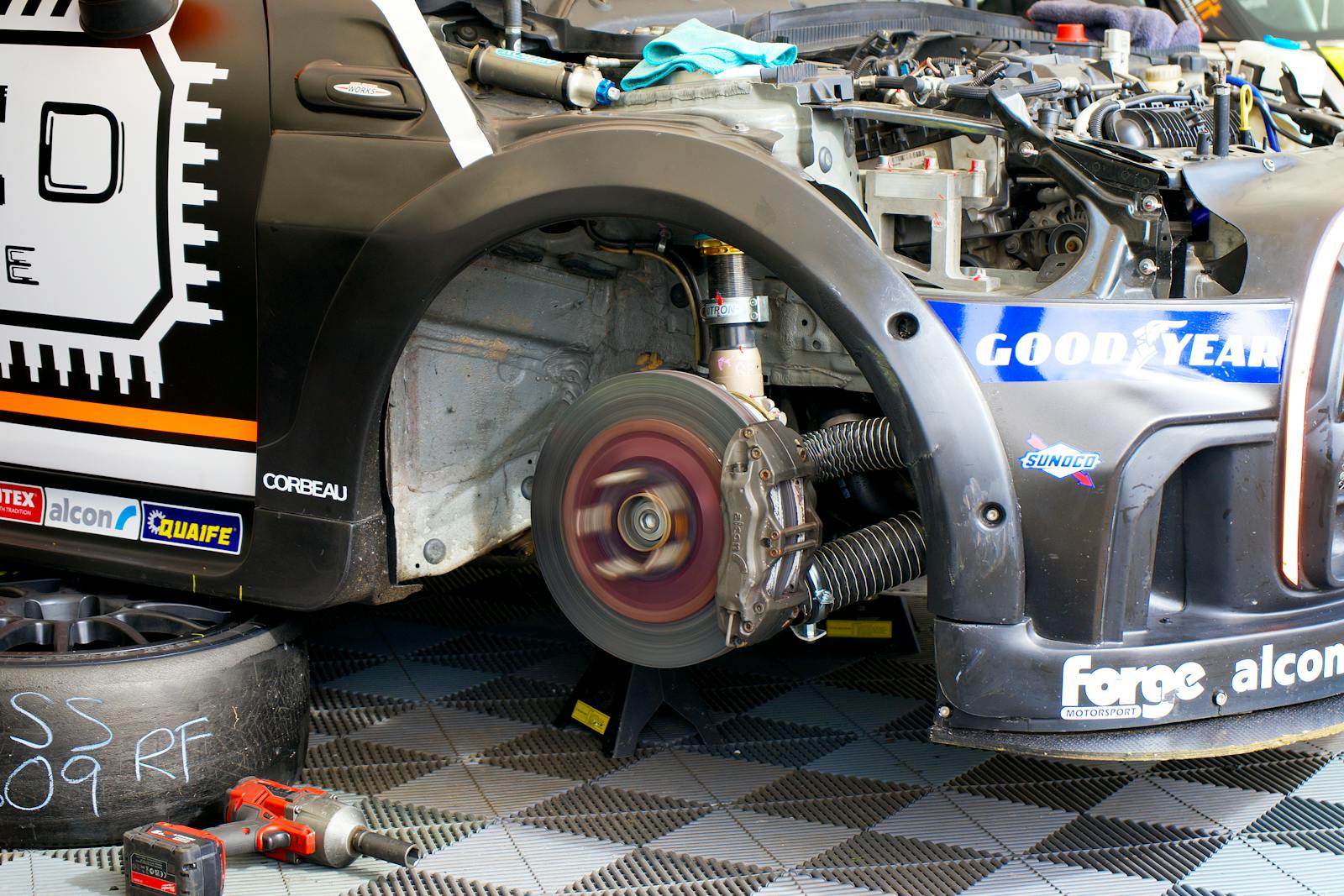
Brake-by-wire, often shortened to BbW, flips the traditional braking script by replacing long runs of hydraulic plumbing with sensors, control units, and actuators. Instead of a direct mechanical link, the pedal becomes an input device, and software decides how much clamping force each wheel needs. As one engineering overview notes, brake-by-wire systems are already at work in Formula 1 race cars and certain luxury vehicles, where a pedal sensor feeds data to an electronic control unit that then controls a car’s brakes electronically through actuators at each wheel, a setup that highlights how far the tech has moved beyond the lab and into real-world use cases supported by Formula 1 applications.
That architecture unlocks tricks that old-school hydraulics simply cannot match. Engineers can blend friction braking with regenerative braking in electric vehicles, tune pedal feel with software updates, and coordinate stopping power with stability control and advanced driver-assistance systems. It also sets the stage for higher levels of automation, since a computer that already meters brake pressure electronically is much easier to integrate into self-driving stacks than a system that relies on a human leg pushing fluid through lines.
China’s numbers show how fast the market is scaling
If anyone wants proof that brake-by-wire is moving from niche to mainstream, they only need to look at China’s passenger car market. There, electronic hydraulic brake systems, or EHB, Have Been Installed in over 10 Million Vehicles, a Figure that is projected to Hit 12 million in 2025, a surge that turns what was once a premium feature into a volume business and underscores how quickly automakers are standardizing the technology across lineups according to Million Vehicles data.
Zooming out, the broader brake-by-wire market in China is expanding on the back of those EHB volumes and the next wave of fully electric mechanical brakes, or EMB. Research on the sector notes that EHB installations are projected to surpass 12 million in 2025 and that this growth is creating a new opportunity as companies like Orient-Motion, Jiongyi, Motion Technology, and Watson Rally race to lead EMB mass production, a sign that the competition is no longer about proving the concept but about locking in scale and supplier slots as described in EHB market projections.
EMB is the next prize, and suppliers are jockeying for position
Within the broader brake-by-wire universe, EMB is emerging as the crown jewel because it strips away even more hydraulic hardware and leans fully into electric actuation. Instead of a central hydraulic unit feeding calipers, each wheel gets its own motor-driven actuator, which can simplify packaging and open the door to more precise control. That is why suppliers in China are not just content with EHB volumes; they are explicitly competing to be first in EMB mass production, with Orient-Motion, Jiongyi, Motion Technology, and Watson Rally all named as key players in that race, a dynamic that turns what used to be a sleepy corner of the parts catalog into a high-stakes technology contest documented in EMB mass production competition.
Global suppliers are not sitting out that fight either, and they are tailoring their offerings to match the shift toward electric and software-heavy vehicles. One example is Nexteer, which has developed an EMB solution that it plans to premiere in its exhibit (1.2H 1BF007) at Auto Shanghai April, positioning the product as a way to improve brake response while also eliminating traditional brake fluid and the disposal concerns that come with it, a pitch that shows how environmental and maintenance angles are now part of the sales story for Nexteer EMB systems.
Why automakers care: packaging, software, and regulations
For automakers, the appeal of brake-by-wire is not just about shaving milliseconds off stopping distances, it is about redesigning the entire vehicle around simpler hardware and smarter software. Removing long hydraulic lines and bulky master cylinders frees up space for battery packs, crash structures, and cabin features, while the electronic control unit becomes one more node in the car’s central computing architecture. In China, regulators are also nudging the market along through standards such as GB21670-2025, which set performance and safety requirements that brake-by-wire suppliers must meet, effectively turning compliance into a competitive differentiator for companies that can certify their systems quickly under frameworks referenced in GB21670-2025 standards.
Software is the other big draw, because once braking is digital, it can be updated, personalized, and integrated with other systems in ways that hydraulic setups never allowed. Automakers can tune pedal feel for different drive modes, coordinate EHB and EMB with traction and stability control, and align braking strategies with energy recovery targets in hybrids and EVs. The same logic that made brake-by-wire attractive in Formula 1, where teams obsess over pedal mapping and brake balance, is now filtering into everyday cars, with suppliers and carmakers betting that drivers will accept, and eventually expect, that kind of software-defined stopping behavior as the new normal.
The road ahead: from niche tech to default choice
Put together, the trends point toward a future where brake-by-wire is not a headline feature but the default way new cars stop. The combination of EHB scale in China, the push toward EMB by suppliers like Orient-Motion and Nexteer, and the early validation from Formula 1 and luxury segments suggests the technology is crossing the line from experimental to inevitable. As more vehicles ship with these systems, the ecosystem around them, from diagnostic tools to aftermarket parts and training, will have to catch up, reshaping how workshops, regulators, and even driving schools think about something as basic as pressing the brake pedal.
The competition, however, is far from settled, and that is what makes this moment so charged. With EHB installations projected to surpass 12 million in 2025 and multiple companies racing to lead EMB mass production, the next few product cycles will decide which suppliers become the go-to names for digital braking and which get left behind in the hydraulic era, a shift that will be tracked closely by anyone watching the evolving brake-by-wire market described in China Passenger Car BBW research.
More from Wilder Media Group: