
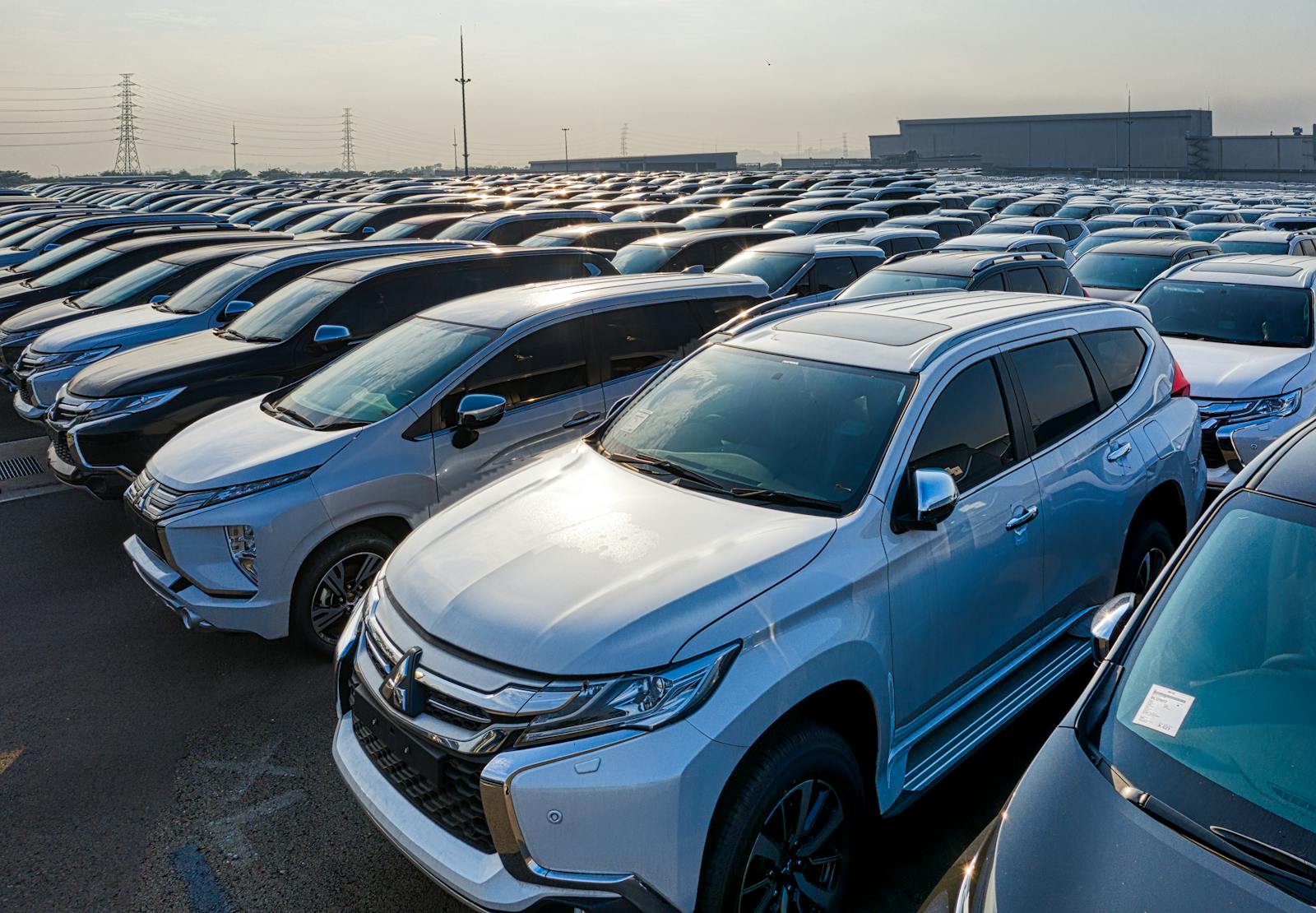

The American auto business is entering 2026 with a problem it has not faced in years: too many vehicles sitting on lots and not enough buyers ready to pay today’s prices. After a sluggish 2025 that followed pandemic shortages and a tariff-fueled buying rush, the industry is discovering that the pendulum has swung from scarcity to surplus. The result is a market where inventory is piling up, discounts are creeping back, and the balance of power is slowly tilting toward consumers.
Behind the headlines about electric vehicle growing pains and tariff battles is a more basic story of supply and demand. Automakers ramped up production just as higher borrowing costs, economic uncertainty, and policy shocks cooled shopper enthusiasm. That mismatch is now visible in swollen inventories, lengthening days on lot, and a widening gap between what manufacturers want to charge and what households can afford.
The new glut: from shortage to surplus in two years

Only a short time ago, dealers were begging for inventory and customers were paying over sticker for popular models. By late 2025, the script had flipped, with new-vehicle stock in the United States climbing back to and then beyond pre-pandemic norms. Industry data show that total available new vehicle inventory reached about 3.04 m units as the year progressed, a level that would have been unthinkable during the chip shortage but now reflects a market struggling to digest what factories are building.
The shift is not just about raw volume, it is about how long those vehicles sit. Earlier in the recovery, dealers were comfortable with lean lots because every arrival had a waiting buyer, but by the end of 2025 the days of supply metric had climbed into territory that signals oversupply rather than balance. That change has left retailers carrying higher floorplan costs and has forced manufacturers to revisit production schedules, incentives, and even model mix as they confront a landscape where supply is finally abundant but demand is no longer keeping pace.
Inventory metrics that signal trouble
The clearest sign that the market is out of sync is the number of days it would take to sell down current stock at the prevailing sales pace. According to year-end tracking, new-vehicle inventory began Dec at about 3 million units of Total Inventory, translating into roughly 90 Days of Supply. That figure is well above the lean conditions of 2021 and 2022 and more in line with a buyer’s market, where shoppers can take their time and negotiate harder.
Pricing tells a similar story. The Average Listing Price for a new vehicle sat at $49,422 heading into the final stretch of 2025, a level that reflects both the industry’s tilt toward larger, more expensive models and the inflation that has rippled through materials and labor. With inventory at 90 days of supply and prices near $49,422, automakers are being forced to choose between protecting margins and moving metal, a tension that is already showing up in richer incentives and more aggressive marketing campaigns.
How the EV hangover fed the pileup
Electric vehicles were supposed to be the growth engine that kept factories humming, but in 2025 they became part of the oversupply problem. After an early wave of adopters pulled demand forward, the market for fully electric models cooled, leaving dealers with more battery-powered crossovers and sedans than they could easily sell. Industry observers described how CDG saw An EV surge turn into an EV hangover, with Pull-ahead demand creating meaningful inventory challenges once the most eager buyers had already switched.
That slowdown has left some brands particularly exposed, especially those that invested heavily in premium electric SUVs and trucks aimed at affluent households. Across all makes, inventory is now more plentiful for higher priced vehicles that typically sell to affluent buyers, a pattern highlighted in Live Market View data. When the most price-insulated customers hesitate, the rest of the market rarely picks up the slack, and that is exactly what has happened as mainstream shoppers balk at both EV sticker prices and charging concerns.
Tariffs, Trump, and the policy whiplash
Policy choices in Washington have amplified the industry’s swings. Tariffs on imported vehicles and components, championed by President Donald Trump as part of a broader industrial strategy, initially triggered a rush of buying as consumers tried to get ahead of expected price hikes. Once that tariff-driven surge faded, sales slowed, leaving automakers with more inventory just as their own costs were rising. Reporting on the tariff impact noted that Major car makers including Ford, GM and Volvo took hits because of tariff associated costs, while Auto prices could rise by thousands of dollars per vehicle.
Those tariffs have also scrambled traditional political alliances. The United Auto Workers union, which is frequently at odds with Trump, has mostly cheered the president’s tariffs for incentivizing domestic production, even as those same policies complicate automakers’ global supply chains and pricing strategies. The combination of higher input costs, political pressure to keep building in the United States, and softer demand has left companies squeezed from both sides, contributing to the inventory overhang now visible on dealer lots.
Affordability crunch meets slow-growth economy
Even without policy shocks, the broader economic backdrop would have made 2025 a challenging year for car sales. Household budgets are still absorbing years of inflation, and while stock markets have been buoyed by technology gains, that wealth effect is uneven. Analysts tracking industrial sectors note that the United States chemical business, a bellwether for manufacturing demand, is expected to see only slow growth, with Jan commentary pointing out that Higher-income individuals feel even more flush as stocks, driven largely by the artificial intelligence boom, have been soaring.
That split matters for autos because the market has skewed toward higher priced vehicles that depend on those better-off buyers. When affluent households feel confident, they can absorb $49,422 average prices and higher interest rates, but when they hesitate, the industry’s reliance on expensive trucks and SUVs becomes a vulnerability. Meanwhile, middle income shoppers are confronting monthly payments that often exceed what they paid for a mortgage a decade ago, a reality that has pushed some would-be buyers into the used market or kept them in aging vehicles longer, further softening demand for new cars and contributing to the inventory buildup.
Which automakers are most exposed
The inventory glut is not evenly distributed across brands. Domestic manufacturers that leaned into large pickups and SUVs have some of the highest stock levels, reflecting both their production capacity and their product mix. Earlier in the cycle, data showed that Domestic Automakers Have Highest Inventory Levels Many domestic makes at the top of the charts, with Dodge singled out for particularly elevated days of supply.
Import brands are not immune, but their exposure often looks different. Japanese and Korean manufacturers that focused on compact crossovers and hybrids have seen steadier turn rates, while some European luxury marques are wrestling with slower EV uptake and higher tariffs on vehicles shipped from overseas plants. The common thread is that any company that overestimated demand for high priced, high margin models is now carrying more inventory than it would like, and the pressure to clear that metal is likely to shape pricing and production decisions well into 2026.
Sales outlook: a steady SAAR hides shifting dynamics
Headline forecasts for 2026 do not suggest a collapse in auto demand, but they also do not promise a boom that would quickly absorb today’s excess inventory. Market analysts expect the United States new-vehicle market to hold near a 16 million SAAR in 2026, a level that is respectable by historical standards but not enough on its own to erase the overhang without production cuts or heavier incentives. That projection from Edmunds assumes that affordability gradually improves as incomes rise and financing conditions stabilize, but it also acknowledges that many buyers remain priced out of the new-car market.
Beneath that steady SAAR, however, the mix of what sells is likely to keep shifting. Hybrids and plug-in hybrids are positioned to benefit from EV hesitation, while mainstream crossovers and smaller trucks may gain share if automakers adjust pricing to chase volume. For inventory planners, the challenge will be matching production to these evolving preferences without repeating the mistakes of the EV surge, where enthusiasm outpaced realistic assessments of how quickly average buyers would embrace new technology at premium prices.
What it means for buyers walking into showrooms
For consumers, the current imbalance between supply and demand is starting to show up in more choice and better deals, even if the era of rock-bottom prices has not returned. Analysts advising shoppers on the 2026 outlook note that the inventory recovery has finally given buyers leverage again, with more room to negotiate on price, trade-in value, and financing. One widely circulated Q&A framed the Thinking of buying a car in 2026 question by explaining that Here the big picture for new cars is that the inventory recovery has largely happened, even as tariffs and higher costs keep manufacturers from slashing prices as deeply as in past cycles.
Shoppers who are flexible on brand, color, or exact trim are likely to benefit the most, especially in segments where inventory is heaviest, such as full-size pickups, three-row SUVs, and certain EVs. Dealers facing 90 days of supply are more willing to discount or throw in extras to move units, and manufacturers are quietly layering on rebates and subsidized financing to keep sales flowing without openly admitting that they overshot demand. For buyers who can navigate the complexity, a sluggish 2025 has set the stage for a more favorable 2026, even as the industry grapples with the uncomfortable reality that it built more cars than the market was ready to absorb.
More from Wilder Media Group: