

Volkswagen has pulled the covers off the ID. Polo’s cabin ahead of the compact EV’s full debut, revealing an interior that leans heavily on practicality, digital tech, and a return to physical controls. The new electric Polo is pitched as an affordable entry point into the brand’s ID family, and the first look inside shows how Volkswagen is trying to balance cost pressures with a more premium feel. With launch set for spring 2026, the interior is now the clearest signal yet of how the company wants everyday European drivers to experience its next wave of small electric cars.
The ID. Polo’s cockpit borrows ideas from recent concepts and production models but adapts them to the tight footprint of a city-friendly hatchback. From the dashboard layout to the rear bench and cargo area, the design choices aim to make the car “more versatile than any of its predecessors” while staying almost identical in size to the current combustion Polo. That combination of familiarity and reinvention is what will define whether this EV can truly replace one of Europe’s best known small cars.
The ID. Polo’s place in Volkswagen’s EV strategy
The ID. Polo is being positioned as the reinvention of a long-running bestseller for the electric era, sitting below larger ID models as a new entry-level mobility option. Volkswagen describes the project as “reinventing a bestseller” and has already shown the car in near-production form, presenting it as a compact, five-door, five-seater hatch that translates the Polo formula into the ID family. The company frames the car as a key step in its plan to broaden electric access, with the ID. Polo 02 referenced as part of a roadmap that includes multiple power outputs and battery sizes for different budgets and use cases, all under the same familiar badge.
Under the skin, the car is built on the updated MEB+ architecture, which Volkswagen is using to roll out its latest electric drive technologies and a new generation of components. Official material highlights how this platform underpins “new entry-level mobility” and supports four power outputs and two battery options, with the latest generation drive unit called APP 290 sitting at the top of the range for stronger performance in the ID. Polo 02 and related variants, according to four power outputs. This hardware strategy allows Volkswagen to scale the car from basic commuter spec to warmer versions that nod toward the brand’s hot hatch heritage, while keeping development costs in check across the broader ID line-up.
Interior reveal: what Volkswagen showed and why it matters
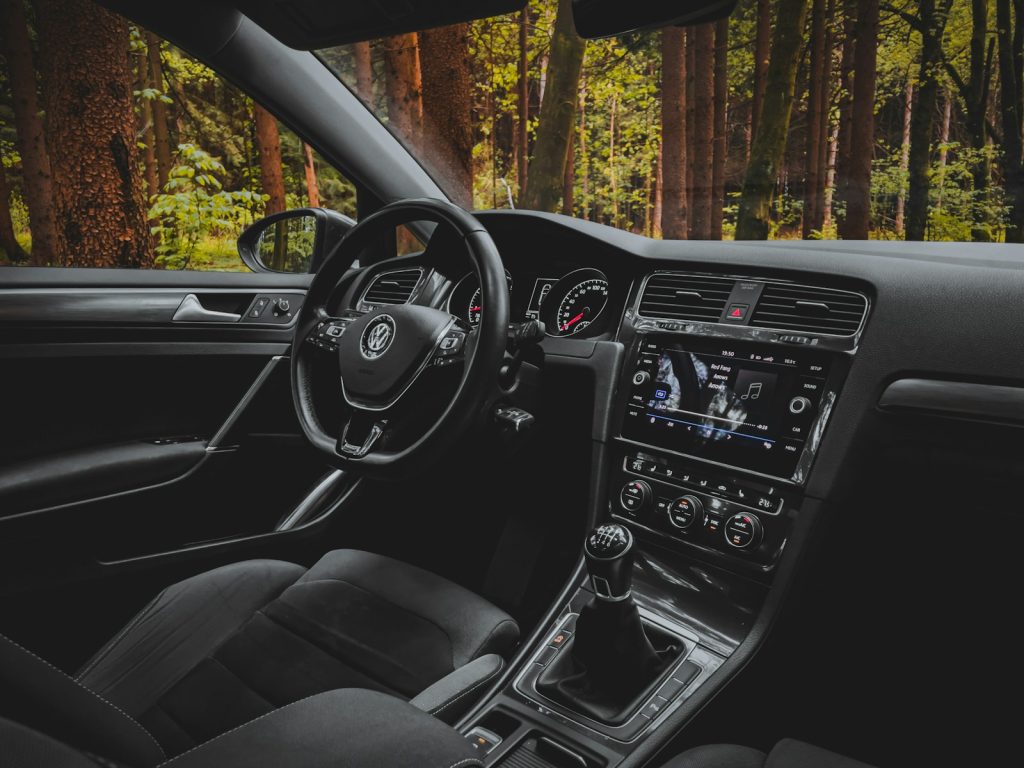
The first official look inside the ID. Polo focuses on how the cabin makes the car “more versatile than any of its predecessors,” a bold claim given the long history of the Polo nameplate. In the reveal, Volkswagen highlights a clean dashboard with a freestanding central touchscreen, a compact digital instrument cluster, and a center console designed to free up storage space between the front seats. The company stresses that the interior has been engineered to feel airy despite the car’s modest footprint, with slim front seats and a relatively upright seating position helping to carve out legroom and headroom for both rows, as described when the electric Polo was shown off for the first time in the electric Polo.
Volkswagen is also using the interior reveal to underline that the ID. Polo is not simply a shrunken version of larger ID models, but a car tailored to urban and suburban buyers who need flexibility from a small footprint. The rear bench is designed to fold flat to extend the load area, and the brand is keen to show that the car can handle everyday tasks like family shopping trips or weekend luggage without feeling compromised. Reporting on the pre-launch phase notes that the ID. Polo is almost precisely the same size as the current combustion Polo, yet the packaging of the battery and electric drivetrain allows more usable space inside, a point that has been emphasized as the car “reveals its inner secrets” ahead of its spring 2026 launch in pre-sales previews.
Design language: from ID.2all to production hatchback
The ID. Polo’s interior does not arrive in a vacuum, it is the production evolution of ideas first seen in the ID.2all concept and related small EV studies. Those earlier show cars previewed a more traditional cockpit layout with a horizontal dashboard, a central touchscreen, and a separate digital driver display, but crucially they also signaled a shift back toward physical controls. In the ID.2all, Volkswagen executives promised that “You’ll see some physical switches and dials in addition to a touchscreen,” explicitly acknowledging customer frustration with touch-only interfaces and confirming that key functions like climate control and hazard lights would be handled by real buttons, as detailed in a look inside the You will see concept.
That philosophy carries into the ID. Polo, where the design and features include a stubby, sloped bonnet and Sleek headlights that echo the larger ID.7, but inside the focus is on intuitive interaction. The main touchscreen handles navigation, media, and vehicle settings, while a separate strip of illuminated, physical controls sits below for audio and climate adjustments. This approach is a direct response to criticism of earlier ID models that relied heavily on touch sliders and buried menus, and it aligns with the broader shift seen in the brand’s small EVs, including the ID.2, whose interior is described as combining a compact footprint with practical storage and a cargo capacity that can reach 46.9 cubic feet with seats folded, on top of a quoted 15.5 cubic feet of space behind the rear seats in the related 15.5 hatch.
Buttons, dials and the tech rethink
One of the most significant aspects of the ID. Polo interior is Volkswagen’s decision to reintroduce real buttons and turning knobs for core functions, a move that mirrors what was shown in the ID.2all and in early looks at the ID.2’s cabin. In video walkarounds of the small EV interiors, the company explicitly talks about “real buttons and turning jocks” and a “retro mode” that signals a return to the roots of simple, tactile controls, with the presenter describing how Volkswagen is going back to the roots in the new ID2 setup, as seen in a detailed clip on Volkswagen ID2. The ID. Polo adopts this thinking with a row of physical climate keys, a proper volume knob, and clearly labeled hazard and driver-assistance switches, all placed where drivers can find them without diving into submenus.
This rethink of the interface is not just about nostalgia, it is a practical response to feedback from owners and reviewers of earlier ID models who found touch sliders imprecise and distracting. By combining a modern touchscreen with a bank of physical controls, the ID. Polo aims to reduce cognitive load, especially in city traffic where quick adjustments are frequent. The digital instrument cluster still delivers configurable information, but the most frequently used functions are now anchored to hardware, a choice that aligns with the broader “Democratising innovations” message Volkswagen uses for its MEB+ cars, where it promises that next-generation tech will be made accessible in a compact, five-door, five-seater ID hatch, as outlined in its push for Democratising innovations.
Space, practicality and how “not bigger” still means roomier
Volkswagen is keen to stress that the ID. Polo is “Not bigger” than the current combustion Polo, yet offers more interior flexibility. Reports from early access events note that the car is almost precisely the same size externally as the existing Polo, but the packaging advantages of an electric platform free up more cabin volume. The flat battery in the floor and compact electric motor allow for a longer wheelbase relative to overall length, which translates into better rear legroom and a more generous cargo area without stretching the bodywork, a point highlighted when The ID. Polo was described as matching its combustion sibling’s footprint while improving practicality in Not bigger.
Inside, this translates into a rear bench that can comfortably accommodate adults for short to medium journeys, with a relatively upright backrest and a flat floor that makes the middle seat more usable than in many small hatchbacks. The boot is shaped to be square and usable, with a low loading lip and the option of a split-level floor to hide charging cables or small items. While exact cargo figures for the ID. Polo are not yet fully detailed in the reporting, Volkswagen’s approach mirrors what it has done with the ID.2, where careful packaging yields a surprisingly generous luggage area for a car of this size. The goal is clear: keep the car city friendly while ensuring that owners do not feel they have sacrificed everyday usability compared with the combustion Polo they might be trading in, a message that is reinforced in broader coverage of the new Polo EV strategy.
Powertrains, MEB+ platform and what they mean for cabin experience
The ID. Polo’s interior cannot be separated from its technical underpinnings, because the MEB+ platform shapes both the driving experience and the way the cabin is laid out. The updated architecture supports multiple battery sizes and charging improvements, and it is designed to deliver a range that is competitive in the small EV segment while keeping costs under control. Coverage of the platform notes that The Volkswagen “MEB+” platform is an evolution of the existing modular electric toolkit, with improvements aimed at boosting efficiency and enabling ranges in the region of 180 to 200 miles for compact models, as outlined in analysis of The Volkswagen MEB. This hardware flexibility allows Volkswagen to offer the ID. Polo with different performance and range combinations without redesigning the cabin each time.
On the powertrain side, The Volkswagen ID. Polo will initially be available with three power outputs: 85 kW (114 hp), 99 kW (133 hp), and 155 kW, giving buyers a spread from efficient commuter to warm hatch performance. These figures, cited for the pre-production prototype, show how the same interior package can be paired with very different driving characters, from a modest 85 k base model to a punchier 155 k variant that could underpin sportier trims, as detailed in early coverage of The Volkswagen ID. For occupants, this means that while the seating position, visibility, and control layout remain consistent, the sense of refinement and acceleration can vary significantly depending on the chosen motor and battery, which in turn influences how the car feels on longer trips versus urban commutes.
Materials, build and early community reactions
Beyond layout and tech, the ID. Polo’s interior is drawing attention for its material choices, which aim to balance cost with a more upmarket feel than some earlier small Volkswagens. Early photos and descriptions point to extensive use of fabric on the dashboard and door cards, replacing hard plastics in key touchpoints to create a warmer atmosphere. Enthusiast discussions have picked up on this, with one widely shared comment noting that the interior photos “definately lines-up with what journalists who have driven the pre-production car have been saying,” including the use of fabric instead of plastic in areas that owners interact with frequently, as highlighted in a community thread about Dec cabin details.
Fit and finish expectations are high because the combustion Polo has long been praised for feeling more solid than many rivals, and Volkswagen appears intent on preserving that reputation in the electric version. The use of soft-touch materials in the upper dash, carefully damped switchgear, and consistent panel gaps are all part of the brand’s effort to justify pricing that may be higher than originally promised for the entry-level EV. At the same time, some harder plastics are likely to remain in lower, less visible areas to keep costs in check, a compromise that is typical in this segment. The early reaction suggests that buyers are willing to accept this mix as long as the main touchpoints feel substantial and the overall design looks modern, a balance that will be crucial as the ID. Polo competes with other small EVs and with well-equipped combustion hatchbacks.
Pricing pressures and the €25k promise
Volkswagen originally targeted a base price of around €25,000 for the ID. Polo, presenting it as the long-awaited “€25k EV” that would bring electric mobility to a broader audience. However, more recent reporting indicates that this target may not be met immediately, with suggestions that the most affordable version could arrive later than the initial launch wave. One detailed analysis notes that VW has reinvented its Polo as the electric ID. Polo for 2026 and that while it targeted a base price of €25k, fulfilling that promise may take longer than first suggested, even though the project itself appears to be on schedule, as reported in coverage by Chris Chilton. This tension between ambition and reality is central to how the ID. Polo will be perceived in the market.
Further analysis of Volkswagen’s broader EV pricing strategy suggests that the brand’s new entry-level EVs “may not be so cheap after all,” with the company delaying some of its most aggressively priced ID models. Reports underline that Volkswagen delays entry-level ID plans and that the German automaker may still make electric mobility more affordable, but not right away, as summarized in a piece that notes how Volkswagen, and the German parent, are recalibrating expectations for the short term, captured in the line that “And the German automaker may still make electric mobility more affordable, but it will not happen immediately,” as discussed in coverage of Volkswagen and the German strategy. For buyers looking at the ID. Polo interior today, that means the cabin will need to feel convincingly premium for the money, even if the headline €25k figure takes time to materialize in showrooms.
Performance variants and the hot-hatch connection
While the standard ID. Polo is focused on efficiency and everyday usability, Volkswagen is already laying the groundwork for sportier derivatives that tap into its hot-hatch heritage. Reporting on future plans points to an ID. Polo GTI arriving around the same time that The Volkswagen Golf GTI celebrates its 50th anniversary, with an Edition 50 special edition marking the milestone for the larger icon. The idea is that a warmed-up ID. Polo GTI would sit below the Golf in size but echo its spirit, giving enthusiasts a compact electric hatch with sharper responses and a more focused chassis, as outlined in previews that link the upcoming EV to The Volkswagen Golf GTI and its Edition celebration.
Inside, such a variant would likely build on the standard ID. Polo cabin with sport seats, contrasting stitching, and GTI-specific trim details, much as the current combustion Polo GTI differentiates itself from regular models. The existing Polo GTI already features a more driver-focused interior with unique upholstery and a sportier steering wheel, and recent updates to the whole Polo range have introduced a new touch-sensitive climate control panel mounted down low, which is easier to use than the setup in some of VW’s electric ID models, as noted in a review of the latest Polo GTI. Translating that formula into the ID. Polo would give Volkswagen a clear bridge between its combustion performance heritage and its electric future, using the same basic interior architecture but layering on visual and tactile cues that signal a more engaging driving experience.
How the ID. Polo interior compares within the ID family
Within Volkswagen’s growing ID family, the ID. Polo’s interior sits at the intersection of cost-conscious design and a clear response to criticism of earlier models. Larger cars like the ID.3 and ID.4 leaned heavily on touch-sensitive controls and minimalist dashboards, which some drivers found unintuitive. The ID. Polo, by contrast, borrows the more user-friendly ideas from the ID.2all and related concepts, combining a straightforward instrument layout with a mix of digital and physical interfaces. Official descriptions of the ID. Polo’s design and features emphasize a stubby, sloped bonnet and Sleek headlights similar to the ID.7, but also highlight how the interior layout has been refined to make audio and climate controls easier to operate, as detailed in the Design and overview.
Compared with the combustion Polo, the electric version’s cabin feels more overtly digital, with larger screens and a more open center console, yet it retains the solid, unfussy character that has long defined the nameplate. The move to MEB+ also aligns the ID. Polo with other next-generation ID models that promise better range, faster charging, and more advanced driver assistance, all of which influence how the interior is used on longer journeys. At the same time, the car’s role as a gateway EV means it must avoid overwhelming first-time electric buyers with complexity. By blending familiar hatchback ergonomics with carefully chosen tech upgrades, and by revealing the interior early to set expectations, Volkswagen is signaling that the ID. Polo is meant to feel like a natural evolution of the everyday Polo experience rather than a radical departure, a message reinforced in its broader communication about Reinventing the Polo for the electric age.
More from Wilder Media Group: