

Tesla closed out 2025 with a sharp slowdown, reporting 418,227 vehicle deliveries in the fourth quarter as global sales fell 16 percent from a year earlier. The pullback capped a second consecutive annual decline and underscored how quickly the balance of power in the electric vehicle market is shifting. Investors and rivals are now parsing the numbers for clues about whether this is a temporary reset or the start of a more structural slowdown for the company that once defined the modern EV boom.
The latest figures arrive at a delicate moment for Tesla, which is facing intensifying competition, changing subsidy regimes, and questions about demand for its core models. While the company still ships hundreds of thousands of cars each quarter, the gap between its growth narrative and its delivery reality has rarely looked wider. How Tesla responds to this pressure will shape not only its own valuation, but also the trajectory of the broader electric transition.
Q4 by the numbers: 418,227 deliveries and a 16% slide
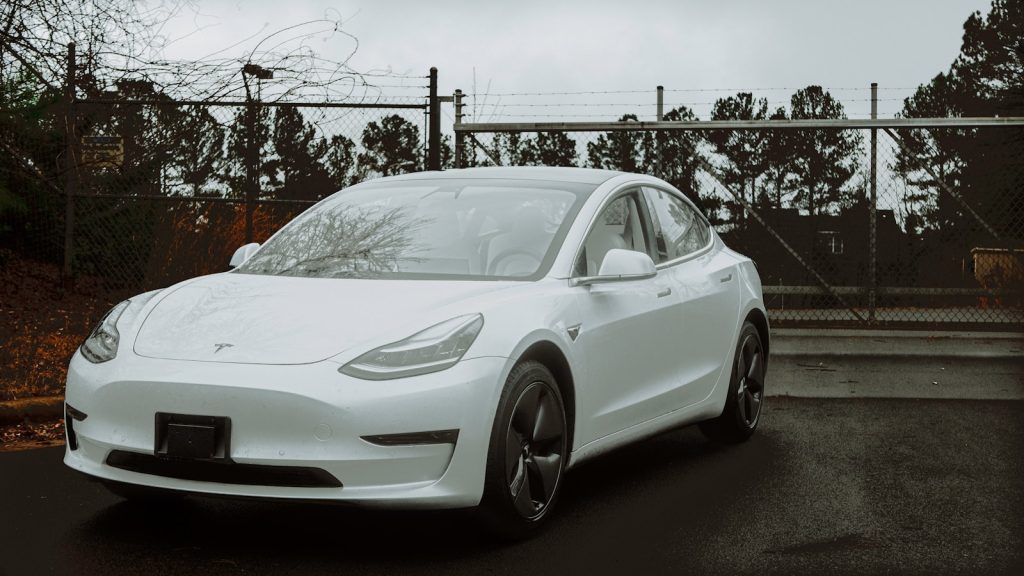
Tesla’s headline figure for the quarter, 418,227 deliveries, represents a clear break from the rapid growth that defined its earlier years. Management framed the result against production of 434,358 vehicles, a reminder that the company still has the capacity to build more cars than it is currently able to sell. That gap between the 418,227 units handed to customers and the 434,358 units produced points to inventory building up in the system, a dynamic that tends to pressure pricing and margins when it persists for more than a few quarters, especially in a segment as price sensitive as mass-market EVs.
The 16 percent year over year decline in deliveries is particularly striking because it comes after a previous year of weakness, turning what might have been dismissed as a blip into a pattern. Tesla had already signaled that Model 3 and Model Y would remain its volume backbone, and the company’s own breakdown shows that Model 3/Y deliveries dominated the quarter even as overall sales contracted. For a business that once promised sustained double digit growth, a second year of shrinking deliveries forces a reassessment of how much untapped demand remains at current price points.
From growth engine to back‑to‑back annual declines
The latest quarter confirms that Tesla is no longer in a simple up-and-to-the-right phase. Reporting that deliveries fell 16 percent in the fourth quarter, and that full year volumes declined for a second straight year, signals that the company has moved into a more mature, cyclical stage of its life. Instead of debating how fast Tesla can grow, investors are now asking how stable its base of demand really is and whether the company can avoid deeper contractions if macro conditions or incentives worsen further.
That shift is evident in the way analysts now frame the story, focusing on the fact that Tesla deliveries drop for second straight year rather than on incremental production milestones. The narrative has also been complicated by the rise of BYD, which has overtaken Tesla in global EV volumes and now serves as a direct benchmark for what scale and growth can look like in the segment. The combination of Tesla’s back to back declines and BYD’s ascent has turned the competitive landscape into a referendum on strategy, pricing discipline, and geographic diversification.
Production capacity, inventory, and the 434,358 vehicle question
The production figure of 434,358 vehicles in the quarter is a reminder that Tesla’s factories are still capable of high output, even as deliveries lag. When a company builds 434,358 units but only moves 418,227 to customers, the roughly sixteen thousand vehicle difference may not sound dramatic in isolation, yet it hints at a subtle but important shift from supply constraint to demand constraint. In earlier years, Tesla routinely sold every car it could produce, with waitlists stretching for months; now, the balance is tilting toward a world where the company must work harder to stimulate demand.
That dynamic has implications for pricing, product planning, and capital allocation. If the company continues to produce at or above the 434,358 level without a matching increase in deliveries, it will either need to accept higher inventory levels or cut prices to clear stock, both of which can weigh on profitability. Analysts watching the quarter’s numbers have already tied the 16 percent delivery decline to factors such as the expiration of certain EV tax credits and intensifying competition, but the hard arithmetic of 434,358 vehicles produced against 418,227 delivered suggests that Tesla’s next moves will be judged on how effectively it can align its factories with real world demand rather than aspirational growth targets.
Tax credits, policy shifts, and the demand reset
One of the clearest external pressures on Tesla’s fourth quarter performance has been the changing landscape of electric vehicle incentives. As some EV tax credits phase out or become more restrictive, the effective price of a new Tesla rises for many buyers, particularly in markets where subsidies had been a key part of the value proposition. The company’s own delivery commentary has acknowledged that the expiration of certain credits weighed on demand, turning what might have been a modest slowdown into a more pronounced 16 percent drop.
Policy shifts matter because they interact directly with Tesla’s pricing strategy. After several rounds of price cuts in previous periods, the company entered this quarter with less room to maneuver without further compressing margins. When incentives fall away at the same time that rivals are offering aggressively priced alternatives, the impact on order books can be swift. The fact that Tesla still produced 434,358 vehicles despite these headwinds suggests that its internal planning assumed stronger demand than ultimately materialized, which in turn raises questions about how quickly the company can recalibrate to a world where tax credits are less of a tailwind and more of a moving target.
BYD’s surge and Tesla’s loss of the EV volume crown
The most symbolic development surrounding Tesla’s latest quarter is its loss of the title of world’s largest electric vehicle maker by volume. For years, Tesla’s dominance in pure EV sales was a central part of its identity and its valuation story. Now, that mantle has passed to BYD, a rival that has combined aggressive pricing, deep vertical integration, and strong positions in China and other emerging markets to outpace Tesla’s growth. The shift is not just about bragging rights; it changes how investors and policymakers think about leadership in the global EV transition.
Reporting on the quarter has been explicit that the Elon Musk Led Company Loses Title As World Biggest EV Maker In To BYD, tying the 16 percent delivery slide directly to this changing of the guard. BYD’s ability to grow volumes while Tesla’s deliveries contract underscores how competition is no longer hypothetical. It is now possible for a rival to surpass Tesla on the very metric that once seemed unassailable. That reality may force Tesla to rethink its mix of premium positioning and mass market ambitions, especially in regions where BYD’s lower cost models are gaining traction among first time EV buyers.
How markets reacted: resilience in TSLA stock
Despite the headline of a 16 percent drop in quarterly deliveries, Tesla’s shares did not collapse on the news. Instead, the stock showed a degree of resilience that surprised some observers, with trading updates noting that Tesla shares actually climbed about 1 percent in early action after the report. That reaction suggests that, at least for now, investors had braced for weak numbers and may even have feared something worse than the 418,227 deliveries the company ultimately disclosed.
Market commentary framed the move as a sign that the bad news was already largely priced in, pointing to the way Tesla shares climb despite 16% drop in the quarter’s deliveries. At the same time, more detailed analysis under the banner of What That Means for TSLA Stock in the New Year has stressed that a single day’s bounce does not resolve the underlying questions about growth, margins, and competitive pressure. The stock’s ability to shrug off the immediate shock may reflect faith in Elon Musk’s capacity to pivot, but it also raises the stakes for upcoming product announcements and strategic updates that will need to justify that confidence.
Model 3/Y dominance and the limits of Tesla’s lineup
Underneath the aggregate delivery figure, Tesla’s reliance on its core mass market models remains striking. The company’s own breakdown shows that Model 3/Y accounted for the overwhelming majority of the 418,227 vehicles delivered in the quarter, with higher end models and newer offerings contributing only a small fraction. That concentration has been a strength in the past, allowing Tesla to focus engineering and manufacturing resources on a relatively narrow set of platforms, but it now exposes the company to saturation risk in its most important segments.
With competitors rolling out fresh crossovers and sedans that target the same buyers as Model 3 and Model Y, Tesla’s lineup looks older than it once did, even with periodic refreshes. The 16 percent decline in deliveries suggests that incremental tweaks may no longer be enough to sustain volumes at previous levels. Analysts have increasingly argued that Tesla needs either a genuinely new mass market model or a significant expansion of its existing platforms to reaccelerate growth. Until that happens, the company will remain heavily dependent on the same two workhorse vehicles that carried it to 418,227 deliveries this quarter, but could also limit its ability to reignite demand in a crowded field.
Reading the tea leaves: Munster, “Normalized December Deliveries,” and forward signals
Some analysts have tried to look past the headline decline by dissecting intra quarter trends, searching for signs that demand may have stabilized toward the end of the period. One influential voice, identified as Munster, has focused on what he calls Normalized December Deliveries, arguing that the month’s performance, stripped of certain one off factors, may be more representative of Tesla’s underlying run rate. In that view, the 418,227 figure for the quarter, while disappointing, could mask a modest improvement as the year drew to a close.
Even if that interpretation proves correct, it does not erase the reality that Tesla delivered fewer vehicles than it produced and that full year volumes declined for a second time. What it does offer is a framework for watching the next few quarters: if normalized monthly deliveries continue to firm up, the 16 percent quarterly drop might come to be seen as a cyclical trough rather than the start of a prolonged slide. For now, however, investors must balance Munster’s relatively constructive read of December against the harder facts of a company that built 434,358 vehicles, delivered 418,227, and ceded the global EV volume crown to a fast rising rival.
Tesla’s narrative at a crossroads
The fourth quarter delivery report crystallizes a turning point for Tesla. The company that once defined the EV boom now finds itself grappling with shrinking deliveries, a more crowded competitive field, and the loss of its status as the world’s largest electric vehicle maker by volume. The 418,227 vehicles delivered in the quarter, and the 16 percent decline they represent, are not just numbers on a spreadsheet; they are a measure of how far Tesla has drifted from the hypergrowth narrative that long underpinned its valuation and its mystique.
At the same time, Tesla still retains formidable advantages, from its global manufacturing footprint to its software ecosystem and brand recognition. The question is whether those strengths can be harnessed quickly enough to offset the pressures evident in the latest figures. Short form coverage of the report has already highlighted that Tesla posted its fourth quarter 2025 vehicle production and deliveries report on Friday, marking a second annual decline in deliveries compared with 2024. Whether future reports tell a story of renewed growth or continued contraction will depend on how decisively Tesla adapts its products, pricing, and strategy to a market that no longer bends so easily to its will.
More from Wilder Media Group: