

Tesla is discovering that cutting prices is no longer a guaranteed way to keep its growth story intact. Even as the company rolls out cheaper versions of its core models and leans on aggressive discounts, sales in the United States and globally are slipping, exposing deeper problems with demand, competition, and brand perception that simple markdowns cannot fix.
The slump is arriving just as rivals flood the market with their own electric vehicles and as policy tailwinds weaken, leaving Tesla to navigate a far more crowded and politicized landscape. The result is a rare moment of vulnerability for a company that once seemed able to sell every car it could build.
The numbers behind Tesla’s sudden slowdown
The clearest sign of strain is in the United States, where Tesla’s deliveries have fallen back toward levels not seen in several years despite a larger EV market. New data show that Tesla sold 39,800 vehicles domestically in a recent month, a figure that underscores how far demand has cooled from its pandemic-era peaks. Analysts describe this as a “serious challenge” for the company, particularly because overall U.S. EV sales are still growing even as Tesla’s share slips.
Globally, the picture is not much brighter. Companywide, Tesla vehicle sales fell 8.6% last year, dropping the Elon Musk led company behind China based BYD in the global rankings and leaving it short of analyst estimates compiled by Bloomberg. For a business that built its valuation on relentless expansion, an 8.6% decline is more than a blip, it is a warning that the era of easy volume gains may be over.
Cheaper models that failed to ignite demand
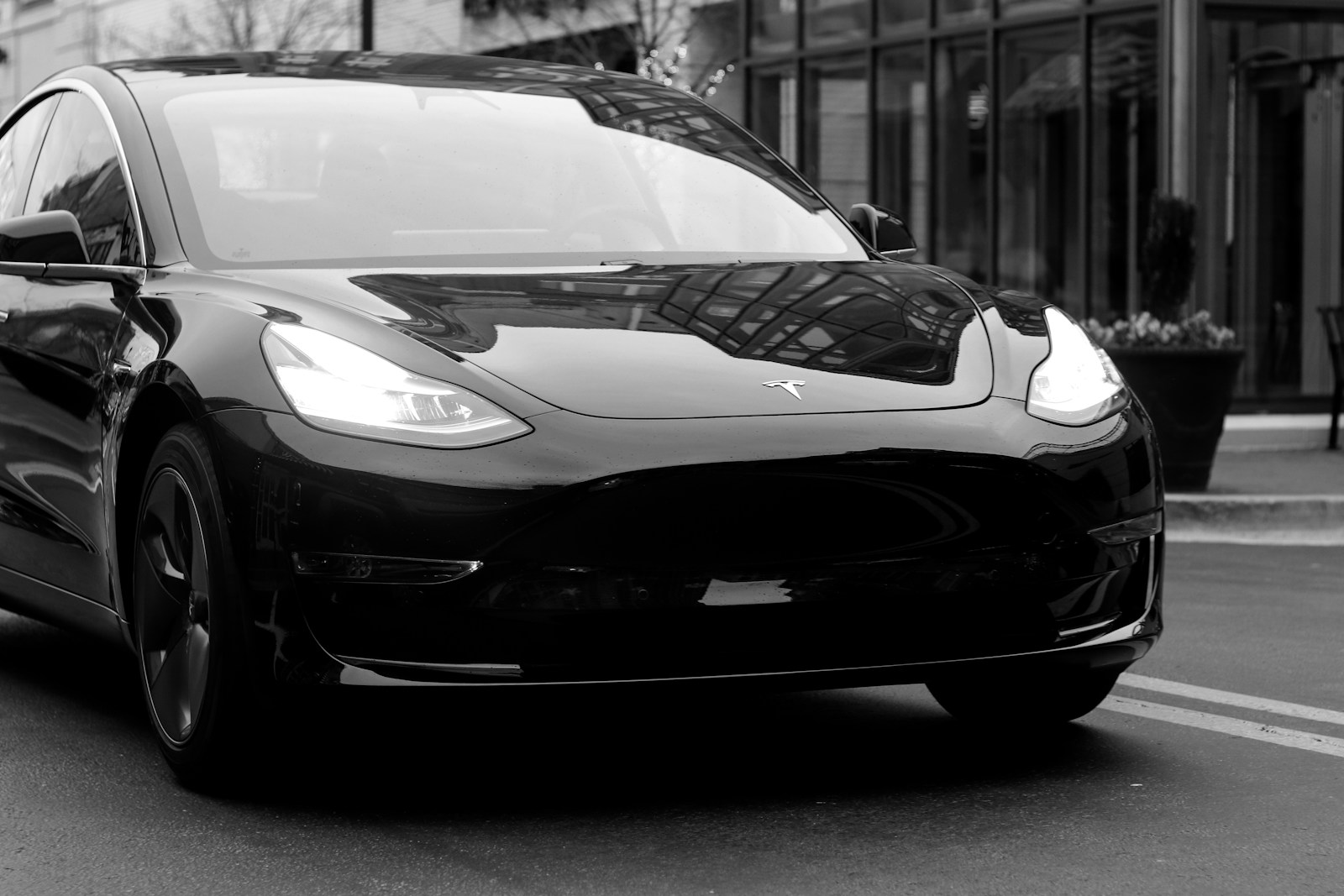
Tesla’s leadership tried to counteract softening demand by introducing lower priced trims of its best selling vehicles, betting that affordability would pull in a new wave of buyers. In the U.S. market, the company rolled out cheaper versions of the Model 3 and Model Y, including a Standard Model 3 that was meant to broaden its appeal. Instead of sparking a surge, U.S. sales plunged to near a three year low, a sign that price alone could not overcome other hesitations.
That pattern repeated in November, when Tesla’s cheaper “Standard” versions were fully in the market but still did not prevent a sharp drop in deliveries. Reporting on Tesla November US sales shows they sank to a nearly four year low even as the company promoted these more affordable trims. The failure of cheaper models to move the needle suggests that many potential customers are now weighing factors like charging access, design freshness, and brand sentiment as heavily as monthly payments.
Discounts that erode margins without fixing the core problem
Price cuts and discounts have long been part of Tesla’s playbook, but the latest round has exposed the limits of that strategy. Analysts note that Tesla profit has tumbled as the cost of cars and parts has stayed stubbornly high, undermining the benefit of record EV sales earlier in the cycle. The EV leader has long teased the idea of making more affordable vehicles, but the combination of rising input costs and aggressive discounting has squeezed margins at the very moment competition is intensifying.
At the same time, rivals are offering compelling alternatives at similar or lower prices, which blunts the impact of Tesla’s markdowns. The EV leader now faces mainstream competitors such as the Hyundai Kona Electric and the Nissan Leaf, with the Nissan Leaf starts at $28,140, eroding Tesla’s once clear value proposition. Discounts that once felt like a bold move to capture share now look more like a defensive tactic that chips away at profitability without resolving deeper concerns about product variety and brand fatigue.
Policy whiplash and the end of easy subsidies
Beyond pricing, Tesla is grappling with a changing policy environment that has removed some of the financial incentives that helped build the EV market. EV sales across the industry have taken a hit since the end of September, when the Trump administration ended the $7,500 federal tax credit for many electric models. That decision removed a powerful incentive for price sensitive buyers, particularly in the mid range segment where Tesla’s Model 3 and Model Y compete.
The impact has been visible in Tesla’s own numbers, with reports that Tesla Sales Plummet to Four year lows even as new cheaper models arrive in showrooms. While the company once benefited from being the default choice for early adopters chasing incentives, it now has to persuade buyers on the strength of its products alone, in a market where many other brands can make similar claims about range, technology, and performance.
Stale lineup and the Cybertruck’s struggle to carry the story
Another structural issue is the age of Tesla’s core lineup. The company has not introduced a completely new mass market vehicle in years, and its most recent high profile launch, the Cybertruck pickup, has struggled to find buyers at the scale once envisioned. Reporting notes that Tesla has not introduced a completely new vehicle since the Cybertruck, and that many consumers and analysts are now calling for new, fresh models rather than incremental tweaks.
This product stagnation matters because rivals are refreshing their lineups on a more traditional automotive cadence, with new crossovers, sedans, and trucks arriving every few years. As Tesla US sales drop to nearly four year lows in November despite the launch of cheaper versions, the lack of a genuinely new mainstream model stands out as a key weakness. The Cybertruck may be a technological showcase, but it has not yet become the volume driver needed to offset slowing demand for the aging Model 3 and Model Y.
U.S. sales slide even as the EV market grows
The depth of Tesla’s current slump is especially striking because it is happening in a market that is still expanding overall. Data on Overall U.S. EV sales show year over year growth of 7.4%, even as Tesla US Sales Plunge To Near three year lows. That divergence suggests that the problem is not a broad collapse in interest in electric vehicles, but rather a shift in which brands are capturing that interest.
November was particularly rough, with Tesla US sales dropping to a nearly four year low despite the launch of cheaper versions that were supposed to stimulate demand. Another report on Tesla describes a rough November for Elon Musk’s company, with U.S. sales sinking even as the Standard trims were marketed heavily. In effect, Tesla is losing share in the very market it once dominated, and discounts have not reversed that trend.
Brand politics and the progressive backlash
On top of product and pricing challenges, Tesla is contending with a more polarized brand image that may be turning off some of its earliest supporters. Reporting has documented how some progressive owners are now selling or avoiding Teslas, citing discomfort with Elon Musk’s increasingly visible role in conservative politics. One account notes that But Musk influence within conservative politics has inspired a growing segment of people to ditch their Tesla, even if they still like the vehicles produced by his company.
This backlash is not yet the primary driver of Tesla’s sales decline, but it adds friction in a segment where word of mouth and social identity are powerful forces. The company once enjoyed near universal admiration among climate conscious buyers, yet now some of those same consumers are actively seeking alternatives. As more EVs from legacy automakers and startups hit the market, it becomes easier for disaffected customers to express their political or cultural preferences by choosing a different badge.
Musk’s self-driving optimism versus a darkening sales outlook
Elon Musk has responded to the sales slowdown by doubling down on a familiar narrative, that Tesla’s future lies in software, autonomy, and robotaxis rather than in traditional car margins. Coverage of the company’s recent year describes a Topsy Turvy period in which Even by the standards of Musk and Tesla, 2025 was tumultuous, with big promises about self driving technology colliding with more sobering sales data. Musk and Tesla continue to promote the idea that full autonomy is close at hand, and that this will unlock new revenue streams that dwarf today’s vehicle profits.
Yet the near term reality is that investors and analysts still judge the company heavily on how many cars it sells and at what margin. As the sales outlook darkens despite Musk’s self driving euphoria, the gap between the visionary story and the current numbers is widening. That tension is amplified by the broader political context, including Musk’s vocal support for US President Donald Trump, which further entwines Tesla’s corporate fortunes with the fortunes of a polarizing political figure.
What Tesla must fix beyond price tags
Tesla’s recent performance makes clear that the company’s challenges are structural, not just cyclical. The combination of falling U.S. volumes, a global decline of 8.6% in vehicle sales, and the failure of cheaper trims to revive demand points to deeper issues with product cadence, competitive positioning, and brand management. Simply cutting prices further would risk compressing margins without guaranteeing that buyers will return in sufficient numbers, especially as rivals improve their own offerings.
To regain momentum, Tesla will likely need to deliver genuinely new models, sharpen its value proposition against competitors like China based BYD, and navigate the political and cultural crosscurrents swirling around Elon Musk. The data on Tesla US Sales Plunge To Near three year lows, the reports of Tesla Sales Plummet to Four year lows amid new cheaper models, and the accounts of progressives turning away from the brand all point in the same direction. The company that once defined the EV boom now has to prove it can adapt to an EV market it no longer fully controls.
More from Wilder Media Group: