
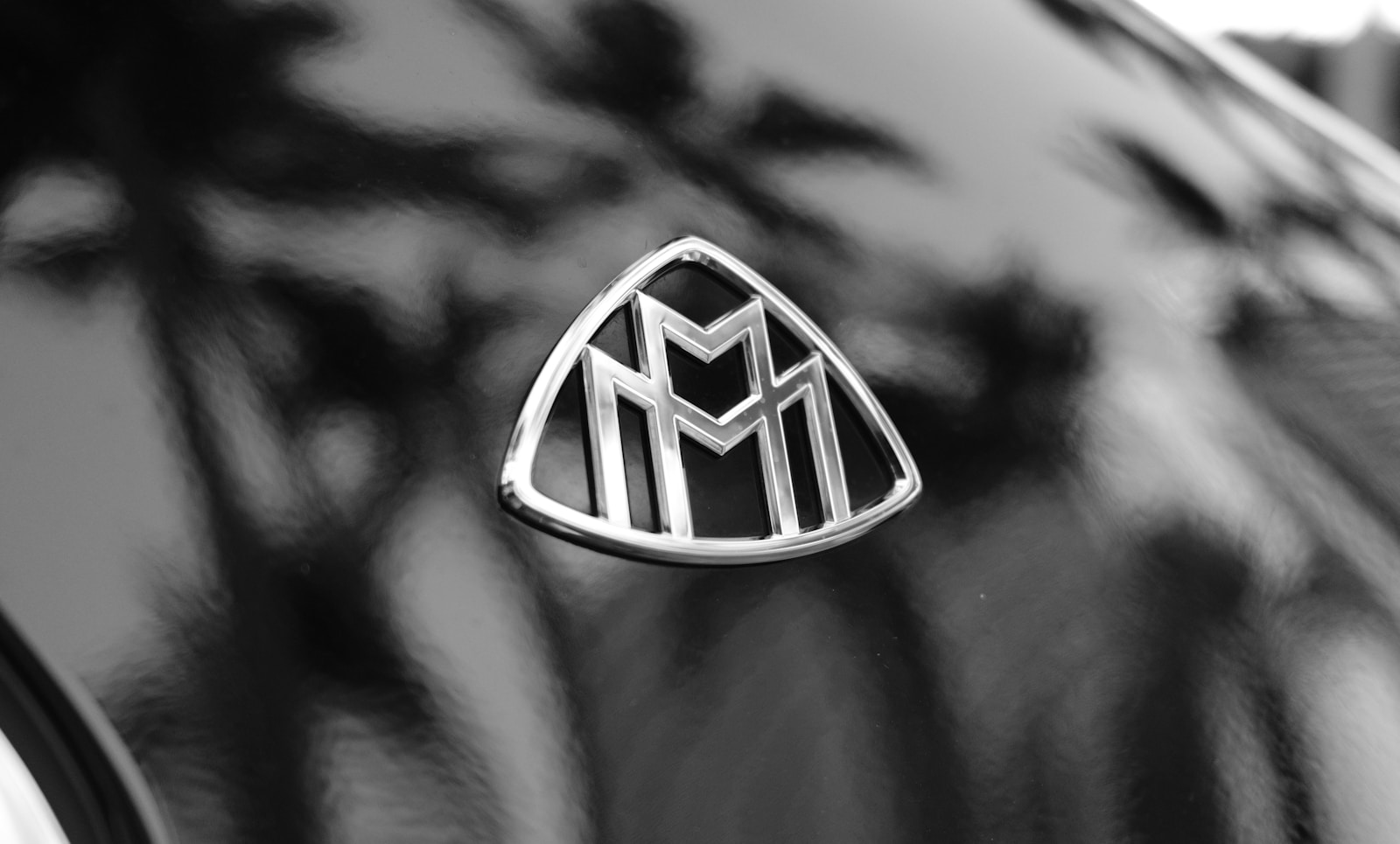

Mercedes-Benz is quietly preparing a new chapter for its most storied powerplant, and the latest V12 patent filings suggest the company is not content to let its flagship engine simply fade into nostalgia. Instead, the documents point to intricate gas-flow tricks and modular hardware that could hide serious performance gains behind a veneer of efficiency and refinement. For a brand that has already promised to keep its twelve‑cylinder alive into the next decade, these moves look less like a farewell tour and more like a technical counterattack.
The stakes are high. As regulators tighten emissions rules and rivals pivot to all‑electric flagships, Mercedes-Benz is trying to prove that a combustion icon can coexist with a rapidly electrifying lineup. The new V12 patents hint at a strategy built on clever airflow management, shared components with straight‑six engines, and a renewed focus on ultra‑luxury models where the emotional pull of a twelve‑cylinder still matters.
Patents That Refuse To Let The V12 Die

The latest filings around a Mercedes-Benz V12 are striking because they arrive at a moment when most automakers are walking away from large combustion engines. Rather than designing a clean-sheet dinosaur, the company appears to be using a common architecture that can support straight‑six, V8, and V12 layouts, then layering advanced gas‑management hardware on top. The technical drawings and descriptions show a focus on how exhaust pulses are routed and combined, which is exactly where engineers can unlock both cleaner emissions and sharper response without changing the basic cylinder count.
One report on the Latest Mercedes, Benz Engine Patent Shows Possibility Of, New, Monster explains that the design is meant to scale across straight‑six, V8, and V12 engines, which keeps development costs in check while still allowing a halo twelve‑cylinder to exist. By treating the V12 as the top tier of a modular family, Mercedes-Benz can justify the investment in complex manifolds and valves that would be hard to defend for a single low‑volume engine. The result is a blueprint for a V12 that is less about brute displacement and more about how intelligently it breathes.
“Like A Megazord In Your Engine”: How The System Works
At the heart of the new patent is an exhaust layout that behaves almost like a mechanical transformer, combining and separating gas streams as conditions change. Instead of each bank of cylinders feeding a fixed set of pipes, the design uses a shared chamber and controllable valves so that multiple cylinders can tap into a common exhaust volume. This allows engineers to tune pressure waves for scavenging at different engine speeds, effectively stacking the benefits of several traditional manifold designs into one adaptable system.
One analysis likens the setup to a powertrain version of a toy robot, describing it as Like, Megazord In Your Engine because the same core hardware can be rearranged to serve an inline‑six or a V12. In practice, that means the V12 can share key components with smaller engines while still gaining unique tuning through its valve strategy. The shared exhaust chamber is not just a packaging trick, it is a way to orchestrate pressure pulses so that the engine can feel muscular at low revs and free‑breathing at the top end without resorting to oversized, inefficient plumbing.
Official Word: V12 Into The 2030s
The patent activity would be easy to dismiss as a theoretical exercise if Mercedes-Benz had not already gone on record about the future of its twelve‑cylinder. At the IAA Mobility show in Munich, the German brand confirmed that its flagship V12 will remain in production into the 2030s, explicitly tying that commitment to the need to meet tougher emissions rules. That public pledge reframes the patents as part of a long‑term survival plan rather than a last‑minute experiment.
Coverage of the announcement notes that At the IAA Mobility, Munich, German executives made it clear that the V12 would be engineered to comply with future regulations rather than grandfathered in. That context makes the new exhaust‑sharing concept look like a key tool for trimming pumping losses and improving aftertreatment performance. Instead of simply detuning the engine or limiting its availability, Mercedes-Benz is investing in hardware that can keep the V12 relevant in markets where emissions and noise standards are tightening year by year.
Where The V12 Lives Today: Mercedes-Maybach S 680 4MATIC
To understand why Mercedes-Benz is fighting so hard for its twelve‑cylinder, it helps to look at where the engine currently resides. The most visible showcase is the Mercedes-Maybach S 680 4MATIC, a limousine that treats the V12 as much as a status symbol as a power source. In this car, the twelve‑cylinder is paired with a handcrafted cabin, extensive rear‑seat luxury features, and a chassis tuned for isolation rather than lap times, underscoring that the V12 has become a marker of ultimate comfort and exclusivity.
The official description of the Mercedes-Maybach S‑Class highlights the S 680 4MATIC® as the pinnacle variant, aimed at buyers who expect a commanding V12 engine and a host of premium amenities. A more detailed breakdown of the 680 model specifies a 6.0L V12 biturbo engine, confirming that Mercedes-Benz still sees a twelve‑cylinder as the natural choice for its most opulent sedan. Any future V12 using the new patent technology is likely to debut in this kind of ultra‑luxury context, where refinement and effortless torque matter as much as raw output.
“Legendary” Status And The Emotional Case For Twelve Cylinders
Beyond the technical details, Mercedes-Benz is leaning heavily into the emotional pull of its largest combustion engine. Company messaging and enthusiast coverage alike describe the V12 as “legendary,” a word that signals how much brand equity is tied up in this configuration. The engine is not just a powertrain option, it is a symbol of a certain kind of motoring that prioritizes smoothness, surplus power, and a sense of occasion every time the starter button is pressed.
One enthusiast‑focused video celebrates that the LEGENDARY Mercedes V12 engine will LIVE ON into the 2030s, Sep, Mercedes, framing the decision as a victory for fans who feared the twelve‑cylinder would disappear entirely. That kind of reaction helps explain why Mercedes-Benz is willing to invest in complex exhaust‑sharing systems and modular engine families. For a subset of buyers, the presence of a V12 is non‑negotiable, and for the brand, keeping those customers engaged can justify significant engineering effort even as the broader lineup shifts toward electrification.
Modular Architecture: “Mercedes Unlocks The Secret”
The new patent does not exist in isolation, it fits into a broader strategy of modular combustion engines that can share technology across multiple cylinder counts. Reports on the company’s powertrain roadmap describe how Mercedes Unlocks The Secret To New Straight, Six, Engines, V8, and V12 units by using common design principles and components. The idea is to treat the inline‑six as a building block, then scale up to a V12 by effectively pairing two six‑cylinder banks while keeping the same fundamental combustion and airflow concepts.
In that context, the V12 becomes the flagship expression of a family rather than an exotic outlier. Coverage of this strategy notes that Mercedes Unlocks The Secret To New Straight, Six, Engines, You by applying the same innovative hardware across the range, which means the cost of developing intricate exhaust valves and shared chambers can be amortized over many more units. For the V12, that modularity is a lifeline, allowing it to inherit advances in combustion efficiency and emissions control that are justified by higher‑volume six‑cylinder models.
Corporate Strategy: Keeping V12 And Launching New V8
The decision to keep the V12 alive is not just a technical curiosity, it is part of a broader product and branding strategy. Mercedes-Benz has signaled that its future lineup will still include high‑end combustion engines alongside electric models, with the V12 reserved for the most exclusive vehicles and a new V8 planned for performance‑oriented cars. This dual approach allows the company to serve traditional luxury buyers while also preparing for markets where internal combustion may be heavily restricted.
One detailed report explains that Mercedes, Benz, Caleb Fong describe the plan as one of the brand’s most ambitious launch programs, pairing the continued sale of V12 engines with the introduction of a new V8. That framing suggests the company sees combustion development not as a reluctant obligation but as a competitive advantage in segments where electric rivals cannot yet match the combination of range, refueling speed, and emotional appeal that a large engine provides.
Hidden Performance: Reducing Pumping Losses And Sharpening Response
The most intriguing aspect of the new V12 patent is how it hides performance gains inside what looks like an emissions‑driven design. By using a shared exhaust gas area and a controllable valve, the engine can reduce pumping losses, which directly improves both efficiency and power. When the valve opens, multiple cylinders can access the same low‑pressure region, helping to pull exhaust out of the combustion chamber more effectively and clearing the way for a fresh air‑fuel charge.
Technical analysis of the filing notes that Mercedes, Benz says opening the valve to let all of the cylinders share that exhaust gas area can reduce pumping losses and smooth the exhaust flow in the ports. In practical terms, that means the engine can feel more responsive at part throttle and deliver stronger acceleration without increasing displacement or boost pressure. The “hidden” nature of the performance comes from the fact that the hardware is justified on efficiency grounds, yet it also gives engineers a new lever to pull when tuning the character of the V12 for different models.
What It Means For Future Mercedes-Maybach And AMG Flagships
Looking ahead, the combination of modular architecture, advanced exhaust management, and a public commitment to keep the V12 into the 2030s points to a clear direction for Mercedes-Benz flagships. Ultra‑luxury sedans and SUVs wearing the Mercedes-Maybach badge are the most obvious candidates to receive the updated twelve‑cylinder, where the focus will be on near‑silent operation, effortless torque, and the cachet of a V12 emblem on the fender. In those vehicles, the new patent’s ability to trim emissions and fuel consumption without sacrificing smoothness will be especially valuable.
Performance‑focused models could also benefit, even if they rely more heavily on V8s or hybridized six‑cylinders. The same exhaust‑sharing concepts and modular components that underpin the V12 can be scaled down, giving AMG engineers more flexibility to balance power, sound, and efficiency. Taken together, the patents and public statements suggest that Mercedes-Benz is not treating its V12 as a museum piece. Instead, it is using hidden performance tech to keep twelve cylinders relevant in a world that increasingly measures engines not just by how fast they are, but by how intelligently they use every gram of fuel and every pulse of exhaust gas.
More from Wilder Media Group: