

Tesla is confronting a reality it has not faced since its early days as a niche automaker: back‑to‑back years of shrinking sales in a market it once dominated. After years of rapid expansion, the company has now logged a second consecutive annual decline in global electric vehicle deliveries, even as overall EV adoption continues to rise.
The reversal has cost Tesla its long‑held status as the world’s largest electric car maker and rattled investors who had grown accustomed to relentless growth. It also raises a sharper question for the broader industry: whether the first wave of EV demand has peaked, or whether Tesla’s stumble reflects company‑specific missteps that rivals are now exploiting.
From Hypergrowth to Consecutive Declines
For most of the past decade, Tesla was synonymous with hypergrowth, scaling production from a few tens of thousands of cars a year to well over a million. That trajectory has now broken, with the company reporting that vehicle sales fell for a second year in a row, a stark contrast to the expectations that it would keep compounding volumes as new factories came online. The latest annual figures confirm that the company is no longer simply growing more slowly, it is shrinking in unit terms despite a larger global footprint and more installed capacity.
Reporting on the company’s latest results notes that Tesla on Friday reported a second straight annual drop in electric vehicle sales, a milestone that would have been hard to imagine during its earlier boom years. That same coverage ties the reversal in part to the phaseout of a federal tax credit worth $7,500 for many buyers, which had previously helped offset the higher upfront cost of battery‑powered models compared with gas‑powered cars. The combination of weaker volumes and fading incentives has forced investors to reassess long‑held assumptions about the company’s growth ceiling.
Q4 2025: A Miss That Set the Tone
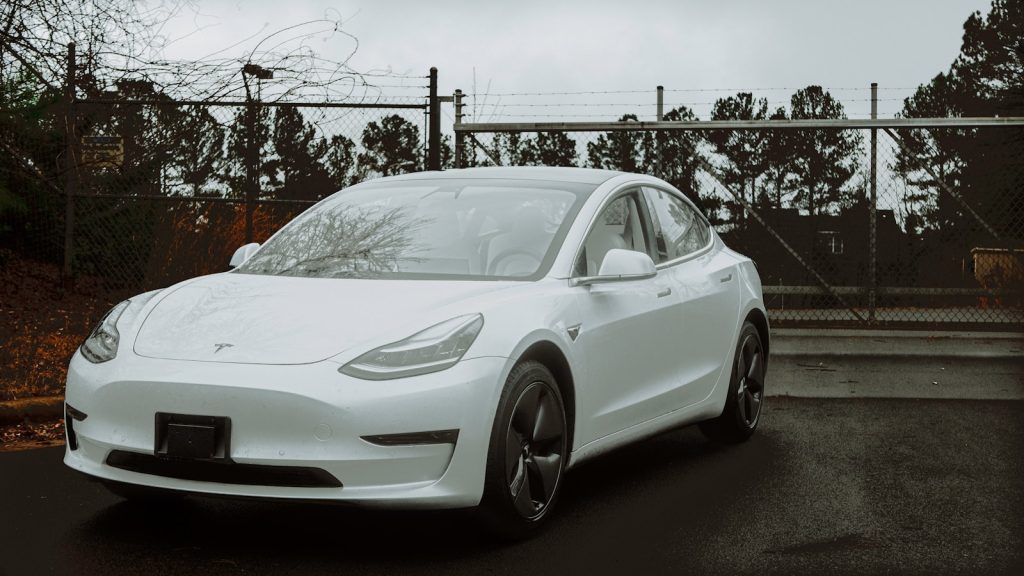
The turning point in sentiment came with Tesla’s final quarter of 2025, when the company’s deliveries fell well short of market expectations. Instead of a year‑end surge that might have salvaged growth, the company disclosed that it had delivered 418,227 vehicles in the quarter, a figure that not only disappointed investors but also underscored how much demand had cooled relative to its expanded production capacity. The shortfall signaled that the company could no longer rely on last‑minute pushes to smooth out weaker quarters.
Analysts highlighted that Tesla’s fourth quarter Misses Big on 418K Deliveries, Down 15.6% compared with the prior year, a drop that would be notable for any automaker, let alone one still priced in markets as a high‑growth technology company. The company itself later confirmed in its official update that Tesla (TSLA) has released its Q4 2025 and full‑year 2025 delivery and production results, and that the numbers were not strong enough to avoid a full‑year decline. For investors on Wall Street who had been betting on a rebound into 2026, the quarter crystallized concerns that the slowdown was structural rather than a temporary blip.
How Much Sales Have Fallen
Behind the headlines about missed expectations is a concrete and uncomfortable number: Tesla’s vehicle sales fell 8.6% over the past year, a sizable contraction for a company that had built its valuation on the promise of relentless expansion. That decline follows an earlier drop, confirming that the company is now in a two‑year stretch of negative volume growth. The erosion has been particularly sharp in the first part of the year, when the company reported double‑digit percentage declines in deliveries compared with the same period a year earlier.
One widely shared breakdown notes that Tesla vehicle sales fell 8.6% last year, and that the company’s deliveries plunged 13% in the first three months, badly missing analyst estimates compiled by Bloomberg. That 46‑second clip of the figures circulating on social media captured how quickly sentiment had shifted, with the company no longer framed as an unstoppable growth engine but as a maturing automaker grappling with the same cyclical and competitive pressures as its peers. The numbers also underscore that the slowdown is not confined to a single region or quarter, but is broad‑based across Tesla’s global operations.
Wall Street’s Shock and Repricing
The sales slump has forced a reckoning among investors who had long treated Tesla as a category apart from traditional carmakers. For years, Wall Street rewarded the company with a valuation that assumed it would dominate the global EV market and expand into adjacent businesses such as energy storage and autonomous driving. The second consecutive annual decline in deliveries has punctured some of that optimism, prompting analysts to revisit their models and question whether the company can sustain the kind of margins and growth rates that once justified its premium.
Coverage of the latest results notes that Tesla released its latest quarterly sales figures and that they were worse than Wall Street expected, marking a second year of declines after years of explosive growth. The disappointment has raised fresh questions about chief executive Elon Musk’s strategy, including his focus on ambitious long‑term projects such as robotaxis at a time when the core car business is under pressure. For investors who had priced in near‑flawless execution, the new reality is a company that must now fight to defend market share while also managing the transition to new technologies and business lines.
Loss of the Global EV Crown to BYD
Perhaps the most symbolic consequence of Tesla’s slowdown is the loss of its status as the world’s largest electric vehicle maker. For years, the company’s dominance in battery‑only cars was central to its brand and to investor narratives that cast it as the clear leader in the transition away from internal combustion engines. That mantle has now passed to China’s BYD, which has leveraged its domestic scale, integrated battery supply chain, and aggressive pricing to overtake its American rival in global EV sales.
One detailed account explains that Tesla Loses EV Crown to BYD After Second Annual Sales Drop, with Tesla Inc reporting a second consecutive annual drop in deliveries while BYD extended its lead. Another report notes that a Gift Article on BYD’s 2025 sales highlighted how the Chinese manufacturer widened its lead over the U.S. rival, underscoring the shift in the industry’s center of gravity toward China. The change is not just about bragging rights, it reflects deeper competitive dynamics in pricing, technology, and government support that now favor Tesla’s challengers.
How Tesla Lost Its Edge
The erosion of Tesla’s lead is not solely a function of external headwinds; it also reflects strategic choices that have left the company more exposed to competition. For years, Tesla relied on a relatively narrow lineup centered on the Model 3 and Model Y, while rivals rolled out a broader range of body styles and price points. At the same time, the company’s decision to prioritize high‑margin variants and premium features left it vulnerable as more cost‑conscious buyers entered the EV market and as subsidies began to wane.
An in‑depth analysis of How Tesla lost its crown as the world’s biggest electric vehicle maker points to the rise of BYD, which combines battery manufacturing, vehicle production, and a strong presence in its home market to undercut Tesla on price while still scaling rapidly. That reporting emphasizes that Tesla has lost its position as the world’s best‑selling electric car company, in part because competitors have matched or exceeded its technology while offering more affordable options. The result is a market where Tesla is no longer the default choice for EV buyers, but one of several strong contenders.
Policy Shifts and the End of Easy Subsidies
Government incentives have been a crucial tailwind for electric vehicle adoption, and Tesla has been one of the biggest beneficiaries. As those subsidies evolve, however, the company is discovering how sensitive demand can be to changes in policy. The phaseout of key tax credits has effectively raised the out‑of‑pocket cost of many Tesla models, especially in the United States, at a time when inflation and higher interest rates are already squeezing household budgets.
Reporting on the company’s latest sales figures notes that the phaseout of a $7,500 federal EV tax credit has made many of its vehicles effectively pricier than comparable gas‑powered cars. That shift has narrowed the economic case for some buyers who were on the fence about switching to an EV, particularly in segments where fuel savings take longer to offset the higher purchase price. Without the cushion of generous subsidies, Tesla must now compete more directly on sticker price, financing terms, and perceived value, areas where rivals with lower cost structures or more flexible pricing strategies may have an advantage.
Regional Pressures and New Markets
The sales decline is not uniform across all regions, but the pattern is clear enough to suggest that Tesla is facing headwinds in both mature and emerging markets. In North America and Europe, the company is contending with a wave of new EV offerings from established automakers, many of which are priced aggressively to gain share. In China, it faces not only BYD but also a host of other domestic manufacturers that are innovating quickly and benefiting from local supply chains and policy support.
At the same time, Tesla is still investing in new geographies, including its Experience and Service Center in Gurugram, India, which signals its ambition to tap into one of the world’s largest emerging car markets. Yet expansion into places like India will take time to translate into meaningful volumes, and the company must navigate local regulations, infrastructure constraints, and price sensitivity. The contrast between its slowing growth in core markets and its still‑nascent presence in new ones underscores the challenge of reigniting global momentum quickly enough to reverse the current sales slide.
What the Second Straight Decline Means for Tesla’s Future
The second consecutive annual drop in sales marks a psychological and strategic inflection point for Tesla. It forces the company to confront questions that many high‑growth firms eventually face: whether to double down on innovation and new products, or to focus on defending margins and optimizing the existing lineup. For Tesla, that debate is unfolding in public markets, where every quarterly delivery figure is scrutinized for signs of either stabilization or further erosion.
One local report captures the broader shift by noting that Tesla lost its crown as the world’s biggest electric vehicle maker as sales fall for second year, a concise summary of both the numbers and their symbolic weight. Another national overview notes that Tesla surrenders the global EV sales crown to China’s BYD after a second straight annual decline, underscoring that the company is now playing catch‑up in a race it once led. Whether Tesla can translate its technological strengths and brand loyalty into a new phase of sustainable growth will determine if this two‑year slump is a temporary setback or the start of a more mature, slower‑growth era.
More from Wilder Media Group: