
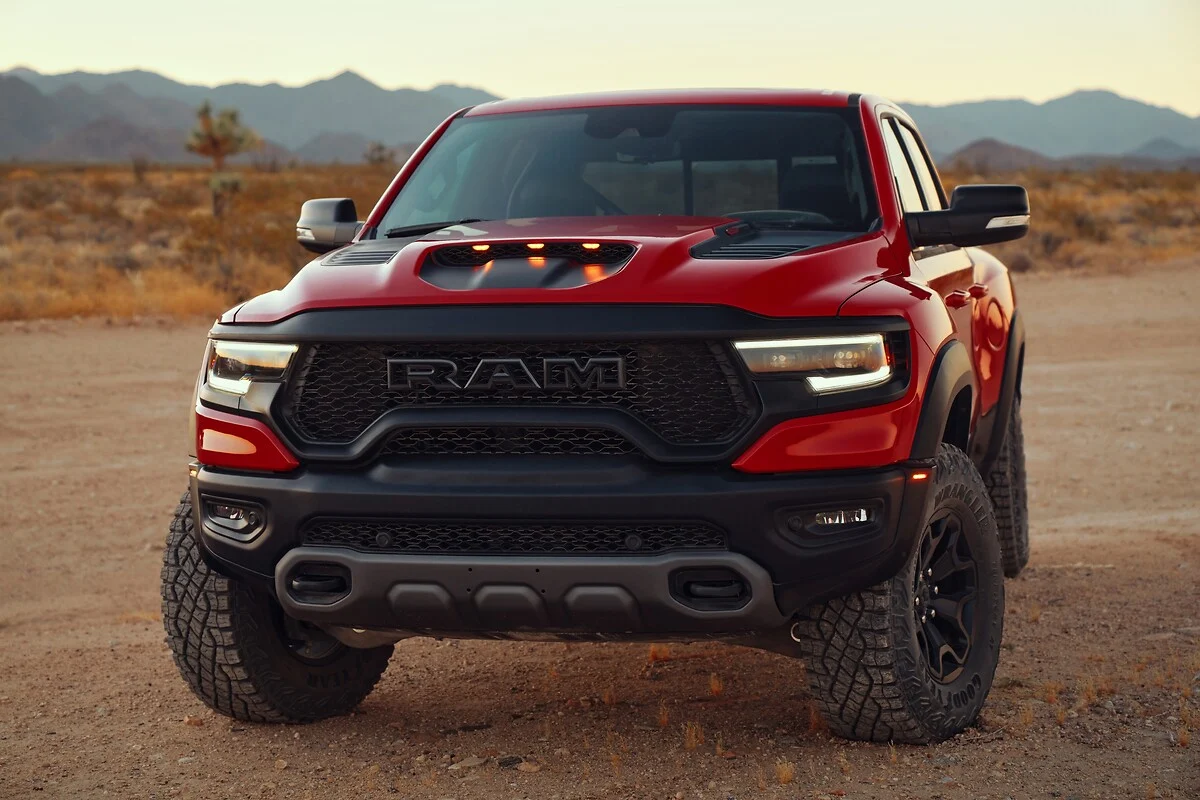

Ram has finally bolted a Cummins diesel into the Power Wagon, answering a request that off-road and towing fans have been making for years. The result is a heavy-duty bruiser with huge torque, serious trail hardware, and a very different mission than the gas version it sits beside in showrooms. That new focus comes with real compromises in ground clearance, articulation, and packaging that buyers will need to weigh carefully.
Instead of simply dropping a diesel into the existing recipe, Ram rebalanced the entire truck around the Cummins engine’s strengths and weaknesses. The new configuration delivers towering pulling power and long-range efficiency, but it also trims back some of the rock-crawling purity that made the gas Power Wagon a cult favorite. The trade is not subtle, and it reshapes what this truck is for.
The long-awaited Cummins HO finally lands in the Power Wagon
For years, the absence of a factory diesel was the Power Wagon’s most glaring omission, especially given Ram’s close association with Cummins in heavy-duty pickups. That gap closes with a version powered by the legendary 6.7-liter Cummins HO turbo diesel inline-six engine, a configuration that has long been the go-to choice for serious towing in the Ram 2500 lineup. Ram positions this as a direct response to customers who wanted the Power Wagon’s off-road hardware without giving up diesel torque and range, effectively expanding the truck into a small portfolio rather than a single, one-size-fits-all build.
Output figures underscore how different this diesel is from the gas truck. The Cummins HO in the Power Wagon produces 430 horsepower and a monstrous 1,075 pounds-feet of torque, which is 646 pounds-feet more than the 6.4-liter gas V-8. That kind of twist is not just a bragging point, it fundamentally changes how the truck behaves when climbing, crawling, or dragging a heavy trailer up a grade, which is exactly what Ram and Cummins Powertrain set out to achieve.
Torque changes everything, from trail manners to towing
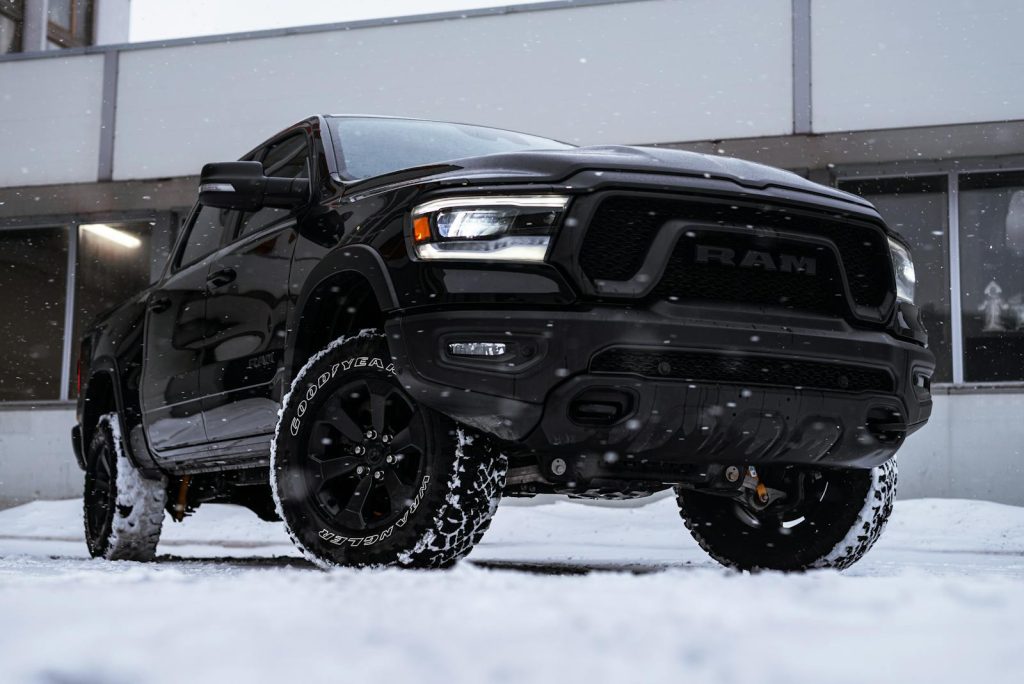
With torque figures that start with a one and four digits, the diesel Power Wagon is built around the idea that, as one internal slogan puts it, Torque Changes Everything. On the trail, that means the truck can idle up obstacles that would have the gas V-8 revving and hunting for traction, using the low-end grunt of the Cummins HO to maintain steady progress. On the highway, it translates into relaxed passing and the ability to hold speed with a heavy trailer in tow without constant downshifts, a key advantage for buyers who split their time between remote campsites and long interstate hauls.
The diesel’s character also reshapes how the Power Wagon fits into Ram’s broader heavy-duty range. In a standard Ram 2500, the gas engine already offers strong capability, with the With the 6.4L HEMI V-8 allowing a Ram 2500 to tow up to 17,750 pounds and carry a max payload of 4,680 pounds. The Cummins diesel in those trucks is already the preferred choice when maximum pulling power matters, and transplanting that philosophy into the Power Wagon shifts the off-road flagship closer to the work-truck end of the spectrum.
Packaging the Cummins forces tough hardware sacrifices
Getting the big inline-six under the Power Wagon’s hood was not as simple as swapping engines on the assembly line. The Cummins is physically longer and heavier than the gas V-8, and that created a packaging crunch in the front of the truck where key off-road hardware normally lives. Engineers had to decide which components were truly essential and which could be relocated or deleted, and according to one detailed breakdown, Of the the major items jockeying for the same real estate, the front sway bar disconnect system was ultimately judged the least critical.
That decision has a direct impact on how the diesel Power Wagon behaves off road. Without the factory electronic disconnect that lets the gas truck dramatically increase suspension articulation at the touch of a button, the Cummins version cannot quite match its sibling’s ability to keep all four tires planted over big rocks and deep ruts. The packaging trade also affects approach and underbody protection, as the larger engine and its cooling hardware crowd the front frame rails, a compromise that becomes more apparent when the truck is pushed into the kind of slow, technical terrain where the original Power Wagon excelled.
Ground clearance and articulation: where the diesel gives up ground
The most visible tradeoff in the diesel Power Wagon is the way it sits relative to the gas model. Reports that compare the two side by side point to less ground clearance, less articulation, and a different stance that reflects the heavier engine and revised suspension tuning. The absence of the front sway bar disconnect compounds that effect, since the truck cannot free up its front axle to the same degree when cresting ledges or dropping into washouts.
Ram’s own positioning acknowledges that the diesel variant is not meant to be a carbon copy of the gas Power Wagon. Instead, The Cummins Power Wagon went a different route. Instead of compromising payload and towing, it chose to make some off-road concessions, particularly in articulation and ground clearance. For buyers who spend more time towing side-by-sides to the trailhead than threading the truck itself through boulder fields, that is a reasonable compromise, but it does mean the diesel is not the automatic choice for the most hardcore trail work.
Weight, payload, and the Reddit reality check
The Cummins engine does not just take up more space, it also adds serious mass over the front axle. One owner discussion captured the scale of that difference bluntly, with a user named Baconshit noting that the diesel engine weighs almost 1k lbs more than the 6.4 gas motor. Hence the payload drop that some shoppers have already flagged as a concern, especially for those who want to carry heavy slide-in campers or fully loaded beds on top of the off-road hardware.
That extra weight also influences how the truck rides and steers. A heavier nose can make a vehicle feel more planted on the highway but less eager to change direction on tight trails, and it increases the demands on the front suspension and tires when the truck is pushed hard off road. Ram counters some of that with revised spring and damper tuning, but the basic physics remain. For buyers cross-shopping the gas and diesel Power Wagons, the choice will come down to whether the benefits of diesel torque and range outweigh the hit in payload and the slightly more ponderous feel that comes with a nearly half-ton of extra iron over the front axle.
Off-road hardware: what stays, what changes, what disappears
Despite the compromises, the diesel Power Wagon still carries a serious set of off-road tools. It retains locking front and rear differentials, a two-speed transfer case, and knobby tires that match the gas truck’s aggressive footprint, details that are highlighted in coverage of The HD off-roader. Just like before, it rolls on knobby rubber and keeps the core four-wheel-drive hardware that defines the Power Wagon nameplate, so the diesel is still far more capable off road than a standard heavy-duty pickup.
Where the hardware story changes is in the details. The deletion of the front sway bar disconnect is the headline loss, but the packaging of the Cummins also affects how skid plates and underbody protection are arranged. One analysis notes that Unfortunately, packaging the Cummins turbo diesel under the hood means it will not be part of the optional equipment package that includes that disconnect, even though the 26 degree departure remains the same. The result is a truck that still has the bones of a serious trail machine but is tuned more toward stability with a load and less toward maximum flex over obstacles.
Towing tech and fifth-wheel capability reshape the mission
Where the diesel Power Wagon clearly pulls ahead of its gas sibling is in towing technology and configuration. For the first time, the truck can be ordered with a dedicated Tow Technology Plus Group, bundling features like a digital rearview mirror and advanced trailer aids. For the first time, the Power Wagon diesel can also be optioned with fifth-wheel and gooseneck prep, complete with integrated bed hardware for effortless trailer hook up. That is a major shift from the gas truck, which has traditionally prioritized off-road purity over heavy towing.
These additions make the diesel Power Wagon a more realistic choice for buyers who want one truck to do everything, from hauling a large camper or equipment trailer to exploring remote fire roads. The combination of Cummins torque, advanced towing electronics, and factory fifth-wheel capability moves the truck closer to the role that a conventional Ram 2500 plays, but with more off-road armor and traction aids. It is a deliberate repositioning that trades some rock-crawling bragging rights for broader real-world utility, especially for owners who regularly tow at or near the upper end of what a three-quarter-ton pickup can handle.
Range, fuel, and the long-haul advantage
Diesel ownership has always been about more than just torque, and the Power Wagon’s new engine delivers on the long-haul promise as well. One analysis pegs the truck’s potential cruising distance at 600 Miles on a tank, framed as “31 Gallons = 600 Miles, Maybe,” which captures both the appeal and the uncertainty of real-world fuel economy in a lifted, knobby-tired heavy-duty truck. Even if that estimate proves optimistic in mixed driving, the diesel’s efficiency advantage over the gas V-8 is likely to be significant on long highway stretches, especially when towing.
That range matters for the kind of remote travel that many Power Wagon buyers have in mind. Fewer fuel stops mean more flexibility when planning routes through areas with limited diesel availability, and more margin when towing into headwinds or climbing long grades. At the same time, the cost and availability of diesel, along with the added complexity of emissions systems, remain part of the ownership equation. For shoppers who primarily use their trucks for short commutes or light weekend duty, the gas Power Wagon may still make more sense, but for those who live on the highway and in the backcountry, the diesel’s long legs are a compelling advantage.
Interior, suspension options, and the evolving Power Wagon identity
Inside, the diesel Power Wagon largely mirrors the gas truck, with a cabin that can be outfitted with premium touches like a 17-speaker Harman Kardon stereo and large infotainment screens. Coverage of the new model notes that the Power Wagon’s interior remains familiar even as the mechanicals change, and that the Cummins-powered version can now be equipped with a self-leveling rear suspension, a feature highlighted in reports on how Just like before, the truck balances ruggedness with comfort. That self-leveling setup is particularly useful when towing or carrying heavy loads, helping maintain a consistent ride height and headlight aim.
All of these changes add up to a Power Wagon that is less of a single, purist off-road icon and more of a family of trucks with distinct personalities. The gas version remains the choice for maximum articulation and trail focus, while the diesel leans into towing, range, and everyday usability without abandoning its off-road roots. For buyers, the key is to be clear about priorities. Those who want the most capable rock crawler in Ram’s lineup will still gravitate to the gas Power Wagon, while those who see the truck as a do-everything adventure and work rig will find the Cummins HO version, with its Ram Power Wagon Diesel Ram identity, a compelling if imperfect answer to years of pent-up demand.
More from Wilder Media Group: