
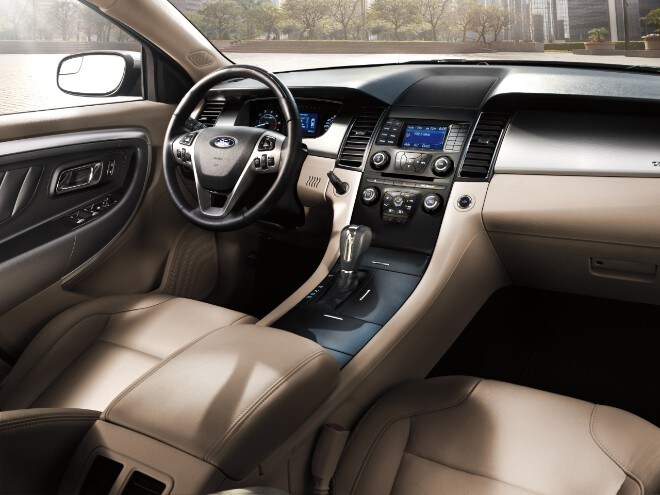

The Ford Taurus SHO’s brief flirtation with a bespoke V8 was one of the strangest powertrain experiments to come out of Detroit in the 1990s, a moment when a sensible family sedan suddenly hid an exotic engine layout under its rounded hood. Instead of chasing muscle car clichés, Ford and its partners tried to engineer a refined, compact eight‑cylinder that could live transversely in a front‑drive chassis and still feel special. The result was brilliant in concept, flawed in execution, and fascinating in hindsight.
That short‑lived 3.4 liter V8 turned the third‑generation Taurus SHO into a rolling engineering thesis on how far a mainstream platform could be pushed before cost, complexity, and market reality snapped everything back to normal. It also marked a turning point for the SHO badge itself, which had started as a purist’s sleeper and ended the decade as a curious, luxurious outlier that previewed later performance sedans more than it followed the template of its own predecessors.
From sleeper sedan to engineering test bed
When the original Taurus SHO arrived, it was built around a high‑revving V6 that treated the family sedan as a stealth performance car rather than a styling statement. The first generation sat on a Ford mid‑size Platform that looked almost anonymous in traffic, which only made its performance more surprising. Under the hood, The Ford Taurus SHO ran a Yamaha‑built 3.0‑liter V6 that was exclusive to the nameplate, a compact, free‑revving unit that set the tone for the car’s identity as a thinking driver’s alternative to European sport sedans.
That early V6, developed with Yamaha, was treated almost like a race engine in a sensible wrapper, and it helped the SHO earn a reputation for punching above its weight. Period tests noted that the car could sprint to 60 in 6.7 seconds, only 0.4 seconds behind an E28 BMW M5, a remarkable comparison for a front‑drive sedan that shared much of its structure with the standard Taurus. Through 1991, SHOs were defined by this balance of understated looks and serious performance, which made Ford’s later decision to reinvent the car around a V8 all the more radical.
Why Ford chased a V8 for the third‑gen Taurus

By the mid‑1990s, Ford was under pressure to keep the Taurus relevant as competitors leaned into more expressive styling and smoother powertrains. For 1996, Ford decided to go in a completely different direction with the Taurus’s design and went all in on roundness, turning the once‑conservative sedan into a bubble‑shaped conversation piece. At the same time, the company wanted the SHO variant to feel like a genuine step up, not just a carryover engine in a new body, which pushed engineers toward a new eight‑cylinder layout that could deliver effortless torque and refinement.
Except, instead of going with a conventional longitudinal layout and rear‑wheel drive, Ford kept the Taurus front‑drive and transverse, which meant any new engine had to fit in the same basic envelope as the V6. The decision to pursue a compact V8 was as much about packaging as prestige, and it led to a collaboration that specified a 235 hp aluminum 3.4 liter V8 with heads from Yamaha and a block from Cosworth for the SHO model. That choice, detailed in the Engine description, shows how far Ford was willing to go to keep its halo sedan technically interesting even as the mainstream Taurus chased mass‑market tastes.
The compact 3.4 liter SHO V8 and its unusual layout
The heart of the experiment was the Ford Super High Output V8, a powerplant designed from the start to live sideways in a front‑drive engine bay. The Ford SHO V8 had a Displacement of 3.4 liters, or 207.0 cubic inches, a relatively small figure for an eight‑cylinder that underscored how tightly packaged it needed to be. According to technical summaries of the Ford SHO unit, the compact dimensions were essential to clear the Taurus subframe and transaxle while still allowing reasonable service access.
To achieve that packaging, engineers chose a 60-degree V8 layout rather than the more traditional 90 degrees, effectively narrowing the engine so it could sit transversely without major structural changes. In a 60-degree V8, the pistons and counterweights are no longer in sync, and you cannot get even firing without adjustments, which meant the SHO engine needed additional balancing measures to run smoothly. The 3.4 liter SHO V8 used a counter‑rotating balance shaft to tame those inherent vibrations, a solution described in detail in the Output and design notes that highlight just how unconventional this compact eight‑cylinder really was.
Power figures, transmission choice, and performance
On paper, the SHO V8’s numbers were competitive for a mid‑size sedan of its era, even if they did not rewrite any records. The engine was rated at 235 hp, or 175 kW, and paired with 230 lb⋅ft of torque, equivalent to 312 N⋅m, figures that placed it squarely in the middle of the 1990s performance sedan pack. A specification list for the Taurus range notes that the 3.4 liter SHO V8, with its 235 hp and 175 k output and 230 lb⋅ft (312 N⋅m) of torque, was mated exclusively to a 4‑speed AX4N automatic, a combination that defined how the car felt on the road. Those details are laid out in the SHO model breakdown, which captures the drivetrain in a few precise lines.
Real‑world performance reflected that balance of modest displacement and solid torque. Contemporary testing of the third‑generation Taurus’s 3.4 liter V8 found that it could send the SHO to 60 in 6.7 seconds, a figure that kept it within 0.4 seconds of the earlier BMW M5 benchmark despite the move to an automatic transmission and a heavier, more feature‑laden body. That acceleration data, highlighted in a retrospective on the third‑gen Taurus, shows that the V8 SHO was still quick enough to embarrass plenty of contemporary V8 muscle cars, even if it no longer felt like the raw, high‑revving sleeper that defined the first generation.
Yamaha, Cosworth, and the global supply chain behind the V8
Behind the badge, the SHO V8 was a genuinely international project that pulled in expertise from multiple specialist firms. The engine’s aluminum block was produced using a patented process associated with Cosworth, while the cylinder heads came from Yamaha and were tuned for both efficiency and high‑rpm breathing. A detailed engine overview notes that a 235 hp (175 kW) aluminum 3.4 liter V8 with heads from Yamaha and block from Cosworth was specified for the SHO model, a combination that gave the sedan a pedigree more often associated with exotic sports cars than with a mass‑market Ford. That collaboration is spelled out in the Yamaha and Cosworth sourcing notes.
Production logistics added another layer of complexity. The SHO V8 engine began production by Ford in Windsor, Ontario, using a patented Cosworth process for the block, then the completed units were shipped to Atlanta, Georgia, for installation into the SHO. That path from Windsor, Ontario, to Atlanta is documented in an auction listing that traces how The SHO engines moved through the supply chain, underscoring how unusual it was for a family sedan’s powerplant to involve such a specialized and geographically spread‑out build process. The description of that journey appears in the Ford auction notes, which read almost like a condensed industrial case study.
How the V8 SHO drove compared with the earlier V6 cars
On the road, the V8 SHO felt very different from the earlier V6‑powered cars that enthusiasts still revere. The original 3.0‑liter V6 was described as a V6 That Thought It Was a Race Engine, with a willingness to rev and a character that encouraged drivers to work the manual gearbox. A retrospective on the 1990 Ford Taurus SHO points out that the real hero of that car was its powerplant, a 3.0‑liter unit that made the sedan feel like a track refugee hiding in plain sight. That characterization appears in a feature on the Ford Taurus SHO, which emphasizes how much of the car’s identity was wrapped up in that high‑strung six.
By contrast, the V8 SHO traded some of that rawness for smooth, low‑end torque and a more relaxed driving experience, especially with the mandatory automatic transmission. A video review of the 1992‑1995 Taurus SHO calls that generation the pinnacle of 1990s performance for the badge, then notes that with this 3.4 liter V8, the following Taurus generation was the only one to offer an 8‑cylinder engine and that, although this was a Ford product, it felt quite different from the earlier cars. That perspective is captured in a detailed Taurus review, which frames the V8 SHO as more of a grand tourer in sedan form than a pure sport sedan, even if its acceleration figures remained impressive.
Packaging compromises and the limits of a 60‑degree V8
The decision to use a 60-degree V8 solved one problem and created several new ones. Narrowing the vee angle allowed the engine to fit transversely in the Taurus engine bay without extensive structural changes, which kept costs and development time in check. However, in a 60-degree V8, the pistons and counterweights are no longer in sync, and you cannot get even firing without adjustment, so engineers had to add a counter‑rotating balance shaft and other measures to smooth out the power delivery. That trade‑off is explained in a technical discussion of the 60-degree layout, which makes clear that the SHO V8 was fighting basic geometry from the start.
Those compromises also affected how the car was perceived in the broader market. A list of unusual front‑wheel‑drive V8 cars notes that the Ford Taurus SHO, particularly the 1996‑1999 models, were among the most peculiar examples, not only because of the oval‑heavy styling but also because they packed 235 hp into a layout more commonly associated with economy sedans. The commentary points out that, besides the oval‑all‑things styling, the SHO still packed 235 hp, which made it quick but also highlighted how much engineering effort had gone into a car that looked, to many buyers, like any other Taurus. That assessment appears in a ranking of oddball V8 front‑drivers that singles out the Ford Taurus SHO as a case study in packaging overkill.
Styling, market reception, and why the V8 SHO struggled
Even the most sophisticated engine cannot overcome a polarizing design, and the third‑generation Taurus styling made the SHO a harder sell to traditional performance buyers. For 1996, Ford went all in on roundness, giving the Taurus a series of ovals in its grille, windows, and interior that signaled a break from the conservative shapes of the past. A retrospective on that redesign notes that Ford decided to go in a completely different direction with the Taurus’s design and that the result divided opinion, especially among enthusiasts who had loved the earlier, more understated SHOs. That context is laid out in a feature on how Ford reshaped the Taurus, which helps explain why the V8 SHO never quite found its audience.
At the same time, the move to an automatic‑only transmission and a more luxurious interior repositioned the SHO away from its original enthusiast base. Buyers who wanted a manual, high‑revving sedan looked elsewhere, while those who appreciated the V8’s smoothness often did not care about the SHO badge or its engineering backstory. A note in the Ford SHO V8 engine history mentions that the Ford SHO V8 program ran from its introduction in the spring of 1996 until the third‑generation Taurus SHO ended, a relatively short production window that reflects how quickly the market moved on. That timeline is summarized in the Please section of the engine’s history, which hints at how the car’s niche appeal limited its long‑term viability.
The SHO V8’s legacy and why it still fascinates enthusiasts
Today, the V8 Taurus SHO occupies a strange but compelling corner of automotive history, admired as much for its ambition as for its actual performance. Enthusiasts look back on it as a rare example of a mainstream automaker commissioning a bespoke, small‑displacement V8 for a single front‑drive sedan, then accepting the cost and complexity that came with that choice. A detailed overview of the Ford SHO V8 engine notes that the Ford Super High Output program was tightly linked to the third‑generation Taurus SHO and ended when that model did, which means the 3.4 liter V8 never had a second life in trucks or other cars. That specificity is captured in the Ford SHO engine history, reinforcing how unusual it was for such an engine to exist at all.
The car’s reputation has also been reshaped by hindsight and by the way later front‑drive performance sedans have evolved. A modern analysis of the Taurus SHO story argues that the third‑gen car’s 3.4 liter V8 was brilliant and completely out of step with the market, a powerplant that made sense on a whiteboard but struggled in showrooms. That same piece notes that the third‑gen Taurus’s 3.4 liter V8 was enough to send the SHO to 60 in 6.7 seconds, only 0.4 seconds behind the E28 BMW M5, yet the car never shook off its image as an oddball. That judgment appears in a reflective feature on the Dec era SHO, and it captures why the V8 experiment still fascinates: it was a brilliant idea, executed with real engineering daring, that arrived just slightly out of phase with what buyers actually wanted.
More from Wilder Media Group: