

Electric vehicle owners have been taught to fear the “full” button, warned that topping up to 100% will quietly eat away at their battery. Yet for a growing number of Ford and Tesla drivers, that old rule of thumb is not just outdated, it is directly at odds with what their cars actually need. The catch is chemistry: some modern packs are built to thrive on regular full charges, and the data now shows that using the whole gauge can be the healthiest choice.
The shift is most visible in models using Lithium Iron Phosphate cells, where both automakers and independent experts now say that charging to 100% is not abuse, it is maintenance. Understanding why that is true, and when it is not, is quickly becoming one of the most important pieces of EV literacy for anyone trying to protect a five‑figure battery pack.
Why “never charge to 100%” is no longer a universal rule
For years, EV advice has been dominated by nickel‑based chemistries, where keeping the battery between roughly 20 and 80% was the gold standard for longevity. Those packs are sensitive to high states of charge, so drivers were told to avoid 100% except before a road trip and to rely on charge limits in the app to stay in the safe zone. That guidance still applies to many vehicles, but it does not reflect how Lithium Iron Phosphate behaves, and treating every pack as if it were the same can leave range and accuracy on the table.
What has changed is that Ford and Tesla now sell high‑volume models with LFP cells that are engineered to sit at full charge without the same stress. Their own documentation and owner communities describe how these batteries can be charged to 100% daily, with the software calibrated around that expectation rather than treating it as an edge case. The result is a split landscape where some EVs still benefit from an 80 or 90% ceiling, while others are explicitly designed to live at the top of the gauge.
The chemistry shift: why LFP likes a full charge
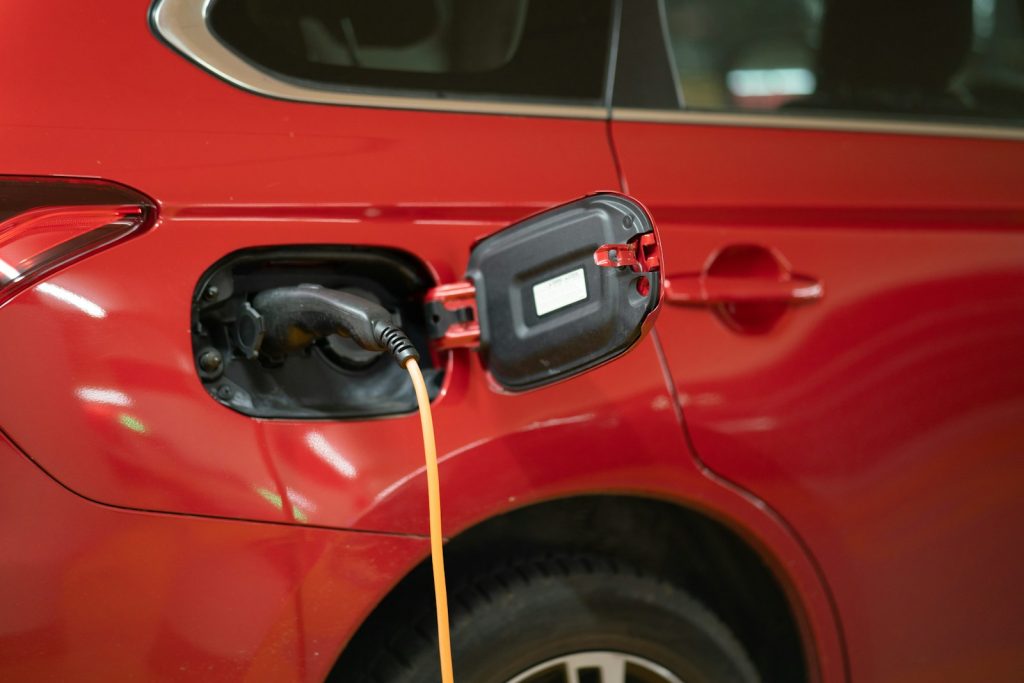
The key to this new charging logic is the underlying material. Lithium Iron Phosphate, often shortened to LFP, trades some energy density for a flatter voltage curve, greater thermal stability, and a wider comfort zone at high state of charge. That means an LFP Battery can spend more time near the top of the pack without the accelerated wear that plagues many nickel cobalt manganese designs. In practice, this chemistry is less prone to rapid degradation when parked full and is more tolerant of frequent top‑ups.
Battery specialists describe how One of the main differences with LFP is its need for regular full charges, something that would be discouraged on other chemistries, because the pack’s management system relies on those sessions to keep its estimate of remaining energy aligned with reality. Guidance on LFP best practices notes that these cells are happiest when cycled broadly, not kept in a narrow mid‑range band, which is why automakers are comfortable telling owners to use the entire capacity instead of babying the top end.
Ford’s explicit 100% recommendation for LFP packs
Ford has moved from vague suggestions to very clear Charging Recommendations for its LFP‑equipped models. In official guidance, the company tells owners of vehicles with Lithium Iron Phosphate packs to Set the maximum charge level to 100% and to Charge to 100% at least periodically so the system can correctly track state of charge and distance to empty. That language is a sharp departure from the cautious tone that surrounds many nickel‑based packs and signals that the hardware and software were designed around full charges as a normal operating mode.
The same support material walks drivers through how to identify whether their Mustang Mach‑E or F‑150 Lightning uses this chemistry, since only certain Standard Range configurations rely on LFP. Ford’s instructions to Set the charge level differently for these packs underline that the 100% target is not a generic EV rule, it is chemistry specific, and owners who ignore it risk inaccurate range estimates and underused capacity rather than extra protection.
How Tesla frames 100% for its LFP models
Tesla has taken a similar path, but with its own twist. The company’s guidance distinguishes between its traditional nickel chemistries and newer LFP packs, telling most owners to use a daily limit around 80 or 90% while encouraging those with LFP to charge to 100% as part of normal use. The official site for Tesla vehicles emphasizes that drivers should follow the in‑car charging screen, which labels the “Daily” and “Trip” zones differently depending on whether the car is equipped with LFP or another chemistry.
Independent coverage of Tesla’s approach notes that the company gives Two Key Reasons for this split: LFP’s tolerance for high state of charge and the need to keep the battery management system calibrated. Analysis of why Tesla tells LFP drivers to reach 100% points to the importance of regular full charges for ensuring more precise range estimates and for avoiding a situation where the gauge drifts away from the pack’s true capacity. That logic is laid out in detail in guidance on why Tesla LFP owners are steered to 100%, which contrasts the advice with the more conservative limits suggested for other chemistries.
Owners, forums, and the “how often is too often” debate
Even with clear manufacturer guidance, many drivers remain wary of the 100% mark, and owner forums have become a running debate over how literally to follow the new rules. In discussions among Model 3 drivers, one recurring question is How often is too often to top up an LFP pack, especially for a 2022 M3 RWD that spends most of its time on short commutes. Some owners describe plugging in At the end of every day and waking up to a full battery, while others still cap their charge at 80% out of habit, even when the manual suggests otherwise.
Threads that reference the Model 3 Owner’s Manual and shared experiments from @AAKEE show how community members are trying to optimize further, balancing convenience, perceived longevity, and the automaker’s own advice. A detailed exchange on how often to charge an LFP RWD highlights that many still import rules from older chemistries, even as experienced owners and the manual itself reiterate that daily 100% charging is acceptable, and in some cases preferred, for these specific packs.
Expert best practices: full charges as a maintenance tool
Battery specialists who focus on LFP are increasingly blunt that regular full charges are not a guilty pleasure but a maintenance task. Guidance framed as Optimal Charging Strategies for LFP Batteries explains that these packs benefit from a pattern that includes frequent 100% sessions, combined with moderate charging speeds and avoidance of extreme temperatures. The Tesla LFP Battery Charging Recomme materials describe how a middle ground between constant fast charging and chronic undercharging can deliver the Best of both worlds, pairing convenience with long service life.
That perspective is echoed in broader EV advice that notes how Some owners and forums suggest that every once in a while, you should charge the battery to 100% to help the car’s tracking systems stay accurate. Articles on how often to reach 100% stress that this occasional calibration charge is useful even for non‑LFP packs, though it should not replace the general practice of staying below the top of the gauge on nickel chemistries. For LFP, by contrast, that calibration step is built into the normal daily routine rather than treated as an exception.
Real‑world evidence: degradation data from Ford’s lineup
Beyond theory, early degradation data is starting to validate the idea that properly managed full charges do not doom a battery. A survey of the 10 EVs with the least battery degradation after 3 Years lists a Second Place entry with 99.9% Range After 3 Years for the 2025 Ford F‑150 Lightning Pro and the 2026 Ford F‑150 Lightning STX, both from Ford’s electric truck family. While not every Lightning uses LFP, the figures suggest that the company’s charging guidance, including its more relaxed stance on higher states of charge, has not translated into rapid capacity loss.
The same analysis notes that these trucks, built on the F‑150 platform, have held their usable range remarkably well despite their size and the heavy use patterns that work vehicles often see. The 150 badge has long been associated with durability in Ford’s lineup, and early EV data indicates that, when owners follow the recommended charging patterns, the electric versions can maintain that reputation. The strong showing in battery degradation rankings gives weight to the argument that chemistry‑aware charging advice, including regular full charges for the right packs, can coexist with long‑term health.
Mustang Mach‑E and the confusion around mixed chemistries
Nowhere is the messaging challenge clearer than in the Mustang Mach‑E, where different trims use different chemistries. Owners of Standard Range versions, which use LFP in newer model years, are told that their Mustang Mach batteries can be charged to 100% at least periodically, while Extended Range variants with nickel chemistries are still advised to live mostly between 15% and 80%. A popular thread on how far to charge a Mach‑E captures the resulting confusion, as drivers compare screenshots and try to decode which rule applies to their specific car.
Ford’s own documentation tries to cut through that by telling owners to Confirming Your Battery Type Standard Range by checking the label and to Locate the Vehicle Identification Number, or VIN, on the driver‑side door or dashboard to match their configuration. The same guidance explains that Extended‑range vehicles have an NCM battery, which should still be treated with the more conservative 15 to 80% window for daily use. The detailed instructions on confirming battery type by VIN underline that the right charging strategy depends not just on the badge on the tailgate but on the chemistry under the floor.
Media, experts, and the evolving consensus on 100%
Coverage of this shift has tried to bridge the gap between old rules and new chemistries. One detailed explainer framed around What Should drivers Know About Charging an LFP pack notes that, Generally, most EVs should be charged to 80% or 90% regularly, but that LFP is the exception where 100% is not only allowed but recommended. The same analysis stresses that owners should still avoid leaving any pack at high state of charge in extreme heat, yet it is clear that the blanket fear of 100% no longer fits every model on the road.
Reporters who track Tesla closely have echoed that nuance. A Senior Reporter at Torque News, writing in Oct, described how Chemistry is the Key to Longevity and argued that LFP Batteries in newer Model Y and Model 3 variants can be charged to 100% as part of a weekly calibration day without the downsides that would worry owners of older chemistries. That piece on charging a Tesla Model Y to 100% captures the emerging consensus: the right answer to whether full charges are safe now starts with a different question, namely what chemistry is in the pack.
Practical rules of thumb for Ford and Tesla drivers
For owners trying to turn all of this into simple habits, the most practical step is to identify the battery chemistry and then set the car’s charge limit accordingly. Tesla drivers can rely on the in‑car labels and supporting material that describe Optimal Charging Strategies for LFP Batteries, using the Daily slider up to 100% when the car confirms it has an LFP pack, and sticking closer to 80 or 90% on nickel chemistries. Detailed guidance on Tesla LFP Battery Charging Recomme also encourages drivers to avoid frequent high‑power fast charging when it is not needed, since chemistry tolerance does not make a pack immune to heat and stress.
Ford owners, especially those in Mustang Mach‑E and F‑150 Lightning models, should use the VIN lookup and support pages to confirm whether they have LFP or NCM, then follow the split guidance that tells LFP drivers to Charge to 100% at least periodically and NCM drivers to keep daily use between 15 and 80%. Broader explainers on why these Ford Mustang Mach‑E and Tesla batteries should be charged to 100% note that the goal is not to encourage wasteful charging, but to align driver behavior with what the hardware was built to handle. A detailed breakdown of why some packs belong at 100% and a companion explanation of why Tesla’s LFP guidance offers peace of mind both point to the same bottom line: for the right Ford and Tesla batteries, using the full gauge is not a mistake, it is following instructions.
More from Wilder Media Group: