

Electric cars stopped being a novelty in Europe in 2025 and became part of the everyday traffic mix, from dense city centers to long motorway corridors. The question for 2026 is not whether the boom happened, but whether the policy, profit and consumer foundations are strong enough to keep it going as subsidies fade and competition intensifies.
The coming year will test how resilient this new electric normal really is, as automakers confront tougher emissions rules, slower overall car demand and a more demanding mass‑market buyer who expects lower prices and better charging without compromise.
From niche to mainstream: how 2025 changed Europe’s roads
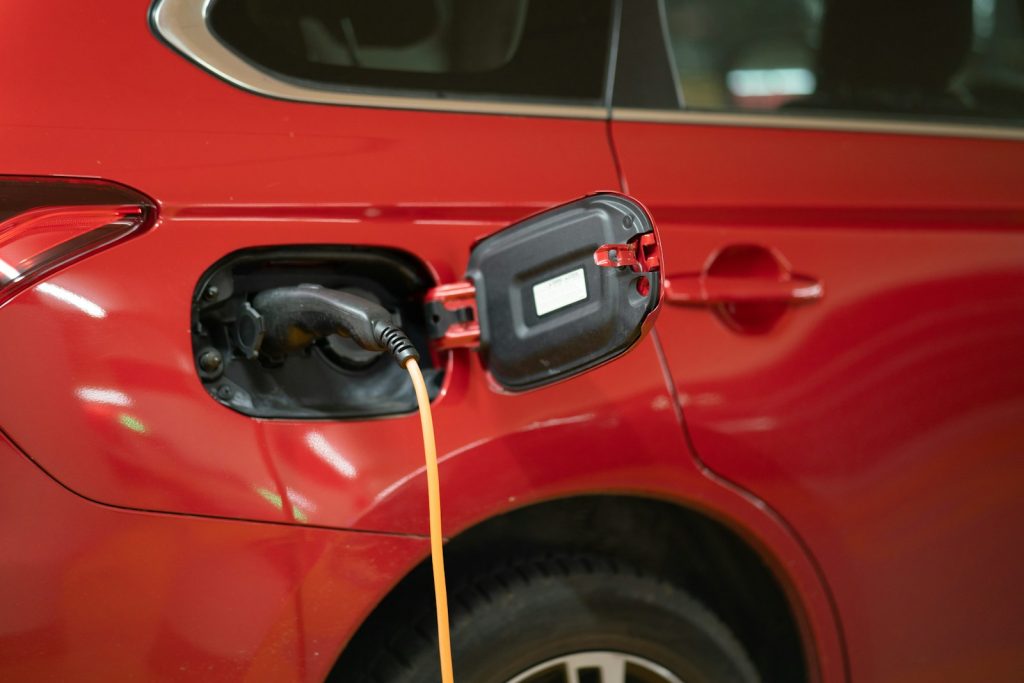
By late 2025, the European continent was visibly crowded with battery‑electric and plug‑in hybrids, a shift that made it easier than ever to own and charge an EV in daily life. Motorway service areas that once offered a single slow charger now host banks of high‑power units, with one analysis of public infrastructure pointing to an average power of 45.34 kW across fast‑charging sites, a sign that the hardware has caught up with early adopters’ expectations and helped underpin Europe’s EV boom. That physical visibility matters, because it reassures hesitant buyers that they are not betting on a fringe technology and that long‑distance travel is now routine rather than experimental.
At the same time, the broader car market in Europe has been reshaped by this surge, with New passenger vehicle registrations increasingly skewed toward electrified drivetrains. Detailed Car Sales and Market Analysis for Oct 2025 show how EVs have moved from compliance sideshow to central pillar of manufacturers’ volume strategies, even as overall demand still reflects cyclical pressures and lingering inflation. The net effect is that 2025 marked a structural break: electric models are no longer bolted onto a combustion‑first market, they are increasingly the products that define it.
Policy pressure: carbon rules as both engine and brake
Regulation has been the single biggest driver of this shift, and it will remain the main stress test in 2026. The European Union’s CO₂ framework for cars and vans ratchets down fleet emissions, and with stricter targets in force, a manufacturer’s limit is calculated as the average of its annual targets, weighted by registrations, over the period to 2029, which pushes companies to accelerate zero‑emission sales in the course of 2025 and beyond rather than back‑loading compliance. The official guidance makes clear that, Similarly to earlier phases, there is little room for creative accounting, which is why automakers have leaned so heavily on EU car and van rules to justify their EV push to investors.
Yet the same regulatory machine can also slow the party. A detailed EV progress report notes that, Sep 2025, However, with the EU’s delay of the 2025 target, carmakers took their foot off the gas, leading to a shortfall of 2 million electric cars compared with what would have been needed to stay on a smooth trajectory to 2030, a warning that inconsistent timelines can sap momentum and confuse planning. That EV progress report underscores a paradox: the rules are tough enough to force change, but political hesitation around interim milestones can still create air pockets in demand that 2026 will have to absorb.
Sales recovery and the carbon‑mandate debate
After a wobble in 2024, EV registrations across Europe began to recover through 2025, helped by clearer carbon rules and a backlog of delayed purchases. Analysts tracking the rebound argue that Europe’s EV sales are recovering in part because the carbon mandate finally gave fleet managers and households a firmer sense of direction, reducing the risk that a last‑minute policy reversal would strand their investment. That dynamic is central to the debate captured in assessments of how Europe’s EV sales are recovering, which credit the mandate with stabilizing expectations even as subsidies are trimmed.
However, the same regulatory tightening is now colliding with new emissions rules that could blunt growth in 2026. A separate assessment warns that Sep, New EU Emission Rules May Impact EV Market Growth, projecting that EU carmakers will sell about 2 million fewer electric vehicles than they otherwise might have because of the way the updated testing and compliance regime interacts with product planning and pricing. That forecast, set out in an analysis of how New EU Emission Rules May Impact EV Market Growth, suggests that the very tools designed to clean up road transport could temporarily slow the pace of electrification if they are not aligned with industrial realities.
Winners, laggards and the geography of the boom
The EV surge has not been evenly distributed across Europe, and 2026 will test whether lagging markets can catch up without the lavish incentives that powered early leaders. Norway remains the most striking example of what a full‑throttle policy mix can achieve: EVs: Norway new car sales hit 96% electric in 2025 as Tesla dominated the rankings, a level that would have been unthinkable a decade ago. Local industry voices credit the final sprint towards the end of the year to a looming VAT change, arguing that the VAT shift was pivotal to the country’s transition and showing how tax design can pull forward demand, as detailed in coverage of Norway’s 96% electric share.
Within the European Union, the picture is more fragmented, with some countries racing ahead while others remain stuck in single‑digit market shares. New battery‑electric car registrations in the EU jumped by 25.7% in October compared to the same period a year earlier, But even with that surge, one major market still saw EVs account for only 6.4% of its overall market, highlighting how far there is to go outside the most advanced pockets. That contrast is laid out in a breakdown of which EU country is buying the most EVs, and it sets up a key 2026 storyline: whether infrastructure, pricing and local policy can close the gap between leaders and laggards before the next round of CO₂ cuts bites.
Model mix: best‑sellers, SUVs and the budget squeeze
Under the surface of headline sales, the composition of Europe’s EV fleet is shifting in ways that will shape profitability and charging demand in 2026. A detailed mid‑year snapshot showed that a familiar model still headed Europe’s electric vehicle market after the first six months of 2025, But the report also highlighted how battery‑electric and plug‑in hybrid volumes are fragmenting across more nameplates, with a total of 240,379 all‑electric units spread across the BEV and PHEV markets respectively. That dispersion, captured in an overview of Europe’s best‑selling EVs, means no single brand can dictate pricing, which is good for consumers but tough for margins.
At the same time, the SUV habit has followed drivers into the electric age, raising questions about efficiency and resource use. Analysts of the Europe & CIS SUV segment argue that Sustainability and Policy Alignment As European countries tighten emission targets under the Green Deal and Fit for 55 package, manufacturers are under pressure to reconcile consumer appetite for larger vehicles with the need to cut fleet emissions and stay competitive in an increasingly green‑conscious market. That tension is spelled out in a forward‑looking assessment of the Europe & CIS SUV market, and it will loom large in 2026 product planning as brands juggle aerodynamics, battery size and sticker prices.
Profit pain behind the volume growth
For all the excitement about rising EV registrations, the financial picture for European Automakers is far more sobering heading into 2026. A major credit assessment titled European Automakers’ 2026 Profits Stagnant Despite Growing Sales concludes that, despite higher unit volumes, earnings are being squeezed by heavy investment in electrification, discounting to move metal and the cost of complying with ever tighter CO₂ rules. The report, issued from London, warns that competition from lower‑cost rivals will Intensify, leaving many incumbents with flat or even declining margins even as they tout record EV deliveries, a dynamic that is central to Fitch Ratings’ outlook.
That squeeze is particularly acute in the mass‑market segments that will determine whether electrification truly goes mainstream. A widely discussed analysis of Europe’s EV boom notes that Dec, The European market is now crowded with affordable Chinese‑built models, and its budget brand Dea is preparing its own version on the same platform aiming to push entry prices even lower, a sign that price wars are only just beginning. The same commentary, captured in a video on Europe’s EV boom and the 2026 battle, argues that 2026 will be the year when profitability, not just compliance, becomes the key metric by which investors judge automakers’ electric strategies.
Macro headwinds: slower car markets and cautious consumers
Even if EVs keep gaining share, they will have to do so in a softer overall car market. A broad industry outlook for 2026 notes in its Forecast Highlights that New Vehicle Sales: Our new vehicle SAAR estimate of 15.8 m is down 2.4% from the prior year, reflecting higher interest rates, economic uncertainty and the fading of pent‑up demand from the pandemic era. Those Forecast Highlights are global in scope but resonate strongly in Europe, where household budgets are still under pressure and buyers are stretching finance terms to afford new vehicles of any kind.
For EVs, that macro backdrop amplifies every concern about upfront cost, residual values and charging reliability. When consumers are cautious, they are more likely to delay big purchases or opt for cheaper combustion models if the perceived savings from going electric are not immediate and obvious. That is why the interplay between policy support, such as targeted tax breaks, and market forces will be so critical in 2026: without a clear value proposition at the dealership level, even the most ambitious climate targets risk colliding with the reality of a slower‑growing car market.
Charging, grids and the invisible infrastructure test
Behind every EV sale sits a web of infrastructure decisions that will either support or undermine the next phase of growth. The rapid rollout of public fast chargers across The European motorway network has been a visible success, but 2026 will hinge on less glamorous work such as reinforcing local grids, standardizing payment systems and ensuring that rural areas are not left behind. Analysts of the 2025 boom stress that it has never been easier to own and charge an EV in many urban centers, But they also warn that everything is under pressure as utilization rises and operators race to keep up with demand, a theme running through assessments of how Europe’s charging network is evolving.
Grid planners are also grappling with the cumulative impact of millions of EVs plugging in at home and at work, especially as heat pumps and data centers add their own load. Some of the same industrial energy analyses that track AI‑ready capacity in power systems now flag transport electrification as a major new demand center, arguing that utilities will need to Combine smarter tariffs, local storage and targeted upgrades to avoid bottlenecks. Those concerns are echoed in discussions of how to align EV growth with grid capacity, and they underline that the next phase of the boom will be as much about cables and transformers as about cars.
2026: from boom to stress test
All of these threads converge on a simple reality: 2025 proved that Europe can scale EV adoption quickly when policy, product and infrastructure line up, but 2026 will determine whether that momentum is durable. The combination of stricter CO₂ rules, patchy national incentives and a more crowded competitive field means that automakers can no longer rely on early‑adopter enthusiasm or generous subsidies to fill order books. Instead, they must deliver compelling vehicles at sustainable prices while navigating the risk that New regulatory tweaks, such as the latest emissions testing rules, inadvertently slow uptake just as the mass market is starting to engage, a risk highlighted in warnings that new EU rules may cut EV volumes.
For policymakers, the test will be whether they can maintain credibility by sticking to long‑term climate trajectories while smoothing short‑term shocks, such as the VAT change that jolted Norway’s market or the delayed 2025 target that created a 2 million‑car gap in EU EV deployment. For consumers, the decision will come down to trust: trust that charging will work, that resale values will hold up, and that the promised savings on fuel and maintenance will materialize in real household budgets. If those three groups can stay aligned, Europe’s electric transition will move from a one‑year boom to a lasting transformation; if they cannot, 2025 may be remembered as a high‑water mark that 2026 struggled to match.
More from Wilder Media Group: