
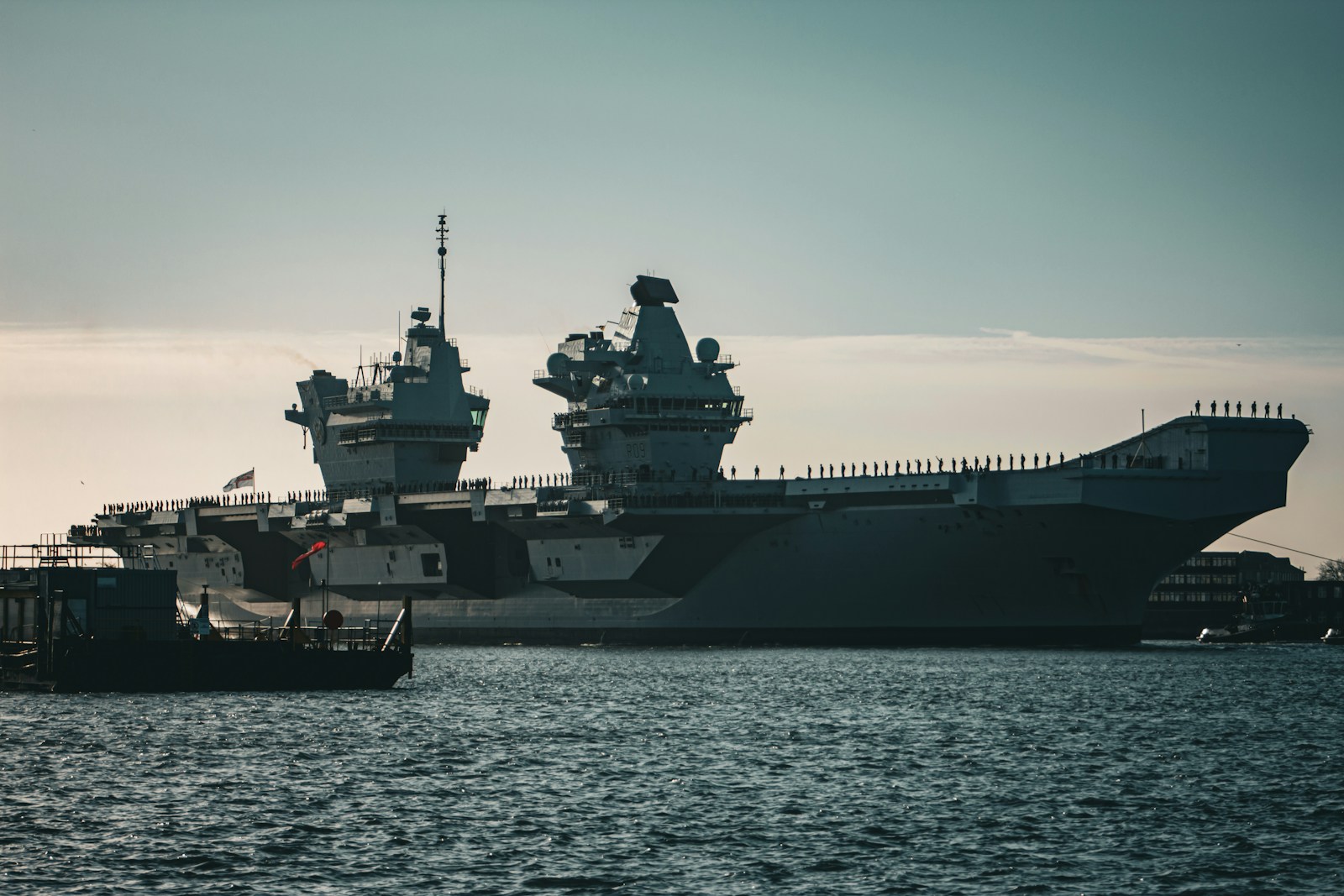

Two U.S. carrier strike groups have converged in the Western Pacific as China intensifies military pressure around Taiwan, turning one of the world’s busiest sea lanes into a live test of deterrence strategy. The deployment signals that Washington is prepared to put some of its most valuable naval assets directly in the path of Chinese drills, raising both the risks of miscalculation and the stakes for regional security.
By sending dual carrier groups and an amphibious assault ship into contested waters, the United States is pairing visible firepower with a political message aimed at Beijing and nervous partners across Asia. The move comes as Chinese forces rehearse scenarios that analysts say look increasingly like a blueprint for isolating Taiwan in a crisis.
Carriers Move In As China Ramps Up Taiwan Pressure
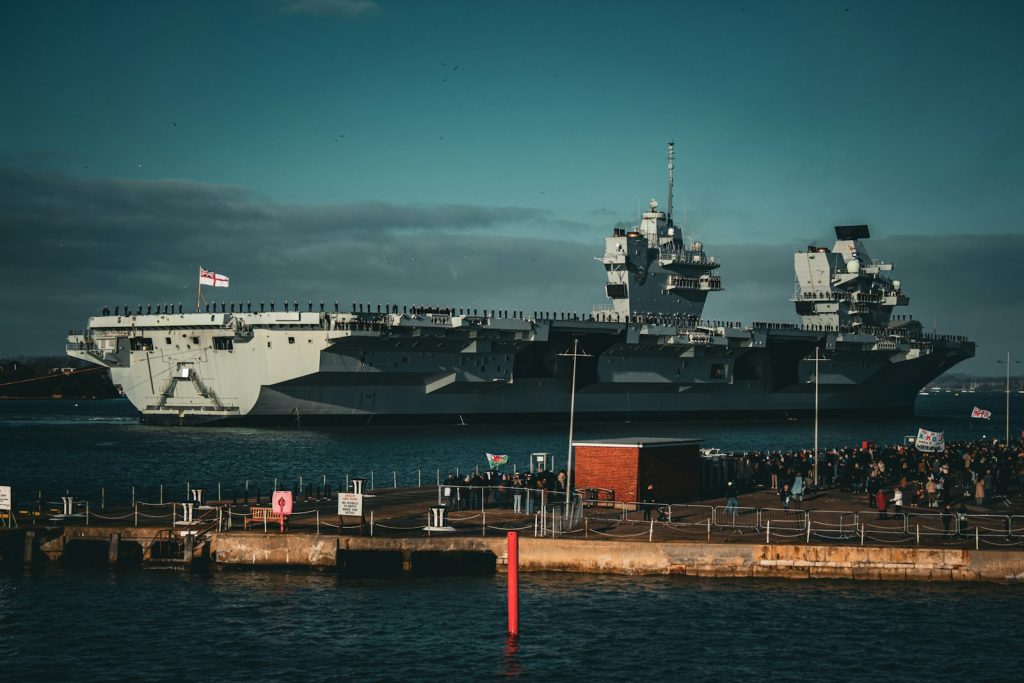
The immediate trigger for the latest deployment was a new round of large-scale Chinese exercises encircling Taiwan, which Taipei has described as part of a sustained campaign of intimidation. Chinese forces have used air and naval drills to probe the island’s defenses and normalize operations that could support a blockade, prompting the United States to answer with its own show of presence in the Western Pacific. Regional officials see the pattern as a dangerous feedback loop in which each side feels compelled to respond more forcefully than before.
Chinese drills around Taiwan have grown more complex, with operations that simulate encirclement and long-range strikes. Analysts tracking the exercise series known as Justice Mission say the maneuvers rehearse elements of a campaign to isolate the island, including joint air and naval activity and long-range rocket fire. Against that backdrop, U.S. officials have framed the carrier movements as a stabilizing step meant to reassure partners that Washington will not leave the Taiwan Strait and surrounding waters uncontested.
Two Carrier Strike Groups Take Up Station In Western Pacific
Washington’s response has centered on deploying two full carrier strike groups into the Western Pacific, a configuration that dramatically increases the volume of aircraft and missiles available for operations. Defense sources describe the move as a deliberate effort to complicate Chinese planning by forcing Beijing to account for multiple axes of U.S. power projection. Reports from the region note that the US deploys two aircraft carriers to the Western Pacific amid China’s Taiwan drills, a move Chinese commentators have already labeled highly provocative and reckless.
Earlier positioning decisions laid the groundwork for this posture, with U.S. planners already shifting assets into the theater to deter Chinese coercion and respond to rising gray-zone challenges. The current configuration includes not only the two carriers but also an amphibious assault ship, giving commanders more flexibility for air operations, logistics and potential evacuation or humanitarian missions. Together, the groups form a layered presence that can operate across the Philippine Sea, the South China Sea and the broader Western Pacific.
USS Abraham Lincoln And The Nuclear Carrier Message
At the center of the deployment is the nuclear-powered USS Abraham Lincoln, a Nimitz-class carrier that has become a symbol of U.S. resolve in the region. Analysts highlight that the ship, formally designated USS Abraham Lincoln (CVN-72), is operating in the Philippine Sea with its strike group after a period of heightened tension. The carrier’s nuclear propulsion allows it to sustain high-speed operations and support a large embarked air wing, making it a potent tool for both deterrence and crisis response.
Satellite imagery has underscored how visible this presence has become, with commercial photos showing that, While the Shandong remained at port, the U.S. aircraft carrier USS Abraham Lincoln was seen operating in the South Chin region and making port calls at key hubs like Yokosuka. Commentators note that the carrier and her carrier strike group, or CSG, include an embarked air wing and a fleet of destroyers that can conduct sustained operations in the region during this deployment. The combination of nuclear endurance, advanced aircraft and escort ships sends a clear signal that the United States is prepared to operate in what Chinese strategists consider their backyard.
F-35 Carriers, Amphibious Ships And Airpower At Sea
The dual-carrier posture is reinforced by the presence of U.S. flattops capable of operating F-35 jets, which bring stealth and advanced sensors into the Western Pacific air picture. Reporting on the deployment of US F-35 jet carriers to the West Pacific amid China naval maneuvers has emphasized how these platforms can detect and track targets at long range, complicating any attempt by Chinese forces to move undetected. The integration of fifth-generation aircraft with carrier air wings gives U.S. commanders more options for both defensive counter-air missions and precision strikes.
Alongside the big-deck carriers, an amphibious assault ship has taken station in the Western Pacific, adding helicopters, tiltrotor aircraft and potentially short takeoff and vertical landing jets to the mix. Regional coverage notes that 2 US carriers are in the Western Pacific during China’s drills, along with an amphibious assault ship that broadens the range of missions the task force can support. This blend of platforms allows the United States to conduct everything from high-end air operations to humanitarian assistance, while also signaling that it can rapidly move Marines and equipment if a crisis around Taiwan escalates.
Deterrence, Risk And The View From Taipei
For Taipei, the sight of multiple U.S. carriers operating nearby is both reassurance and a reminder of how precarious the security environment has become. Local reporting from TAIPEI has stressed that the US has two aircraft carriers and an amphibious assault ship in the Western Pacific during China’s drills, even as at least one major Chinese carrier has remained in port. Commentators in Taiwan argue that the U.S. presence helps offset the psychological impact of Chinese exercises that are designed to normalize the idea of encirclement and to test the island’s responses.
At the same time, the concentration of high-value assets in contested waters raises the risk that an accident or miscalculation could spiral into a broader confrontation. Analysts warn that as Amid China drills near Taiwan, U.S. carrier operations in the Western Pacif are taking place in crowded air and sea lanes where even a minor collision could have outsized political consequences. The challenge for all sides is to manage close-in operations without triggering the very conflict that these deployments are meant to deter.
More from Wilder Media Group: