


The families of four women killed in a Texas Panhandle crash say their loved ones did everything right, slowing in the right lane after a flat tire, only to be run down by a distracted 18-wheeler that never even tried to avoid them. A new wrongful death lawsuit alleges the truck driver’s inattention and his employers’ safety failures turned a routine roadside problem into a violent collision that obliterated a Nissan Altima and left no survivors.
The case, now filed in civil court, is emerging as a test of how far responsibility extends up the corporate chain when a fully loaded semi barrels into slower traffic on a rural highway. At its center are four friends on a road trip, a veteran trucker behind the wheel of a grocery chain rig, and a stretch of U.S. asphalt where a flat tire should have been an inconvenience, not a death sentence.
The road trip that ended in a violent rear-end crash
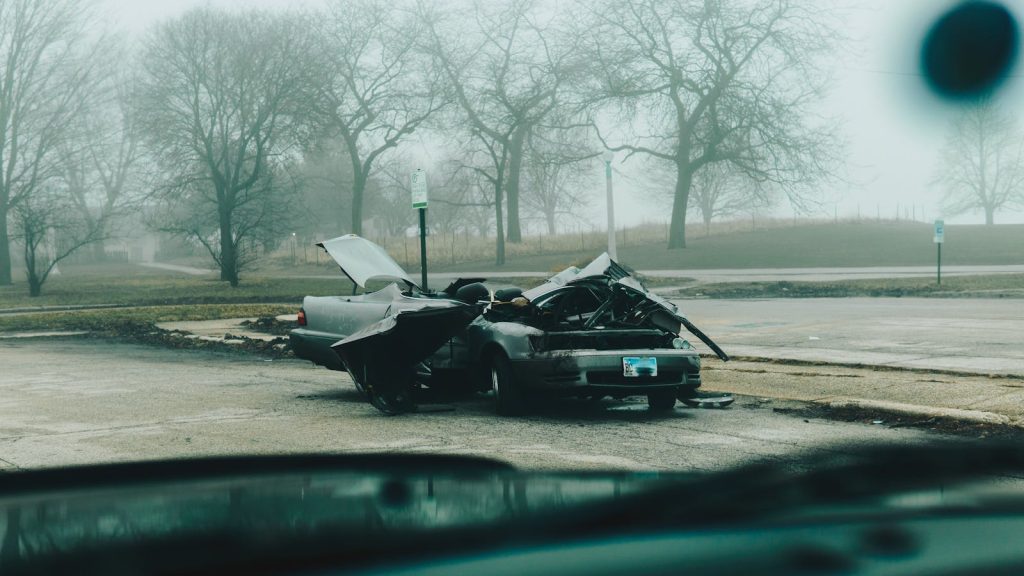
Authorities say the four women were traveling together in a Nissan Altima on U.S. 87 in the Texas Panhandle when trouble started with one of the car’s tires. The group, described in reports as friends on a road trip, slowed in the right lane as the driver tried to manage the flat at a reduced speed instead of stopping in a live traffic lane. On that highway, where heavy trucks and passenger cars share long, open stretches, a vehicle moving significantly slower than the flow can become dangerously vulnerable if approaching drivers are not paying attention, especially when the vehicle is a smaller sedan like the Altima.
Investigators later identified the women as The Altima’s driver, Myunique Johnson, 20, and passengers Lakeisha Brown, 18, Breanna Brantley, 31, and 28-year-old Taylor White. Separate coverage also described the victims as 18-year-old Lakeisha Brown of Galveston, 31-year-old Breanna Brantley of Rosharon, and Taylor White, 28, of Missouri City, Texas, along with Johnson. According to law enforcement accounts, a southbound semi-truck then approached from behind at highway speed and slammed into the slower Altima, killing all four women at the scene.
Allegations of a “distracted” trucker and a preventable impact
The lawsuit filed by the families centers on the conduct of the semi’s driver, identified in court filings as Daniel Villarreal, and on what the plaintiffs say is clear video evidence of a preventable crash. Lawyers for the families contend that Villarreal was “distracted” in the moments before impact, allowing his 18-wheeler to close a “significant distance” on the Altima without any meaningful braking or evasive maneuver. In their telling, the truck simply ran over the smaller car in the right lane, even though the sedan’s reduced speed and lane position should have been obvious to a reasonably attentive driver.
One complaint describes how Villarreal’s truck, traveling along the same stretch of U.S. 87, “obliterated” the Nissan from behind, with the force of the collision so extreme that the passenger vehicle was destroyed and the semi overturned into the median. The families’ attorneys argue that the video shows the Altima moving at a slower speed in the right lane because of the flat tire, while the 18-wheeler closes in without any apparent attempt to change lanes or slow down, a sequence they say supports their claim that the driver was not watching the road. In their filing, they assert that the crash was not a freak accident but the foreseeable result of a distracted trucker behind the wheel of a fully loaded rig.
H-E-B and contractors pulled into the legal crosshairs
While the immediate focus is on Villarreal’s driving, the lawsuit reaches far beyond one man, targeting the grocery giant H-E-B and a web of contractors tied to the truck and its route. The families are seeking more than $1 million in damages and allege that H-E-B and its associated trucking companies failed to properly train, supervise, and monitor the driver who rear-ended the Altima. In their view, corporate decisions about scheduling, safety policies, and oversight created conditions in which a driver could barrel into slower traffic without adequate safeguards, turning a routine delivery into a fatal event on a rural highway.
According to the complaint, the plaintiffs argue that H-E-B and its contractors “wholly-own” and control the trucking operation that put Villarreal on U.S. 87 that day, making the companies responsible for his conduct behind the wheel. Coverage of the filing notes that the suit was brought in HOUSTON, Texas, with references to WOAI and KABB as part of the reporting on the case. Another account of the lawsuit emphasizes that, at the same time, 39-year-old Villarreal was operating the semi as part of a broader logistics network, and that the plaintiffs say the corporate defendants had the power and duty to prevent unsafe driving before it cost four women their lives, a point echoed in a related RELATED report that highlights the corporate defendants’ role.
How investigators say the crash unfolded on U.S. 87
Law enforcement accounts and the civil complaint together sketch a stark sequence of events on the highway near Dalhart in Hartley County. The Nissan Altima, already compromised by the flat tire, was traveling at a slower speed in the right lane when Villarreal’s 18-wheeler approached from behind. Troopers reported that the semi rear-ended the car with such force that the Altima spun violently into the median, while the truck itself overturned onto its side, scattering debris and leaving a chaotic scene across the roadway. The description of the impact underscores how little margin for error exists when a fully loaded tractor-trailer fails to adjust to slower traffic ahead.
One detailed account of the wreck notes that the impact sent the passenger vehicle spinning into the median and that the 18-wheeler overturned onto its side in the same median area, a sequence that matches the families’ portrayal of a catastrophic rear-end collision rather than a glancing blow. That description appears in coverage of the lawsuit filed against H-E-B and its contractors, which also notes that state troopers are continuing to investigate the crash circumstances. Earlier local reporting, including a piece by Jamie Burch for ABC 7 News, framed the wreck as a semi rear-ending a car with a flat tire near Dalhart, reinforcing the core allegation that the Altima’s reduced speed was known and visible before the truck struck it, as reflected in the local crash report.
Families’ push for accountability and the trucking industry’s response
For the families of Myunique Johnson, Lakeisha Brown, Breanna Brantley, and Taylor White, the lawsuit is as much about public accountability as it is about financial damages. Their attorneys argue that the video of the crash, combined with troopers’ findings, shows a textbook case of what can happen when a professional driver loses focus even briefly while piloting a massive commercial vehicle. By naming H-E-B and multiple contractors, the plaintiffs are signaling that they see the tragedy not as a single driver’s mistake but as a systemic failure in hiring, training, and monitoring that allowed a distracted operator to stay on the road until it was too late.
The corporate defendants, for their part, have publicly expressed sympathy and said they are cooperating with investigators, while declining to accept blame as the civil case moves forward. One statement referenced in coverage of the lawsuit notes that the “H-E-B Family is devastated” and is fully cooperating with the investigation along with the contractor, language that appears in the same reporting that identified Villarreal as the truck’s driver. As the case proceeds, it will test how jurors and judges weigh video evidence, trooper reports, and corporate safety records in a crash that began with a flat tire and ended with four lives lost on a Texas highway.
More from Wilder Media Group: