


The near collision between a Russian fighter and a gigantic US bomber was not a freak occurrence but the product of a crowded sky, clashing narratives and razor-thin margins for error. As Russian and American crews fly closer to each other over contested seas and icy frontiers, a single aggressive maneuver can turn a routine intercept into a crisis. The pattern that emerges from recent encounters shows how quickly professional choreography can give way to brinkmanship when pilots push their luck.
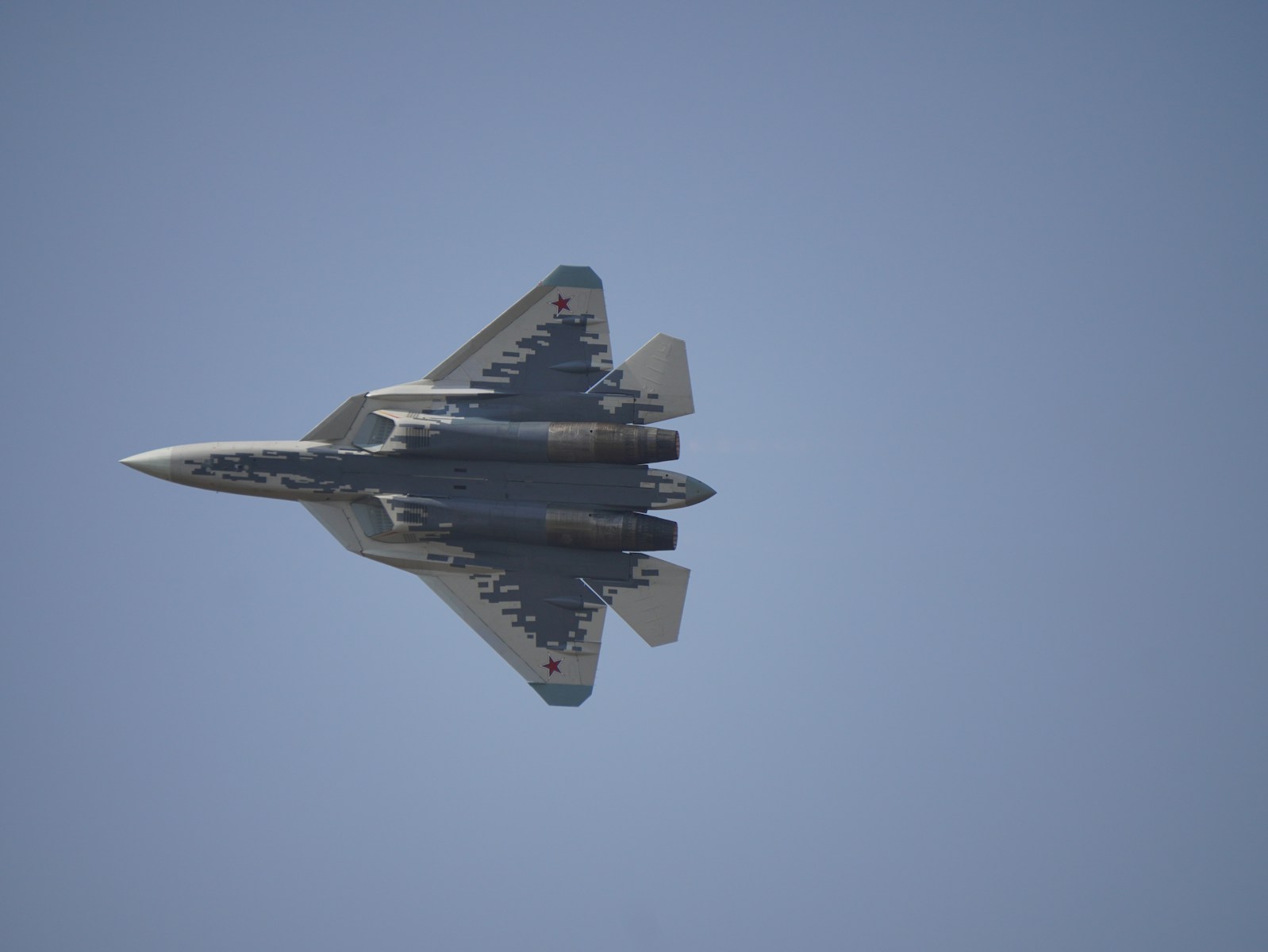
At the heart of the story is a simple, unsettling image: a nimble Russian jet sliding in alongside a lumbering US strategic bomber, closing the gap until both crews are relying on instinct and training to avoid disaster. That image has played out over the Black Sea, the Baltic and the Arctic, and it is captured vividly in cockpit footage and narrated breakdowns that have turned one near miss into a case study in how modern great-power rivalry looks from 30,000 feet.
From routine intercept to near disaster
Interceptions are supposed to be predictable. A fighter climbs to meet an approaching aircraft, identifies it, then shadows it at a respectful distance. In the incident that inspired the headline, video analysis from the aviation channel Fluctus shows how that script can unravel when a Russian jet fighter edges in too close to a US bomber, turning a standard escort into a near collision. The size mismatch is stark, with the fighter weaving around a bomber that fills the frame, and the commentary underscores how little room for error exists when metal is separated by only a few wing lengths.
The US military has publicly accused Russian crews of exactly this kind of behavior over the Black Sea, where U.S. Air Forces in Europe and Air Forces Africa said that The Russian pilots flew in an unsafe and unprofessional manner around a bomber on a long-planned mission. Officials described high-speed passes directly in front of the American aircraft and tight turns that forced the bomber’s crew to fight their own wake turbulence, a dangerous situation for a heavy airframe. That description mirrors what the Fluctus footage highlights: a fighter pilot using proximity as a form of pressure, even as both sides insist they are operating in international airspace.
Black Sea and Baltic Sea: crowded skies and clashing messages
The Black Sea has become one of the most contested regions on Earth, a place where Russian and NATO aircraft regularly test each other’s resolve. A separate video breakdown of a Russian Fighter Jet Attempt to Bully a USAF B-2 Bomber over the Black Sea shows how close approaches and aggressive banking can be used as signaling, with Russian crews trying to make the American bomber alter course. In that narration, the presenter notes how the region’s geography compresses flight paths, forcing large aircraft and interceptors into the same narrow corridors and increasing the odds that a show of force will slide into a safety violation.
Farther north, similar dynamics play out over the Baltic, where Russian and NATO aircraft share a patchwork of national airspace and international corridors. During a Baltic training flight, Russian jets intercepted B-52s flying with Swedish JAS 39 Gripens, a reminder that even planned exercises can draw a quick Russian response. Earlier, The Su of the Russian Baltic Fleet was scrambled to meet an American B-52, with the Su-27 Flanker shadowing the American bomber at close range. Each of these encounters is framed by Moscow as a necessary response to foreign aircraft near its borders, and by Washington as a lawful mission in international airspace, which leaves pilots to manage the tension in real time.
Alaska and the Arctic: near misses at the edge of the map
The risk of collision is not confined to Europe. Over the Arctic approaches to Alaska, Russian and US aircraft have been meeting more often, and not always on comfortable terms. In one high-profile case, a Russian Su-35 nearly collided with a US F-16 during an Alaska intercept, prompting senior commander Guillot of Northern Command, which includes NORAD, to describe the maneuver as “Not what you’d see in a professional air force.” The near miss, which unfolded in the thin air and low temperatures of the far north, underscored how quickly a routine NORAD mission can become a crisis when one pilot cuts inside the safe separation bubble.
Those intercepts are part of a broader pattern of Russian flights probing North American defenses. Over the Arctic, Russia says its military scrambled MiG-29 and MiG-31 fighters that identified approaching US planes as 52 H strategic bombers, presenting the intercept as a defensive action near sensitive territory. Closer to Alaska, US F-35 jets were sent up when Russian Nuclear Capable Bombers Challenge US Air Defenses Near Alaska, a mission that highlighted how 53 and 35 series aircraft can find themselves sharing the same airspace in tense, highly choreographed encounters. NORAD officials, including Garand, have stressed that many of these intercepts are professional, but they contrast sharply with the Russian SU-35 incident that unfolded on a Tuesday and raised questions about why the Russian aircraft were there with no obvious reason.
Kaliningrad, deterrence flights and the B-52’s symbolic weight
In Europe, the US continues to send its most recognizable bomber, the B-52, on long-range flights that are as much about signaling as training. Near Russia’s western enclave, US Bombers Intercepted by Russian Jets Near Kaliningrad on Monday were tracked by Russian fighters that closed in to visually identify the aircraft. A U.S. official said 202 aircraft were involved in the broader regional activity, illustrating how a single intercept can sit inside a much larger pattern of sorties, radar tracks and political messaging. For Moscow, the presence of US bombers so close to Kaliningrad is framed as a provocation, while for Washington it is a reassurance mission for allies on NATO’s eastern flank.
Russian commentary has zeroed in on the B-52’s role in these flights, describing how the presence of B-52 bombers near Russia’s border serves as a deterrence signal that underscores US military capabilities. In one assessment, the recent interception of US 52 bombers was described as a routine encounter in which stringent safety protocols were observed, a contrast to the more confrontational episodes over the Black Sea. That account, linked to Russia and Jul reporting, suggests that not every close approach is reckless, and that some Russian units are careful to keep their distance even while making a political point.
Unsafe patterns and the thin line between signaling and escalation
What worries commanders is not a single dramatic video but a pattern of behavior that normalizes risk. When U.S. Air Forces in Europe and Air Forces Africa complained that The Russian pilots flew in an unsafe and unprofessional manner over the Black Sea, they were echoing concerns raised after other incidents in which fighters crossed directly in front of bombers or came within a few meters of their wingtips. A separate account of Russian fighters conducting an unsafe intercept of a US Air Force bomber described how the aircraft lingered in the bomber’s turbulence and performed repeated close passes, behavior the US Air Force said was inconsistent with standard intercept procedures. That episode, detailed in coverage that urged readers to Follow Ryan Pickrell and noted that Every time Ryan publishes a story, readers get an alert, underscored how such maneuvers are now frequent enough to form a news beat of their own.
Russian officials, for their part, often insist that their crews are acting responsibly and that it is US and allied aircraft that are pressing too close to Russian borders. In some cases, such as the Jul intercepts over the Arctic and the Baltic, Moscow has emphasized that its fighters simply identified 52 bombers and then broke away, presenting the flights as textbook examples of professional conduct. Yet the near collision between a Russian Su-35 and a US F-16, the bullying passes around a B-2 over the Black Sea and the tight shadowing of a B-52 by The Su of the Russian Baltic Fleet all point to a more volatile reality. As long as gigantic US bombers continue to fly near Russian territory and Russian fighters are tasked with meeting them, the line between signaling and escalation will depend on the judgment of individual pilots in split-second, high-speed encounters.
More from Wilder Media Group: