

After years of vague promises and political declarations, the security guarantees offered to Ukraine are starting to look like a concrete playbook rather than a distant aspiration. Western capitals are now sketching out how they would deter or respond to any renewed Russian assault once the current fighting stops, turning abstract solidarity into specific commitments on troops, weapons and long term support. The shift reflects a hard lesson from the past two years of war, and a growing belief that any peace worth signing must be backed by credible power.
The Paris pivot: from rhetoric to a real security architecture
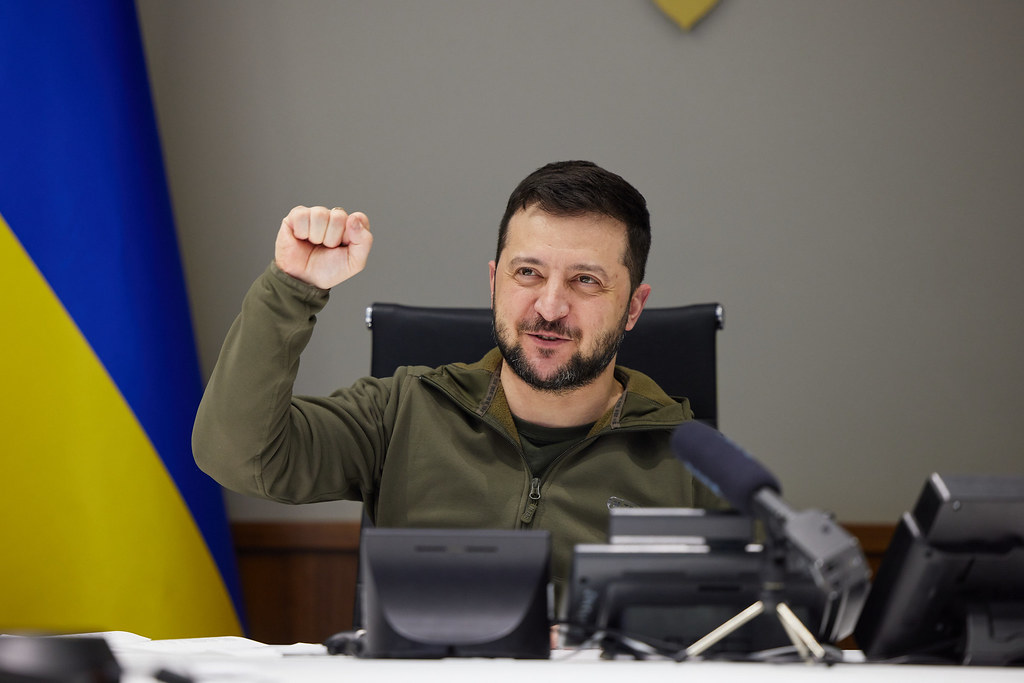
The turning point has come in Paris, where leaders from Europe and North America have been working with Kyiv on a framework that would lock in long term protection for Ukraine once the guns fall silent. Ukrainian President Volodymyr Zelensky met with leaders of states in the Coalition of the Willing in Paris, using the gathering to press for guarantees that would make any future attack by Russia a far riskier gamble. The Coalition of the Willing, a loose grouping of countries that have taken the lead on military and financial aid, is now being asked to translate battlefield support into a standing security system that would outlast any ceasefire.
Those discussions are unfolding against the backdrop of a still active front line, which is why Zelensky has framed the Paris talks as part of a broader effort to send a clear “signal” to Russia that aggression will carry lasting costs. Analysts who track the conflict note that the meeting in Paris is not just about the next few months of fighting, but about shaping the strategic environment for years to come, with Ukrainian President Volodymyr Zelensky pushing partners to commit on paper to what they have long said in public.
“Major progress” on guarantees if a peace deal is struck
Allied governments now say they are closer than ever to agreeing how they would defend Ukraine if a peace deal is eventually reached with Russia. Officials reported that Ukraine’s allies made major progress Tuesday toward a shared plan that would define what happens the day after a ceasefire, including how quickly weapons and other support would flow if Moscow tried to test the new arrangement. The emerging consensus is that any settlement must be paired with a robust deterrent, not a return to the fragile status quo that existed before the full scale invasion.
Diplomats involved in the talks describe a multilayered approach that would combine political commitments, military aid and economic backing, all triggered if Russia violated a future agreement. The idea is to move beyond open ended pledges and instead codify specific responses, a shift reflected in the way Ukraine’s allies said they made major progress Tuesday on the architecture that would sit alongside any peace deal with Russia.
NATO style promises without full NATO membership
One of the most striking developments is the way partners are borrowing from NATO’s playbook without yet offering Ukraine a seat at the alliance table. Officials from Italy and other European states have described the emerging package as “NATO style” security guarantees, a phrase that signals both ambition and limits. The guarantees under discussion would not be identical to NATO’s Article 5 mutual defense clause, but they are intended to create a similar sense in Moscow that any renewed attack would trigger a coordinated Western response.
Italian leaders have stressed that these guarantees are being designed to be both politically binding and operationally credible, with clear expectations on training, equipment and rapid assistance. The concept has been advanced in European forums where Ukraine’s allies advance NATO style security guarantees, Italy says, underscoring that the goal is to lock in long term deterrence even if formal NATO membership remains a separate and more contentious track.
US backing and a European led security net
Another key shift is the role of the United States, which has now publicly backed European ceasefire security guarantees for the first time. Washington’s support gives political weight to a framework that is still expected to be led and largely implemented by European states, reflecting both geography and the way the war has reshaped security thinking on the continent. The pledge came at a Paris summit of major donors, where leaders discussed how to combine military aid with diplomatic pressure to shape any eventual negotiations.
Officials involved in the talks say the United States is not only endorsing the idea of guarantees, but also encouraging European partners to take the lead in designing and funding them. That balance is captured in reports that the Ukraine war briefing highlighted a US backed, European built security net, one that would aim to deter Russia while also reassuring skeptical publics that any commitments are clearly defined and shared.
Multilayered guarantees, potential troops and the road ahead
Behind the diplomatic language, the guarantees being discussed are remarkably concrete. Ukraine’s allies have agreed to provide multilayered defense guarantees as part of a peace proposal, a structure that would include air defense, ground forces support, intelligence sharing and rapid resupply mechanisms. The goal is to ensure that any future attack by Russia would meet a coordinated response, rather than leaving Kyiv to scramble for help as it did in the early days of the full scale invasion. This multilayered design reflects a recognition that modern warfare spans missiles, drones, cyber operations and conventional forces, all of which must be addressed in a coherent plan.
Some European nations are even committing to the possibility of stationing troops in Ukraine as part of a future settlement, a step that would have been politically unthinkable at the start of the war. German Chancellor Friedrich Merz has said at a joint press conference that Berlin is “not fundamentally ruling out” sending forces, signaling that Germany is prepared to consider a role on the ground if it is part of a broader peace arrangement. That debate is unfolding as German Chancellor Friedrich Merz and other leaders weigh how far they are willing to go to make deterrence credible without triggering a direct clash between NATO and Russia.
For Kyiv, the emerging framework is both a diplomatic win and a reminder of how much remains uncertain. Reports describe how Ukraine’s allies have agreed to provide multilayered security guarantees to deter any future attack by Russia, yet the exact triggers and timelines for those guarantees will matter as much as the promises themselves. Ukrainian officials are pushing for automaticity, where certain violations by Russia would immediately unlock specific forms of support, while some partners prefer more political discretion. That tension will shape how reassuring the final package feels to Ukrainians who have already lived through one broken security assurance after the Budapest Memorandum.
What the guarantees could look like in practice
Although the final text is still being negotiated, a clearer picture is emerging of the tools allies are ready to put on the table. Options under discussion include continued military backing at current or higher levels, long term contracts for ammunition and air defense systems, and the possible deployment of multinational forces to monitor any ceasefire lines or demilitarized zones. The focus is on making sure that Ukraine can defend itself day to day, while also having the assurance that partners will step in quickly if Russia tests the boundaries of a peace deal.
Diplomats say the guarantees will likely be spelled out in a series of bilateral and multilateral agreements, rather than a single grand treaty, which would allow different countries to tailor their contributions while still presenting a united front. The emerging menu of options is designed to be flexible enough to adapt if the security situation changes, but firm enough to convince Moscow that any renewed aggression would be met with a rapid and coordinated response.
Balancing deterrence, diplomacy and domestic politics
Even as the guarantees take shape, allied leaders must sell them at home. Voters in Europe and North America are grappling with inflation, energy costs and war fatigue, and some are wary of open ended commitments that could drag their countries into a future conflict. That is one reason why officials emphasize that the guarantees are meant to prevent another war, not to prepare for one, by making it clear to Russia that the costs of renewed aggression would be immediate and severe. The political challenge is to explain that credible deterrence now may be the best insurance against a far more dangerous crisis later.
For Ukraine, the stakes are existential. The country’s leadership argues that only firm, detailed guarantees can make any peace sustainable, and that vague assurances would simply invite another attack once Russia has rebuilt its forces. Reports from Paris describe how Ukraine’s allies praise major progress on the contours of that future security regime, even as negotiators haggle over the fine print. The outcome will help determine not only how this war ends, but whether Europe faces another one in the years ahead, and whether the phrase “never again” finally comes with a detailed plan to make it real.
A fragile opening in a long war
None of these guarantees will matter if the current fighting escalates beyond control, and officials are careful to stress that the priority remains helping Ukraine hold the line now. Yet the fact that allies are investing political capital in long term security arrangements suggests they see a window, however narrow, to shape the postwar order. The Coalition of the Willing, the European Union, the United States and other partners are trying to ensure that any eventual peace is backed not just by signatures, but by standing capabilities and clear commitments.
That effort reflects a broader reassessment of European security that began when Russia launched its full scale invasion of Ukraine and shattered assumptions about the stability of the continent. As Western governments work through the details of “robust” guarantees, they are also testing whether a coalition of democracies can learn from past failures and build a security system that deters aggression without locking the region into permanent confrontation. The answer will shape not only Ukraine’s future, but the credibility of Western security promises far beyond Europe’s eastern flank.
More from Wilder Media Group: