


German luxury badges used to glide into American driveways with almost no resistance. Now, the road into the United States is full of potholes, from tariffs to shifting tastes, and even the most established brands are being forced to rethink how they show up for U.S. buyers. Two of the most closely watched names, Mercedes-Benz and BMW, are quietly rewriting their playbooks to stay desirable, profitable, and politically safe on this side of the Atlantic.
The stakes are not abstract. German car exports to the United States dropped by almost 14% in the first three quarters of 2025, a slide that signals real pressure on pricing power, dealer margins, and long term brand heat. That kind of hit is pushing these companies to experiment with new product strategies, new factories, and even new definitions of what “German luxury” should feel like to an American customer.
Tariffs, politics, and the new cost of being German
The starting point for any German luxury strategy in America right now is not a design studio in Stuttgart or Munich, it is the tariff schedule in Washington. German car exports to the United States falling by almost 14% in the first three quarters of 2025 is not just a blip, it is a sign that the cost of importing high end vehicles has become a structural problem for every German brand that still leans heavily on transatlantic shipping. That drop, detailed in reporting on how German car exports are struggling, shows how quickly policy can erode a business model that once looked bulletproof.
Tariffs have clearly had a dramatic effect on the way these companies plan. As early as March 2025, Audi was already weighing whether it needed to rethink its footprint in the United States, a conversation that only grew louder as new trade measures landed. The same analysis that flagged the export slump also noted that tariffs on German imports were strong enough that Audi was considering “the nuclear option” of shifting more production closer to its buyers, a move that would have been unthinkable when the brand could simply ship cars from Europe and let the exchange rate do the work.
Mercedes chases volume again, but on its own terms
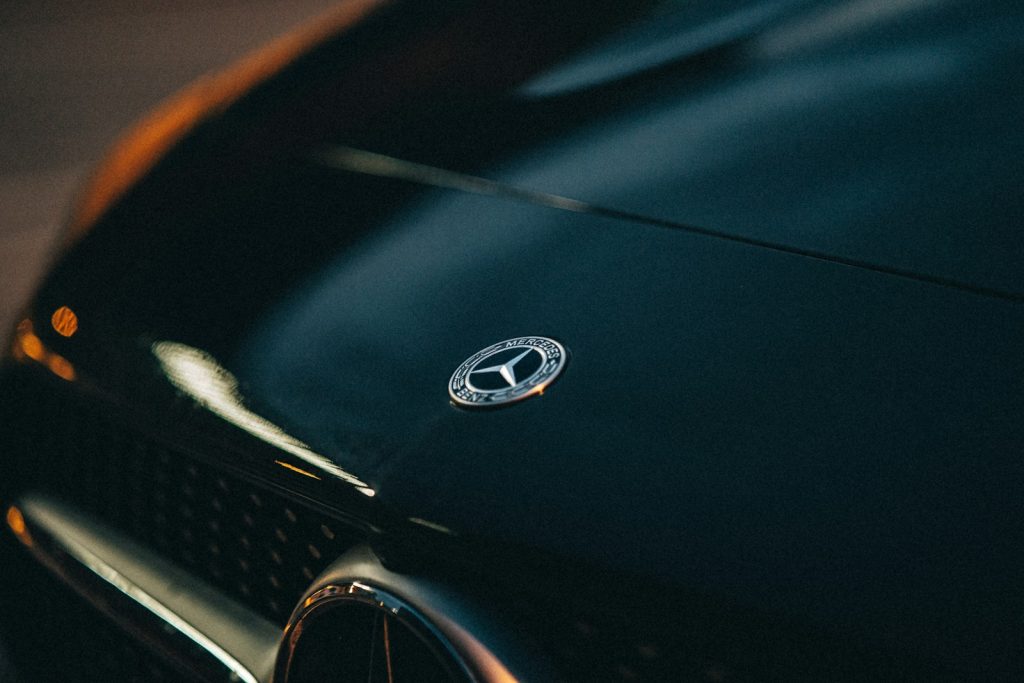
Mercedes-Benz has not led the U.S. luxury sales market since 2018, and it has now slipped to third place behind BMW and Lexus. That fall from the top spot is not just a hit to corporate pride, it is a real problem for a company that has long sold itself as the default choice for American luxury buyers. One recent deep dive into the brand’s plans noted bluntly that Mercedes-Benz has not led the U.S. luxury sales market since that 2018 peak, and that executives are now openly talking about clawing back share by focusing on sales volume and lease penetration rather than just sticker prices.
To get there, the company is rolling out an aggressive U.S. product strategy that reads like a greatest hits album for American tastes. Internal targets are framed around catching BMW, and the plan, described in detail as Mercedes Outlines Aggressive U.S. Product Strategy as It Sets Sights on BMW’s Lead, leans heavily on fresh crossovers, sharper lease deals, and a tighter focus on the models that actually move metal in American suburbs rather than in European city centers.
From Stuttgart to Alabama: building luxury closer to home
One of the clearest ways Mercedes is adapting is by physically moving its cars closer to U.S. buyers. The company has already decided that Mercedes-Benz will move GLC SUV production to the United States, a shift designed to offset rising costs from President Donald Trump’s auto import tariffs. That decision, which puts the popular Mercedes-Benz GLC SUV in American factories, is as much about politics as it is about logistics, signaling to the White House that the brand is willing to invest locally if it means avoiding the worst of the tariff pain.
That move fits into a broader pattern. Mercedes-Benz is expanding its U.S. production by building its GLC SUV at its Alabama plant, a plan that actually predates the Trump administration but has become far more valuable now that tariffs are front and center. The company’s push to deepen its footprint in Alabama production gives it a hedge against future trade fights and lets it market its SUVs as more American made than many buyers might assume when they see the three pointed star.
EVs, software, and the BMW versus Mercedes split
While Mercedes is busy chasing volume and localizing SUVs, BMW is trying to win the next round of the luxury game through technology. The BMW Group has been explicit that it wants to build on a foundation of consistent strategy, robust demand, sustained cost discipline, and high flexibility, a mix that helped The BMW Group show strong resilience in the first half of the year even as tariffs and EV growing pains hit the wider industry. That mindset is now being poured into a new generation of electric models that are meant to feel less like compliance cars and more like the core of the brand.
BMW’s Neue Klasse based iX3 and Mercedes’ CLA are being framed as the first generation of EVs that is truly designed to be profitable, not just regulatory box ticking. Analysts expect BMW’s Neue Klasse platform and the upcoming Mercedes CLA to bring software defined vehicles to the market in a way that finally lets German luxury brands compete head on with Tesla and Chinese upstarts on tech, not just on leather quality and paint depth.
Different EV attitudes, same U.S. buyer
Even as they share platforms and suppliers, Mercedes and BMW are not approaching the EV transition with the same personality. One seasoned observer summed it up by saying that Mercedes seems to be adopting a more cautious approach while BMW seems willing to try out more new things, a contrast that has sparked debate over whether Mercedes CEO Ola Källenius should question himself. That critique, captured in reporting on how Mercedes and BMW are evolving their EV strategies, highlights a real split in how quickly each brand is willing to pivot away from combustion engines in the United States.
That difference matters because U.S. luxury buyers are not a monolith. Some want the bleeding edge, over the air updated, software heavy experience that BMW is promising with its Neue Klasse based iX3, while others still want the familiar comfort of a Mercedes sedan that just happens to have a plug. The tension between those camps is playing out in dealer showrooms, where Between the lines, as German automakers work to navigate U.S. tariffs and a tightening market, every misread of customer appetite can turn into unsold inventory and nervous retailers.
Model mix: from CLA and GLB to subscription friendly options
Product timing is another lever both brands are yanking hard. Mercedes-Benz has a busy 2026 schedule planned with the launches of several newly updated models, including the Mercedes-Benz CLA and GLB, the GLC, and the flagship S-Class. Those Mercedes-Benz CLA and GLB updates are aimed squarely at younger buyers who want compact luxury with big tech screens, while the refreshed GLC and S-Class keep the brand’s core audience from drifting toward BMW or Lexus.
At the same time, Mercedes-Benz said it would stop its current practice of making most features available individually and instead bundle them more cleanly, a shift that should make it easier to manage inventory and to sell subscription style upgrades. That change, part of a broader push as At the same time, Mercedes wants to sell 400,000 vehicles in the U.S. by 2030, shows how even option sheets are being redesigned to fit a world where software, not hardware, drives a growing share of profit.
When “German made” meets “built in America”
Mercedes and BMW are not the only German luxury players rethinking their geography. Porsche and Audi are reportedly considering U.S. production if the Trump administration follows through on proposed tariffs that would hit vehicles imported from Europe and Mexico. The potential tariffs, which could take effect as early as 2026, are serious enough that Porsche and Audi are now openly gaming out what it would look like to bolt their sports cars and SUVs together on American soil.
There is already a template for that shift. Porsche and Audi plan U.S. production to avoid Trump tariffs, with one scenario involving spare capacity from the ID.4 electric SUV being repurposed as demand for that EV slumps. The idea is that an American plant that currently builds the ID.4 electric SUV, alongside models like the Jetta and Tiguan in Mexico, could be retooled to assemble higher margin luxury vehicles if tariffs make imports untenable, a possibility laid out in detail as Porsche and Audi plan their next moves.
Tariffs versus the future product pipeline
All of this scrambling is happening against the backdrop of a longer term product pipeline that was supposed to carry German luxury brands smoothly into an electric, software heavy future. Tariffs threaten to slow the roll of those future products, especially for Germany’s luxury power players BMW Group and Mercedes-Benz, which have laid out ambitious plans to eliminate tailpipe emissions over the coming decades. The warning that tariffs threaten to disrupt that roadmap is a reminder that even the cleanest, most forward looking product strategy can be knocked off course by a change in trade policy.
German automakers are already feeling the squeeze. One widely shared video report noted that German automakers have just halted deliveries to the U.S., with heavyweights Volkswagen and MercedesBenz posting year on year declines that spooked investors and dealers alike. That clip, which highlighted how German Volkswagen and its peers are reacting, underscored how fragile the flow of vehicles into the United States has become when every shipment is subject to new tariffs, new rules of origin, and new political calculations.
The new rules of winning over U.S. luxury buyers
Put together, the moves by Mercedes-Benz, BMW, Porsche, and Audi add up to a new rulebook for selling German luxury in America. It is no longer enough to ship over a well tuned sedan and hope the badge does the rest. Brands now have to juggle local production, tariff exposure, EV profitability, and software roadmaps, all while keeping an eye on rivals like BMW that are just as hungry for U.S. market share. The fact that As German automakers work to navigate this new normal, the U.S. market is tightening, means there is less room than ever for strategic mistakes.
For Mercedes and BMW in particular, the next few years will show whether their bets pay off. Mercedes is leaning into American built SUVs, bundled features, and a crowded launch calendar to win back buyers, while BMW is banking on Neue Klasse technology and disciplined execution to keep its lead. Both are trying to stay ahead of a tariff regime that could still get tougher, a reality that has already pushed Tariffs German brands into some uncomfortable conversations about what it really means to be “German made” in a world where the most important luxury buyers live thousands of miles away.
More from Wilder Media Group: