
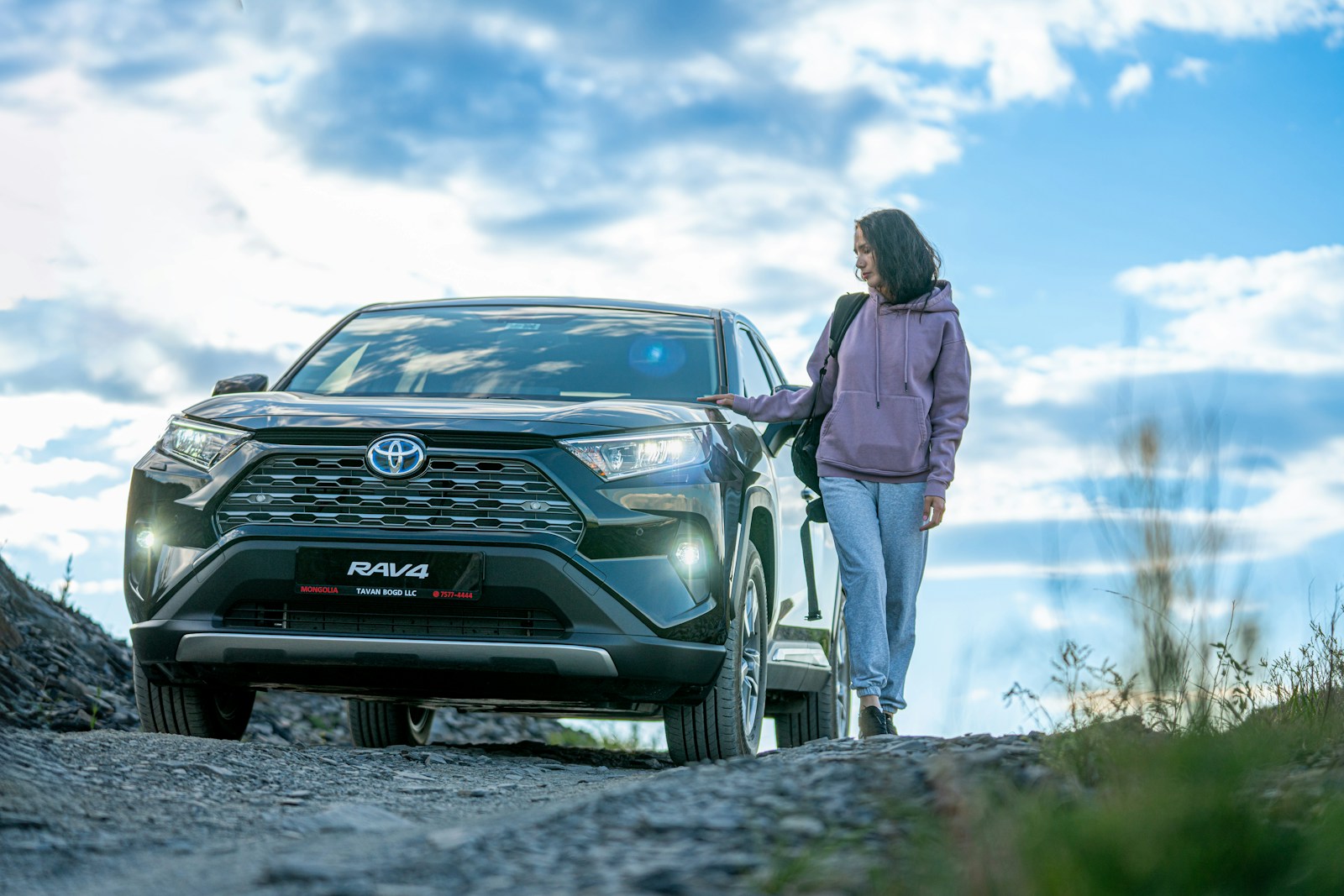

For most drivers, the ideal vehicle is not a weekend toy or a status symbol, but a single, trustworthy SUV that can quietly handle every commute, road trip, and family errand for years. Japanese brands have spent decades building that reputation, and today one compact crossover in particular comes closest to being the only car you are likely to need. To understand why, you have to look at how it stacks up on reliability, efficiency, comfort, and long-term value against the strongest rivals from the same playbook.
Compact Japanese SUVs now blend hybrid powertrains, advanced safety tech, and family-friendly practicality in a way that makes owning multiple vehicles feel unnecessary for many households. When you compare the latest Toyota, Honda, Mazda, and Subaru offerings, one model emerges as the most balanced all-rounder, even as others excel in specific niches like driving feel or luxury features.
The do-it-all Japanese SUV idea
The notion of a single SUV that can cover school runs, highway slogs, light off-roading, and long-term ownership without drama is no longer theoretical. Analysts looking at Japanese crossovers have highlighted a “do-it-all” formula that combines durability, usable space, and modest running costs, with one report even describing a Subaru as a vehicle that could realistically be the only car you will ever need. That assessment of a do-it-all Subaru underscores how far this segment has come from the bare-bones utilities of the past.
At the same time, Japanese brands are pushing deeper into electrification and premium-feeling cabins, so the “one car” concept now has to include hybrid efficiency and tech that does not feel dated after a few years. That is where Toyota’s latest compact SUV strategy stands out, especially as the company leans into hybrid power as standard equipment rather than an expensive add-on.
Why the 2026 Toyota RAV4 Hybrid fits most drivers best

If you are looking for a single vehicle that can credibly replace a sedan, a family hauler, and even a light adventure rig, the 2026 Toyota RAV4 Hybrid is the most convincing candidate. The broader RAV4 line has long defined the compact SUV segment, and for 2026 it shifts to an all-hybrid lineup with more power and updated technology, which means every trim benefits from electrified efficiency without sacrificing everyday usability. Independent testing notes that the RAV4 has long defined what buyers expect from a small SUV, even as some earlier versions earned only a rating of just average for certain aspects.
The 2026 Toyota RAV4 Hybrid leans into that heritage while modernizing the powertrain and cabin. Reporting on the new generation explains that the RAV4 goes fully hybrid for 2026, pairing everyday practicality with smarter electrification so you get strong fuel economy, responsive performance, and the ability to cover long distances without charging stops. That mix of usability and efficiency is why the Toyota RAV4 Hybrid is framed as everyday practicality meeting smarter electrification, rather than a niche eco experiment.
Reliability and safety: the long-haul argument
When you plan to keep one SUV for a decade or more, reliability and crash performance matter as much as fuel economy. Over the years, the Toyota RAV4 has built a reputation as a capable SUV that holds up well to daily use, with detailed reliability tracking showing that the Toyota compact crossover has consistently performed well as the Insurance Institute for Highway Safety has subjected the car to rigorous testing. Recent evaluations note that Consumer Reports gives the 2026 RAV4 an overall score of 86 out of 100, a figure highlighted in a Toyota RAV4 reliability breakdown that also emphasizes its status as a capable SUV.
Safety and dependability are not just abstract scores, they are what allow you to rely on a single vehicle for everything from solo commutes to fully loaded holiday trips. Rankings data for the 2026 Toyota RAV4 show that its #13 position is based on its score within the Hybrid SUVs category, and that currently the Toyo compact hybrid is competing in a crowded field of electrified crossovers. Even so, the Rankings for the Toyota RAV4 underline that it remains a benchmark choice, especially if you prioritize a proven safety record and consistent reliability over flashier styling.
How rivals from Honda and Mazda compare
To see whether the RAV4 Hybrid really can be the only car you need, it helps to compare it with the strongest alternatives from Honda and Mazda. The 2026 Honda CR-V Hybrid is one of the closest competitors, with an evolutionary redesign that retains the strengths of the previous generation while refining the ride and cabin. Analysts note that the CR-V Hybrid’s updates are measured rather than radical, and that the latest version still focuses on the features that matter most to you, a point underscored in a detailed overview that invites you to See how your top choices measure up.
Real-world impressions of the CR-V Hybrid also highlight its comfort and refinement. In one detailed video review of the 2026 Honda CR-V Hybrid, the presenter notes that the cabin quality is high enough that the interior “smells like a Nordstrom,” a colorful way of saying that the materials and ambiance feel more upscale than you might expect in this class. That Nordstrom comparison captures how Honda has pushed the CR-V Hybrid toward a more premium experience, even as it remains a practical family SUV.
Owner satisfaction and real-world feedback
Beyond expert tests, owner reviews give you a sense of how these SUVs perform once the new-car sheen wears off. For the 2026 Honda CR-V Hybrid, consumer feedback is mixed but informative, with a summary of Honda CR-V Hybrid Consumer Reviews showing an average rating of 3.5 out of 5 and a recommendation rate of 45%. That same breakdown notes that the section labeled Hybrid Consumer Reviews encourages shoppers to Save This Car and highlights how many owners would Recommend it based on perceived Value, which is why the Honda CR-V Hybrid Consumer Reviews are worth reading closely before you decide.
Mazda’s compact SUV, the CX-5, tells a different story, one that leans more on driving enjoyment and long-term durability. A detailed reliability analysis notes that Mazda CX-5 owners commonly report strong overall dependability, with the Mazda CX-5’s reliability rated highly, around 4 out of 5, even as some earlier models experienced transmission hesitation. That balance of strengths and known weak spots is laid out in a Mazda CX-5 Reliability guide that also covers common issues, ratings, and longevity.
Longevity and cost of ownership
If you truly want one SUV to last, you need to know how far it can go before major repairs become likely. Mazda’s CX-5 is a useful reference point here, because detailed dealership data on How Long Does The Mazda CX-5 Last explains that, if you maintain your CX-5 properly, you can expect a very high mileage before major repairs, especially if you follow the recommended service schedule and address any issues early. That same analysis of Average Mileage Before Major Repairs emphasizes that Mazda CX-5 owners who stay on top of maintenance can see their Mazda CX last well into six-figure odometer territory, as outlined in the How Long Does The Mazda CX-5 Last breakdown.
Video reviews of the 2026 Mazda CX-5 add nuance by pointing out both its strengths and weaknesses. One in-depth look at the latest model describes the 2026 Mazda CX-5 as having shocking pros and fatal cons, noting that Mazda’s compact crossover has been the brand’s best seller for years, winning over drivers with a rare combination of style and driving dynamics. That same review, published in Nov, also flags trade-offs that might matter if you want a single do-it-all SUV, which is why the 2026 Mazda CX-5 is often praised but not always crowned as the ultimate one-car solution.
Where the RAV4 Hybrid stands in the wider Japanese field
Looking across the broader Japanese market, you can see how the RAV4 Hybrid’s positioning fits into a spectrum that runs from affordable compacts to high-end plug-in hybrids. A survey of the best Japanese cars in 2026 highlights models like the Mazda CX-90 PHEV, which earns an Overall Score of 9.2 out of 10 and carries a price tag of $49,945, while also noting that the Mazda CX-90 PHEV is worth a test drive if you want three-row space and plug-in capability. That same list points out that the Mazda CX-90 PHEV’s 90 combined score reflects its blend of performance and efficiency, as detailed in the Overall Score ranking for top Japanese models.
Those flagship numbers show what is possible at higher price points, but they also underline why the RAV4 Hybrid is so compelling as a single-vehicle solution. It delivers hybrid efficiency and a strong reliability record in a package that is easier to park and more affordable to run than larger PHEVs, while still offering enough space and capability for most families. When you weigh the Toyota RAV4 Hybrid’s all-hybrid lineup, its 86 out of 100 reliability score, and its established safety performance against the comfort of the Honda CR-V Hybrid and the driving flair of the Mazda CX-5, the RAV4 Hybrid emerges as the Japanese SUV most likely to cover every task you throw at it without needing a backup car.
More from Wilder Media Group: