

The lightning U.S. raid that toppled Venezuela’s leadership was more than a dramatic special operations story. It was also a live-fire test of Russian-made air defenses against a sophisticated American air campaign, and the results are already rippling through military planning from Moscow to Beijing. The failure of those systems to bring down a single attacking aircraft has raised hard questions about technology, training, and the future of air defense in an era of stealth and electronic warfare.
By striking deep into a defended capital and spiriting away President Nicolás Maduro, the United States exposed how vulnerable even heavily armed partners of Russia and China can be when their networks are mapped, deceived, and suppressed. The operation has become a case study in how modern airpower can dismantle ground-based defenses that look formidable on paper but falter under pressure.
The raid that shattered assumptions in Caracas
The United States hit Venezuela earlier this year with a coordinated campaign that combined precision strikes and special operations raids, culminating in the capture of President Nicolás Maduro and other senior figures. According to accounts of the 2026 United States strikes in Venezuela, U.S. forces moved quickly against command centers and security units while aircraft roared over Caracas and other key locations. The speed and reach of the assault underscored how thoroughly American planners had penetrated Venezuela’s defenses before the first bombs fell.
Those air operations were part of a broader effort known as Operation Southern Spear, which saw explosions and low-flying aircraft reported in Caracas and other cities as U.S. units closed in on Maduro. In the capital, nearly 200 Americans descended into dense urban terrain, supported by aircraft that flew in and out of the city without being shot down. The fact that such a complex mission unfolded over a country equipped with modern Russian systems, yet suffered no reported aircraft losses, is what has turned Caracas into a global case study.
Russian systems on paper, silence in the sky
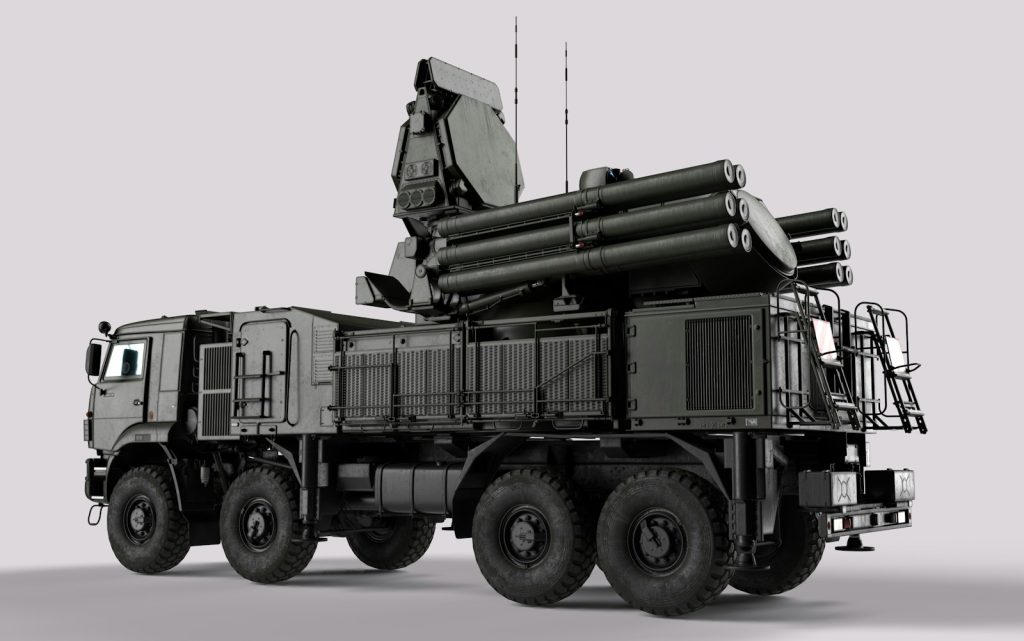
Venezuela had invested heavily in Russian-made air defenses, including long-range systems that, in theory, should have posed a serious threat to U.S. aircraft. Yet during the raid, Venezuelan-operated Russian air defenses were effectively AWOL, failing to contest the airspace in any meaningful way. Analysts noted that U.S. air strikes successfully targeted key nodes while a U.S. fleet in the Caribbean provided additional reach and pressure, leaving the Russian hardware looking impressive but largely inert.
Russian commentators have pushed back, arguing that the systems were not used rather than defeated. One prominent military observer pointed out that no S-300 or Buk systems were activated and that there was not even a single attempt to employ man-portable air defense weapons. That version of events suggests Venezuelan commanders were either paralyzed, blinded, or ordered to hold fire, a distinction that matters greatly for Russia’s efforts to defend the reputation of its export systems.
How the U.S. neutralized Venezuela’s Russian shield
Behind the scenes, American planners appear to have spent months shaping the battlefield before the first aircraft crossed into Venezuelan airspace. Reports indicate that for months, U.S. spies monitored Venezuelan networks and probed for weaknesses, a process that one Chinese analyst described as a warning that the United States can exploit internal divisions and other shortcomings in rival systems. That long-running intelligence effort set the stage for a campaign that combined stealth, cyber operations, and electronic warfare to strip away Venezuela’s Russian-made shield.
Accounts of How the US approached the problem describe a methodical effort to trick Venezuelan air defense operators into revealing their locations and operating patterns. Venezuela primarily relied on Russian systems, and once those operators were lured into switching on their radars, American forces could map, jam, and target them using some of the most advanced electronic warfare tools available. A separate analysis framed the strike as A defining moment in modern air warfare, arguing that U.S. stealth jets and jamming platforms effectively blinded and bypassed both Russian and Chinese air defense architectures that had been deployed in Venezuela.
Embarrassment for Moscow, warning for Beijing
The operational outcome has been described by some Western experts as Embarrassing for Russia, since Venezuelan-operated Russian air defenses failed to protect a friendly government from a large-scale U.S. operation. The fact that no U.S. aircraft were shot down has raised doubts among potential buyers about how these systems perform when facing a peer adversary rather than simulated targets. For Moscow, which has long marketed its surface-to-air missiles as a cost-effective counter to Western airpower, the images from Caracas cut directly against that narrative.
In Asia, strategists are drawing their own conclusions. One Chinese military voice argued that, in terms of military and defense capabilities compared to the United States, China is relatively evenly matched, with only some gaps, but that the Venezuela episode highlighted internal divisions and other shortcomings that must be addressed. The same analysis warned that the Venezuela attack should be seen as a reminder for China to boost air defense and counter-intelligence against infiltration. For Beijing, the lesson is not only about hardware but about the need to harden networks against the kind of long-term surveillance and deception that preceded the raid.
Washington’s message and Moscow’s rebuttal
U.S. officials have not been shy about highlighting the performance gap on display over Caracas. Pentagon chief Pete Hegseth mocked the Russian-supplied defenses in Venezuela after they failed to stop American aircraft, noting that the systems “didn’t work so well” as U.S. forces carried out the raid without reported casualties. In a separate social media post, U.S. Defence Secretary Pete Hegseth again derided the Russian equipment, reinforcing Washington’s narrative that American technology and training can outmatch Russian exports in real combat.
Russia, for its part, has condemned what it called an act of armed aggression by the United States against Venezuela and has sought to limit the reputational damage to its defense industry. Russian voices have emphasized that no S-300 or Buk batteries were actually engaged, arguing that the systems were not given a fair test. At the same time, the United States has moved to tighten the economic screws, with reports that it is attempting to seize The Marinera tanker, previously known as Bella-1, in the Singapore Strait, a vessel linked to Venezuelan and Russian oil interests. That combination of military success and financial pressure underscores how Washington is using the raid to send a broader strategic message to Moscow and its partners.
What the failure in Venezuela really says about Russian air defenses
For military professionals, the most important question is not whether Russian hardware is useless, but what the Venezuela case reveals about how such systems must be integrated and operated to be effective. Defense expert Mark Cancian of the Center for Strategic and International Studies has argued that the outcome reflects a mix of factors, including the quality of Venezuelan training, the readiness levels of the units, and the sophistication of U.S. suppression tactics. In his view, the raid shows that even advanced Russian systems can be neutralized if operators are poorly prepared and their networks are compromised before the shooting starts.
Other analysts have stressed that the Venezuelan experience should be a wake-up call for all countries operating Russian systems, not just for Caracas. The fact that Venezuelan-operated Russian air defenses were unable to shoot down U.S. aircraft flying into and out of the capital suggests that any state relying on similar technology must invest heavily in training, redundancy, and counter-intelligence if it hopes to avoid the same fate. The raid on Venezuela has therefore become a real-world laboratory for modern air warfare, one that will shape how both Russian and Western planners think about the balance between air offense and air defense for years to come.
More from Wilder Media Group: