
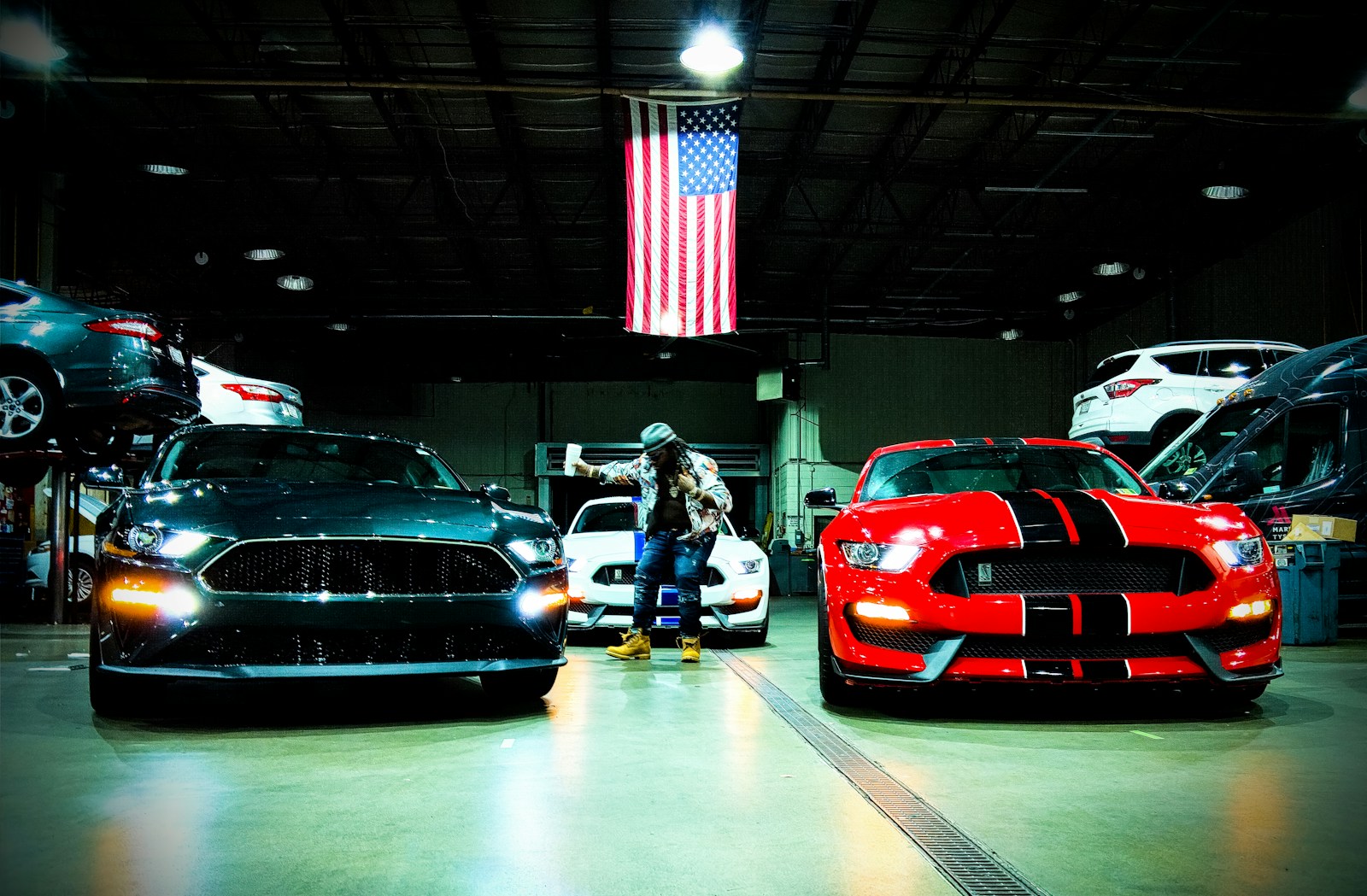

World Car of the Year used to be a stage where American brands could at least expect a cameo. Now, as one country’s automakers crowd the finalist lists and collect the trophies, the United States finds itself watching from the audience. The shutout is not a one-off snub but a sign of how quickly the global balance of power in carmaking is tilting away from Detroit and toward Asian and especially Chinese and Korean rivals.
How World Car of the Year became a global barometer
To understand why American brands being absent matters, it helps to look at what the World Car of the Year title actually represents. The award is part of a broader program, The World Car Awards, which brings together a jury of 102 international automotive journalists from multiple continents to evaluate new vehicles. That figure, 102, is not just trivia, it signals that the verdict reflects a wide cross section of markets and driving cultures rather than the tastes of a single region.
The program’s own historical record, catalogued in a detailed WORLD CAR AWARDS, LIST, WINNERS, YEAR document, shows how the competition has evolved from a largely European and Japanese affair into a truly global contest. Over time, categories such as World Electric Vehicle and World Urban Car have been added alongside the flagship Car of the Year, mirroring the industry’s shift toward electrification and city-focused mobility. In that context, being consistently absent from the podium is less about missing a trophy and more about losing influence over what the world now considers the benchmark for innovation, efficiency, and design.
South Korea’s surge and the Kia EV3 moment
While American brands have faded from the World Car conversation, South Korea has stepped decisively into the spotlight. The clearest symbol of that rise is the compact electric crossover that took the top prize, with the Kia EV3 named 2025 World Car of the Year. Positioned as a practical five seat layout that blends a sliding center console table with an ultra wide display, the EV3 distills the formula that is winning over jurors: approachable pricing, thoughtful packaging, and a clear electric identity rather than a half step hybrid compromise.
The brand’s own communications underscore how the EV3 sits within a broader portfolio of global models, from the Picanto city car to the Rio, Cerato and larger EV6 and EV9. That breadth gives Kia the scale to experiment with dedicated electric platforms while still serving cost sensitive buyers. It also helps explain why South Korea, listed in global production tables as a leading Country for Total Vehicles Produced, can now field multiple credible contenders in the same awards cycle. The EV3’s win is not an isolated upset, it is the product of an industrial base that has quietly become one of the world’s most efficient car factories.
Kia’s back to back wins and the EV pivot
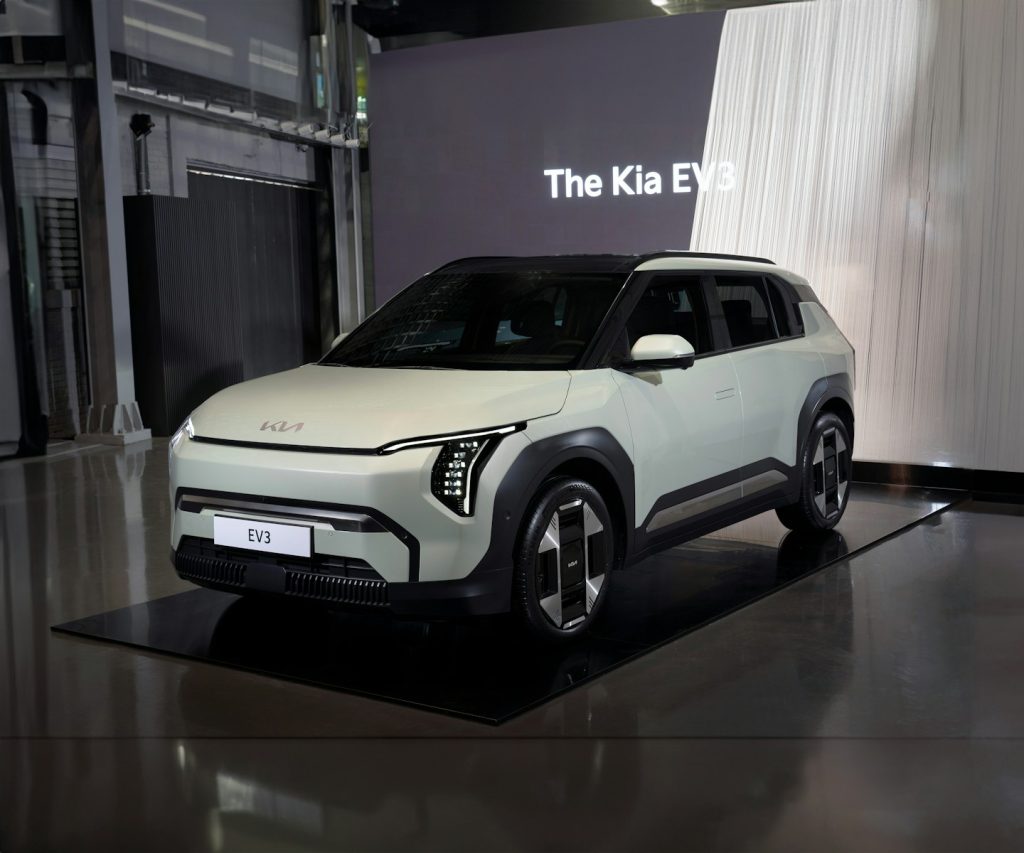
The EV3’s triumph did not come out of nowhere, it followed a year in which its larger sibling, the Kia EV9, had already signaled that Korean electric SUVs were ready to compete at the very top. At the 2024 ceremony, the Kia EV9 secured a double win, taking both its segment and an overall honor at the World Car Awards. That back to back success across two model years shows a pipeline of EV products, not a one off halo project, and it reinforces the idea that Korean brands have mastered the art of scaling battery platforms from compact crossovers to three row family haulers.
The 2025 event at the World Car Awards, New York International Auto Show drove the point home, with electric vehicles dominating nearly every category and the EV3 crowned as the overall winner. In that environment, American automakers that still rely heavily on internal combustion trucks and SUVs look increasingly out of step with where the global jury is placing its bets. The awards are not dictating the market, but they are reflecting a consensus that the most interesting engineering and design work is happening in dedicated EVs, a space where Korean and Chinese brands are moving faster than their U.S. rivals.
China’s rise and the 2026 finalist shock
If South Korea has become the awards circuit’s quiet overachiever, China is the disruptive force that now dominates the shortlists. The latest slate of contenders for 2026 delivered a jolt to American pride, with In the World Urban Car category, Chinese brands filled the field. Finalists included the Baojun Yep Plus and its twin, the Baojun Yep Plus / Chevrol co badged variant, underscoring how Chinese manufacturers are not only building for their domestic market but also tailoring products for global partners and export.
That dominance in the small city car segment is backed by sheer industrial weight. China is now listed as the world’s largest producer of vehicles, with China turning out a Total Vehicles Produced figure of about 30.2 million vehicles in 2023 across Cars Produced and Commercial Vehicl output. When that kind of volume is paired with aggressive investment in electric drivetrains and software, it becomes easier to see why Chinese brands are suddenly everywhere on the World Car finalist lists. For American automakers, the shock is not just that they are missing from the 2026 lineup, it is that the gap is being filled by companies that barely registered in Western showrooms a decade ago.
Why American brands are falling behind
Inside the U.S. industry, there is a growing recognition that the problem is not just perception but strategy. Ford CEO Jim Farley has been blunt, warning that China is “completely dominating” Tesla, GM, and Ford in electric vehicles, helped by strong industrial policy support that their automakers get to enjoy. His comments highlight a structural disadvantage for American brands that are trying to pivot to EVs while still defending lucrative gasoline truck and SUV franchises, often without the same level of coordinated state backing that Chinese rivals receive.
The World Car Awards jury of 102 journalists is not judging industrial policy, it is judging products, but the two are linked. When Chinese and Korean manufacturers can amortize battery research across millions of units and multiple nameplates, from compact crossovers like the EV3 to larger SUVs such as the EV9 and even small urban models like the Baojun Yep Plus, they can move faster on range, charging speed, and in car tech. American brands, by contrast, are still in a transitional phase, with lineups that mix legacy platforms and newer EVs that have yet to achieve similar scale. Until that changes, the sight of American automakers being shut out while one country or another dominates the World Car of the Year stage is likely to become a recurring feature of the global auto calendar rather than an exception.
More from Wilder Media Group: