

Electric vehicles were supposed to be the future, but for many buyers the price tag has been stuck in the future too. That is starting to change as carmakers slash stickers on some of their most affordable models, turning once niche city cars and compact hatchbacks into genuine budget options. One small EV in particular was already a bargain before nearly $6,000 came off the price, and its aggressive discounting captures how quickly the economics of going electric are shifting.
Behind that headline cut sits a broader story about competition, incentives and supply chains that is reshaping what “entry level” means in the battery age. From Europe’s cheapest electric runabout to mass market models in the United States and Canada, manufacturers are using price as their sharpest tool to keep demand growing while tax credits fade and new rivals crowd the market.
The tiny EV that just lost nearly $6,000
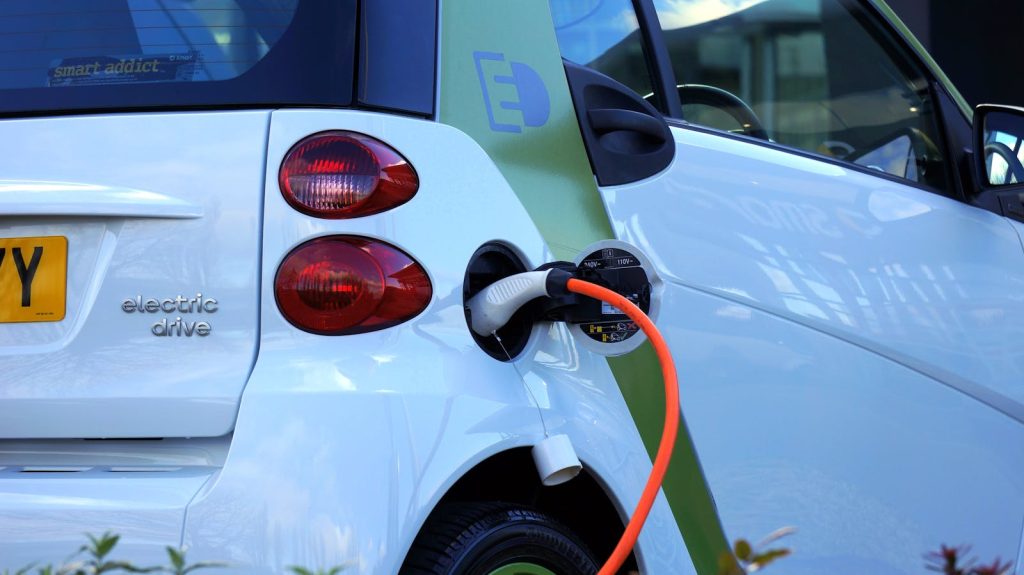
The most dramatic recent move comes from Dacia, which has taken an already low priced city car and carved off almost another $6,000 to keep it in reach of cost conscious drivers. In Germany, the company cut the price of the Spring by a full €5,000, a reduction large enough to reposition the car in the same mental space as basic combustion hatchbacks rather than tech heavy status symbols. For buyers who have been waiting for an EV that feels like a normal small car purchase rather than a lifestyle statement, that kind of discount is the tipping point.
The promotion is time limited, with Dacia requiring customers in Germany to sign a contract by June 30 to secure the €5,000 saving on the Spring, but the size of the cut signals how aggressively it is prepared to defend its budget niche. Reporting on the deal notes that the offer effectively knocks nearly $6,000 off a model that was already marketed as one of Europe’s most accessible electric cars, turning the Spring into a case study in how far pricing can move when a manufacturer prioritizes volume over margin, as highlighted in coverage of how Dacia cut €5,000 off the Spring in Germany.
How Dacia turned the Spring into Europe’s bargain EV
Dacia has built its modern reputation on no frills value, and the Spring is the purest electric expression of that strategy. The car trades outright performance and long range for light weight, compact dimensions and a focus on urban use, which keeps battery size and therefore cost down. That philosophy has allowed The Spring to be positioned as Europe’s most affordable electric vehicle, a title that comes with compromises but also with a clear promise to drivers who simply want a cheap way into zero emission motoring.
Safety and refinement are part of that trade off, with assessments of The Spring noting that its budget engineering shows up in crash test performance and cabin quality, even as Dacia works to address concerns by submitting updated versions for retesting. Yet the latest €5,000 discount in Germany suggests the brand believes price still trumps perfection for a large slice of the market, especially in cities where low speeds and short hops are the norm, a calculation that underpins detailed analysis of how The Spring’s positioning as Europe’s most affordable electric vehicle shapes its design and safety story.
From Europe to America, the template was set by the Chevy Bolt EV
Long before Dacia’s latest move, the idea of a truly low cost modern EV had already been tested in North America by the Chevy Bolt EV. General Motors took the unusual step of cutting the price of the 2023 model year by a flat $6,000 across the lineup, explicitly framing the decision as a way to prioritize affordability and rebuild momentum after a major battery recall. That reset turned the Bolt from a niche early adopter choice into one of the most aggressively priced electric cars on sale in the United States.
The official product pages for Chevrolet’s electric range show how the company has used the Bolt family as the entry point into its broader EV strategy, with the compact hatchback and its slightly larger sibling positioned below newer crossovers and trucks in both size and cost. By leaning on a mature platform and amortized development costs, Chevrolet could afford to trim margins and still keep the Bolt viable, a tactic that helped it stand out on the crowded grid of models showcased on Chevrolet’s own site.
The $6,000 cut that made the Bolt the cheapest EV in the U.S.
The scale of the Bolt’s price correction was striking in a market where new car stickers had been climbing for years. For the 2023 Chevy Bolt EV, the $6,000 reduction pulled the starting price down to levels more commonly associated with compact gasoline sedans, and it applied not just to the base car but across the range. Analysts noted that the move came after the Bolt and its slightly taller sibling were given an extensive refresh, suggesting General Motors was confident enough in the updated product to chase volume with a lower margin strategy rather than trying to recoup development costs through higher prices.
That bet quickly reshaped the competitive landscape. Coverage of the change pointed out that the 2023 Chevy Bolt EV and its companion EUV variant both received the same $6,000 haircut, with the smaller car starting at just $25,600, a figure that undercut many rivals and even some hybrids. The repositioning was so aggressive that the Chevrolet Bolt was described as the cheapest EV in the U.S. after the cut, with General Motors confirming it was trimming prices on the Bolt by around US$6,000 to bring the entry point down to US$28,195 from US$35,695, a shift detailed in reporting on how General Motors on Wednesday said it would cut prices on the Bolt.
Why deep discounts can supercharge demand
Once the lower prices hit showrooms, demand for the Chevrolet Bolt EV and Bolt EUV surged, validating the idea that a meaningful cut can unlock a new wave of buyers. Internal sales updates from General Motors highlighted that demand for the Chevrolet Bolt EV and Bolt EUV had outpaced supply after the new pricing strategy was announced, with the Bolt EUV starting at $27,200 and both models suddenly looking like bargains relative to larger, more expensive crossovers. That kind of response shows how sensitive mainstream shoppers are to a few thousand dollars in either direction when they are weighing the jump to an unfamiliar technology.
The reaction was not limited to corporate spreadsheets. In enthusiast communities, owners and observers pointed out that The Bolt was legitimately one of the absolute cheapest cars available new in America, ICE or electric, once the cuts were in place, while still offering a real world range of around 320 miles. That combination of low purchase cost and usable range made it a reference point for what an attainable EV could look like, a status reflected in discussions where The Bolt was legitimately one of the absolute cheapest cars you could buy new in America.
Other automakers join the EV price war
Once one brand proves that cutting prices can unlock demand, rivals rarely stay on the sidelines. In the United States, Kia has responded to a slowdown in its electric car sales by slashing stickers by up to $10,000 on all of its EV models, a move that commentators have framed as a bold attempt to jolt buyers back into showrooms. The company’s willingness to take such a dramatic step underscores how quickly the balance of power can shift in a segment where new entrants and changing incentives constantly reshape the playing field, a dynamic captured in analysis of how Kia slashes EV prices by $10000 on all models.
Hyundai has taken a slightly different route, using a mix of direct price cuts and equipment reshuffles to keep its popular Ioniq 5 attractive even as federal tax credits phase out. Reporting on the Korean brand’s strategy notes that Hyundai set a new bar on making affordable EVs by trimming the cost of the Ioniq 5 lineup just as the tax credit ended, effectively offsetting the loss of government support with its own discounts. That approach, which treats price as a lever to maintain monthly payment parity rather than simply chasing headlines, is detailed in coverage of how Hyundai’s insanely successful EV just became even cheaper as the tax credit ends.
Tax credits fade, but discounts and leases fill the gap
The backdrop to these cuts is a shifting incentive landscape, particularly in the United States where federal EV tax credits have been restructured and, for some models, effectively removed. As those subsidies fade, manufacturers and dealers have leaned more heavily on direct discounts and aggressive lease deals to keep monthly costs in check. Analysts tracking the market note that On Oct, Hyundai announced substantial price reductions across the 2026 Ioniq 5 lineup, explicitly describing the move as a way to reinforce its commitment to accessible electric mobility even as the $7,500 federal credit expired for that model.
Broader coverage of EV shopping trends points out that the end of straightforward tax credits has pushed buyers to pay closer attention to advertised lease specials and dealer cash offers, which can quietly replicate much of the old incentive’s value. Reports on the evolving landscape explain that On Oct, Hyundai and other brands have used a mix of lower MSRPs and subsidized financing to keep effective transaction prices near previous levels, a pattern illustrated in detailed breakdowns of how the EV tax credit is over, but EV lease deals and discounts are stepping in.
Nissan Ariya and the mainstreaming of EV price cuts
Price repositioning is not limited to tiny city cars and compact hatchbacks. Nissan has taken a scalpel to the sticker of its Ariya SUV, a model that was originally pitched as a premium leaning electric crossover. The company has slashed the starting price of the 2024 Ariya electric SUV to $39,590, a figure that brings it closer to the heart of the midsize market and signals a willingness to trade some margin for higher volumes. That shift is particularly notable because it affects a global halo model rather than a low cost regional special.
Dealer level information reinforces how significant that change is, with materials describing the all electric Nissan Ariya as an SUV with a base MSRP of $39,590, positioning it as an intriguing alternative for buyers who might otherwise default to a gasoline crossover. The move fits into a broader pattern in which Nissan has reduced the prices of the Ariya across multiple trims, extending the lower starting point throughout the range, a strategy outlined in guides that explain how Nissan slashes starting price of 2024 Ariya while dealer sites emphasize the Ariya SUV’s updated MSRP of $39,590.
Discounts are already moving the market
Evidence from registration data suggests that these price moves are not just noise. In key European markets, Battery electric vehicle (BEV) registrations have risen sharply by 25.8 percent, taking a 21.8 percent market share as manufacturers turned to discounts and tactical offers to spur uptake. That kind of double digit growth in a maturing segment indicates that there is still a large pool of buyers who are willing to go electric once the numbers on the finance sheet line up with their expectations, especially when they can compare discounted EVs directly with similarly priced combustion models.
Industry observers link that surge to a combination of manufacturer led cuts, dealer incentives and the gradual normalization of EVs in everyday life, from ride hailing fleets to delivery vans. Reports on the new car market’s return to growth in May highlight how BEV discounts have been particularly effective at nudging fence sitters into showrooms, with the 25.8% rise in registrations and 21.8% share cited as clear signs that price sensitive buyers are responding to deals, a trend captured in analysis of how Battery electric vehicle (BEV) registrations rose sharply by 25.8%, taking a 21.8% market share.
Why EV prices are diverging, and what comes next
Not every manufacturer is cutting. Some automakers, like Rivian and Lucid, have adjusted their pricing strategies in the opposite direction, increasing base model prices to cope with higher input costs and the realities of building lower volume premium vehicles. That divergence reflects a split market in which mass market brands chase scale with cheaper models while luxury focused players lean on exclusivity and higher margins, a pattern summarized in assessments that note how Some, Rivian and Lucid have raised prices even as others trim them to keep EV adoption on track.
At the same time, mainstream brands are using targeted cuts to keep their own momentum going. Hyundai, for example, has been reported to cut prices on the 2026 Ioniq 5 by up to nearly $10,000 with the end of the $7,500 credit, while GM and Ford are extending incentives at a slower rate to close out 2025. Those moves sit alongside broader commentary that, in the past five years, driven by state and federal incentives, electric vehicle competition has turned fierce in India and other markets, with new players jostling against legacy automakers, a dynamic described in analysis that opens with the phrase Caveats In the context of climate tech competition. Together, they paint a picture of an industry where price is becoming as important a battleground as technology, a reality underscored by reports that Hyundai cut prices on the 2026 Ioniq 5 by up to nearly $10,000 with the end of the $7,500 credit while supply chain focused commentary notes that Some automakers, like Rivian and Lucid, have already adjusted their pricing strategies, and climate tech roundups observe that Caveats In the past five years, driven by state and federal incentives, electric vehicle competition turned fierce.
The Bolt, the Spring, and the new floor for EV pricing
Taken together, the stories of the Dacia Spring and the Chevy Bolt EV show how quickly the lower end of the EV market is evolving. The Spring’s €5,000 discount in Germany and the Bolt’s $6,000 cut in the United States both transformed already affordable models into outliers that forced competitors to rethink their own pricing. In each case, the manufacturer accepted thinner margins in exchange for higher volumes and a stronger foothold in a segment that will only grow more crowded as new entrants arrive.
Those decisions have already reshaped sales charts and consumer expectations. Internal updates from General Motors emphasize that demand for the Chevrolet Bolt EV and Bolt EUV surged once the new pricing took effect, while detailed breakdowns of the 2023 Chevy Bolt EV and EUV price cuts highlight how the $6,000 reduction and $25,600 starting point reset the benchmark for what a modern EV could cost. On the other side of the Atlantic, coverage of The Dacia Spring in Germany notes that the €5,000 discount and lightweight, urban focused spec are aimed squarely at city drivers who simply need a cheap, simple electric car, a strategy spelled out in reports that describe how The Dacia Spring sees a dramatic price cut in Germany, with a €5,000 discount and a lightweight spec aimed squarely at urban electric drivers, while earlier coverage of the Bolt’s repositioning explains that 2023 Chevy Bolt EV and EUV get $6,000 price cut, start at $25,600, with further analysis noting that 2023 Chevy Bolt EV: $6,000 price drop for lineup as GM aims to prioritize affordability and corporate filings confirming that Demand for the Chevrolet Bolt EV and Bolt EUV have outpaced supply, while the broader context of falling stickers is illustrated by roundups of Electric Vehicles That Have Seen Major Price Decreases So Far In the year.
Supporting sources: Untitled, 10 Electric Vehicles That Have Seen Major Price Decreases So Far …, This EV Was Already Cheap, Then Dacia Knocked Off Nearly …, This EV Was Already Cheap, Then Dacia Knocked Off Nearly $6,000, 2023 Chevy Bolt EV: $6,000 price drop for lineup as GM aims …, 2023 Chevy Bolt EV and EUV get $6,000 price cut, start at …, Chevrolet Bolt is the cheapest EV in U.S. after price cut – Driving.ca, KIA SLASHES EV PRICES BY $10000 on ALL Models, Hyundai’s Insanely Successful EV Just Became Even Cheaper as …, The EV tax credit is over, but EV lease deals and discounts …, This EV Was Already Cheap, Then Dacia Knocked Off Nearly …, Dacia Spring Gets Supercharged Without the Premium Price Tag, GM takes over as the ‘#1 EV seller’ in Canada : r/electricvehicles, GM Earns a Sales Trifecta in Q3: No. 1 in Full-Size SUVs, Full-Size Pickups a…, 2024 Nissan Ariya | Fuel Economy, Nissan Ariya, New car market returns to growth in May as EV discounts spur uptake, 2025 Climate Tech Companies to Watch: Ather Energy and its premium e-scooters, The Impact of Supply Chain Disruptions on New Car Prices in 2025, September U.S. auto sales: EV surge boosts Hyundai, Kia volume.
More from Wilder Media Group: