

The centerpiece of President Trump’s promise to restore American shipbuilding strength is a single commercial yard on the Delaware River, and it is already straining under the weight of its existing workload. Hanwha Philly Shipyard has become the symbol of a hoped‑for industrial revival, yet the very success that made it attractive to Washington now threatens to slow the administration’s ambitions.
The yard’s order book is full, its workforce is stretched, and its docks are booked years ahead, even before new naval and commercial projects tied to Trump’s agenda fully arrive. The result is a paradox: the facility that is supposed to anchor a new era of U.S. maritime power risks becoming the first and most visible bottleneck.
The Trump doctrine meets a crowded waterfront
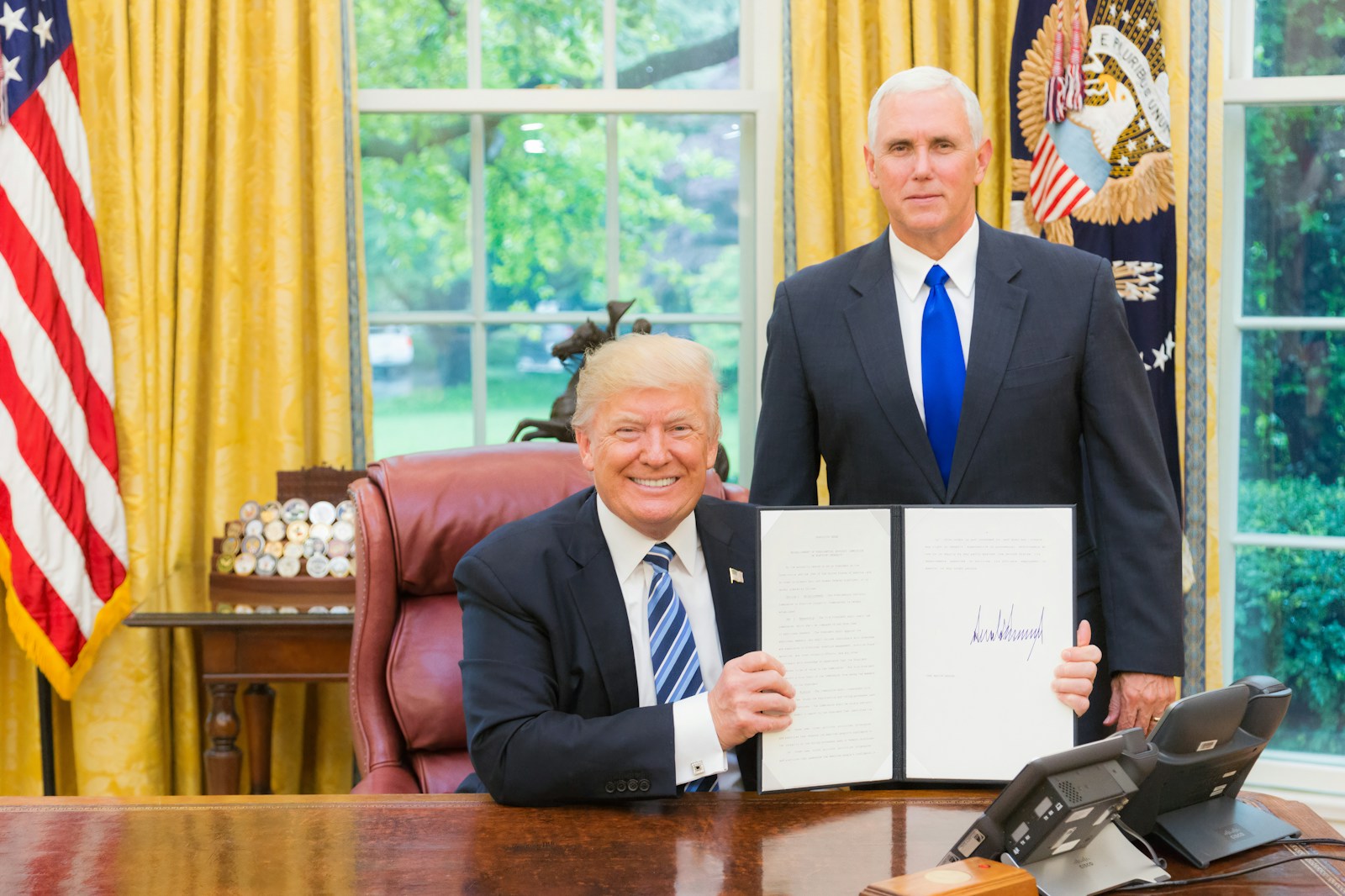
President Donald Trump has framed shipbuilding as a test of national strength, tying blue‑water capacity to economic security and industrial jobs. His executive order titled “Restoring America’s Maritime Do” signaled that the White House wants more hulls in the water, more work in domestic yards, and a larger share of global shipping and naval construction to originate in the United States, a shift that places intense pressure on a handful of capable facilities.
The policy push is not limited to rhetoric, since the order directs agencies to prioritize U.S. yards and to channel investment into the maritime industrial base, effectively turning shipbuilding into a flagship component of the broader “Restoring America” economic agenda backed by President Donald Trump. That ambition, however, collides with the reality that the country has only a small number of large, modern commercial yards, and that the most prominent of them is already operating near capacity.
Hanwha’s big bet on Philly Shipyard
Since acquiring Philly Shipyard in 2024, Hanwha has rebranded the facility as Hanwha Philly Shipyard and launched a multibillion‑dollar infrastructure program to modernize its docks, cranes, and production lines. The company has outlined a $5 billion investment plan that is intended to turn the yard into a hub for both commercial and government work, a scale of spending that reflects how central the site has become to the administration’s maritime strategy and to Hanwha’s own global ambitions.
The yard is already seeing the payoff from that bet, with Hanwha Philly Shipyard securing its first order for a U.S.‑built, export‑ready LNG carrier from Hanwha Group’s shipping affiliate, a contract that signals confidence in the yard’s ability to compete in high‑end commercial markets. That LNG deal, combined with a pipeline of government work and the planned infrastructure upgrades, underscores why Hanwha Philly Shipyard has become the focal point of Trump’s shipbuilding revival, but it also helps explain why the facility is already so busy.
A yard stretched by commercial, naval and nuclear ambitions
The administration’s expectations for the yard go well beyond tankers and LNG carriers, extending into sensitive defense work that would mark a major expansion of its role. Hanwha Group has confirmed that Hanwha Philly Shipyard has the capability to participate in nuclear submarine construction for the U.S. Navy, a statement that positions the yard as a potential partner in one of the most complex and tightly controlled segments of the defense industrial base.
That nuclear submarine capability, highlighted in reporting By Jensen Toussaint, would add another layer of demand on a facility that is already juggling commercial orders, Jones Act‑compliant projects, and prospective naval surface combatants. It also raises questions about workforce depth, security requirements, and the yard’s ability to manage classified programs alongside export‑oriented commercial work without introducing delays or cost overruns.
Backlogs, bottlenecks and the search for capacity
The strain at Hanwha Philly Shipyard is part of a broader pattern of congestion across the U.S. maritime industrial base, where backlogs have become a defining feature rather than an exception. The Defense Department and Navy have identified shipyard delays as a strategic vulnerability, pointing to aging infrastructure, limited dry dock space, and a shortage of skilled labor as key reasons why vessels spend too long in maintenance and new construction schedules slip.
To address those delays, Pentagon planners are increasingly looking to technologies such as artificial intelligence and digital twins, tools that can model ship designs, optimize workflows, and predict maintenance needs before they become schedule‑busting surprises. Officials have argued that AI‑enabled planning could help clear shipyard backlogs and improve throughput across the maritime industrial base, a push reflected in discussions at NATIONAL HARBOR, Maryland where The Defense Department and Navy emphasized that digital tools are now central to any realistic plan for expanding capacity.
Trump’s showcase yard and the limits of a single hub
The political spotlight on Hanwha Philly Shipyard has only intensified as President Trump has floated the idea of a new generation of “Trump Class” naval ships, a branding exercise that critics argue risks prioritizing symbolism over strategy. Analysts such as By Benjamin Giltner have warned that building vessels around a political label rather than a clear operational requirement could misallocate resources and fail to advance America’s strategic interests, particularly if the program leans too heavily on a single already crowded yard.
Those concerns are sharpened by the fact that the yard is being asked to serve as both a commercial export platform and a flagship for Trump’s naval expansion, a dual role that magnifies the risk of schedule conflicts and cost inflation. The critique that “Trump Class” ships are a “terrible idea” is rooted not only in questions about design and doctrine but also in the practical limits of what one facility can deliver, a point underscored in By Benjamin Giltner where the argument is made that such a program may not help achieve America’s strategic interests if it overwhelms existing industrial capacity.
Workarounds: overflow docks, new partners and autonomous ships
Recognizing that Hanwha Philly Shipyard cannot absorb every new order, company executives and federal officials have begun exploring ways to spread the load. Those talks include access to underused docks nearby, an effort to tap idle or underutilized waterfront assets in the region so that some stages of construction or outfitting can be shifted away from the main yard. The company is also considering building overflow orders at other facilities, including sites that have historically focused on repair or smaller vessels but could be upgraded to handle larger hulls.
These contingency plans highlight how fragile the current capacity picture is, with Trump’s shipbuilding revival already facing a bottleneck at an already busy U.S. yard before the full wave of new contracts has even arrived. Reporting on the administration’s strategy notes that Those talks include access to nearby docks and potential work for the U.S. Maritime Administration, underscoring that the solution set will likely involve a patchwork of public and private facilities rather than a single, all‑purpose hub.
Autonomy, AI and the next wave of demand
Even as the current backlog strains existing yards, new technologies are poised to generate additional demand for hulls and systems that only a few facilities can build. Hanwha has teamed up with HavocAI to develop 200‑foot autonomous warships for the U.S. Navy, a program that aligns with broader policy shifts in Washington and with Trump’s emphasis on leveraging advanced technology to maintain maritime dominance. The timing of that partnership reflects a belief that unmanned surface vessels will become a core part of fleet architecture, adding yet another category of complex ships to the production queue.
The autonomous warship effort is expected to move quickly, with testing and initial production targeted to begin within a relatively short window, which will further test the capacity of U.S. yards to integrate cutting‑edge sensors, software, and propulsion systems at scale. The collaboration between Hanwha and HavocAI, described in detail in coverage of 200‑foot autonomous warships, illustrates how Trump’s maritime agenda is not only about more ships but also about more sophisticated ones, a combination that intensifies the pressure on already busy yards like Hanwha Philly Shipyard.
Local stakes and the geography of revival
The choice of Philadelphia as a centerpiece of the revival is not accidental, since the city offers deepwater access, a skilled industrial workforce, and proximity to major East Coast shipping lanes. The Hanwha Philly Shipyard complex sits within a broader maritime cluster that includes terminals, logistics firms, and naval facilities, making it a natural anchor for Trump’s effort to rebuild a national shipbuilding ecosystem that had atrophied over decades.
Local leaders have embraced the prospect of thousands of new jobs and a revitalized waterfront, pointing to the LNG carrier order and the nuclear submarine capability as proof that the region can compete at the highest levels of global shipbuilding. The physical footprint of the yard and its surroundings, captured in mapping tools that highlight the Hanwha Philly Shipyard location, underscores how much of the local economy now hinges on whether the facility can expand fast enough to meet Trump’s ambitions without choking on its own success.
Can one yard carry a national strategy?
Trump’s push to “make U.S. shipbuilding great again” has elevated Hanwha Philly Shipyard from a regional player to a national symbol, but the gap between symbolism and capacity is becoming harder to ignore. The yard is simultaneously a commercial exporter, a potential nuclear submarine partner, a candidate to build “Trump Class” ships, and a prospective hub for autonomous warship production, a portfolio that would challenge even the largest global shipbuilders.
Industry experts argue that a sustainable revival will require a network of upgraded yards, a deeper workforce pipeline, and widespread adoption of AI‑driven tools, not just a single showcase facility. The early experience in Philadelphia, where Hanwha Philly Shipyard received its first LNG export order from Hanwha Group even as nuclear and naval ambitions ramp up, suggests that Trump’s American revival is real but fragile, dependent on whether policymakers can turn one crowded yard into the foundation of a broader, more resilient industrial base.
More from Wilder Media Group: