

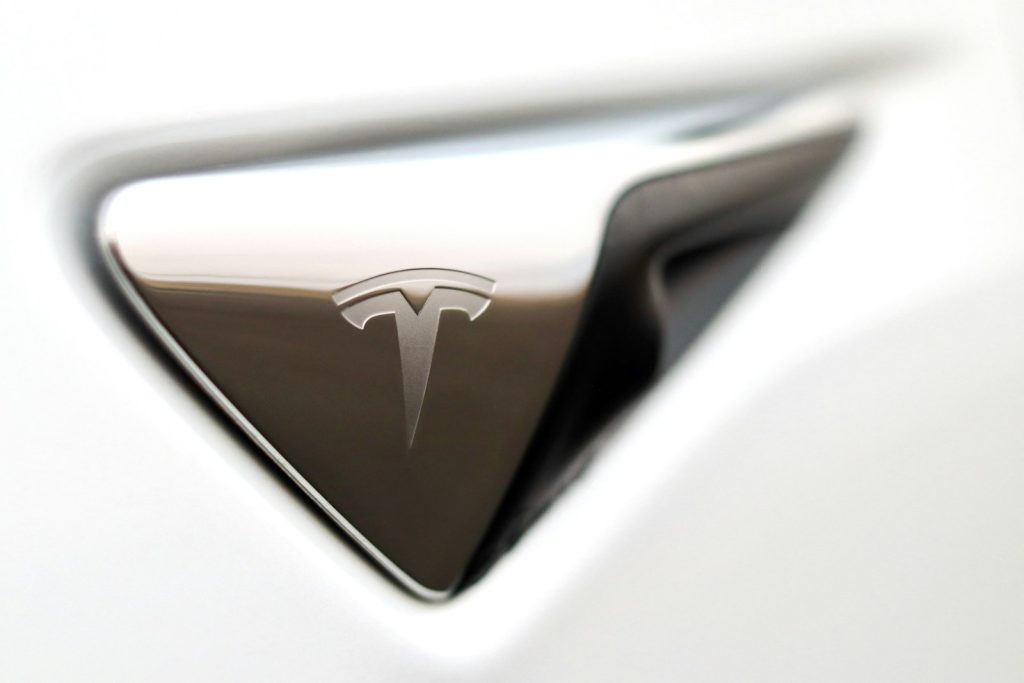
House lawmakers are sharpening their focus on a small but consequential piece of car design: the sleek, retractable handles popularized by Tesla. A new proposal on Capitol Hill would push automakers back toward simple, mechanical latches, arguing that style and aerodynamics should never come at the expense of a trapped passenger’s chance to escape.
The debate now unfolding in Washington is not just about one company’s hardware, but about how far regulators should go in dictating the interface between people and increasingly electronic vehicles. Flush handles have become a visual shorthand for high tech, yet critics say they have also become a weak link in emergencies when seconds matter.
Inside Rep. Robin Kelly’s push to rewrite the rulebook
At the center of the fight is U.S. Rep. Robin Kelly, the Illinois Democrat who represents IL-02 and who has made electric vehicle safety a signature issue. In WASHINGTON, Rep. Robin Kelly introduced a measure that would require every electric vehicle door to include a reliable mechanical way to open from inside and out, even if the car loses power, positioning the bill as a direct response to high profile failures of Tesla style hardware. Her office describes the proposal as a way to set a clear federal standard for electric vehicle doors so that drivers, passengers, and first responders are never left guessing about how to get someone out of a disabled car.
The legislation, which has been framed as a Safe Exit style act in supporting materials, would direct the National Highway Traffic Safety Administration to write detailed rules for these backup systems and to fold them into the broader crash and egress code that already governs conventional latches. In a separate description of the effort, a Lawmaker Readies Bill Requiring Manual Door Handles in Cars report notes that the goal is to guarantee that doors can be opened when power is lost, a scenario that has surfaced repeatedly in crash accounts involving electric models. The same push is reflected in Rep. Kelly’s own description of how the bill would empower regulators to set a uniform standard for electric vehicle doors, which she laid out in a detailed release from her office in WASHINGTON, where she emphasized that Today’s sleek designs must not override basic escape routes for occupants.
Safety investigations, Tesla’s redesigns, and the NHTSA backdrop
Lawmakers are not acting in a vacuum. The National Highway Traffic Safety Administration has already been probing whether Tesla’s retractable handles can fail at the worst possible moment, particularly on the Model Y, after drivers reported doors that would not open from the outside when the vehicle lost power or when electronics glitched. According to one account, The National Highway Traffic Safety Administration is investigating reports of Model Y door handle issues that could prevent entry, a pattern that has fed directly into congressional concern. The broader regulatory context is that NHTSA already oversees a web of egress and crashworthiness rules, and the agency’s own portal at nhtsa.gov lays out how it can mandate recalls or new standards if it concludes that a design poses an unreasonable risk.
Facing that scrutiny, Tesla has begun to adjust its hardware and software. Reporting on internal changes describes how the company is updating its passenger trapping door handles so that they default to an unlocked state or present clearer manual releases when the car detects a crash or power failure. Those changes are widely understood to be a response to a safety probe launched by the National Highway Traffic Safety Administration, which has been gathering accounts from parents who say they struggled to remove their children from the vehicle. Regulators have also been investigating Tesla after passengers say they have been unable to operate Tesla door handles in emergencies, and one analysis cited by lawmakers ties the design to at least 15 deaths, a figure that appears in coverage of the Safe Exit debate and is echoed in a report that notes Regulators have been investigating Tesla in connection with at least 15 deaths linked to doors not opening.
Global backlash against flush handles and what comes next in Congress
Even as the U.S. debate unfolds, other regulators are moving faster and more bluntly. In China, authorities are preparing to outlaw the very style of retractable handle that helped define Tesla’s design language, a move that has reverberated through the global auto industry. One report notes that China Is Banning Tesla Style Door Handles outright, and another explains that According to Autoblog, Chinese regulators are moving ahead with rules that require all vehicles under 3.5 tons to have mechanical releases for both interior and exterior handles. A separate analysis of global incidents found that a Bloomberg analysis tied 15 auto deaths directly to Tesla’s doors not opening, a stark data point that has been widely cited by safety advocates and that appears in coverage of how Bloomberg analysis tied 15 auto deaths directly to Tesla and its retractable hardware. Those international moves have given fresh momentum to U.S. critics who argue that if Chinese regulators can draw a bright line, Congress should be able to do the same.
On Capitol Hill, however, the path is less certain. Coverage of the proposal notes that it is unclear how much support the effort has with other lawmakers and that the bill may not end up being signed into law, even though it would give automakers several years to comply if it becomes law, a timeline described in detail in an analysis of how Tesla door design is targeted by the new bill. Another account frames the fight as The War On Electronic Door Handles Just Came To The U.S., describing how a U.S. Congresswoman has proposed a bill that would regulate the automaker’s door handle design and require manual alternatives, a characterization that appears in a piece headlined The War On Electronic Door Handles Just Came To The. A separate overview of the industry reaction notes that the bill was Introduced by Rep Robin Kelly and that the industry followed Tesla’s lead on flush handles, but now faces a reckoning as lawmakers seek to make future vehicles safer for everybody, a point underscored in a piece titled New Bill Finally Targets Electric Door Handles, But Only One Brand Gets Blamed. Against that backdrop, Rep. Kelly’s own office has stressed in WASHINGTON that Today’s proposal is not about punishing a single company, but about using federal power to set a clear standard for electric vehicle doors, a message that is spelled out in her release titled Rep Kelly introduces bill addressing Tesla, electric vehicle. For now, the flush handle remains on the road, but the political and regulatory pressure around it is rising fast.
More from Wilder Media Group: