
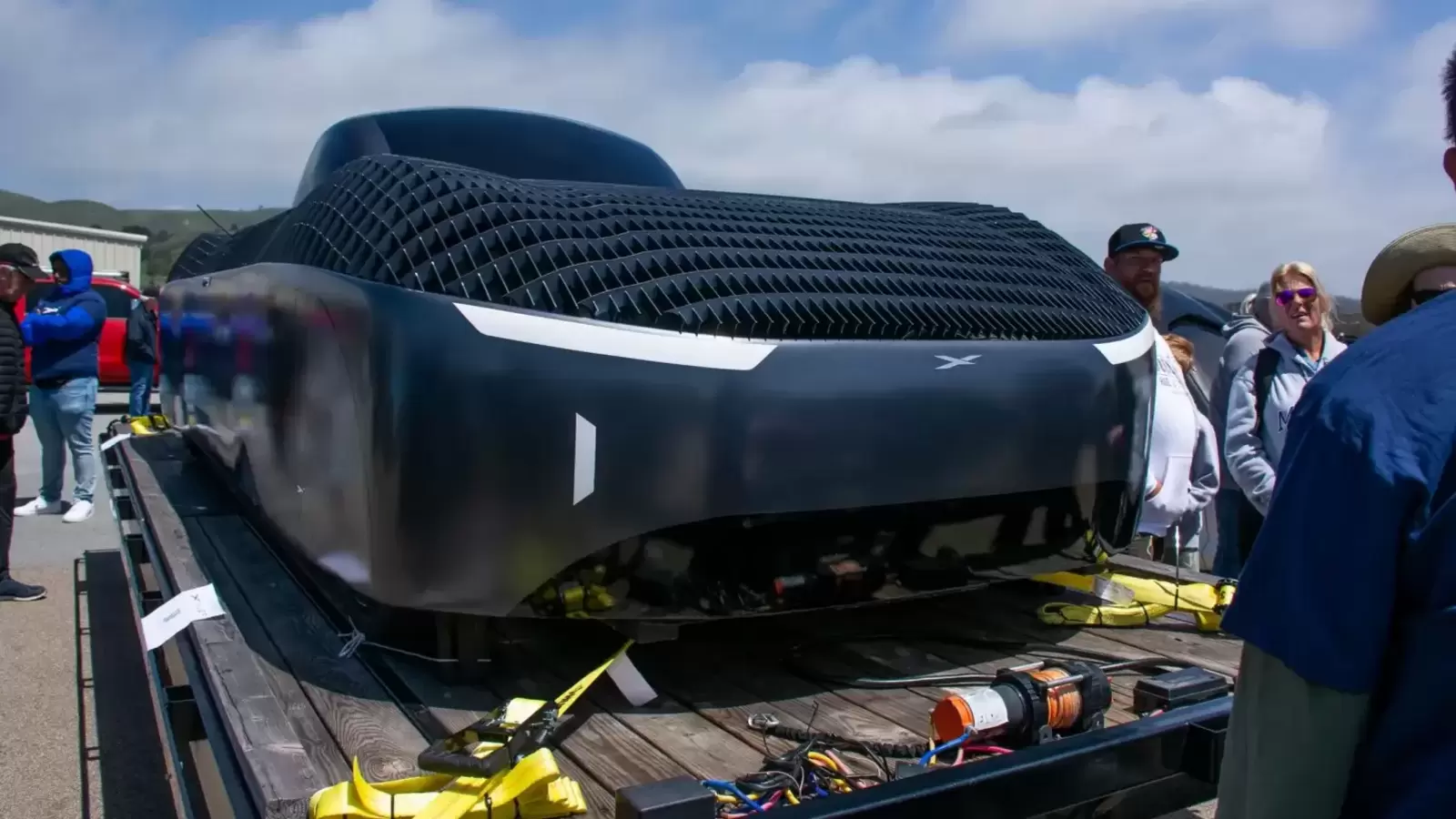

The long promised age of flying cars has quietly crossed a threshold that once belonged to science fiction. A California startup has begun building a real vehicle that can drive on public roads and lift off vertically, turning a century of sketches and prototypes into a product headed for paying customers. The world’s first production flying car is no longer a concept, it is a hand assembled machine taking shape in Silicon Valley workshops.
The Alef Model A Takes Off From Fantasy To Factory Floor

The company at the center of this shift is Alef Aeronautics, a California outfit that has spent more than a decade working toward a road legal aircraft that behaves like a car in traffic and a multicopter in the sky. Its first product, the fully electric Model A, is described as the world’s first commercial flying car and is now in limited production for early buyers, with US startup Alef Aeronautics confirming that manufacturing of the Model A flying car has begun. The company says the vehicle is designed to offer road legal driving and vertical takeoff, a combination that has eluded generations of engineers who tried to merge wings and wheels into one practical package.
Unlike earlier experiments that looked like small airplanes with license plates, the Model A is being pitched as a genuine daily driver that can slot into existing traffic patterns before rising above them. Alef Aeronautics has framed the car as the first of its kind to enter production for customers, a claim echoed in reports that describe the Model A as the first road legal flying car to reach this stage, with Alef Aeronautics Model A highlighted as the milestone product. Coverage of its first public flights notes that the vehicle has already taken to the air and that manufacturing of the Model A will take several months per unit as the company ramps up, a timeline underscored in reports on how the world’s first flying car takes flight and enters production.
Hand Built In Silicon Valley, Priced For Early Adopters
For now, Alef’s breakthrough looks more like a bespoke supercar operation than a mass market assembly line. The Model A is being built largely by hand at a facility in Silicon Valley, where only a small number of early customers are in line to receive the first units, according to detailed accounts of how the world’s first flying car is currently being assembled in California. Earlier reporting described the vehicle as being hand made in the state, with CEO Jim Dukhovny introducing the Model A electric flying car and emphasizing its dual capability for driving and vertical takeoff. That craftsmanship and complexity come at a price, with the first flying car that will be commercially available expected to cost around $300,000, a figure Alef CEO Jim Dukhovny discussed when he appeared on NewsNation Live.
The company’s own timeline suggests that buyers will not have to wait long to see the vehicles leave the factory. A Bay Area briefing on the project reported that production of the flying car is underway in San Mateo County and that delivery of the world’s first flying car could come within months, with the Bay Area company stressing that its schedule is on track. Separate coverage of the program notes that the world’s first flying car is expected to be available to customers by early 2026 and that the price tag is soaring along with expectations, with Flying cars take off as Alef Aeronautics Inc moves from prototypes to paid orders. Another report from Vietnam’s tech press reinforces that the Model A is fully electric and that Alef has finally been able to get production off the ground, describing how The Model A enters production in the United States.
Regulators, Safety And The Road To The Skies
Turning a flying car from a novelty into a mainstream transport option will depend as much on regulators as on engineers. In the United States, any vehicle that leaves the ground must satisfy the Federal Aviation Administration, which oversees aircraft certification, airspace rules and pilot licensing, responsibilities detailed on the FAA website. Alef Aeronautics has already highlighted that its Model A is intended to be road legal, a status that requires coordination with both aviation and motor vehicle authorities, and it has framed the car as a limited production ultralight that can fit within existing categories while the rules catch up. One short video feature describes the world’s first commercial flying car as the Alef Model A Ultralight and notes that, after more than a decade of development, it is now in production and being assembled in California, presenting the world’s first commercial flying car as a bridge between today’s regulations and tomorrow’s urban air mobility networks.
Safety systems are another pillar of that transition, and Alef’s design has been scrutinized for how it handles emergencies in both driving and flight modes. One detailed overview of the project describes the world’s first modern flying car taking flight and entering mass production, highlighting that the vehicle includes an onboard kill switch if needed, a feature cited in coverage of the First Modern Flying Car Takes Flight and Enters Mass Production. Another report notes that a California startup called Alef Aeronautics has officially begun manufacturing what it calls the world’s first flying car and that the vehicle will not be cheap, while also raising questions about whether owners will need a pilot’s license to drive it, concerns captured in a social media post about how a California startup called Alef Aeronautics is reshaping expectations. Together, these reports sketch a picture of a technology that has finally reached the factory, even as regulators, customers and neighbors work out what it means to share streets and skies with a car that can lift off.
More from Wilder Media Group: