
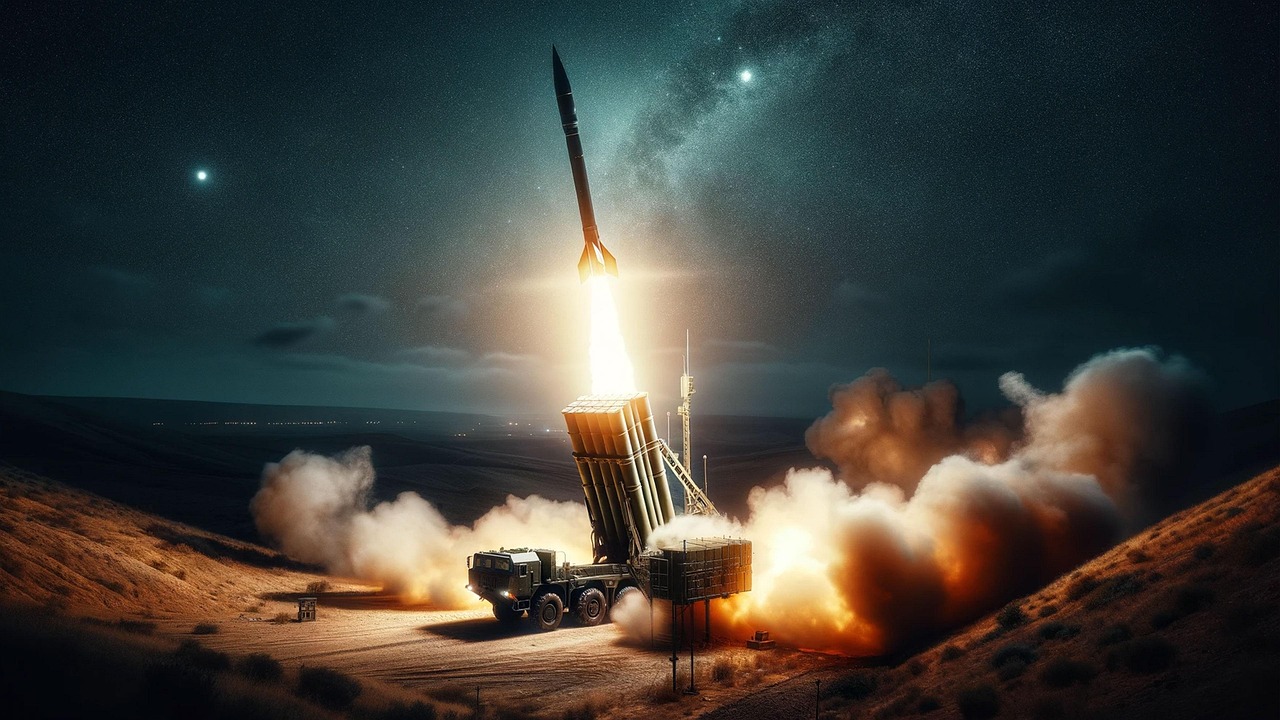

The Pentagon’s latest hypersonic experiment marks a significant step in the race to field faster, more maneuverable weapons that can evade traditional defenses. Officials describe a next-generation hypersonic missile vehicle that builds on a series of recent test flights, including reusable platforms and advanced guidance systems, to validate both extreme speed and precision. While some public claims about specific systems remain unverified based on available sources, the broader test campaign points to a maturing U.S. hypersonic arsenal rather than a single breakthrough moment.
What the Pentagon’s New Test Really Proves

Defense officials say the newly tested vehicle is designed to operate at hypersonic speeds, a regime defined as faster than Mach 5, where airframes and guidance systems are pushed to their limits. Earlier flights of the experimental Talon test vehicle, which exceeded Mach 5, demonstrated that reusable platforms can survive and collect data in this environment, giving engineers a template for operational weapons. The Pentagon’s latest announcement, framed around a next-generation missile vehicle rather than a pure research craft, suggests that those lessons are now being folded into designs that can carry warheads and integrate with existing launch systems.
However, the public record around specific systems is uneven, and some claims are disputed. A social media post that trumpeted “🚨 BREAKING NEWS: PENTAGON SUCCESSFULLY TESTS DARK EAGLE HYPERSONIC MISSILE” has circulated widely, but it mixes speculation, commentary and conflicting assertions, and does not constitute an official confirmation. Against that backdrop, Pentagon statements about a successful next-generation vehicle test should be read as part of a broader, incremental test program, not as proof that any single named missile, including Dark Eagle, has quietly moved into full operational status.
From Talon Flights to GPS-Free Guidance
The most concrete evidence of progress lies in a string of experimental flights that have steadily expanded U.S. hypersonic know-how. The reusable Talon test vehicle, which reached speeds above Mach 5, has been pitched as a workhorse for developing future hypersonic weapons, allowing repeated flights instead of one-off shots. In parallel, Stratolaunch has advanced its own family of vehicles, and its Talon-A2 has been described as the first recoverable U.S. hypersonic aircraft since the 1960s, underscoring how rare it is to bring such vehicles back intact for inspection.
Guidance and navigation are evolving alongside airframes. In two recent flights, Northrop Grumman demonstrated an advanced navigation system that allowed a hypersonic test vehicle to fly without GPS, a critical capability if satellites are jammed or destroyed in conflict. The Pentagon’s new missile vehicle is expected to draw directly on these experiments, combining reusable test data, GPS-independent guidance and high-speed aerodynamics into a single integrated weapon concept.
How the New Vehicle Fits the Wider Hypersonic Race
Hypersonic weapons are attractive to militaries because they compress decision time and can maneuver unpredictably, making interception far harder than with traditional ballistic missiles. By definition, Hypersonic weapons can fly faster than Mach 5, or more than 3,836 miles per hour, and some designs aim to sustain that speed while executing sharp turns in the atmosphere. Reporting on the global race notes that the fastest systems to date can reach several miles a second, and that their speed is a central reason Aug hypersonic missiles are seen as such a disruptive threat. The Pentagon’s latest test is best understood as an attempt to close perceived gaps with rivals by proving that U.S. designs can match that combination of velocity and agility.
Within the U.S. portfolio, the Long Range Hypersonic Weapon System, or LRHW, is one of the flagship Army programs, designed to achieve a range exceeding 1,725 miles and provide a land-based option for deep strikes. At sea, The Department of Defense has tested a hypersonic missile launched from Cape Canaveral Space Force Station in Florida using a sea-based cold-gas launch system, a sign that the Navy is exploring how to adapt hypersonic payloads to ships and submarines. The Pentagon’s newly touted missile vehicle slots into this ecosystem as a testbed that can inform both land and sea-based concepts, rather than as a standalone silver bullet.
Industrial partners are central to that effort. Stratolaunch, a California-based aerospace company, has been highlighted in milestone tests for providing air-launch services and reusable hypersonic platforms that shorten development cycles. As the Army aims for its next major Apr test window and the Pentagon continues to refine its next-generation missile vehicle, the pattern is clear: instead of a single dramatic unveiling, U.S. hypersonic capability is emerging from a dense web of experiments, each one nudging the technology closer to operational reality while leaving some of the most sensitive details deliberately obscured.
More from Wilder Media Group: