
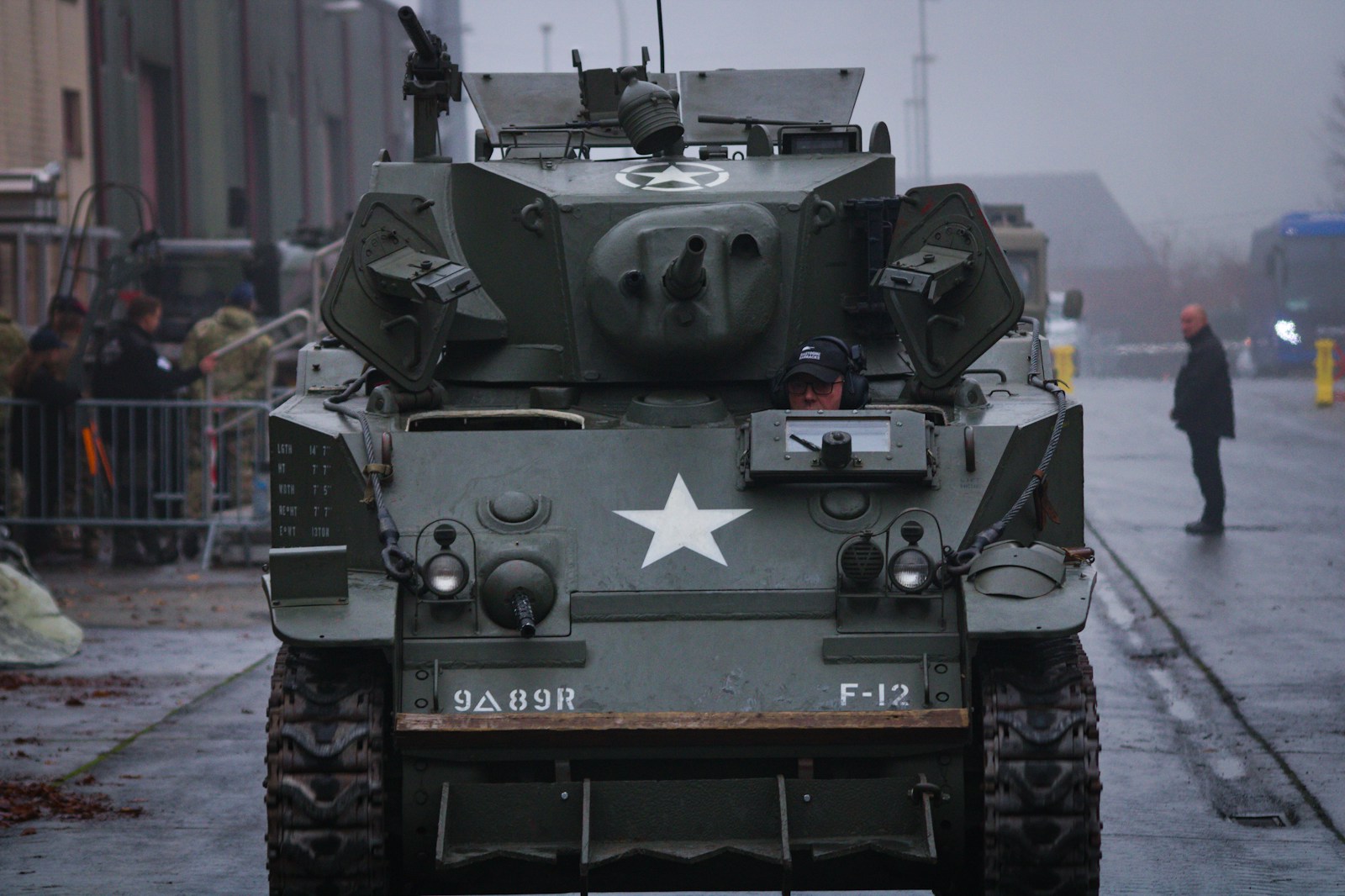

Decades after they first rolled off production lines, a surprising number of Cold War tanks are still in uniform around the world. Their longevity reflects rugged engineering, constant upgrades, and the reality that many armies rely on proven armor rather than the latest designs. These ten tanks, some dating back to the 1940s, remain in service today, showing how battlefield relevance can outlast original expectations by generations.
1) M60 Patton
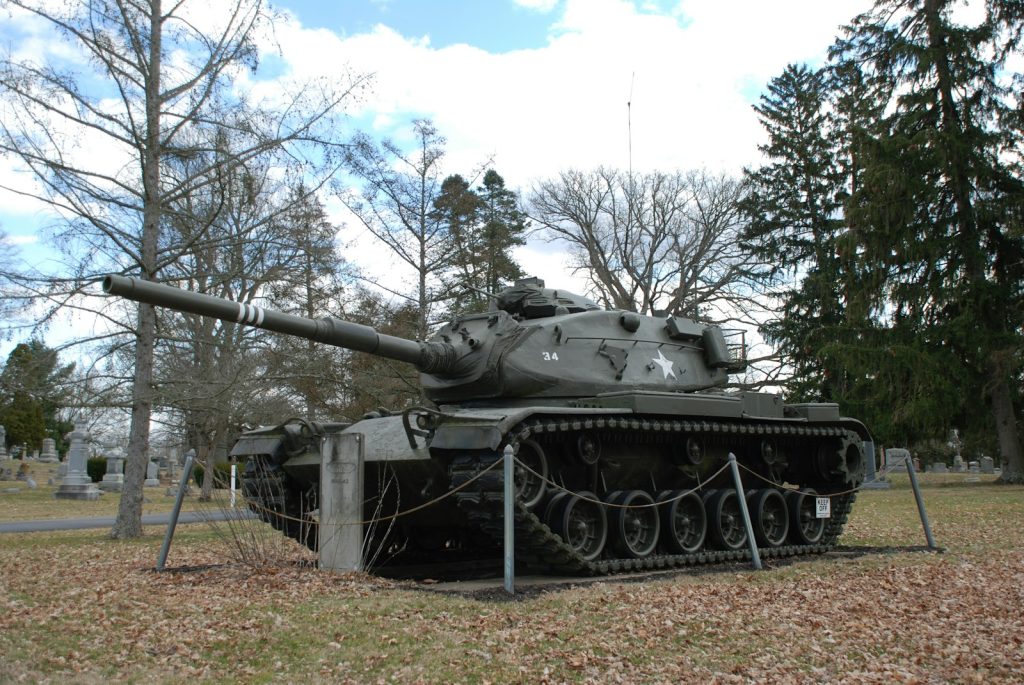
The M60 Patton main battle tank entered United States service in 1960 and quickly became a backbone of Western armored forces. According to detailed production data, 15,000 M60s were built, serving in the armies of 22 countries. That scale helps explain why the design still appears on modern orders of battle. Turkey alone operates over 900 M60s as of 2023, a figure that underlines how deeply this platform is embedded in NATO-aligned inventories.
Many surviving M60s have been upgraded with improved fire-control systems, thermal sights, and reactive armor, keeping them viable for second-line and deterrent roles. For countries that cannot afford brand-new main battle tanks, modernized M60s offer a cost-effective way to field heavy armor with acceptable protection and firepower. Their continued service illustrates how industrial volume and incremental modernization can keep a 1960s design relevant in twenty-first century security planning.
2) T-55
The Soviet-designed T-55 medium tank, first produced in 1958, is one of the most widely deployed armored vehicles in history. It remains operational in more than 30 countries, a testament to its simple mechanics and ease of maintenance. The design’s longevity is especially visible in North Korea, which maintains an estimated 2,500 T-55s in its inventory as of 2022, giving Pyongyang a large, if aging, armored force that still matters for regional deterrence.
Although the T-55 is outclassed by modern main battle tanks, many operators have upgraded armor, engines, and fire-control systems to keep the platform useful for infantry support and internal security. Its widespread availability also means spare parts and ammunition remain relatively easy to source. For smaller states and sanctioned regimes, the T-55’s continued service highlights how legacy Soviet equipment still shapes local balances of power long after the original factories stopped producing it.
3) T-72
The T-72 main battle tank entered Soviet service in 1973 and continues to serve in more than 40 armies worldwide. Its enduring frontline role is starkly visible in the 2022 Ukraine conflict, where Russia fields an estimated 2,000 plus operational T-72 variants. Visual documentation of both losses and active units confirms that this family of tanks remains central to Russian armored brigades, despite the introduction of newer designs.
Export success has also kept the T-72 in circulation, with many countries operating locally upgraded versions featuring improved armor packages and digital fire-control systems. These modifications aim to offset vulnerabilities exposed in modern combat, such as susceptibility to top-attack munitions. The T-72’s persistence shows how a relatively affordable, mass-produced design can anchor national armored forces for decades, even as adversaries deploy increasingly sophisticated anti-tank weapons.
4) Leopard 1
Germany’s Leopard 1 main battle tank, often referred to simply as The Leopard, first entered service in 1965 after being designed and produced by Porsche in West Germany. A technical overview of the Leopard 1A1 underscores how this Leopard MBT prioritized mobility and firepower over heavy armor, reflecting Cold War doctrine that emphasized speed and first-shot accuracy. With a total of 4,744 vehicles produced since 1965, the LEOPARD 1 MBT family spread widely among NATO partners.
Today, the Leopard 1 persists in service with countries such as Greece and Chile, where around 200 upgraded tanks support training and reserve roles as of 2021. An additional production summary notes that those 4,744 units continue to equip the armed forces of eleven countries, highlighting the design’s staying power. For operators, the Leopard 1 offers a capable gunnery platform for crew training and secondary missions, freeing newer Leopard 2 fleets for frontline tasks.
5) Chieftain
The British Chieftain tank, commissioned in 1967, was once among the most heavily armed and armored Western designs of its era. Although retired from British service, it endures abroad, most notably in Iran. Reporting on Middle Eastern armor holdings indicates that Iran has approximately 100 refurbished Chieftain units integrated into the Islamic Revolutionary Guard Corps as of 2020, reflecting Tehran’s long-standing practice of sustaining legacy Western equipment despite sanctions.
Iranian engineers have reportedly overhauled engines and fire-control systems to keep these tanks operational, pairing them with domestic support infrastructure. In IRGC service, Chieftains can reinforce armored brigades or serve as mobile fire support in defensive plans. Their survival in Iran’s order of battle illustrates how geopolitics and embargoes can extend the life of older platforms, as states invest in local upgrades rather than rely on new imports that may never arrive.
6) AMX-30
France’s AMX-30 battle tank, rolled out in 1966, was designed around the idea that mobility and firepower could compensate for lighter armor. While France has long since replaced it, the AMX-30 remains in limited service elsewhere. Cyprus retains 52 examples for coastal defense duties, according to 2019 assessments that catalog the island’s armored inventory and deployment patterns along key approaches.
In Cypriot service, the AMX-30’s relatively low weight and decent cross-country performance make it suitable for the island’s varied terrain, from coastal plains to more rugged interior areas. These tanks provide a credible deterrent against amphibious or mechanized incursions, even if they would struggle against the latest main battle tanks. Their continued use underscores how geography and specific mission profiles can keep older armor relevant in niche but strategically important roles.
7) Type 59
China’s Type 59 tank, based on the Soviet T-54 and adopted in 1959, was the country’s first mass-produced main battle tank. An analysis of the Type 59 MBT notes that it was essentially a Chinese-produced version of a Soviet design, with the number 59 m often associated with its early development timeline. Over 5,000 Type 59s were produced historically, giving the People’s Liberation Army a huge armored fleet during the Cold War.
Today, the Type 59 is still deployed by the People’s Liberation Army in reserve roles, with hundreds active in training as of 2023. Many have been upgraded with new guns, armor, and electronics, while others serve as platforms for specialized variants. For China, keeping Type 59 units in secondary roles frees more modern tanks for frontline formations, illustrating how a layered force structure can stretch the utility of legacy hardware without sacrificing overall combat capability.
8) PT-76
The Soviet PT-76 amphibious light tank, introduced in 1952, occupies a unique niche among enduring armored vehicles. Its lightly armored hull and water-jet propulsion allow it to swim across rivers and coastal waters, a capability that remains valuable in certain environments. Reporting on its modern use highlights Vietnam, which operates about 200 PT-76s for reconnaissance in wetland terrains as of 2022, particularly in riverine and delta regions.
In Vietnamese service, the PT-76’s ability to move seamlessly between land and water supports surveillance, patrol, and rapid reaction missions in areas where heavier tanks would bog down. Although vulnerable to modern anti-armor weapons, its amphibious mobility and low logistical footprint keep it relevant for specialized tasks. The PT-76’s survival shows how unique capabilities, rather than raw protection, can justify keeping a 1950s design in active inventories.
9) M48 Patton
The American M48 Patton medium tank, first fielded in 1952, bridged the gap between early postwar designs and later main battle tanks like the M60. While the United States has retired it, the M48 still serves abroad. Taiwan’s army maintains around 400 M48s for second-line duties, according to a report on planned upgrades that would extend their service life amid rising tensions with China.
These Taiwanese M48s are candidates for modernization programs that could add improved fire-control systems and survivability enhancements, turning them into credible support assets behind newer frontline armor. Their continued presence in Taiwan’s order of battle reflects both budget realities and the island’s need to maximize every available platform for deterrence. In a potential conflict, even older tanks like the M48 could provide valuable fire support and depth to defensive lines.
10) Centurion
The British Centurion tank, which entered service in 1945, is one of the earliest postwar designs still visible in modern militaries. In Israel, heavily modified Centurions known as Sho’t variants have long formed the backbone of armored forces. According to an Israeli Defense Forces equipment review, remnants of these Centurion-based vehicles remain in use for engineering roles as of 2018, including armored recovery, obstacle clearing, and support for combat engineers.
By converting aging gun tanks into specialized engineering platforms, Israel has extracted decades of additional value from the Centurion chassis. These vehicles operate alongside newer main battle tanks, handling tasks that require heavy armor but not cutting-edge firepower. The Centurion’s evolution from frontline tank to support workhorse encapsulates how robust designs can be repurposed rather than scrapped, extending their service lives well into a third or even fourth generation of warfare.
More from Wilder Media Group: