
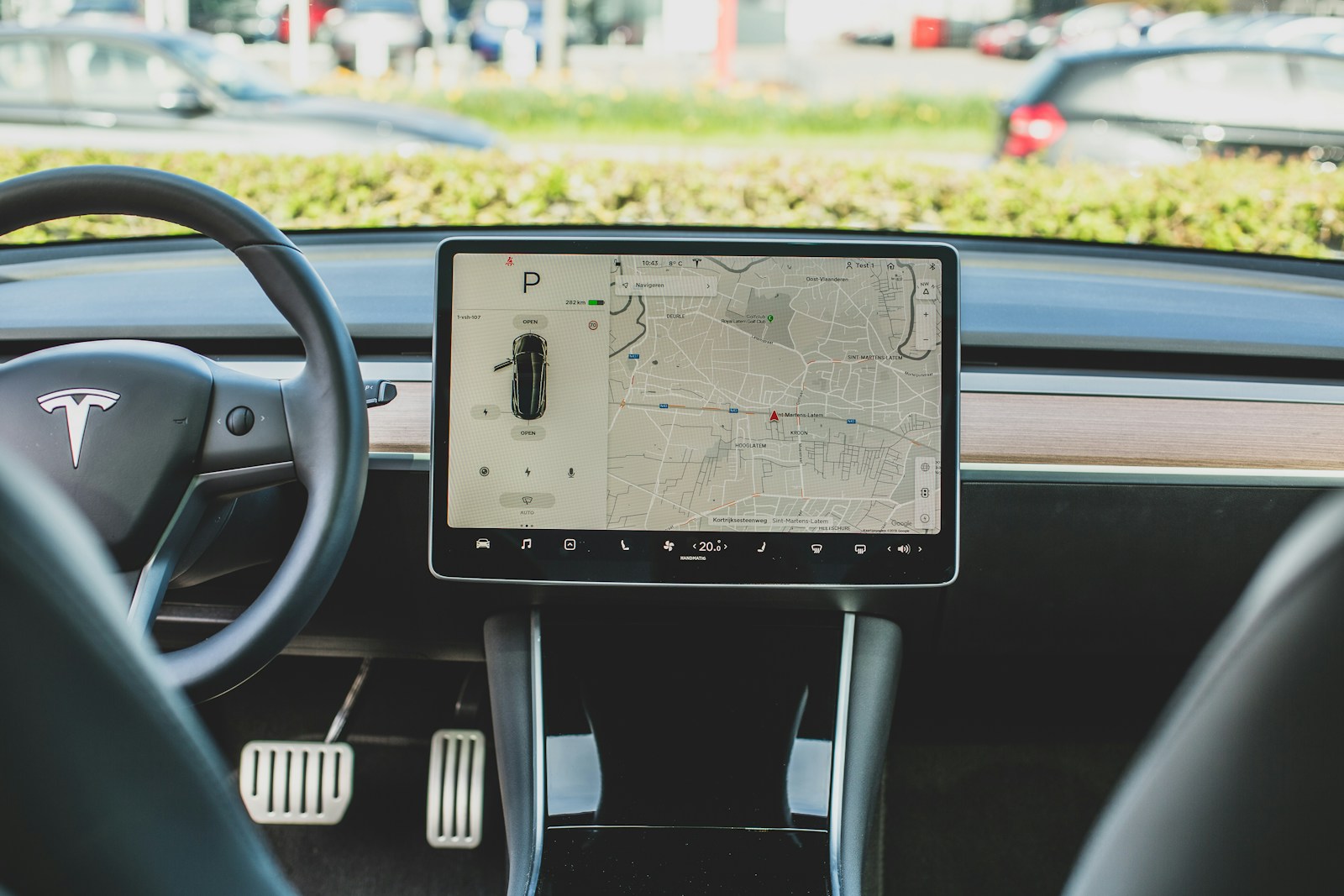

GPS is quietly undergoing one of its biggest shifts since drivers first started following robotic voices through unfamiliar streets. The upgrade is not just about prettier maps or faster chips, it is about turning navigation into something that behaves less like a static tool and more like a back‑and‑forth guide. At the same time, a deep technical reset in how location is measured on Earth is forcing industries that depend on precision to rethink their digital boundaries.
Together, these changes mean the next generation of guidance will feel more like a conversation and less like a command line, whether someone is asking a car for the quickest route or a farmer is steering a planter along a property edge that has effectively moved on the screen.
The car GPS that talks back

Automakers and tech companies are racing to replace stiff, menu‑driven navigation with assistants that can understand layered, natural requests. Built‑in navigation systems were among the first pieces of “tech” in cars, but they have lagged behind smartphones in flexibility, a gap that new conversational systems are now trying to close by handling multiple intents, follow‑up questions, and casual phrasing in a single exchange, as highlighted in reporting on how GPS is evolving. Instead of tapping through submenus to find a coffee shop with parking, a driver can say something like “Find a café on the way with a charger and avoid tolls,” and expect the system to parse every part of that sentence.
That shift is visible across the show floor in Las Vegas, where HERE and New Alexa integrations are being pitched as branded, conversational navigation experiences that can be tailored to each automaker. In practice, that means a BMW or Samsung interface can keep its own look and feel while relying on the same underlying voice intelligence from Amazon, turning the map into a front end for a broader agent that can adjust climate, queue music, and tweak routes in the same dialogue.
BMW, Garmin and the “unified cabin”
BMW is leaning hard into this idea by fusing its in‑house Intelligent Personal Assistant with Alexa, so that the car’s native voice persona can tap into a larger ecosystem of skills without losing its brand identity. The company has detailed how its Intelligent Personal Assistant will sit on top of Alexa, and how the Rollout and Availability plan brings those capabilities, and third‑party integrations, into upcoming vehicles. That strategy dovetails with BMW’s broader push into AI‑centric mobility, including the debut of the all‑new 2026 BMW iX3, the first production vehicle on its next‑generation BMW Neue Klasse platform, which is designed to support more autonomous and connected features.
Garmin is taking a similar approach from the supplier side, pitching a single software layer that can coordinate everything a driver sees and hears. Its Unified Cabin 2026 platform, introduced in LAS VEGAS, Nev and described in a Newswire announcement, is headlined by an AI LLM based conversational, multi‑intent, multi‑lingual virtual assistant that can route information to the right screen and the right person in the car. A companion release invites readers to Preview the Garmin and notes how Garmin Autom is positioning this as a coherent platform built for scale, so that automakers can plug in their own branding while relying on Garmin’s back‑end for navigation, voice, and cabin control.
The quiet but critical GPS datum shift
While dashboards get friendlier, a more technical change is unfolding in the background that could literally move digital maps by several feet. Survey and mapping experts are preparing for a 2026 overhaul of the geodetic reference systems that underpin GPS, a change often described as a Big shift in how coordinates are tied to the Earth. Guidance for ag professionals has stressed that What You Need to Know About the 2026 GPS Shift includes the replacement of older datums by NAPGD2022 for elevational positioning, which will ripple through everything from yield maps to drainage plans. A related explainer on What You Need to Know About the Datum Shift in GPS uses survey based examples, such as a grower in Eastern Iowa watching guidance lines drift across actual property lines if equipment is not updated.
The stakes are particularly high for agriculture, where even a small offset can push heavy machinery into a neighbor’s field. One advisory bluntly titled Major Major GPS System in 2026 Could Affect Farmers and Ranchers warns that Farmers and ranchers already face a long list of risks before adding the possibility that a guidance implement could veer slightly off course. Another piece, framed around not ending up in the ditch, urges operators to Find out what experts say you should do soon and notes that a 37 page guidance line update may be needed for some systems, even if others should be OK for 2026. In Ohio, coverage of how the National Geodetic Survey will roll out a new geodetic datum in 2026 explains that this mathematical model will shift field boundaries inside digital systems, again drawing on Survey based work to show how that plays out on the ground.
For farmers already seeing odd behavior in their equipment, the change is not theoretical. A video aimed at precision ag users, titled “2026 GPS Datum Changes What It Means for Precision Ag,” opens with a producer saying that “this year my boundaries have seemed to have shifted” and that “my guidance lines don’t line up,” before walking through how GPS datum changes can cause mapping systems to drift. The broader tech world is moving in the same conversational direction, with retail platforms describing how Amazon and Google are redesigning shopping around AI judgment and delivering capabilities through new, more conversational and agent‑like interfaces, a pattern that extends from e‑commerce into navigation as agent‑like interfaces become the default way people ask for directions, recommendations, and real‑world actions.
More from Wilder Media Group: