
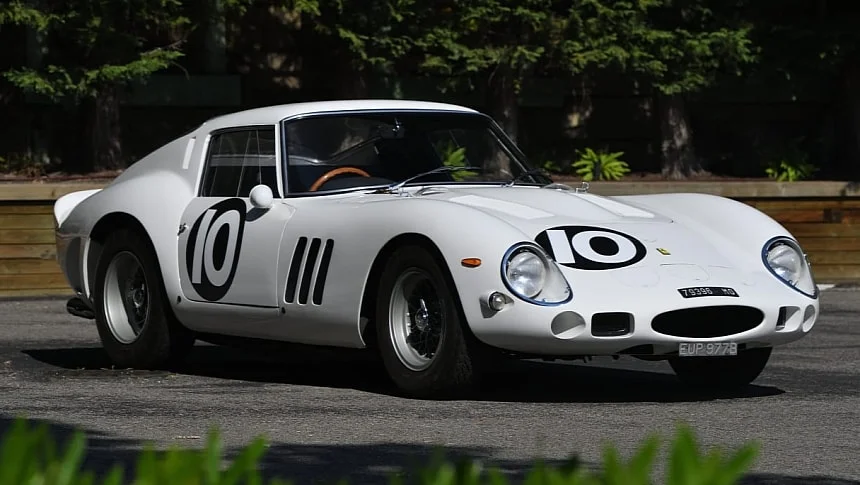

The only factory white Ferrari 250 GTO ever built is about to test the upper limits of the collector-car market, with expectations that it could change hands for a figure that would make even seasoned buyers pause. Long regarded as the most coveted of all classic Ferraris, the 250 GTO is rare enough on its own, but this one-off color combination and storied competition history have turned it into a singular prize.
As interest in blue-chip collectibles keeps pushing record prices, this car is emerging as a litmus test for how far the very top of the market can stretch. Talk of a potential $70 million result is circulating among specialists, and the outcome will signal whether the appetite for the rarest racing Ferraris is still climbing or finally leveling off.
The unicorn of 250 GTOs
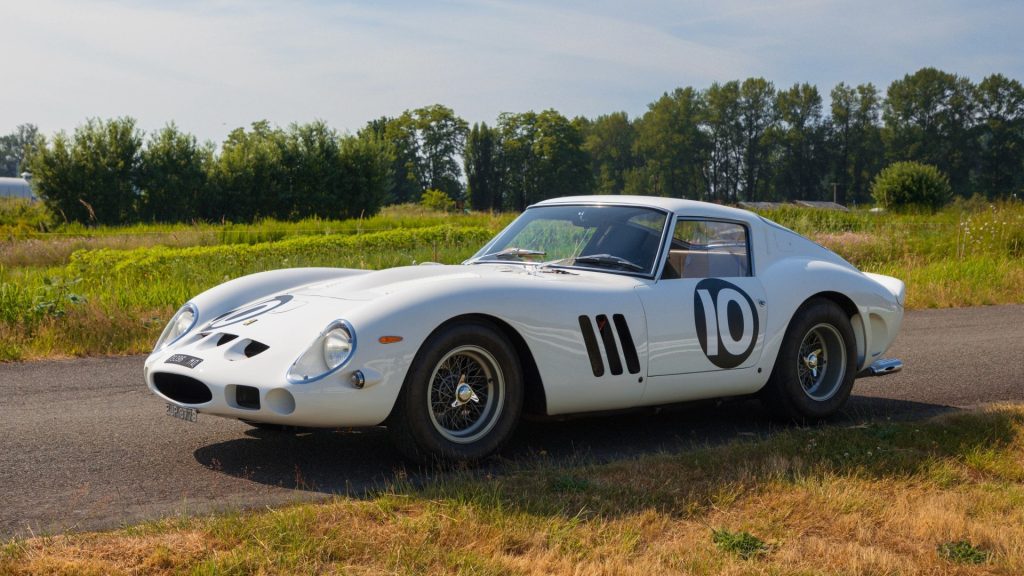
Among Ferrari cognoscenti, the 250 GTO has long been described as the Mount Everest of collecting, the peak that even well-heeled enthusiasts rarely reach. Only 36 examples of the 250 G were built, and each car carries its own competition narrative and ownership lore, but just one left the factory in white. That singular specification instantly separates it from the rest of the GTO field, where most cars wore the traditional Italian racing red or team-specific colors.
The car’s origin story only deepens its appeal. In 1962, a man named John Coombs, a prominent Jaguar dealer in England, ordered the only white Ferrari 250 GTO ever built, a decision that gave the car its “Great White” reputation among historians. Later racing campaigns involved notable drivers such as Mike Parkes, and period competition use has become a crucial part of its mystique. For collectors who prize authenticity and originality, the fact that this GTO was delivered from the factory in its unique color, rather than repainted later, is a decisive factor.
Engineering pedigree and market expectations
Beyond its paint, the car shares the core engineering that made every 250 GTO a legend. The model’s lightweight tubular steel chassis, clothed in hand-formed aluminum bodywork by Scaglietti, was designed to keep curb weight low while housing a race-bred V12 that excelled in endurance events. That blend of beauty, speed, and reliability during long races is what turned the 250 G into a benchmark for 1960s GT competition. Period success at circuits across Europe cemented the GTO’s reputation as the definitive dual-purpose road and race car of its era.
It is that combination of engineering and provenance that underpins the current valuation chatter. Specialists are openly discussing a potential $70 M result for this One of One White Ferrari, a figure that would place it among the most expensive cars ever sold publicly. Earlier reporting has framed the broader GTO market as one where very few examples trade hands for under $50 million, and the only factory white car, with its continuous history, sits at the very top of that hierarchy. For buyers who already own multiple halo Ferraris, this sale represents one of the last chances to secure a truly unique GTO.
Why this auction matters beyond one car
The sale also arrives at a moment when the ultra-high-end collector market is being closely watched for signs of fatigue. Analysts note that it is one of just 36 Ferrari GTO chassis built, and the only one delivered in factory white, so its performance at auction will be read as a barometer for the very top of the market. If bidding surges past guidance, it will reinforce the idea that truly irreplaceable racing Ferraris remain insulated from broader economic jitters. If it stalls, it may suggest that even the rarest cars are not entirely immune to shifting sentiment.
Publicity around the car has been building for months, from its display at major events to detailed previews that highlight its history and condition. One report described how the only white Ferrari 250 GTO ever built is heading to auction and that it could fetch $70 million, while another noted that interest has been stoked by coverage of the car on the eve of the sale, with Jan and Eve referenced in relation to a Sat morning preview in PST. Additional analysis has emphasized how the 250 G’s blend of performance and reliability during long races helped create this feverish demand, with some observers likening the car to a unicorn that the market is about to adopt. Together, these perspectives explain why this One White Ferrari is being watched so closely by both seasoned collectors and casual enthusiasts.
Even the language around the car reflects its singular status. Commentators routinely stress that it is the only Ferrari 250 GTO to be delivered in factory white, a detail that sets it apart from every other GTO and reinforces its status as a one-off prize. Coverage has also highlighted how the 250 G’s engineering, from its competition-tuned chassis to its endurance credentials, continues to resonate with modern buyers who see it as the purest expression of Ferrari’s early 1960s racing program. As the auction approaches, the consensus is clear: whatever hammer price it achieves, this car will reset expectations for what a truly unique GTO can command.
Behind the scenes, auction specialists have been careful to frame the sale as both a historic opportunity and a realistic test of the market. They point to the broader context of high-profile consignments and the steady performance of top-tier Ferraris in recent years, while acknowledging that predicting the final number is always an inexact science. References to Jan, Eve, Sat, PST, and the One One White Ferrari in pre-sale coverage underscore how tightly choreographed the lead-up has been, with every detail designed to maximize global attention. For the small circle of bidders capable of competing at this level, the message is unmistakable: this is the moment to decide what the only white 250 G is really worth.
Technical aficionados have also revisited the car’s specification, noting how the 250 G’s chassis and drivetrain were optimized for both speed and durability. Reports have emphasized the model’s balance of power and control, qualities that made it a dominant force in period GT racing and that still impress modern drivers who experience well-preserved examples on track. The fact that this particular GTO retains its core mechanical identity, while standing alone as the only factory white car, is central to its appeal. In a market where provenance, originality, and rarity drive value, this combination is precisely why talk of a $70 m result no longer sounds implausible.
As the auctioneer prepares to open bidding, attention will focus not only on the final number but also on who emerges as the next caretaker. Whether the car disappears into a private collection or continues to appear at major concours and historic races, its status as the only white Ferrari 250 GTO ever built is secure. The sale will simply put a new price tag on a story that has been building since John Coombs first asked Ferrari to paint a GTO white, and the market will finally reveal how much that decision is worth in today’s terms.
In the end, the auction is less about setting a headline-grabbing record and more about confirming the hierarchy within the rarest of classic cars. The 250 G remains the benchmark, and this One of One White Ferrari sits at the very top of that pyramid. Whatever the final figure, the car’s journey from a special-order racer in the early 1960s to a potential $70 M centerpiece in the modern market captures the enduring power of Ferrari’s most celebrated GT.
Supporting sources: One-of-One White Ferrari, One-of-One White Ferrari, Only Ferrari 250, Rare white 1962, One of the, only white Ferrari, Rare 1962 White.
More from Wilder Media Group: