


Russia is fielding a new generation of kamikaze drone that blends cruise missile speed with the expendability of a low-cost UAV, and it may not need a runway to get into the fight. The Geran-5, a jet-powered evolution of earlier loitering munitions, is already being used against Ukraine and is designed to be launched from the air as well as from the ground. Its arrival signals a shift in how Russia intends to strike deep targets while staying outside the reach of Ukraine’s air defenses.
What Makes the Geran-5 Different
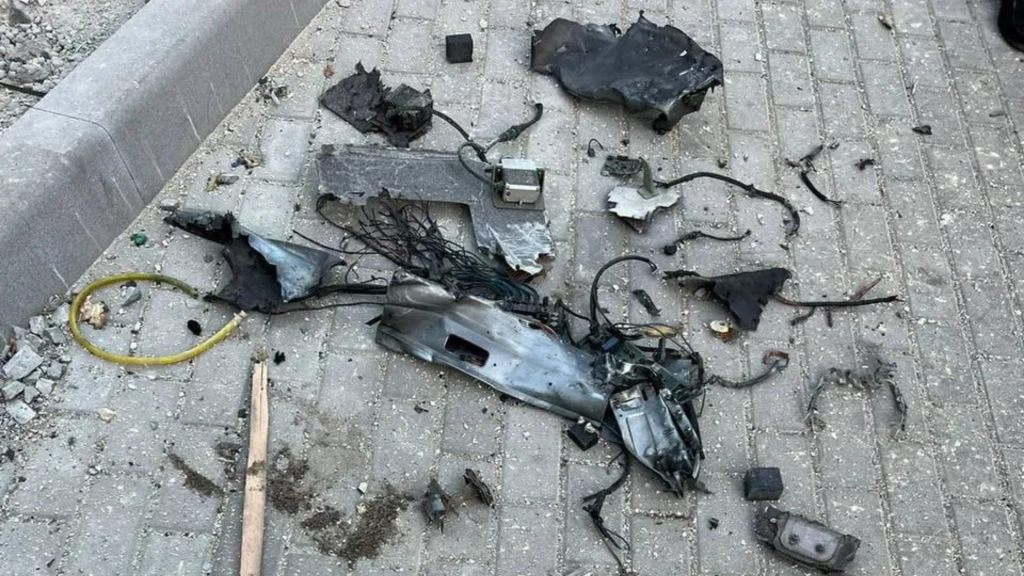
The Geran-5 marks a clear break from the propeller-driven Shahed derivatives that previously defined Russia’s long-range one-way attack drones. Ukrainian intelligence and open-source imagery describe a conventional airframe with swept wings and a turbojet engine, a layout that aligns it more closely with a compact cruise missile than with earlier Geran models that were based on the Iranian Shahed. Analysts note that Russia is seeking drones that can better evade Ukraine’s air defenses, which are increasingly adept at intercepting slow, noisy propeller aircraft, and the new jet-powered profile is tailored to that requirement. With internal fuel only, reporting indicates that the platform is optimized for long-range missions launched from positions relatively close to the front lines, trading sheer endurance for speed and survivability.
As for the engine, Ukrainian accounts state that the Geran-5 uses a JT80 turbojet from the Chinese Telefly company, a small powerplant that has appeared in hobby and target drones but is now being adapted for combat use. The airframe is described as roughly similar in size to earlier Geran-2 types, but with structural tweaks and materials that may reduce weight and better handle jet-related stresses. Technical assessments also point to a guidance suite that includes satellite navigation and the Kometa system, with The Kometa typically using multiple antennas to improve resistance to jamming. Other features resemble those of earlier models in the series, including a 12-channel satellite navigation system and communications hardware that Ukrainian intelligence has linked to civilian-grade 4G modems.
From First Combat Use to Air-Launched Threat
Ukraine’s military says the Geran-5 has already moved from testing to combat. During early 2026 air strikes, Ukrainian officials reported that Russian forces used the new Geran-5 UAV for the first time, describing it as a jet-powered platform with improved payload capacity and flight performance compared to earlier loitering munitions. Separate Ukrainian reporting framed the event as the first deployment of Russia’s jet-launch capable Geran-5 drones, underscoring that the design is intended to be carried and released by aircraft rather than only fired from ground-based launchers. Russia has also been described as introducing a new long-range strike drone into its arsenal as part of a broader effort to intensify attacks on Ukraine.
Ukrainian sources say the Geran-5 has already been used in combined strikes that mix cruise missiles and other drones, a tactic meant to saturate defenses and complicate interception. One assessment notes that at the beginning of 2026, during such combined attacks, Russia employed the new Geran alongside other drones in the same series. Technical descriptions from that reporting highlight that the new drone features the same general layout as the Geran-3 but with greater thrust, reinforcing the idea that Russia is iterating on a common family of designs. Analysts who have tracked Russia’s air campaign argue that this evolution comes as Russia’s air campaign against Ukraine enters a more dangerous phase, with Moscow leaning on massed aerial attacks to pressure Ukrainian infrastructure and air defenses.
The air-launch concept is central to why the Geran-5 matters. Analysis of imagery and Russian statements suggests that the new jet-powered version of the Geran long-range kamikaze drone is designed so it could be air launched by Russian Air Force platforms, potentially including tactical jets or bombers. At the very least, having an air-launched Geran-5 would provide an immediate boost in range for the one-way attack drone, since the carrier aircraft can release it at altitude and closer to the target area, rather than relying on fixed launchers close to the. That flexibility complicates Ukraine’s early warning picture, because launches could originate from multiple directions and at varying distances, and it allows Russia to keep valuable aircraft outside the engagement envelopes of many Ukrainian surface-to-air systems.
Cost, Capacity, and the Pressure on Ukraine’s Defenses
Despite its jet engine and upgraded guidance, the Geran-5 is still framed by analysts as a relatively low-cost cruise missile or drone, intended to be produced in quantity and expended in large salvos. Technical write-ups describe Russia’s Geran-5 Low Cost cruise missile or drone as a platform that trades some sophistication for affordability, with a structure that may be lighter and optimized for mass manufacture. Ukrainian intelligence has said the drone can carry a significant warhead, and that its avionics include a 12-channel satellite navigation system and communications gear that can use civilian Geran networks for control or tracking. Reports on the first operational use emphasize that Russia deploys the Geran-5 strike drone in attacks as part of a broader pattern of using one-way attack UAV systems to wear down Ukrainian air defenses.
For Ukraine, the emergence of the Geran-5 adds to an already complex air threat that includes cruise missiles, ballistic missiles, and multiple drone families. Ukrainian reporting has stressed that Russia deploys the new Geran-5 jet-powered drone against Ukraine as part of large-scale strikes on energy and industrial targets. Analysts note that Russia has attacked Ukraine with various Geran types over the past two years, and that the Geran-5 is roughly similar in size to its predecessors but has been tweaked for production inside Russia. Ukrainian sources also link the rollout of the new drone to a broader Russian buildup, citing that Russia Accumulates 71 M i-8 and Mi-24/35 Helicopters at Syzran Storage Facility, which Ukraine’s Defense In intelligence service interprets as preparation for sustained operations.
Strategically, the Geran-5 fits into a Russian playbook that uses volume and variety to exhaust Ukrainian stocks of surface-to-air missiles and force difficult choices about which threats to engage. Analysts argue that Russia is seeking to field drones that are better able to evade Ukraine’s air defenses, which are in turn being stretched by the need to protect cities, power plants, and front-line units at the same time, a trend highlighted in detailed assessments of long-range Geran operations. Ukrainian reporting on the first strike with Russia’s new Geran-5 drone underlines how it threatens How Ukraine will have to adapt its air defense posture, particularly if air-launched variants become routine. For now, the Geran-5 remains a relatively new entrant, but its combination of speed, range, and potential air-launch flexibility suggests it will be a recurring feature of Russia’s campaign as the war grinds on.
More from Wilder Media Group: