


General Motors is easing off the accelerator on electric vehicle growth, but its top executive is not backing away from the strategy that set the company on a collision course with the industry’s future. GM CEO Mary Barra has told automotive reporters she has “no regrets” about the company’s aggressive EV push, even as the market cools and policy headwinds mount. Her message is that the timeline is shifting, not the destination.
Barra’s ‘no regrets’ stance and a slower EV ramp
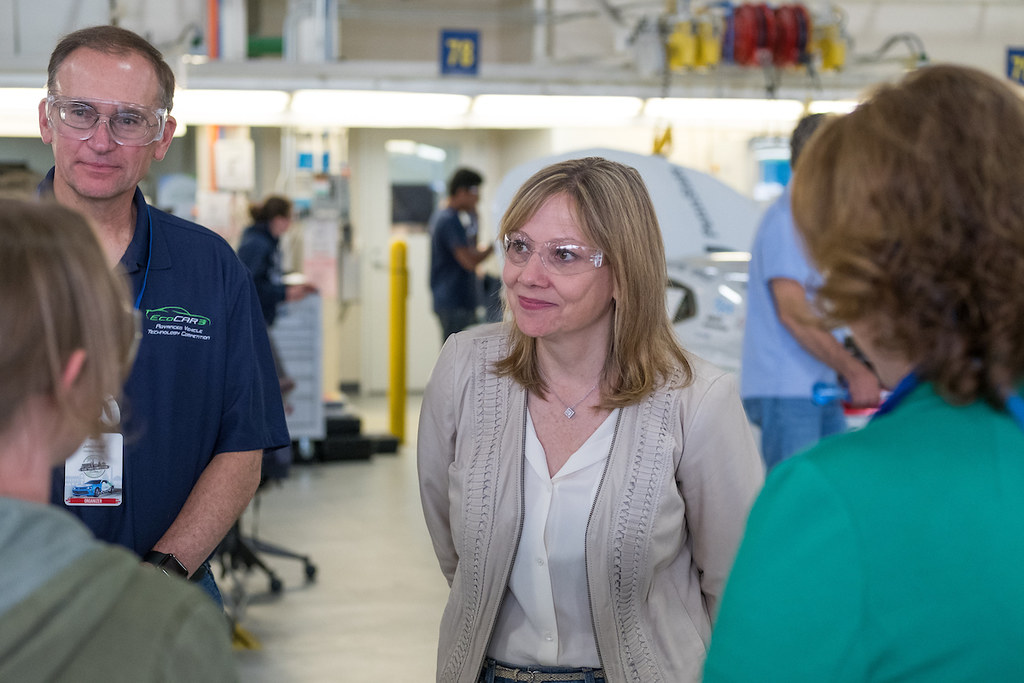
Mary Barra’s insistence that she has no second thoughts about GM’s electric strategy is as much about investor psychology as it is about product planning. After years of promising an all-electric future, she is now signaling that GM will be “pragmatic” about how quickly it gets there, acknowledging that the transition is taking longer than early forecasts suggested. In her remarks to the automotive press, Barra framed the issue around consumer readiness and infrastructure, arguing that once the United States has a more robust charging network, demand will better match the company’s long-term plans.
That nuance matters because GM is not abandoning EVs, it is recalibrating. Barra has tied the pace of rollout to practical constraints like public charging and affordability, rather than to a fixed calendar. She has also been clear that the company’s production plans will adjust to market signals, even as it keeps investing in Ultium-based models and software-heavy platforms. Her comments about being “pragmatic” on timing and about the need for a stronger charging ecosystem were delivered as part of a broader briefing on GM’s outlook, which underscored that the company still views electric vehicles as central to its future once those infrastructure gaps close.
Tariffs, Trump, and the pressure on GM’s EV economics
Barra’s confidence in the EV strategy is being tested in a policy environment that has become far more volatile than when GM first mapped out its electric roadmap. The company has had to factor in President Donald Trump’s tariffs, which GM previously projected would affect roughly 30 percent of its total tariff exposure. Those costs ripple through the supply chain for batteries and critical components, complicating the business case for high-volume electric models that already carry thinner margins than established gasoline vehicles.
In that context, Barra’s “no regrets” line reads less like stubbornness and more like a bet that policy cycles will eventually catch up with technological reality. GM has been explicit that its EV economics are sensitive to trade rules and sourcing requirements, and that it must navigate those while still meeting its own emissions and product commitments. The company’s internal projections on tariff impacts, including the estimate that about 30 percent of those costs tie back to its operations, were part of the backdrop as GM’s CEO defended the long-term EV push to skeptical analysts and dealers.
Balancing profitable ICE models with a tech-heavy EV future
Even as GM slows some EV launches, Barra has been careful to emphasize that the company’s gasoline lineup is not simply a legacy business to be discarded. She has pointed out that some of GM’s internal combustion engine vehicles remain highly profitable and will continue to play a central role in funding the transition. Those models, which include popular trucks and SUVs, are also becoming more technologically sophisticated, with advanced driver assistance systems and connected services that mirror features found in GM’s newest electric offerings.
That dual-track strategy is evident in GM’s product roadmap. The company is planning to roll out more advanced driver assist technology by 2028, a timeline that applies across both EVs and traditional vehicles. By layering software and safety features onto its existing portfolio, GM is trying to narrow the experiential gap between gasoline and electric products while it waits for charging infrastructure and consumer economics to catch up. Barra has framed this as a way to keep customers in the GM ecosystem regardless of powertrain, a point underscored in reporting that highlighted how “some of our ICE vehicles” will carry sophisticated driver assist technology by 2028.
More from Wilder Media Group: