
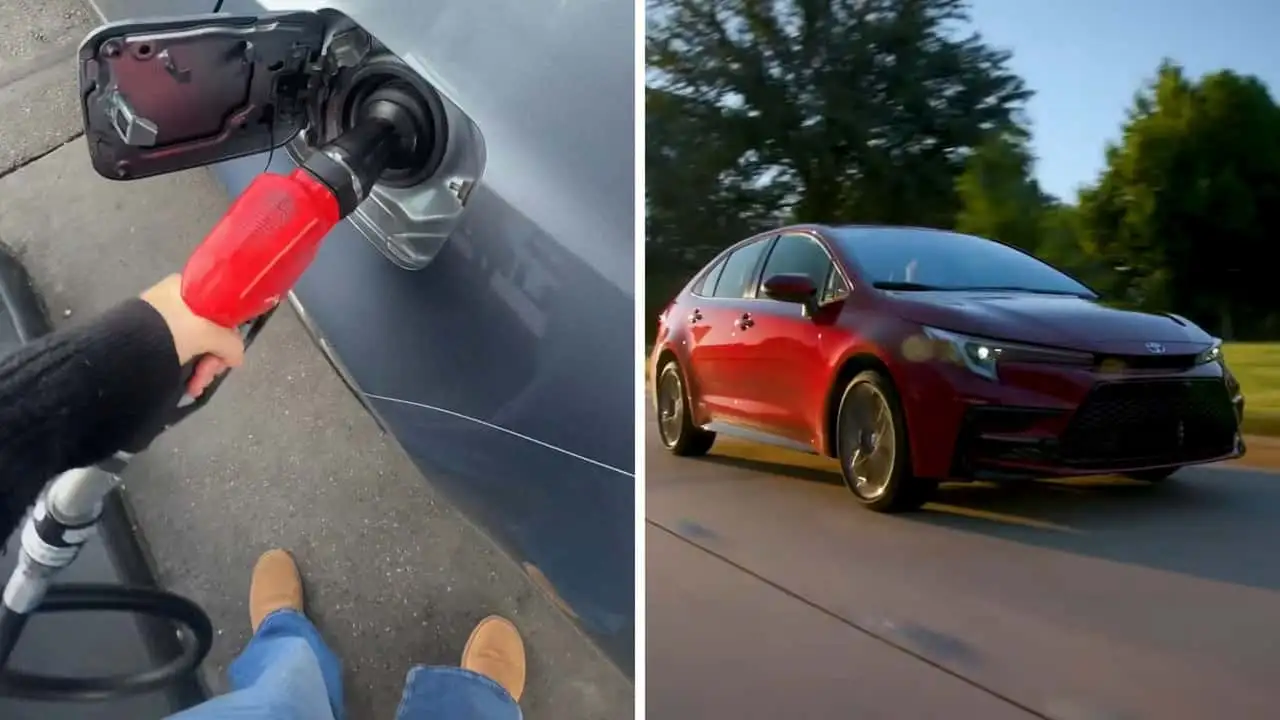

When a young driver filmed herself filling her new Toyota from empty and then gasped at the final total, the reaction resonated far beyond one receipt. Her disbelief captured the collision of high pump prices, thirsty vehicles and a car market where even “normal” models can quietly deliver luxury-size fuel bills. The viral moment also exposed how social media outrage now shapes what drivers expect from automakers, from fuel economy to subscriptions for basic features.
The viral fill-up that struck a nerve
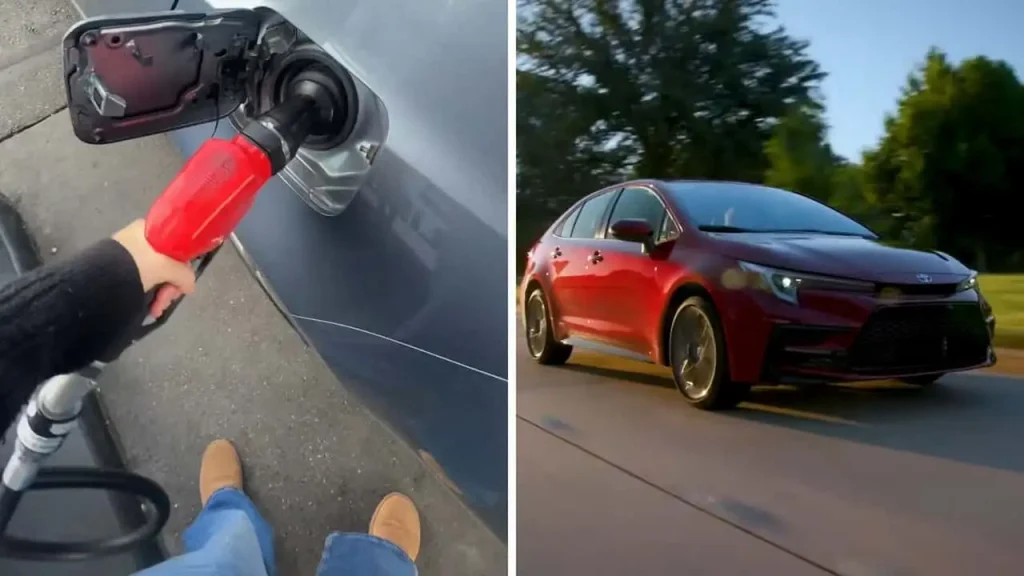
The latest flashpoint came from content creator Kieran Elaine, who recorded herself at a gas station as the dollars ticked upward on the pump. By the time her tank was full, the total was high enough to leave her audibly stunned, a reaction that helped the clip rack up more than 259,000 views and turn a routine errand into a talking point about the cost of driving. Viewers were not just rubbernecking at one person’s bill, they were comparing it with their own rising expenses and asking whether a new Toyota still fits the brand’s reputation for affordable ownership.
Her shock landed in a social feed already primed for car-related frustration. Another creator, in a separate TikTok, filmed herself at the pump while discussing a so-called “slow pour” trick that supposedly saves money by pumping fuel at the lowest setting. That idea was later unpacked and debunked, with one explainer spelling out What “slow-pouring” actually does and quoting a sarcastic “God bless the person” who popularized it. Together, these clips show how quickly everyday fuel anxiety can be packaged into viral content, even when the underlying hacks do little to change the math.
Sticker shock, from the showroom to the pump
Part of the reason Kieran Elaine’s reaction hit home is that the financial squeeze now starts before a driver even reaches the gas station. One viral complaint came from a woman who said her new Toyota cost $40,000 and then discovered that some features required ongoing payments, putting her car in the same price neighborhood as a Camry XSE, RAV4 Prime and Tacoma, even though She did not specify the exact model. That complaint fed a broader backlash over alleged subscription fees in 2025 models, prompting fact-checkers to step in when one viral post claimed Toyota would lock basic functions behind a paywall. But the company’s connected services, branded as Toy, were already more nuanced than the outrage suggested, underscoring how quickly nuance disappears once a story hits social media.
Even for buyers who avoid the subscription debate, the cost of filling a modern SUV or truck can be jarring. A 2024 Toyota Sequoia, for instance, can require about $77 to brim the tank if fuel is around $3.50 per gallon, a figure that highlights how Filling the SUV at $3.50 is no longer a casual expense. At the heavy-duty end of the lineup, the 2021 Toyota Tundra with four-wheel drive has been described as “utterly parched,” a reminder that Toyota Tundra owners, like other full-size truck drivers, often accept high annual fuel costs as the price of capability. Consumer advocates have noted that more than 20 large SUVs and pickups now sit in the “$100 to fill” club, with No surprise that the worst offenders are big, heavy vehicles with massive tanks.
How outrage travels, and what drivers can actually do
Once a clip like Kieran Elaine’s takes off, it enters a broader ecosystem where some stories about women and cars go viral while others barely register. Analysts who studied the disappearance and death of Gabby Petito noted that the case “quickly went viral” and then asked why some missing women make headlines and others do not, a pattern summed up in the line that begins with But. The same dynamics apply to consumer outrage: certain faces and narratives, like a young woman stunned at a gas pump, are more likely to be amplified, which in turn shapes public perception of which problems are urgent and which are background noise.
That amplification can have real consequences for brands. A past wave of scrutiny over unintended acceleration, for example, intensified after the recording of a 911 call went public and Everyone seemed to blame Toyota and the automaker’s vehicles. Today, a single viral video about a fuel bill or a subscription rumor can trigger a similar pile-on, even when fact-checkers later clarify the details. In that environment, official advice about saving money at the pump can struggle to cut through, even when it comes from within the Toyota ecosystem. One dealer-affiliated reel tagged with #SaveOnGas and #ToyotaFinancial urged drivers to pay attention to how Prices at the pump can sting and offered practical steps, from tire maintenance to smarter trip planning, under the TFS banner.
More from Wilder Media Group: