
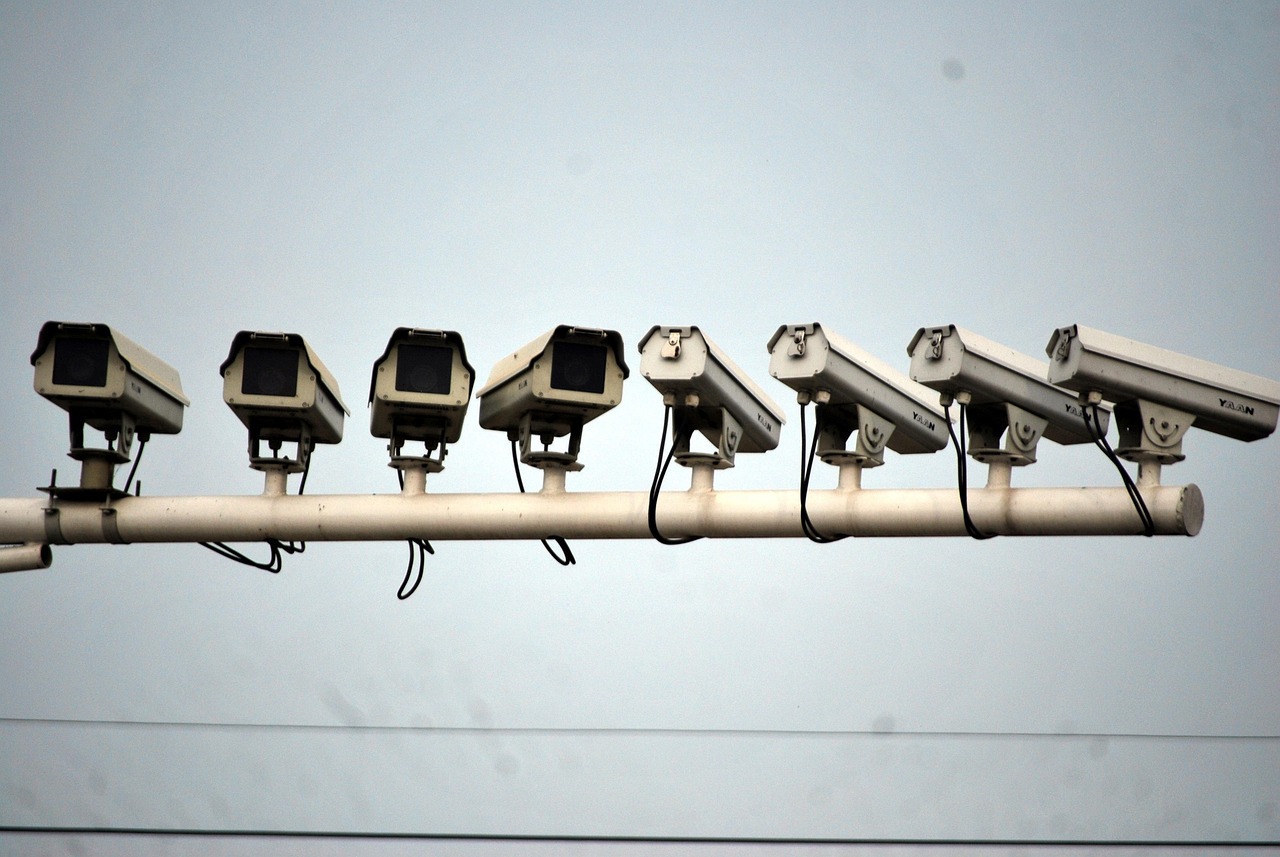

Across major cities and quiet suburbs alike, new roadside cameras are appearing on poles and gantries that drivers instinctively assume are there to catch speeders. In reality, a growing share of these devices are watching for something else entirely, from noisy exhausts to dirty tailpipes and even unbuckled seatbelts. The shift is quietly rewriting the rules of the road, often before motorists realize that the latest lens pointed at their car is not clocking miles per hour at all.
What began as a straightforward push to automate speeding and red light enforcement is evolving into a broader system of automated compliance. Governments are wiring cameras into environmental rules, noise codes and distracted driving laws, while private networks track license plates for security. The result is a patchwork of new obligations that can trigger instant fines, mailed tickets or data trails, even when a driver never touches the accelerator beyond the limit.
The overnight camera that was not about speed
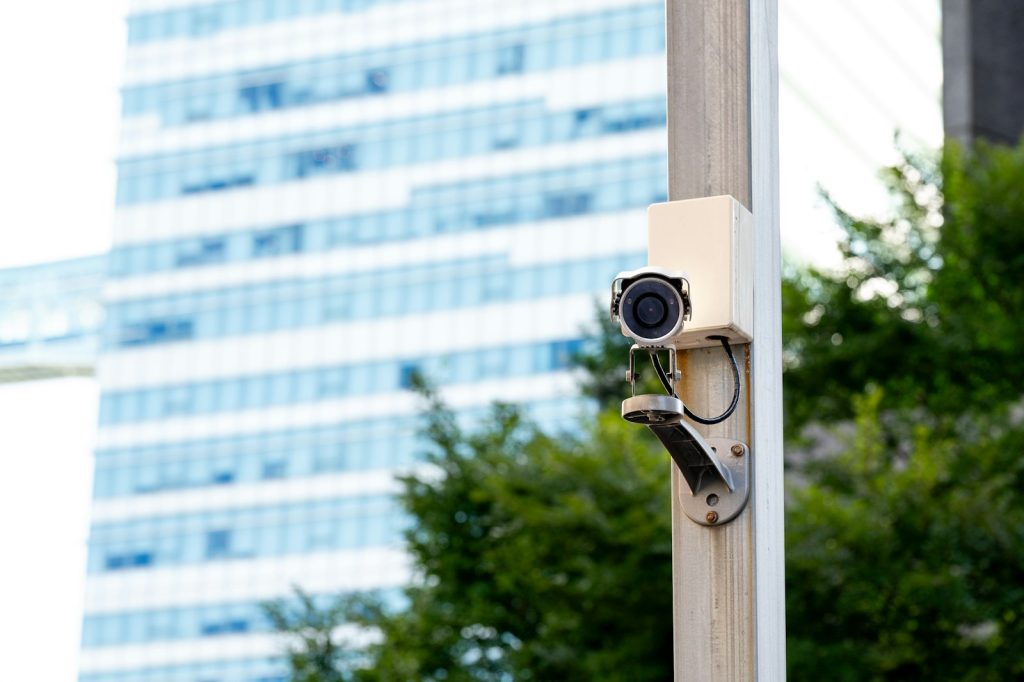
For many drivers, the first sign that something has changed is a fresh camera housing that appears on a familiar commute, with no obvious explanation. The assumption is almost automatic: another speed trap. Yet the latest wave of devices is often calibrated to measure sound, emissions or behavior inside the cabin, not the speedometer. That disconnect between expectation and reality is at the heart of the surprise when a notice arrives weeks later citing a noise violation or a missing seatbelt instead of a speeding ticket.
Traditional enforcement tools such as red light and Speed cameras are still expanding, but they now sit alongside systems that read license plates to check emissions charges, microphones that log decibel spikes and artificial intelligence that scans for phones in hands. The new hardware can look almost identical to the old, which means a driver passing under a gantry has little way of knowing whether the lens is measuring velocity, exhaust gases or the angle of a shoulder strap.
New York City’s quiet crackdown on loud cars
Few places illustrate the new model better than New York City, where residents have long complained about roaring mufflers and late night street racing. City officials have turned to sound monitoring devices that pair microphones with cameras to identify vehicles that exceed a set decibel threshold. According to an Annual Report, the Department of Environmental Protection, referred to as DEP, is required, subject to appropriations, to install no fewer than 5 noise cameras in each borough by September 2025, and DEP already has nine units in operation.
Residents began to notice the impact when hidden “noise cameras” in NYC generated $1.7 million in fines, a figure that underscored how aggressively the city was enforcing its noise code. Coverage of the program quoted residents saying “Things have gotten worse” since the pandemic, as modified exhausts became more prevalent. In online car forums, one post noted that, specifically, Specifically, New York approved a pilot that armed each borough with at least one noise monitoring camera, and even stock exhausts were reportedly being flagged if they exceeded a normative sound level.
From pilot project to citywide noise network
The rollout did not happen overnight, but for many drivers it felt that way. New York City’s council began debating a broader deployment after an initial pilot showed that automated microphones could reliably identify loud vehicles. In public discussions, officials described a plan to put noise violation cameras “all over the city,” building on a pilot that had already placed at least one device in each borough. A televised segment on New York City politics captured how the council weighed the benefits of quieter streets against concerns about surveillance and fairness.
The policy trajectory was clear: what started as a limited test was on track to become a permanent fixture of the urban landscape. The DEP’s own reporting confirmed that Jan and Subject language in the law required a minimum number of units per borough, effectively locking in a citywide network of sound cameras. For drivers, that meant a new category of automated enforcement that did not care how fast they were going, only how loud, and it arrived in the form of hardware that looked indistinguishable from a standard traffic camera.
California’s 2026 rules: more than just speed
On the opposite coast, California is also expanding its reliance on roadside technology, but with a different mix of priorities. Starting January 1, 2026, the state will begin issuing mailed civil tickets using red light and speed cameras under new laws that formalize automated enforcement. One social media explainer noted that, in Jan, a clip about California’s changes drew 1.8K views and 710 likes as it walked through how, Starting January, drivers would see more cameras in school zones and high risk corridors.
Separate guidance on New traffic Rules for Drivers from January 01, 2026, explained that California is also updating its fine structure for red light violations and clarifying how responsibility is assigned when a camera cannot identify the exact driver. Another post about the same legal shift stressed that, Starting January 1, 2026, California will use cameras to ticket speeding in highway work zones, while a legal advertisement framed it as a New California law that would activate speed cameras in Caltrans work zones to protect crews.
License plates, emissions and the ULEZ model
Beyond the United States, cities are using cameras to enforce environmental rules that have nothing to do with how fast a car is traveling. London’s Ultra Low Emission Zone, often shortened to ULEZ, relies on a dense network of license plate readers to identify vehicles that do not meet emissions standards. Official guidance explains that, yes, Transport for London, known as TfL, uses Automatic Number Plate (ANPR) cameras to detect entry to the zone, and drivers whose vehicles fail to meet ULE criteria are charged when they drive into central London.
Security analysts describe how ULEZ cameras, overseen by Transport for London, are strategically positioned throughout the city as a fundamental component of its environmental strategy. Consumer facing explainers add that, when people ask “What Are ULEZ?”, the answer is that they are carbon tracking tools that enforce London’s Ultra Low Emission Zone rules. They capture number plates, cross reference them with emissions databases and, if necessary, trigger daily charges even when a driver is crawling through traffic well below the speed limit.
AI cameras that watch how you drive, not just how fast
The next frontier is not just what a car emits or how loud it is, but what the people inside are doing. In parts of the United Kingdom, New Artificial Intelligence systems are being mounted above roads to scan for seatbelts and mobile phones. A council report from Somerset described how New Artificial Intelligence (AI) cameras installed on a stretch of the A361 had already shown thousands of drivers and passengers not wearing seatbelts, with the system automatically flagging potential offences for review.
Legal briefings in other jurisdictions warn that similar New Artificial Intelligence based roadside cameras are being installed across the country, capable of spotting a range of motoring offences. These include so called “distraction” offences, such as using a handheld phone, and failures to wear seatbelts. The systems use high resolution imaging and machine learning to analyze each passing vehicle, then generate evidence packages that can support prosecution, even when the car is moving at a perfectly legal speed.
From Europe to the US, AI enforcement is scaling fast
Europe has been an early laboratory for this kind of automation. In The Netherlands, authorities pioneered fully automated fines for handheld mobile phone offences, relying on fixed and mobile cameras equipped with artificial intelligence. According to a technology briefing, The Netherlands saw thousands of infringements recorded within months of implementation, as cameras scanned cabins for drivers with phones in their hands and automatically issued penalties.
In the United States, a similar logic is being applied to speed enforcement, with AI systems processing violations at a scale that would be impossible for human officers. One report on an AI traffic camera that issued 1,000 tickets in just four days noted that, in fact, at least 342 US cities, counties and other communities had speed camera programs in Jan 2026. Advocates argue that automated enforcement frees up police resources and improves safety, while critics warn that it can feel like a revenue machine that leaves little room for discretion or context.
Private plate readers and the rise of constant tracking
Not all of the new cameras are run by governments. Private companies are building vast networks of license plate readers that track vehicles for security and investigative purposes, often in partnership with local law enforcement. One widely cited example is Flock Safety, described as the largest provider of such technology in the country. A consumer warning noted that Drivers may not realize it, but roadway cameras are doing more than watching for speeding, with Flock Safety systems tracking their every move and building searchable databases of vehicle movements, often illustrated with stock images credited to Getty.
These networks can capture plates as cars enter neighborhoods, pass through intersections or park near businesses, then store that data for weeks or months. Police can query the system to find vehicles linked to crimes, while homeowners associations and private communities use it to monitor who comes and goes. For an ordinary driver, the effect is that a camera that looks like a standard traffic device may actually be part of a private surveillance grid, logging their presence even when no traffic law has been broken.
Instant fines and the future of driving under AI
As more of these systems come online, the experience of being a driver is shifting from occasional roadside stops to a background risk of instant, automated penalties. A recent overview of how cameras in California and New York are cracking down described a model of Instant fines, where drivers with a history of speeding or other violations can be quickly identified and ticketed by automated systems. The piece highlighted how California and New York are using cameras not just to catch one off offences, but to build profiles of repeat behavior that can trigger escalating consequences.
For motorists, the practical takeaway is that the new camera on the corner might be measuring almost anything: noise levels, emissions compliance, seatbelt use, phone distraction or simple presence in a restricted zone. Some of these systems, like ULEZ ANPR or Caltrans work zone cameras, are clearly signposted, while others, like hidden noise monitors or private plate readers, are far less obvious. As New rules for Drivers in California and elsewhere come into force, and as New Artificial Intelligence tools spread from The Netherlands to US highways, the line between traffic enforcement and continuous monitoring is becoming harder to see from behind the wheel.
More from Wilder Media Group: