

Drivers in cities across California have been racking up tickets at certain corners so quickly that some residents started to suspect the problem was not just bad luck. At one busy intersection, the pattern of citations eventually revealed a deeper story about confusing rules, new safety laws and the gap between what drivers think the law is and what it actually says. The same dynamics are now playing out from coastal neighborhoods to inland suburbs, turning a single troublesome corner into a case study in how modern traffic enforcement really works.
What began as a local annoyance has become a window into a statewide shift in how intersections are designed, policed and debated. As new rules reshape where people can park, how they approach red lights and how close they can pull up to a crosswalk, the number of tickets at a few “problem” corners is exposing the tension between safety goals and public trust.
The corner where the tickets never stopped
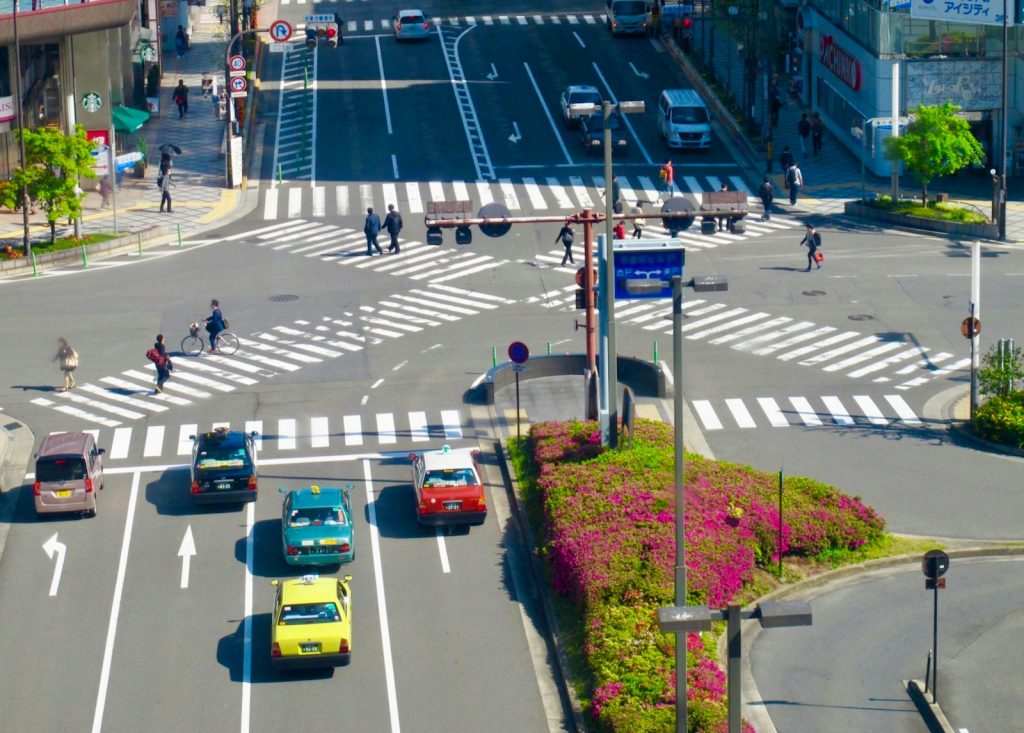
Residents first noticed something was off when friends and neighbors kept comparing notes about citations from the same intersection. The violations were not for speeding on a long stretch of road or for obvious reckless driving, but for small mistakes at a corner that looked, to many, like any other. Drivers parked where they had always parked, rolled forward to see around a larger vehicle or inched into the crosswalk to make a turn, only to find a ticket tucked under the wiper or a notice arriving in the mail days later.
On local social media, frustration quickly turned into pattern spotting. One commenter, Jun, warned others that “Yall at this intersection NEED To pay attention,” arguing that the problem was not a hidden trap but a failure to read the signs that were already there. Another resident, Shirley G Crow, chimed in to say she had stayed away from the corner entirely after seeing how many people were being cited, while others blamed what they called driver “illiterate” habits around basic street markings in the Facebook thread. The intersection had become notorious long before most people understood the legal changes behind it.
How a new parking rule quietly changed the game
Behind the spike in tickets was a statewide push to keep parked cars away from crosswalks so people on foot could be seen more easily. A new street safety law barred drivers from stopping too close to corners, even if the curb was not painted red and no fresh sign had been installed. The idea was simple: by forcing drivers to leave a clear space near the crosswalk, cities hoped to cut down on crashes between turning vehicles and pedestrians stepping off the curb.
In practice, the rule meant that a driver who pulled into what looked like a legal space near a crosswalk could return to find a $64 parking ticket waiting. The law applied even when the driver had no prior warning that the curb had effectively become a no-parking zone, and it did not matter whether they had blocked a wheelchair ramp or a fire hydrant. The only thing that mattered was the distance from the crosswalk, a detail spelled out in the new law that many motorists had never heard of.
San Diego’s Ocean Beach as a statewide warning sign
Nowhere did the new rules become more visible than in San Diego’s coastal neighborhoods, where one area in particular emerged as a cautionary tale. In Ocean Beach, a cluster of intersections turned into what local officials described as a “Hot Spot” for enforcement of the daylighting Law, with officers writing thousands of tickets in a relatively short period. Police said they were simply applying the statute as written, but for drivers who had parked in the same spots for years, the sudden wave of citations felt like a trap.
The enforcement blitz in Ocean Beach highlighted how quickly a single corner can become a symbol of broader policy shifts. Police described the area as a priority for Enforcement because of its heavy foot traffic and history of close calls between cars and people crossing the street, yet many drivers said they were confused by the lack of new paint or signage. The result was a neighborhood where the same few blocks generated a disproportionate share of tickets, a pattern documented in coverage of the Ocean Beach crackdown.
Daylighting goes national, but drivers lag behind
California’s daylighting push is not happening in isolation. Traffic safety advocates point out that, Nationwide, 43 states already have daylighting laws that restrict parking near intersections, often using a standard distance of about twenty feet from the crosswalk. The idea is to create a consistent buffer that gives drivers and pedestrians a clear line of sight, especially in dense urban areas where parked cars can easily hide someone stepping into the street.
In San Diego, officials have framed their own rollout as part of this broader trend, noting that the City of San Di is catching up to practices that have been common elsewhere for years. Yet the fact that 43 states have some version of the rule does not mean drivers understand it, particularly when local markings and habits have not kept pace. The gap between the written law and on-the-ground expectations has been a recurring theme in coverage of daylighting, and it helps explain why certain intersections suddenly feel like ticket factories.
From warnings to citations, one day to the next
State officials initially tried to ease drivers into the new reality with warning periods and public outreach, but the shift from education to enforcement happened quickly. In California, transportation agencies and local police departments spent weeks explaining that a so-called daylighting law would soon make it illegal to park too close to crosswalks, often through short video segments and community briefings. The message was clear: starting tomorrow, a car that might have been ignored the day before could now earn a ticket.
One widely shared video segment laid out how, beginning the next morning, officers would move from warnings to real citations for violating the state’s daylighting rule. The clip, which circulated on local news and social platforms, urged viewers to be aware that the grace period was ending and that enforcement would be stepped up at corners where visibility was a concern, a warning captured in the Feb briefing. For drivers at the already notorious intersection, that meant the pattern of tickets was about to intensify rather than fade.
When a “hotspot” becomes a revenue engine
As enforcement ramped up, the financial stakes for drivers also grew. In San Diego, when the city first began writing tickets for parking too close to intersections under the daylighting rules, the fine was set at $77.50. That amount was later increased to $117, a $39.50 jump that turned a momentary lapse in judgment into a significant hit to a household budget. For someone who parked in the wrong spot twice in a month, the cost could rival a car payment.
The same corners that had quietly become enforcement hotspots now looked, to many residents, like revenue engines. Investigations into the city’s ticketing patterns showed that a relatively small number of intersections were generating a large share of the daylighting citations, especially in neighborhoods where street layouts had not been updated to match the new rules. The escalation in fines, documented in coverage of Sep enforcement, only sharpened the sense that some intersections were doing more to fill city coffers than to prevent crashes.
Red light cameras raise the stakes at key junctions
Parking tickets are only part of the story. At some intersections, the real shock has come from red light cameras that issue hefty fines for rolling through a signal or failing to stop before turning right. In Chico, police began issuing red light camera tickets at the intersection of Mangrove Avenue and Ea, a junction that quickly became known for its steep penalties. Drivers who misjudged the yellow or crept into the crosswalk before stopping could face a $465 fine, a figure that dwarfs most parking citations.
The rollout in Chico showed how a single camera-equipped corner can transform local driving habits almost overnight. Once word spread that violations at Mangrove Avenue and Ea carried a $465 price tag, some residents began altering their routes to avoid the intersection entirely, while others complained that the cameras were too unforgiving of minor mistakes. The enforcement push, captured in a Dec briefing, underscored how technology can turn an ordinary junction into a high-stakes checkpoint where every misstep is recorded and billed.
New laws, new layouts and a learning curve
Layered on top of these specific hotspots is a broader wave of traffic law changes that are reshaping how intersections look and feel. Legal updates in 2025 have signaled that drivers should expect changes in street layouts, with new no-parking zones near corners and more aggressive use of daylighting to open up sight lines. The goal, according to safety advocates, is to reduce crash rates at intersections by making it easier for drivers to see pedestrians, cyclists and oncoming cars before committing to a turn.
For everyday motorists, the practical takeaway is that familiar corners may no longer behave the way they used to. A curb that was once a safe place to leave a car might now be off limits, and a right turn on red that felt routine could be monitored by a camera or restricted by new signage. Legal analysts have emphasized that drivers should pay close attention to what these changes mean for them, echoing guidance that begins with “What it means for you” and urges people to Expect evolving rules that are meant to reduce crash rates at intersections.
Public support, private frustration at camera corners
Not every driver is opposed to stricter enforcement. In Manteca, one resident publicly backed the use of red-light cameras at a busy intersection while still voicing concerns about how violation tickets are handled. The cameras at the Commerce and Yosemite intersection were installed to catch drivers who ran red lights or failed to stop fully before turning, a move that many saw as a necessary response to repeated crashes and near misses. Yet even supporters worried about whether the system gave drivers a fair chance to contest citations or understand exactly what they had done wrong.
The Manteca debate captured the ambivalence that often surrounds automated enforcement. On one hand, residents want safer crossings and fewer high-speed collisions at places like the Commerce and Yosemite intersection. On the other, they question whether camera programs are calibrated to prioritize safety over revenue and whether the appeals process is accessible to people who cannot easily take time off work. Those tensions were laid out in coverage of how a Manteca resident could support the cameras in principle while still questioning their execution.
What drivers can control at complex intersections
While many of the changes at intersections are structural or legal, some of the risk still comes down to how individual drivers behave in tight spaces. Safety campaigns have stressed that Motorists need to understand the blind spots around large vehicles, especially at corners where a truck or bus can block the view of a crosswalk. The concept of a Commercial Vehicle “No Zone” refers to the large blind spots in front, behind and on both sides of a big rig, areas where a driver in a smaller car or on a bike may be effectively invisible.
At intersections that already feel risky because of new rules or heavy enforcement, staying out of a truck’s No Zone can be the difference between a close call and a serious crash. Traffic agencies have used short videos and social posts to remind drivers that cutting too close in front of a semi or lingering alongside its trailer at a light can put them in a place where the truck driver simply cannot see them, a message reinforced in guidance aimed at Motorists. For drivers trying to avoid both tickets and collisions, understanding these invisible zones is as important as reading the latest parking rules.
More from Wilder Media Group: