
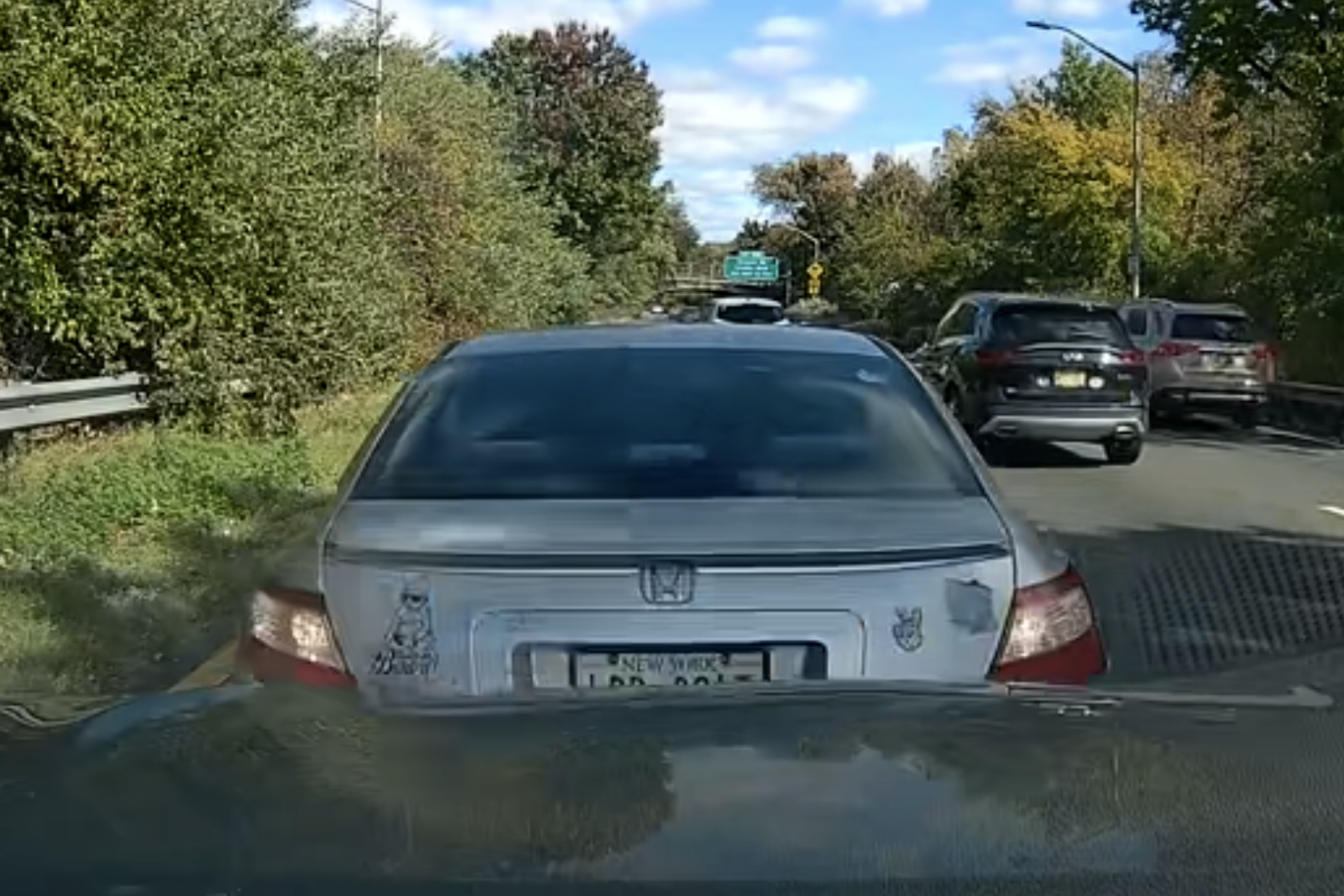

On a quiet stretch of highway, a dashboard camera captures what begins as an impatient lane change and ends with gunfire, twisted metal, and a crime scene. The unblinking lens does not just record a crash, it documents the split seconds in which anger behind the wheel hardens into criminal intent. I use that kind of footage as a starting point to examine how road rage is escalating, how police and courts are responding, and why drivers underestimate how quickly a minor slight can turn into a felony.
The split second when anger becomes a crime

Every driver has felt that flash of irritation when someone cuts in too close or brakes too hard, but the crucial line is crossed when frustration turns into a deliberate act that endangers others. In the dashcam clips that now circulate widely, the pattern is familiar: a near miss, a retaliatory swerve, a brake check, then a collision or a weapon drawn. What looks like a personal dispute is, in legal terms, a sequence of intentional choices that can satisfy the elements of assault, reckless endangerment, or even homicide, depending on the outcome.
One recent video shows a trucker’s cab view as another vehicle races up, crowds his lane, and sparks a confrontation that escalates into a shooting. The camera does not capture a single spontaneous outburst, it records a chase, a confrontation, and then a shot that leaves the driver critically injured, all of which investigators can replay frame by frame to assess intent and sequence. When I watch that kind of footage, I see not just chaos but evidence, the raw material that prosecutors later use to argue that what unfolded on the road was not an “accident” at all but a crime.
What the dashcam actually shows
In one widely shared clip, a truck driver is traveling on a beltway when a car begins tailing him aggressively, weaving through traffic to stay on his bumper. The dashcam records the moment the smaller vehicle pulls alongside, matching speed, as the tension inside the cab is audible in the driver’s breathing and shouted calls for help. Seconds later, a muzzle flash appears at the edge of the frame and the truck lurches, proof that the confrontation has moved from intimidation to lethal force.
Police say the person who opened fire in that beltway encounter was a 15-year-old boy, a detail that turns a frightening video into a sobering snapshot of youth violence. The clip, shared widely on social media, shows the truck driver being chased down before the teenager allegedly opens fire, leaving the older man critically injured and his rig crumpled against the barrier. When I slow that footage down, what stands out is how ordinary the first few seconds look, just another day in traffic, until the moment a gun appears and the road becomes a crime scene.
From viral clip to criminal charge
Once a video like that hits the internet, it does more than shock viewers, it shapes the investigation. Officers can match license plates, clothing, and even the timing of traffic lights to what appears in the clip, then cross check that with 911 calls and witness statements. In the beltway shooting, investigators quickly focused on the teenager seen in the footage, treating the dashcam as a central piece of evidence rather than a curiosity.
On another widely shared reel, a caption urges viewers to “WATCH THE VIDEO & LISTEN TO POLICE” as authorities describe how a 15-year-old is now charged with aggravated assault with a deadly weapon after an 18 wheeler driver was shot during a chase. That short phrase, highlighted in an Instagram reel, captures the new reality in which police not only rely on dashcam evidence but also speak directly to the public through the same platforms that spread the footage. When I see officers narrating over these clips, I am reminded that the camera has become both a witness and a teaching tool, a way to show how quickly a teenager’s impulsive act can become a serious felony case.
Highway 90 and a deadly turn in Horry County
The stakes are even clearer in Horry County, where a confrontation on Highway 90 ended with one driver dead at the scene. A witness who was involved in the crash told investigators she was heading westbound when a white truck, driven by a man identified as Greenwood, collided with her vehicle. That impact set off a chain reaction that drew in another driver, Taylor, and turned a stretch of Highway 90 into a tangle of damaged vehicles and panicked calls for help.
Video from the area shows the moments leading up to the deadly encounter, capturing how the vehicles moved before the final collision and the gunfire that followed. According to investigators, Greenwood was later pronounced dead at the scene, while Taylor was detained nearby and taken into custody. When authorities detained Taylor, they noted his behavior and statements as part of a broader case file that now includes the roadway footage, the witness account from Highway 90, and other physical evidence documented in the local reporting. Watching that sequence, I see how a few aggressive maneuvers on a busy corridor can culminate in a fatal shooting that no one on that road expected when they left home.
Inside the Horry County road rage investigation
What stands out in the Horry County case is how methodically investigators reconstruct the final minutes before the shooting. They start with the crash itself, mapping skid marks and impact points to determine how Greenwood’s white truck struck the witness’s vehicle and how Taylor’s vehicle entered the scene. Then they layer in the available video, which shows the relative positions of the vehicles on Highway 90, the speed of the approach, and the moments when drivers appear to accelerate or brake in response to one another.
According to the detailed account of the incident, the witness described Greenwood’s truck colliding with her as she drove westbound, a detail that aligns with the visual evidence from the roadway. After the crash, the situation escalated further, ending with Greenwood being pronounced dead at the scene and Taylor detained by authorities who noted his condition and statements for the record. Those specifics, documented in a focused segment, show how a road rage incident is treated not as a traffic mishap but as a potential homicide, with every frame of video and every word from witnesses feeding into a criminal case file.
Route 201: when blocking traffic becomes a criminal act
Not every road rage case involves a gun, but even without a weapon, aggressive driving can cross into criminal territory. In JOHNSON CITY, N.Y., police say a high speed confrontation between drivers escalated until one vehicle deliberately blocked Route 201, bringing traffic to a standstill. What might have started as tailgating or a shouted insult turned into a dangerous obstruction of a major route, with other motorists suddenly trapped in the middle of someone else’s feud.
Johnson City Police later released more information, explaining that the crash that closed Route 201 happened on a Monday and involved drivers who had been jockeying for position before the final impact. The incident, detailed in a police summary, ended with two people ticketed and one person facing a criminal charge, a reminder that using a vehicle to block a highway is not just rude but potentially prosecutable. When I read that account, I see how quickly a driver’s urge to “teach someone a lesson” by cutting them off or boxing them in can morph into a charge that follows them long after the traffic clears.
Two ticketed, one charged: how officers sort blame
The Route 201 case also shows how officers disentangle responsibility when multiple drivers are behaving badly. According to the detailed account, Two motorists received tickets for their roles in the high speed incident, while a third person was charged after investigators concluded that their actions in blocking the road created the most serious risk. That distinction matters, because it reflects a judgment about who crossed the line from poor judgment into criminal conduct.
In Johnson City, the crash that shut down Route 201 was serious enough that the roadway had to be closed while officers documented the scene and interviewed witnesses. The follow up report, attributed to a piece “By Brandon Kyc,” notes that the confrontation unfolded in Johnson City and that the most aggressive driver now faces a criminal case, while the others deal with traffic citations. That breakdown, captured in the Route 201 report, illustrates how law enforcement parses intent, speed, and maneuvering to decide who simply made a bad choice and who turned the road into a weapon.
Bengaluru’s dragged motorcycle and the global face of road rage
Road rage is not confined to any one country, and a viral clip from India underscores how familiar the pattern has become worldwide. In Bengaluru, a drunk SUV driver was recorded dragging a Royal Enfield Bullet for nearly 500 meters, sparks flying as the motorcycle scraped along the pavement. The video, shot from another vehicle, shows the bike wedged under the front of the SUV as other motorists honk and shout for the driver to stop, turning an already dangerous situation into a rolling hazard for everyone nearby.
The clip, shared widely with a blunt caption that road rage is not “OMG behaviour” but criminal conduct, has resonated because it strips away any illusion that such incidents are harmless venting. The image of a Royal Enfield Bullet for being pushed along the road by a larger SUV, documented in the Bengaluru video, is a stark example of how a driver’s refusal to back down can endanger not just the original rider but everyone sharing the lane. When I compare that footage to the American cases, the common thread is clear: a moment of anger, a refusal to yield, and a vehicle used in a way that no traffic code ever intended.
Why dashcams are now central to road rage justice
Across these incidents, the dashcam is more than a gadget, it is the central witness that never blinks, never forgets, and never edits its story. In the beltway shooting, the camera inside the truck captures the approach of the car, the chase, and the instant the 15-year-old allegedly fires, details that investigators later highlighted in a focused segment. In Horry County, video from Highway 90 helps reconstruct how Greenwood’s white truck moved before the fatal crash, while in Johnson City, footage from Route 201 supports the decision to ticket two drivers and charge a third.
As more drivers install cameras on their dashboards and windshields, the balance of proof in road rage cases is shifting. Where officers once had to rely almost entirely on conflicting witness accounts, they can now replay the exact lane changes, brake taps, and accelerations that turned a disagreement into a crime. When I look across the beltway shooting, the Highway 90 killing, the Route 201 blockade, and the Bengaluru dragging, I see a common lesson in every frame: the moment a driver decides to use a vehicle, or a gun, to punish someone else, the dashcam is already recording the evidence that will follow them into court.
Supporting sources: Untitled, Untitled, Untitled, Leslie DelasBour on, 18-wheeler driver was, Videos show moments, Two ticketed, one, Two ticketed, one, Road rage isn’t.
More from Wilder Media Group: