


From a distance, a roadside traffic camera looks like a neutral piece of infrastructure, a quiet machine counting cars and catching red-light runners. The shock comes when drivers discover who is actually behind the lens, how their movements are being turned into data, and how that data is then packaged, sold, and used to shape what they see and read online. The same logic that governs a camera pointed at an intersection now governs the feeds and headlines that follow people home.
When I look at that camera, I see less a single device and more a symbol of a media and data ecosystem that has learned to monetize attention with ruthless efficiency. The story is not about one rogue operator but about a system in which surveillance, advertising, and journalism increasingly share the same incentives, and the public is often the last to know who is running what.
The camera, the operator, and the invisible business model
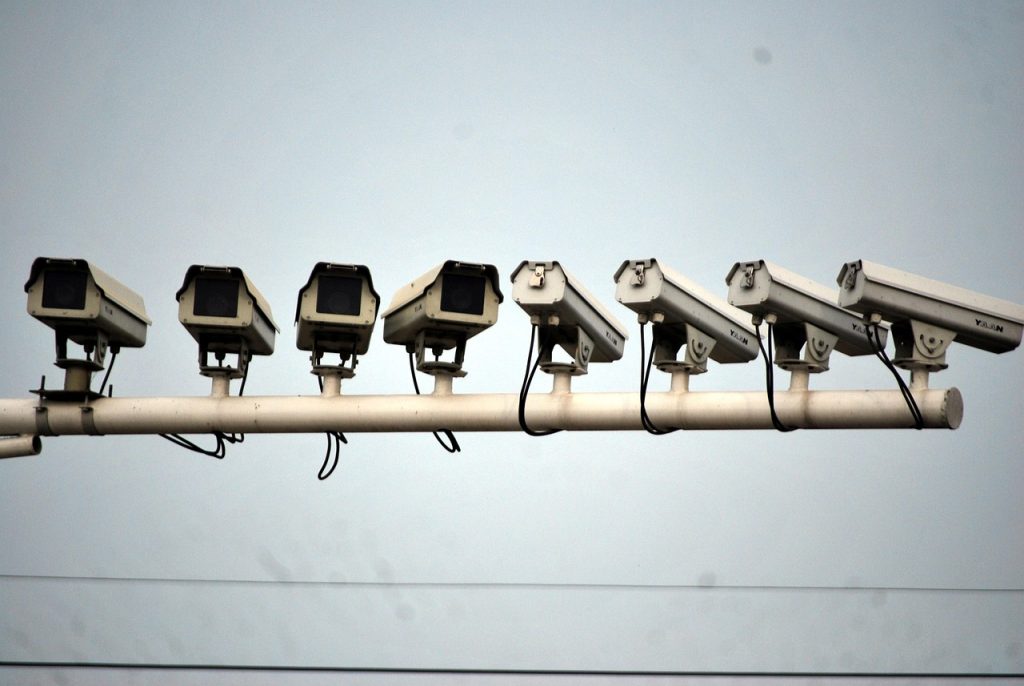
The most unsettling part of modern traffic monitoring is not the hardware on the pole but the business model behind it. A camera that appears to be a simple safety tool can in practice be part of a layered commercial network, where images, timestamps, and license plate reads are treated as raw material for analytics and targeting. Drivers may assume that a municipal agency is in charge, yet the real operator can be a private contractor whose revenue depends on how much usable information the system can extract from passing vehicles.
That structure mirrors the way digital platforms treat user behavior as a commodity. Just as a roadside device quietly logs every passing car, news and social platforms log every click, scroll, and pause, then feed those signals into systems designed to keep people engaged. The camera is only the most visible node in a much larger attention economy, one that blurs the line between public service and private profit while leaving users with little clarity about who is collecting what and why.
From Great Moon Hoax to roadside lenses
The uneasy feeling that someone else is running the camera has deep historical echoes. In the nineteenth century, the so‑called Great Moon Hoax showed how publishers could exploit curiosity with fabricated spectacle, long before anyone wired a city with sensors. That episode became an early emblem of what later critics would call Yellow Journalism, a style that prioritized sensation over verification in order to capture readers and sell more papers.
Those patterns did not vanish with the printing press. They evolved into modern forms of attention hacking, where the logic of Yellow Journalism is updated for a world of dashboards and metrics. The same instincts that once drove editors to splash lurid illustrations across front pages now drive product teams to optimize thumbnails, headlines, and notifications. The roadside camera fits into that lineage as another tool that can be framed as neutral infrastructure while quietly serving commercial and psychological strategies honed over generations.
Clickbait as the new red light
In the digital era, the equivalent of a red light is not a traffic signal but a headline that forces a user to stop scrolling. Designers of clickbait rely on a simple insight from psychology: people feel an almost physical need to close the gap between what they know and what they suspect they might be missing. One widely cited explanation of this behavior notes that this theory suggests humans have a natural curiosity to seek information and to know the full story, which can be triggered and manipulated by carefully crafted teasers.
Clickbait headlines function like automated enforcement: they penalize inattention by hinting that something crucial will be lost if the user does not comply. The more a platform can provoke that reflex, the more data it collects and the more advertising inventory it can sell. In that sense, the digital equivalent of a traffic ticket is not a fine but the time and personal information surrendered every time someone taps on a story that was engineered to be irresistible but not necessarily informative.
Rokeya Lita, Yellow Journalism, and the modern feed
Media scholars have traced a direct line from the excesses of Yellow Journalism to the current wave of engagement‑driven content. Writer Rokeya Lita has described how techniques once associated with fringe outlets have migrated into the mainstream, as every major platform and many legacy newsrooms now rely on metrics that reward provocation. The result is an environment where the loudest or most emotionally charged material often rises to the top, regardless of its civic value.
In that environment, the feed becomes a kind of virtual intersection, with stories racing past like cars. Algorithms act as the unseen traffic controllers, deciding which items get a green light and which are held back. When those systems are tuned primarily for clicks and shares, they reproduce the same incentives that once drove sensational front pages, only at far greater speed and scale. The public may think it is choosing what to read, but in practice it is responding to a choreography designed by people and systems it rarely sees.
Why curiosity is so easy to monetize
Curiosity is not a flaw in human nature, it is one of its strengths, but it becomes a vulnerability when paired with opaque systems that treat attention as a resource to be extracted. The psychological pull described in Nov by researchers who study clickbait is not limited to headlines; it also shapes how people respond to notifications, autoplay videos, and even the small red badges that signal something new has appeared. Each design choice is a way of turning a basic cognitive impulse into a predictable pattern of behavior.
For operators of both cameras and content platforms, predictability is profit. If a system can reliably forecast when a driver will pass a certain point, or when a user will open an app, it can sell that moment to advertisers or other clients. The more precisely it can map those habits, the more valuable the underlying data becomes. What looks like a neutral record of movement or reading is in fact a detailed portrait of routines, preferences, and vulnerabilities that can be packaged and traded.
When infrastructure starts to feel like a trap
There is a point at which tools that were introduced as safety measures begin to feel like traps. Drivers who once accepted cameras as a way to reduce speeding may start to question them if they suspect that enforcement is calibrated more for revenue than for public health. Similarly, readers who once trusted recommendation systems to surface relevant news may grow wary when they notice how often they are steered toward outrage, scandal, or trivial distraction instead of the information they actually need.
That erosion of trust has consequences beyond individual frustration. When people come to see both physical and digital infrastructure as mechanisms for extraction, they are less likely to cooperate with public initiatives that genuinely require data sharing, such as emergency alerts or traffic planning. The challenge is not simply to deploy technology but to do so in ways that make the operator and the purpose visible, so that users can distinguish between systems built for collective benefit and those built primarily for commercial gain.
The ethics of who gets to watch
The question of who runs the camera is ultimately a question about power. Entities that control large streams of behavioral data gain leverage over how people move, what they see, and how they are categorized. Without clear rules and transparency, that power can be used to reinforce existing inequalities, target vulnerable groups, or shape public debate in ways that are difficult to detect or contest. The ethics of observation are no longer confined to police departments or city planners; they now extend to any organization that can afford to build or rent a network of sensors and servers.
Responsible governance requires more than privacy policies written in dense legal language. It demands mechanisms that let people understand, in plain terms, who is watching them and for what purpose, along with enforceable limits on how long data can be kept and how it can be combined with other sources. Without those safeguards, the gap between what users think a system does and what it actually does will continue to widen, and the sense of being monitored by unseen operators will only intensify.
How journalists can resist the clickbait camera
Journalists face a particular tension in this landscape. On one hand, they operate within platforms that reward the same engagement tactics used by marketers and influencers. On the other, their credibility depends on resisting the most manipulative forms of attention capture. The history of the Great Moon Hoax and Yellow Journalism is a reminder that the profession has stumbled before when it allowed commercial pressures to override editorial judgment, and that course corrections are possible when those failures are acknowledged.
One practical response is to treat metrics as tools rather than masters. Reporters and editors can study which stories resonate without letting raw click counts dictate coverage, and they can design headlines that respect readers’ intelligence while still acknowledging the curiosity that draws people in. By being explicit about how they gather and use audience data, newsrooms can distinguish themselves from platforms that treat users primarily as sources of behavioral surplus, and in doing so they can help reset expectations about what ethical observation looks like.
Reclaiming the lens
When drivers finally learn who is running the camera, they are really learning something about the broader systems that structure their daily lives. The same forces that turn a traffic device into a data engine also shape the feeds, alerts, and headlines that compete for their attention. Recognizing that connection is the first step toward demanding more transparency, more accountability, and more alignment between the stated goals of a system and the incentives that actually drive it.
Reclaiming the lens does not mean rejecting technology outright. It means insisting that the power to watch and to frame reality be subject to public scrutiny, clear rules, and meaningful choice. Whether the device is mounted over an intersection or embedded in a news app, the core question remains the same: who benefits from what it sees, and how can the people in its field of view have a real say in the answer.
More from Wilder Media Group: