
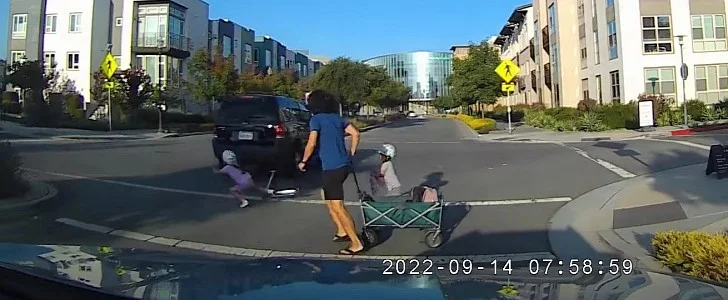

When a dash-mounted camera recorded an SUV barreling through a crosswalk as a child stepped into the street, the footage crystallized a fear every parent carries. The near miss, captured in startling clarity, showed how a single reckless decision can turn an ordinary intersection into a life-or-death line. It also exposed how fragile the social contract is between drivers and the people who trust painted stripes to protect them.
What unfolded in that clip was not an isolated lapse but part of a broader pattern of dangerous driving that is increasingly documented on video. From California suburbs to busy highways, Dashcam recordings are forcing communities to confront how quickly routine trips can tip into catastrophe, and how much more needs to be done to keep children safe at the edge of the curb.
The split-second at the crosswalk
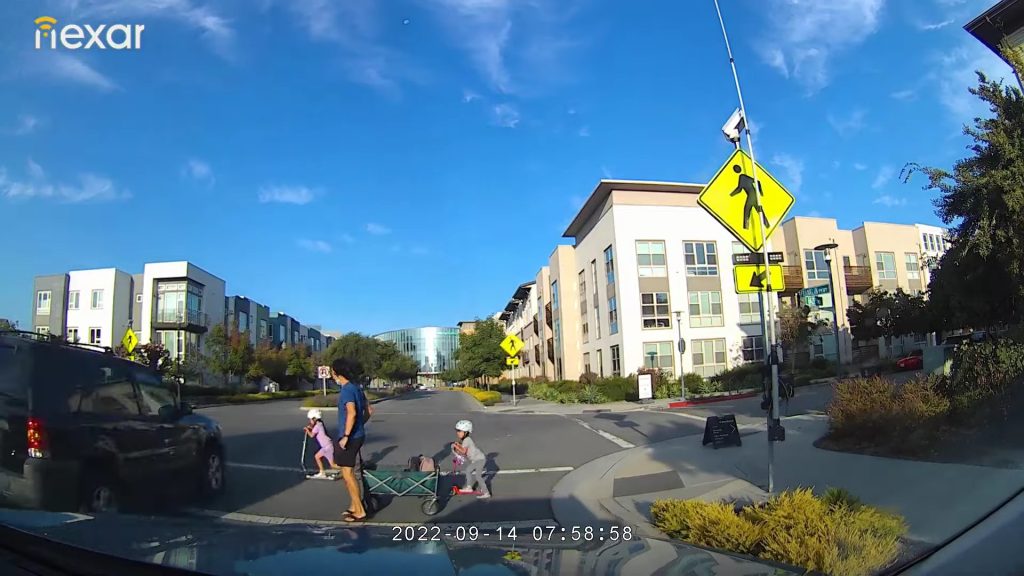
The crosswalk incident that stunned viewers began like countless school-day routines, with a young girl stepping off the curb while traffic appeared to be stopped. In the Dashcam frame, she moves into the marked crossing just as an SUV slices through, missing her by what looks like inches and leaving onlookers frozen in disbelief. The video, recorded in northern California, underlined how even in a clearly marked crossing in California, a child can be exposed to lethal risk before anyone has time to shout a warning.
Investigators and advocates who reviewed the clip noted that the child was doing what safety campaigns urge, using a crosswalk and moving with apparent caution, yet the vehicle still came close enough to trigger gasps from those who later watched the replay. The fact that the near collision unfolded in a community served by Los Angeles media coverage underscored how widely the shock resonated, with the Dashcam clip quickly becoming a touchpoint in California and far beyond.
How the SUV’s move defied basic road rules
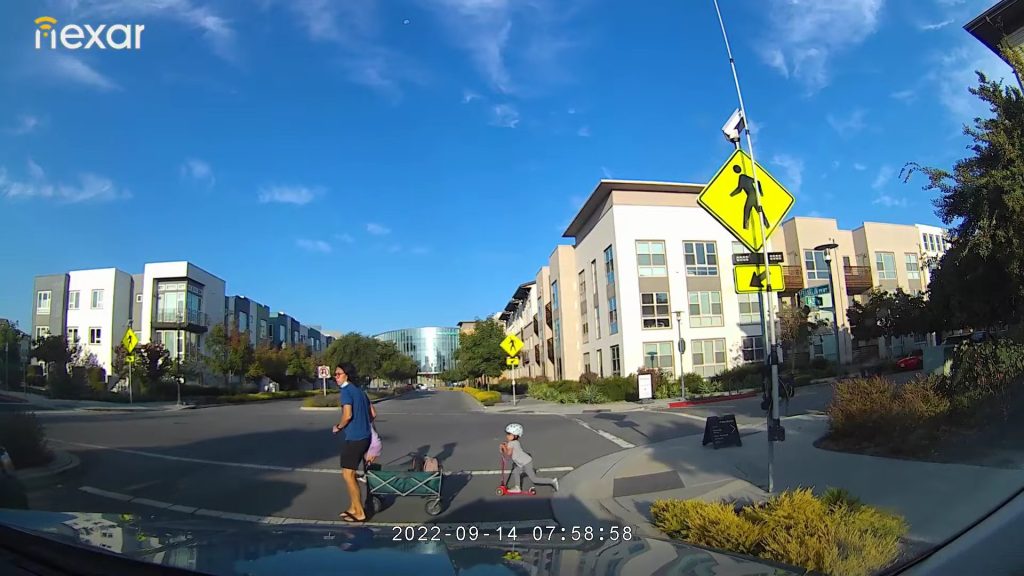
Seasoned traffic officers who study crash footage often talk about a chain of small errors, but in this case the SUV’s maneuver appeared to break the most basic rule of yielding to a pedestrian in a crosswalk. The driver moved through the intersection at a speed that left almost no margin for reaction, effectively treating the crossing as an obstacle to be threaded rather than a zone of absolute caution. That choice, visible frame by frame, is what made viewers describe the move as unthinkable, because it disregarded the clear legal and moral priority of a child already in the roadway.
Similar patterns show up in other recordings where SUVs behave aggressively around vulnerable road users, including a separate clip in which an SUV narrowly misses another girl in an intersection. In that case, the vehicle appears to accelerate through a space where a child is visibly crossing, reinforcing concerns that some drivers are prioritizing their own momentum over the clear duty to stop. Together, these recordings highlight how a disregard for crosswalk right-of-way is not just a technical violation but a direct threat to children who are following the rules.
Parents’ horror and the community’s close call
For the family of the girl in the California crosswalk, the horror was not theoretical, it was a replayable moment in which they could see how close they came to losing a child. Parents who spoke after viewing the footage described a mix of gratitude and anger, grateful that the girl walked away unharmed yet furious that a driver could treat a marked crossing as optional. The emotional whiplash of watching a child step into what should be a protected space, only to see an SUV slice through, has become a rallying point for calls to redesign intersections and stiffen penalties for failing to yield.
Community members who saw the near miss shared it widely, not for shock value but as a warning about how quickly a routine walk can turn into a near tragedy. In another case involving a girl nearly struck in a similar way, the child’s father urged neighbors to think of safety as a shared responsibility, saying that everyone on the road, whether driving, biking, or walking, has a role in preventing the next close call. His plea, captured in coverage of the intersection incident, echoed the frustration of parents who feel that painted lines and flashing signs are not enough when drivers treat them as suggestions.
Dashcams as silent witnesses on American roads
The crosswalk footage exists because a driver chose to install a camera on the dashboard, a decision that has quietly transformed how traffic incidents are documented. Dashcams, once a niche gadget, now serve as silent witnesses that capture everything from routine commutes to the instant an SUV veers toward a child. In the California case, the recording did more than fuel online outrage, it provided clear, time-stamped evidence of the SUV’s path, speed, and failure to yield, details that can be crucial for both enforcement and policy debates.
Other recordings show how these devices are reshaping public understanding of road risk, including a widely shared clip in which a vehicle’s Dashcam captures a child nearly hit in another California crosswalk. In that video, as in the SUV near miss, the camera’s unblinking eye strips away excuses and subjective memory, leaving only the stark sequence of events. The growing archive of such clips is giving traffic engineers, prosecutors, and safety advocates a new kind of raw material, one that shows not just where crashes happen but how drivers behave in the seconds before impact or escape.
When reckless driving moves from crosswalks to highways
The behavior seen at the crosswalk is part of a continuum that stretches onto high-speed roads, where the stakes are even higher. On highways, the same disregard for lanes and right-of-way can escalate into multi-vehicle crashes, especially when large SUVs are involved. One recorded incident shows an SUV drifting out of its lane into oncoming traffic, a move that mirrors the casual lane encroachment seen in some intersection near misses but with far less room for error once speeds climb.
In a particularly stark example, a SUV is seen on Dashcam video veering across the center line and slamming into an 18-wheel truck. The impact, captured in full, illustrates how a momentary lapse or aggressive maneuver can turn a heavy vehicle into a battering ram. When viewed alongside the crosswalk near miss, the highway crash reinforces a sobering point, the same habits that nearly cost a child her life at low speed can be catastrophic when repeated at freeway velocities.
The shocking choice to drive children into danger
Not all dangerous SUV maneuvers stem from distraction or misjudgment; some involve conscious choices that leave bystanders stunned. In one recorded case, a driver steered an SUV with children inside into the path of oncoming traffic in what appeared to be an attempt to bypass congestion. Witnesses who later watched the footage struggled to understand how any adult could weigh a few minutes of delay against the risk of a head-on collision with a larger vehicle.
One observer, Jorge Cabrera, summed up the disbelief by saying he thought there was no way a parent would willingly put their kids in danger in head-on traffic, yet the video showed exactly that. His reaction, tied to the dangerous maneuver, echoed the outrage many felt after the crosswalk near miss. Both incidents show how the people inside the vehicle, often children with no say in the decision, are the ones who bear the brunt of a driver’s impatience or recklessness.
Swerving, cutting in, and the culture of aggressive driving
The SUV that tore through the crosswalk fits into a broader culture of aggressive driving that is increasingly visible in Dashcam compilations. On multi-lane roads, some drivers treat traffic like a slalom course, swerving between lanes, accelerating hard, and cutting in front of larger vehicles to gain a few car lengths. That behavior may feel routine to the person behind the wheel, but to those watching from the outside, especially when children are nearby, it looks like a series of near misses waiting to become headlines.
One widely shared clip shows an SUV swerving into the right lane, speeding up, and cutting in front of a truck so closely that a collision is narrowly avoided, all captured From the Dashcam perspective. The sequence, which begins as a simple lane change and escalates into a high-risk cut-in, mirrors the mindset behind the crosswalk incident, a willingness to gamble on tight gaps and assume others will react in time. When that mindset meets a child in a crosswalk, the margin for error shrinks to almost nothing.
What these videos reveal about SUV risk
Across these recordings, one detail recurs, the vehicles involved are often SUVs, with their higher ride height, longer stopping distances, and larger blind spots. Safety researchers have long warned that when an SUV strikes a pedestrian, especially a child, the consequences are typically more severe than with a smaller car, because the point of impact is higher on the body. The crosswalk near miss in California, where a tall vehicle passed within a narrow buffer of a young girl, visually reinforces those concerns, showing how little space separates a survivable scare from a devastating impact.
Highway footage adds another layer to that risk profile, as seen in the clip where an SUV crosses into oncoming traffic and collides with a truck, a moment captured in full on Dashcam video. The mass and momentum of a large vehicle amplify the damage when things go wrong, whether that is a side-swipe in a lane change or a direct hit in a crosswalk. When combined with aggressive driving habits, the characteristics that make SUVs appealing to families, size, power, a sense of security inside the cabin, can translate into greater danger for those outside the vehicle.
From viral outrage to safer streets
The viral spread of the crosswalk near miss has already prompted calls for concrete changes, from better signage and lighting to redesigned intersections that physically slow vehicles as they approach. Advocates argue that relying on driver goodwill is not enough, especially when Dashcam footage keeps revealing how often that goodwill fails. Instead, they point to measures like raised crosswalks, curb extensions, and automated enforcement as ways to force drivers to respect pedestrian space, regardless of their personal habits.
Community leaders who watched the California clip alongside other recordings of SUVs swerving, cutting in, or crossing into oncoming lanes say the pattern is too consistent to ignore. They are urging local governments to treat each viral video not just as a moment of outrage but as a data point that can guide policy, whether that means stricter penalties for failing to yield, targeted enforcement at high-risk intersections, or public campaigns that highlight the real stories behind the footage. In that sense, every shared clip, from the dangerous maneuver with children in the back seat to the Watch clip of an SUV cutting off a truck, becomes part of a larger push to ensure that what happened at that crosswalk remains a warning, not a preview.
More from Wilder Media Group: