
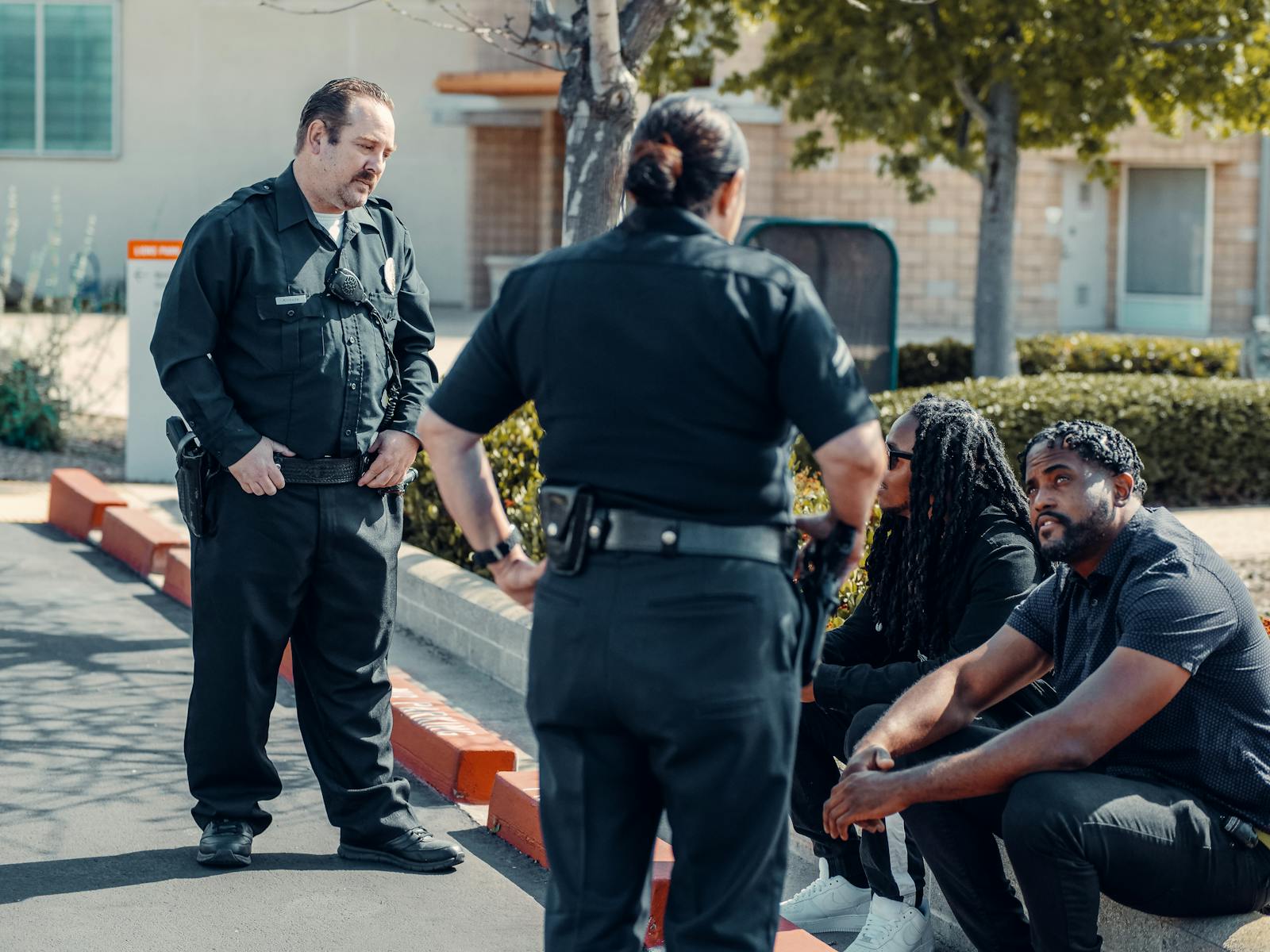

Most drivers who see flashing lights in the rearview mirror assume the same thing: they are about to get a ticket for going too fast. Yet a growing collection of traffic stop stories shows that what begins as a simple speeding pull‑over can quickly turn into something far stranger, kinder, or more alarming than anyone expects. From costume-clad motorists to suspected impersonators, these encounters reveal how much drama can be packed into a few minutes on the shoulder of the road.
Across the United States, officers and drivers are colliding in moments that ricochet across social media, reshaping how people think about routine enforcement. Some stops end in viral goodwill, others in criminal charges, and a few in scenes so absurd they read like scripted sketches. Together, they show that the phrase “pulled over for speeding” often hides a much more complicated story.

The split second when a routine stop changes
Every traffic stop begins with a judgment call. An officer spots a car moving too fast, weaving through lanes, or ignoring a signal, and decides to intervene. For the driver, that decision is usually interpreted as a narrow question of speed, but for the officer it is also a safety check, a chance to see who is behind the wheel and what else might be going on. That gap in expectations is where so many of these surprising encounters begin.
Social media clips and local reports show how quickly a standard stop can pivot from a citation to something more memorable. A driver might be racing to a personal emergency, hurrying to a job, or, as one viral case illustrated, rushing to a shoot that had nothing to do with crime at all, a twist that only emerged once the officer started asking questions about why the car had been clocked so fast, a moment captured in a routine stop.
He thought it was about speeding, it was really about the story behind it
In that widely shared encounter, a motorist who expected a straightforward lecture about the speed limit instead found himself explaining his career. The driver admitted he was racing to make it to a shoot, a detail that turned the conversation from a scolding into a curious back‑and‑forth about what kind of production was so urgent that it justified pushing the accelerator. The officer’s questions peeled back the surface of a basic traffic infraction and exposed the pressures that had pushed the driver to take the risk in the first place.
The clip, circulated by creator accounts that framed it as a moment when a “routine traffic stop took an unexpected turn,” underscored how quickly a stop can become a character study. The driver’s explanation, and the officer’s reaction, were later highlighted again in a second share of the same unexpected turn, reinforcing how audiences are drawn to the tension between the driver’s fear of a ticket and the more human explanation that emerges once he starts talking.
Running late, red and blue lights, and the anxiety everyone recognizes
For many people, the dread of being pulled over is tied less to the fine and more to the timing. Being stopped when already late for work, a medical appointment, or a family obligation can feel like insult layered on top of stress. That shared anxiety has become a staple of online storytelling, where creators and outlets lean into the image of red and blue lights appearing in the mirror just as a driver is trying to make up lost minutes, a feeling captured in a post shared by Rare.
That same post leaned into the universal moment when “we’re already running late” and the last thing anyone wants to see is a patrol car lighting up behind them. It invited followers to share their own stories in the comments, turning a single image into a crowdsourced archive of near‑misses, warnings, and tickets. A second version of the same image, shared again by When the account resurfaced it, underscored how enduring that fear is, and how easily a simple traffic stop can become a story people retell for years.
When the driver is famous, the stop becomes a spectacle
Not every speeding stop involves an ordinary commuter. In Kansas, officers recently pulled over an ’80s pop icon, a driver whose face and music were already familiar to millions. Being stopped by police is nerve‑racking for anyone, but the awkwardness multiplies when the person behind the wheel is a celebrity with a long trail of fans and cameras. The encounter, which reportedly included a lighthearted photo opportunity under the wide Midwestern sky, showed how fame can turn a standard citation into a public spectacle.
Coverage of the Kansas incident emphasized that the singer, who had multiple hits in the 1980s, handled the situation with humor, even posing with officers after being caught speeding. The story, shared widely as an example of how a tense moment can be defused with a smile, was anchored by descriptions of the Kansas sky and the surreal image of a pop star standing roadside with law enforcement. A follow‑up version of the same account, which framed the moment around the idea of Being pulled over, reinforced how celebrity traffic stops can quickly become feel‑good content rather than just another entry in a citation log.
Santa behind the wheel and the power of a costume
Sometimes the surprise in a speeding stop is visual. In Ohio, a police officer who pulled over a car for going too fast walked up to the driver’s window and found someone dressed head to toe as Santa. The sight of a full red suit and white beard behind the wheel instantly shifted the tone of the encounter, turning what could have been a dry exchange about miles per hour into a moment that blended holiday humor with a reminder about road safety.
The clip of the Ohio stop, which showed the officer addressing the costumed driver, circulated widely as viewers reacted to the juxtaposition of flashing lights and festive attire. The video highlighted how even a serious conversation about speeding can be softened when the person in the driver’s seat looks like Santa cruising through Ohio. It also underscored a recurring theme in these stories: officers are often navigating not just violations, but the personalities and performances of the people they stop.
When a speeding stop uncovers something darker
Not every surprise uncovered during a traffic stop is charming. In Port St. Lucie, officers who initiated a stop encountered a man accused of impersonating law enforcement while intoxicated, a far more serious situation than a simple speeding ticket. According to body camera footage and local reporting, the man had fixed mounted white lights, a badge, handcuffs, and a firearm, along with an open container of alcohol, all of which were seized once officers realized what they were dealing with.
The case, which unfolded at the intersection of SW Port St. Lucie Boulevard and SW Aster Avenue, showed how a roadside encounter can expose a broader threat to public trust. The report credited PSL officers with stopping the suspect, and noted that the story was reported by Skyler Shepard and Gershon Harrell on a Thu, underscoring how quickly a traffic stop can escalate into a criminal investigation with serious charges.
Compassion on the shoulder: when officers choose empathy
Alongside the more dramatic and dangerous stories are quieter moments that resonate because they show officers choosing empathy over punishment. One viral clip, shared by an account labeled Shout, showed a Louisiana sheriff’s deputy pulling over a man for speeding and then changing course once he learned why the driver was in such a rush. Instead of simply writing a ticket, the deputy listened, weighed the circumstances, and responded in a way that viewers praised as humane.
The Louisiana stop, which was reposted again with the same “Shout out to this officer, we more like this” framing by an account that highlighted Louisiana, tapped into a public appetite for examples of law enforcement using discretion. In the comments, viewers contrasted the deputy’s response with their own experiences of rigid enforcement, arguing that understanding context can build more trust than a stack of citations. The story reinforced the idea that while officers have the authority to punish, they also have the power to help, especially when a driver’s urgency is tied to a personal crisis.
A crooked tie, a looming life event, and a small act of help
Another widely shared video captured a different kind of kindness. In that clip, an officer pulled over a man for speeding and quickly noticed that the driver was struggling to fix his tie while trying to explain himself. It turned out the man was racing to a significant life event and was visibly flustered, juggling his appearance and the fear of being late with the stress of being stopped. Instead of focusing solely on the violation, the officer stepped in to help straighten the tie, turning a tense moment into a brief tutorial in both fashion and empathy.
The scene was described as “a moment of pure humanity” in a post that emphasized how authority can still have empathy, a sentiment attached to the original traffic stop. A second share of the same footage, which again highlighted how the traffic encounter evolved, reinforced the message that small gestures from officers can leave a lasting impression. For many viewers, the image of an officer carefully adjusting a driver’s tie on the roadside became a counterweight to more adversarial narratives about policing.
Absurd escapes, viral metrics, and the technology that stops the chaos
Not all drivers accept a ticket or a warning without protest. In Springfield, one late‑night traffic stop spiraled into what was described as one of the most absurd attempts to flee on record. A driver, already pulled over, tried a last‑second escape that was quickly thwarted, a sequence that was clipped and shared online with the kind of incredulous commentary usually reserved for action movies. The post that carried the footage noted “163” reactions and engagement markers, a reminder of how quickly these moments can spread when audiences sense a mix of danger and slapstick.
The Springfield incident, shared by an account called Jan and tagged with the handle incomehunters, was later echoed in a second version that again highlighted the figure 163 and the name Springfield. At the same time, law enforcement agencies have been highlighting tools designed to prevent such escapes from turning into high‑speed chases. A recent roundup from Stop Stick News, titled Cybertrucks and Coastal and subtitled Stop Stick Stories, detailed how spike systems have been used against fleeing vehicles, including a Cybertruc, underscoring that what begins as a speeding stop can sometimes end with specialized equipment deployed across a highway.
More from Wilder Media Group: