

A routine traffic stop can pivot from polite small talk to raw panic in the time it takes to ask a single question. The stakes in that moment are not abstract, they are written on the faces of drivers and officers who know that one misstep, one misunderstood command, can change lives. When a calm roadside check suddenly turns wild, it exposes not only individual choices but the legal gray zones and cultural expectations that shape every flashing blue light in the rearview mirror.
Across the country, viral clips of stops that start quietly and then explode into shouting, punches, or desperate pleas have become a running referendum on how power is used on the side of the road. Those same feeds also capture quieter scenes, where a speeding ticket becomes a moment of unexpected humanity. Together, they show how much can hinge on what is said, and how it is heard, in the first few seconds after an officer walks up to a driver’s window.
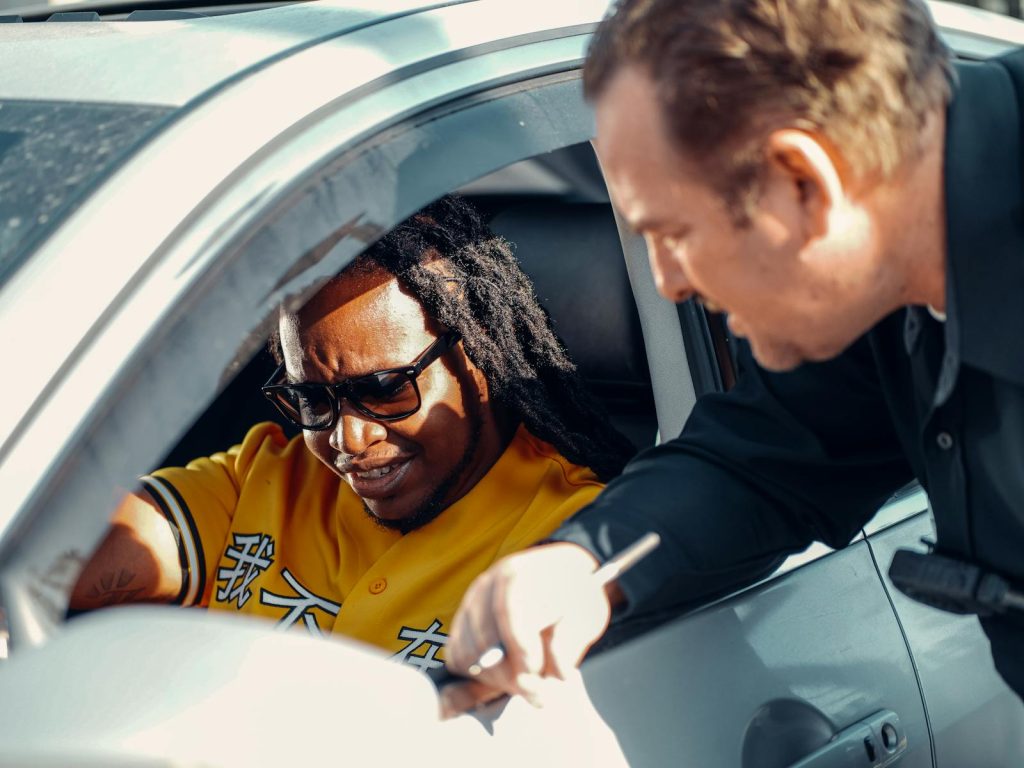
The calm before the chaos at a quiet intersection
In one widely shared video from Oct, a patrol car in De Moines, Washington pulls in behind a sedan at what looks like a standard late afternoon stop. The officer’s tone is measured as he approaches, the kind of everyday interaction that plays out thousands of times a day without incident. The driver appears compliant, hands visible, voice steady, and for a brief stretch the scene feels almost mundane, the sort of encounter that rarely makes it beyond a dashcam archive.
The mood shifts when the officer asks a pointed question about the driver’s recent movements, a query that seems routine but clearly rattles the person behind the wheel. Within seconds, the driver’s anxiety spikes, the officer’s commands grow sharper, and the stop that began as a calm roadside check in De Moines, Washington unravels into a scramble of raised voices and sudden movement captured in the traffic video. The speed of that escalation, from measured conversation to chaos, is what keeps viewers replaying the clip, searching for the precise moment when control slipped away.
One question that changes everything
The question that often flips a stop from routine to volatile is not always shouted or aggressive, it can be as simple as asking a driver to step out of the car. For many motorists, that request signals that the encounter has moved beyond a minor infraction into something more serious, even if the officer frames it as a safety precaution. The gap between how that order is intended and how it is received can widen quickly, especially when past experiences or viral stories have primed drivers to fear what might come next.
In a separate clip from Nov, a driver repeatedly asks, “Can you get your sergeant?” while an officer insists, “Okay so can I will underway for your sergeant. Get out of the car.” The exchange, preserved in a recorded confrontation, shows how a simple directive to exit the vehicle can collide with a driver’s demand for oversight and clarity. By the time the officer repeats “Get out of the car” and the driver protests that she was parked, the original reason for the stop is almost beside the point, replaced by a struggle over authority and trust.
Jacksonville’s viral punch and the fight over “reasonable” force
Few recent cases illustrate the combustible mix of perception, power, and legality as starkly as the Jacksonville traffic stop involving William McNeil Jr. In cell phone footage that spread quickly, William is seen during a roadside encounter that escalates into a physical clash, culminating in an officer punching him in the face. The video, recorded from a limited angle, does not capture every movement, but it shows enough to ignite a fierce debate over whether the officer’s response crossed the line.
Legal scrutiny followed, with investigators weighing whether the punch amounted to excessive force or a justified attempt to gain control. In a detailed review, officials ultimately cleared the officer of criminal wrongdoing, concluding that the strike fell within the bounds of “reasonable” force under the circumstances described in the internal files. That decision, tied closely to what could be seen and heard in the viral footage, did little to settle public anger, especially among viewers who saw the punch as a textbook example of a calm stop turning violent in seconds.
Community outrage and the power of a smartphone frame
The Jacksonville incident did not unfold in a vacuum. Earlier over the summer, another recording from the city, shared by 22-year-old Will McNeil Jr. on Sunday, showed a contentious stop that reportedly involved officers striking a driver and using a Taser. That clip, which quickly circulated across social platforms, became a rallying point for residents who felt that aggressive tactics had become too common in routine traffic enforcement. Even though the angle of the recording did not clearly show every action, the sound of shouting and the visible struggle were enough to fuel protests and calls for accountability.
As the clip spread, national commentators and local activists seized on the case as evidence that roadside encounters were tipping too easily into force. The fact that the footage came from a smartphone, not an official camera, shaped the narrative, with supporters of Will arguing that citizen recordings were the only reason the incident drew scrutiny at all. The public debate, anchored in the shared video, underscored how much power now rests in the hands of bystanders who hit “record” the moment blue lights appear.
Internal discipline, missing details, and shaken trust
Inside the Jacksonville Sheriff’s Office, the fallout from these viral stops has not been limited to public relations. In one closely watched case, an Officer involved in a high profile traffic encounter was formally reprimanded for failing to include a punch to a driver’s face in the initial written report. That omission, uncovered after video surfaced, raised immediate questions about how accurately use of force is documented when there is no camera rolling. The disciplinary action signaled that even when force is later deemed legally justified, incomplete paperwork can still trigger consequences.
The reprimand also fed a broader skepticism among residents who already doubted official narratives. If a punch could be left out of a first draft, critics asked, what else might be missing from reports that never face public scrutiny. The Sheriff’s leadership, aware of the growing distrust, has had to address both the specific case and the larger perception that transparency only arrives when a clip goes viral. The internal review, and the decision to sanction the Officer for the missing detail, was detailed in a broadcast segment that itself became part of the public record.
When a stop becomes a symbol: William McNeil Jr. and national advocacy
The story of William McNeil Jr. did not end with local reviews or departmental memos. Civil rights advocates seized on his case as emblematic of a broader pattern in which Black drivers experience traffic stops as fraught, high risk encounters rather than minor inconveniences. Prominent attorney Ben Crump highlighted the moment William was punched in the face during the stop, framing it as part of a national struggle over policing and racial justice. The advocacy campaign around William’s experience turned a single roadside clash into a touchstone for conversations about reform.
On social media, that framing resonated. A post describing how William was punched in the face during a traffic stop after a disputed interaction drew 4191 likes and 467 comments, a volume of engagement that reflected both outrage and solidarity. Those numbers, attached to a short reel, show how quickly a local incident can be elevated into a national talking point when it is amplified by a well known advocate. For William and his supporters, the attention is not just about one punch, it is about forcing a reckoning with how easily a calm roadside conversation can turn into a violent flashpoint.
Policy shifts: the quiet power of limiting questions
While individual cases grab headlines, quieter policy changes are reshaping what officers can ask in the first place. In California, new rules that took effect at the start of 2024 restrict certain questions during traffic stops, particularly those that are seen as fishing expeditions unrelated to the original reason for pulling a driver over. The idea is straightforward, if officers are barred from veering into open ended queries about topics like immigration status or vague suspicions, there is less room for misunderstandings or confrontations that spiral out of control.
Legal analysts note that these limits do not prevent officers from asking necessary safety questions or issuing lawful commands, but they do narrow the script in ways that could reduce friction. For drivers, knowing that some lines of questioning are off the table may ease the fear that a broken taillight will morph into a far more serious investigation. The change, explained in a public explainer, reflects a growing recognition that the words spoken in the first minute of a stop can be as consequential as any physical action that follows.
Investigations, Instagram, and the Jacksonville Sheriff’s Office
Back in Florida, the Jacksonville Sheriff’s Office has found itself under sustained scrutiny as more traffic stop videos surface. After one particularly contentious encounter, the agency launched an internal investigation that was quickly picked up by national social feeds. A widely shared post, credited to TSR STAFF: Lawrencia G!, described how The Jacksonville Sheriff’s Office was reviewing the actions of officers seen in a clip tagged with local handles like 904will. The language of the post captured both the seriousness of the inquiry and the social media savvy of the audience following every update.
For the Sheriff’s team, the challenge is twofold, they must conduct a thorough review that satisfies legal standards while also communicating with a public that is consuming information in short, emotionally charged bursts. The investigation, highlighted in the Instagram post, shows how law enforcement agencies now operate in an environment where internal processes are instantly translated into shareable content. Each new clip of a stop that turns heated becomes not just a personnel matter, but a public referendum on the Sheriff’s credibility.
When empathy, not escalation, defines the stop
Not every dramatic traffic stop ends with shouting or handcuffs. In a quieter but equally revealing scene from Jan, an officer pulled over a man for speeding and noticed him struggling to fix his tie while trying to explain that he was running late for a job interview. Instead of leaning into the power imbalance, the officer chose a different path, helping the driver adjust the tie and offering a few words of encouragement before sending him on his way. The moment, captured on video, quickly spread as a rare example of a roadside encounter that left both people better off.
Viewers who shared the clip saw it as proof that authority can still have empathy, that an officer can enforce the law while recognizing the human being in the driver’s seat. The scene, celebrated in a short post, stood in stark contrast to the more familiar images of fists and Tasers. It also underscored a simple truth, the same split second in which an officer decides whether to bark an order or ask a question can be used to deescalate rather than inflame.
Humanity at the roadside and the road ahead
The tie fixing stop did more than warm hearts, it offered a template for what many reformers want traffic enforcement to look like. In a follow up description, the scene was framed as a reminder that authority can still have empathy, that a badge does not have to erase basic kindness. The officer’s choice to help rather than humiliate the driver, shared again in a second clip, suggested that the same discretion that sometimes leads to unnecessary escalation can also be used to build trust.
More from Wilder Media Group: