
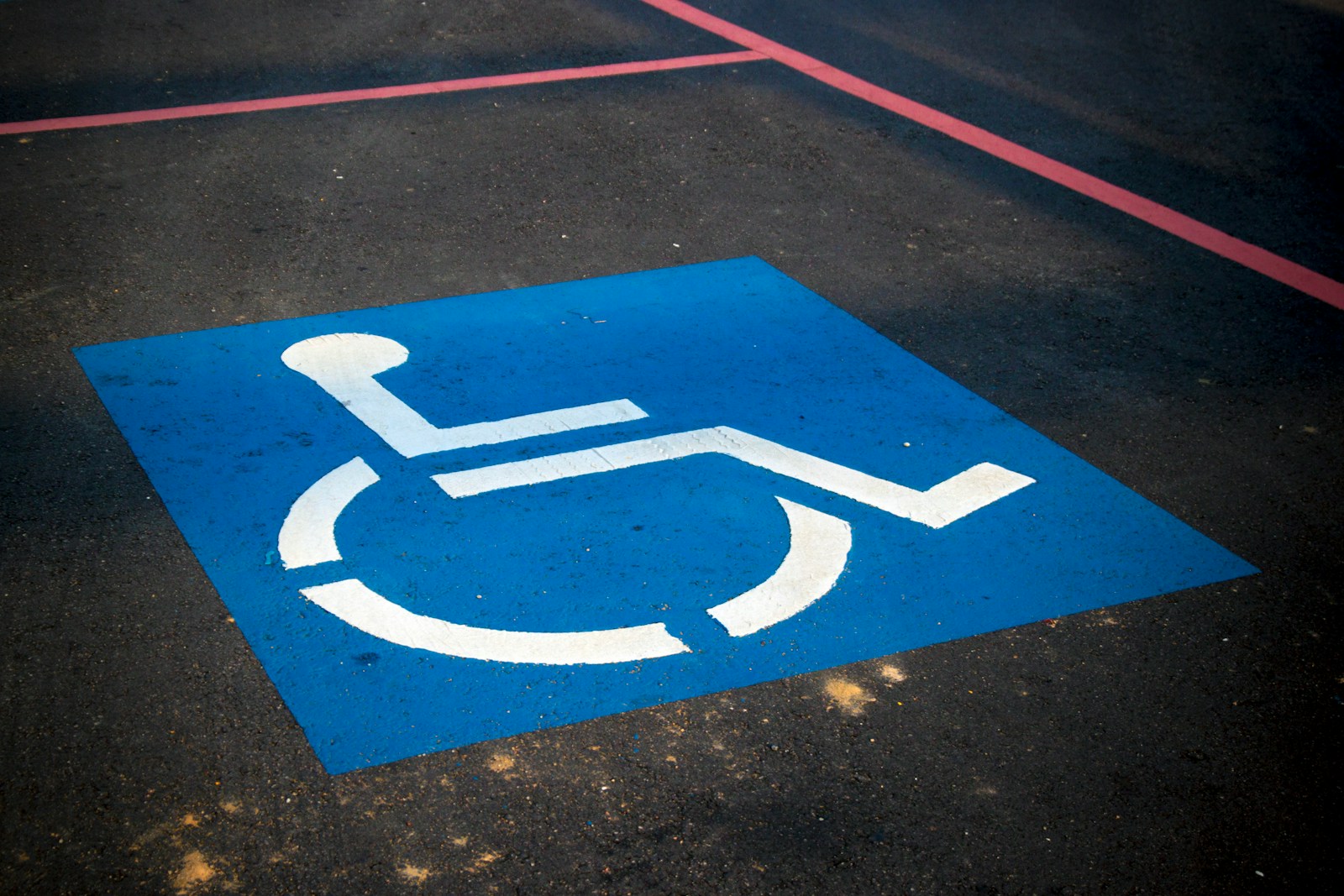

Few things ignite public anger faster than a driver sliding into a handicap space without permission. In the age of camera phones and instant uploads, that single decision can trigger a chain of outrage, vigilante “justice,” and, sometimes, a twist that forces everyone to rethink their assumptions. A string of viral incidents, from a Lamborghini owner to a Brazilian prank victim, shows how one bad parking choice can lead to consequences nobody saw coming.

The Lamborghini that broke the internet’s certainty
The story that crystallized this tension began with a low, bright Lamborghini sitting in a disabled bay, its presence captured and shared before anyone asked who owned it or why it was there. Commenters saw a luxury badge and a blue wheelchair symbol and instantly filled in the rest, accusing the owner of entitlement and selfishness as the image ricocheted through local groups and wider feeds. In one case, a man in a Lamborghini was targeted in a Lambo Driver Parks narrative that framed him as the archetype of the rule-breaking supercar owner.
The backlash only began to soften when the owner responded not with insults but with a photograph that showed why he had the right to be there, undercutting the certainty of his critics in a single image. A separate viral post about a Lamborghini owner in a disabled spot made the same point even more bluntly, turning a pile-on into a lesson about invisible disabilities and the danger of judging a person, or their medical history, by the car they drive.
How a Facebook group turned outrage into a public shaming
Local Facebook groups have become the new town square, and in one case they became the courtroom too. After a man parked in a disabled space, a community group seized on a photo of his car and launched a thread that quickly filled with accusations and armchair legal analysis. The driver was not just criticized, he was dissected, with users in the Facebook discussion questioning his right to the space and assuming that a high-end car could not possibly belong to someone with a disability.
Another viral clip framed with the line “Well well well, how the turn tables” captured how quickly that certainty can flip when new information appears. In that case, a Lamborghini in a disabled bay again triggered instant outrage, only for the narrative to become more complex once the owner’s circumstances were revealed. Together, these episodes show how quickly a parking dispute can escalate into a digital spectacle, and how rarely the first viral frame tells the whole story.
Brazil’s viral Post-it “punishment” and the myth of instant karma
Long before the Lamborghini debates, a very different handicap-spot saga unfolded in Brazil and set the template for viral “payback.” A man left his red hatchback in a disabled space in MARINGA, Brazil, and returned to find it completely covered in blue and white sticky notes arranged into the universal wheelchair symbol. Video of the Brazilian Guy prank, complete with a jeering crowd and a stunned driver, was framed as poetic justice for someone who had treated disabled parking as optional.
Follow-up reporting revealed that the spectacle was not a spontaneous act of citizen enforcement but a staged stunt, with the driver in on the joke and the sticky-note ambush planned in advance. A detailed explainer noted that After the man parked in the disabled area, his car was deliberately transformed into a giant disability symbol using blue and white Post-its for the camera. A Reddit breakdown of the same clip, shared under the line “Here is the Actual video for ‘that’s what happens when you park in a handicap spot in Brazil’,” stressed that the whole thing was orchestrated, with the driver acting in it with the crew, as users on Here pointed out.
From prank to global meme: the Post-it wheelchair goes mainstream
Once the Brazilian clip took off, the image of a car smothered in sticky notes became a shorthand for crowd-sourced discipline. International outlets described how an Illegally parked car in a handicapped zone was plastered with Post-its, turning a mundane parking violation into a viral spectacle. The visual was simple and instantly shareable: a sea of blue squares forming the outline of a wheelchair, a driver trying to peel them off while onlookers filmed and laughed.
Coverage from MARINGA, Brazil, emphasized how the pranksters used hundreds of Post notes to draw the disability symbol and how the stunt briefly turned a supermarket lot into a stage. Entertainment coverage, including a piece by David O’Shaughnessy, leaned into the drama of the crowd reaction, noting that “Our Portuguese” might not be perfect but it was clear the jeering spectators were not offering compliments as the crowd watched the driver inch away under a blizzard of paper.
When a prank looks like real justice: the Brazilian hatchback
The same Brazilian stunt was retold in automotive circles with a focus on the car itself, a modest red hatchback that became an unlikely global symbol of bad parking. One detailed account described how The Brazilian man parked his hatchback in a space reserved for handicapped drivers and then walked back into a scene that looked like a social media morality play, complete with a chanting crowd and a car that now resembled a rolling accessibility logo.
What many viewers did not realize was that the same clip was being dissected elsewhere as a carefully choreographed prank rather than a spontaneous act of righteous anger. A Reddit user who shared the Actual video stressed that the driver was part of the production, highlighting how easily audiences can mistake staged content for documentary evidence of “what happens” to rule-breakers. The gap between perception and reality in this case mirrors the assumptions made about the Lamborghini owner, even though one scenario involved a scripted prank and the other a real disabled driver.
From Walmart lots to tow trucks: when enforcement steps in
Not every handicap-spot controversy is resolved with sticky notes or social media lectures. In some cases, the consequences are delivered by uniformed officers and tow trucks rather than pranksters. A widely shared video from a Walmart parking lot showed a confrontation that escalated from a simple handicap-space dispute into a criminal case, with the driver insisting “did I just hear you say that this is because you’re black” as the encounter spiraled. The clip, titled around how parking in a Walmart handicap spot turned into a felony, underscored how a routine enforcement stop, captured on a Jun video, can quickly become a flashpoint over race, authority, and the limits of compliance.
In another viral clip, a driver who parked in a handicap spot “without authorization” learned that the most immediate consequence was not online shaming but losing his vehicle altogether. The video shows Enforcement arriving quickly, a tow truck hooking up the car, and officers explaining that assumptions about “nothing happening” when people ignore basic rules are often wrong. These scenes highlight a different kind of consequence, one rooted in statutes and fines rather than viral humiliation.
Everyday misuse: from Sonic employees to Tel Aviv streets
Beyond the headline-grabbing supercars and elaborate pranks, there is a quieter, constant frustration among disabled drivers who find their spaces casually occupied. In Radcliff, Kentucky, a customer used a local Facebook group to call out an employee at a Sonic drive-in who had parked in a handicap spot without a placard. The poster described the worker as “ignorant” and then, after being criticized for sharing the image, argued that “we must protect the guilty” had become the default when people object to public shaming, as captured in the Des post.
In Tel Aviv, a different kind of parking controversy showed how quickly official decisions can collide with public perception. Tel Aviv student Hila Ben Baruch parked near her apartment on Sunday, believing she was in a legal space, only to discover that the markings had been changed and she was suddenly accused of parking in a handicapped spot. Her case, which turned into a Tel Aviv Facebook sensation, illustrated how even well-intentioned enforcement can feel arbitrary when the rules on the ground shift without clear communication.
Viral justice versus the rule of law
These stories sit at the intersection of two powerful forces: the legitimate need to protect disabled access and the internet’s appetite for instant, crowd-sourced punishment. In Brazil, the sticky-note prank was celebrated as “crowd-sourced karma in action,” with David O’Shaughnessy highlighting how the jeering audience turned a parking lot into a theater of shame as the David clip spread. Yet the revelation that the driver was part of the production complicates the idea that viewers were watching real accountability rather than entertainment dressed up as justice.
Elsewhere, the line between spectacle and law is even sharper. A video compilation of reckless motorists showed how Four drivers who filmed themselves racing at break-neck speeds were later convicted after their own viral clips became evidence. That dynamic echoes the Walmart handicap-space confrontation and the towed car, where cameras captured not just the alleged offense but the official response. The more people reach for their phones in parking lots, the more those spaces become contested arenas where law, morality, and performance collide.
The lesson nobody expected: assumptions, disability, and the next viral clip
What ties the Lamborghini backlash, the Brazilian Post-it prank, and the Sonic employee complaint together is not just a blue wheelchair symbol on the asphalt but the speed with which strangers decide who is right and who is wrong. The viral post about a Lamborghini owner “teaching the internet a lesson about assumptions” captured that perfectly, pointing out that disability is not always visible and that neither wealth nor youth cancels out a medical diagnosis. The Instagram clips that began with “Well well well” and “After parking in a disabled space” both ended by reminding viewers that the story behind a parked car is often more complicated than a single frame suggests, as the Well and After posts made clear.
At the same time, disabled drivers and advocates argue that the anger fueling these viral moments is not misplaced, only misdirected when it turns into harassment or misidentification. The Brazilian sticky-note stunt, replayed in multiple versions from Des explainers to Jun video segments and UPI write-ups, shows how creative tactics can raise awareness about access without involving police. Yet the Lamborghini episodes and the Tel Aviv case are a reminder that the most surprising consequence of parking in a handicap spot today may not be a ticket or a tow, but a global audience forced to confront how little it really knows from a single photograph.
Supporting sources: Lambo Driver Parks, man just taught, Payback: What happens, Consequences, If You, Car illegally parked, Man Parks His, Watch: Post-its form, How Parking in, Employee misusing handicap, Parking debacle turns, Watch: Brazilian man, parked in a, Facebook group attacked, Lamborghini parked in, Consequences, If You, Car illegally parked, Watch: Post-its form, Watch: Brazilian man, Man Parks His, man just taught, Lamborghini parked in, Facebook group attacked, How Parking in, Employee misusing handicap, parked in a, Reckless Drivers Endangering, Here is the.
More from Wilder Media Group: