
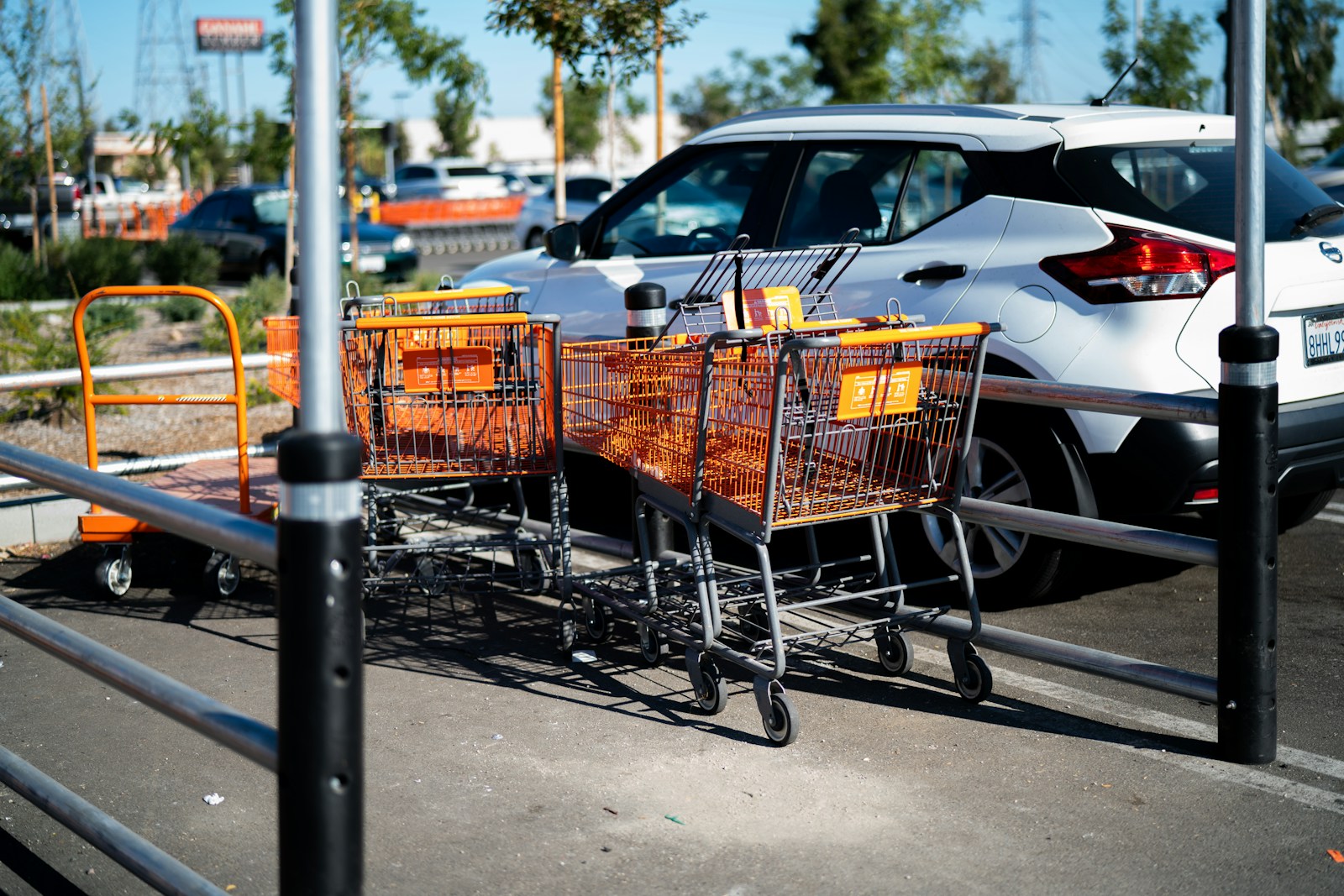

When a driver nudges a shopping cart against someone else’s car and walks away, it can feel like a petty slight that will never be punished. Increasingly, though, a quiet witness is watching from the windshield, recording every scrape, shove and flared temper. The spread of dashcams and parking cameras is turning small acts of parking-lot disrespect into shareable, traceable evidence that can follow drivers long after they leave the scene.
The viral clips that now flood social feeds show how quickly a casual lapse in courtesy can escalate into a public spectacle once video exists. From carts rolling into doors to full-blown confrontations on the shoulder of the highway, the camera’s presence is reshaping how drivers behave, how victims respond and how communities call out bad conduct.
The cart, the car and the instant replay
The classic version of this story starts in a crowded lot, where someone finishes unloading groceries and casually shoves a cart toward the nearest gap, letting it coast into a stranger’s door. For years, the victim would return to find a fresh dent and no clue who was responsible, left to argue with a landlord, a mall manager or an insurer about what might have happened. Now, a growing number of vehicles record continuously while parked, so the moment a cart hits the panel, the impact is captured in crisp detail, from the direction it came to the person who let it go.
Owners who once had to absorb the cost of these “mystery” dings are starting to post the footage, both to vent and to crowdsource accountability. In one widely shared thread, a driver described stocking up at Costco and watching later as a woman released a cart that smacked into the side of a previously pristine car, then walked away as if nothing had happened. The clip, captured by a built-in sentry system, did more than document a minor impact, it turned a private annoyance into a public example of how a small act of carelessness looks when replayed frame by frame.
When a loose cart becomes a flashpoint
Not every cart incident ends with a quiet walk-off. Sometimes the presence of a camera, or even the suspicion that one is rolling, can inflame tempers on the spot. Drivers who confront someone for leaving a cart against their bumper often find that the conversation shifts quickly from the dent to the lens, with the accused demanding that recording stop or reacting as if the act of filming is a greater offense than the original shove.
Short-form clips of roadside confrontations show how quickly these moments can spiral. In one viral video tagged with roadrage, a man with a shopping cart on the shoulder erupts in anger, gesturing at a passing vehicle as if provoked for no clear reason. The clip, which drew 27K views and 1,706 likes, is labeled with simple prompts like “Jan” and “What” that underscore how viewers are left to puzzle out the backstory. Whether the cart ever touched a car is almost beside the point, the spectacle of rage, preserved and replayed, becomes the main event.
Dashcams catch more than moving traffic
The technology that exposes cart damage is the same hardware that has transformed how collisions and scams are documented on the road. Modern dashcams record in high definition, often with wide-angle lenses that capture not only the lane ahead but also the edges of parking lots and the behavior of nearby drivers. When a car is sideswiped or backed into, the footage can show exactly how the impact unfolded, eliminating the he said, she said that used to dominate insurance disputes.
Some of the most striking examples involve drivers who appear to weaponize their vehicles for profit. In one clip, a car on a busy highway suddenly reverses into another vehicle in what looks like an attempted insurance scam, a maneuver captured clearly on a front-facing camera and later shared as dashcam evidence. A similar recording shows another vehicle backing into a car in traffic, again framed as an apparent staged crash that would have been hard to disprove without video from the moment of impact, which was preserved in a separate clip that highlighted how deliberate the move appeared.
From viral clip to criminal charge
What begins as a shareable video can quickly move into the realm of law enforcement when the behavior crosses into fraud or endangerment. Insurance investigators and police departments now routinely review dashcam submissions, especially when a pattern of suspicious crashes emerges. The same cameras that catch a cart scraping a door can also reveal a driver intentionally reversing into another car, then claiming to be the victim.
One high profile case involved a driver on the Belt Parkway in Queens, where viral footage showed a vehicle deliberately backing into a trailing car in what prosecutors described as a staged crash. The video, recorded by a dashcam and widely circulated online, helped support an insurance fraud charge against a Brooklyn man and turned a local traffic incident into a cautionary tale about how quickly a scam can unravel when every move is on camera.
Parking-lot sleuthing and neighborhood justice
Outside the courtroom, communities are using video to identify drivers who treat shared spaces like their personal dumping ground. Neighborhood groups on social platforms have become informal clearinghouses for clips of hit-and-runs, reckless speeding and, increasingly, people who leave carts pressed against someone else’s fender. Members post stills of license plates and ask if anyone recognizes the vehicle, hoping that a neighborly nudge will prompt the offender to come forward.
In one discussion, a user described watching a car turn off a main road into a residential area and speculated that the driver likely lived nearby, prompting others to weigh in on how to handle the situation. A commenter named Tyler Thorpe suggested that the strong reaction from someone associated with the license plate hinted at their identity, dismissing some of the responses as “Trolls” while still acknowledging the frustration of those dealing with repeat bad behavior. The exchange captured how local sleuthing, fueled by video, can blur the line between accountability and online pile-on.
When carts and chaos spill onto the highway
Most shoppers expect to see carts in parking rows, not on the shoulder of a live roadway. Yet dashcam compilations increasingly feature surreal scenes of people pushing or abandoning carts in places where they clearly do not belong, sometimes as part of a larger confrontation. These moments highlight how a simple object from the grocery aisle can become a prop in roadside drama once tempers flare.
One clip shows a man maneuvering a cart along the edge of a highway, weaving near moving traffic in a way that looks less like necessity and more like provocation, a scenario unpacked in coverage that asked whether he was simply looking for a fight. Another short video, tagged with momento and “#dashcam,” shows a cart-wielding figure causing chaos on a busy road, underscoring the tagline that the road is an unpredictable place. In both cases, the cart is less a tool for hauling groceries than a symbol of how quickly ordinary objects can become hazards when common sense breaks down.
How the law views dashcam evidence
As cameras capture more of these incidents, courts are being asked to weigh how much weight to give the footage. In many jurisdictions, video from a personal dashcam is treated like any other piece of physical evidence, admissible as long as it is relevant and can be authenticated. That means a clip of a cart striking a parked car, or a driver reversing into another vehicle, can be played in front of a judge or jury to clarify who was at fault.
Legal guidance in states like California notes that the answer to whether such recordings can be used in a crash case is a clear Yes, with dashcam footage often serving as decisive proof when witness accounts conflict or when the parties disagree about how a minor impact occurred. Separate analysis of criminal prosecutions points out that police can also rely on these recordings, with one legal explainer stating that officers may use dashcam clips to bring charges because the video offers a clear and often unbiased view of events. For the driver who left a cart resting against someone’s door, that can mean the difference between a shrugged-off complaint and a documented act of property damage.
Insurance, scams and the cost of “minor” damage
Even when a cart leaves only a small crease, the financial fallout can be significant once repair estimates and insurance deductibles enter the picture. Insurers scrutinize claims for inconsistencies, and without video, a driver who returns to find a fresh dent may struggle to prove that someone else caused it. That uncertainty has created fertile ground for staged incidents, where scammers engineer low-speed collisions or fake impacts and then blame the other party.
Consumer-focused reporting has highlighted cases in which drivers became victims of elaborate schemes, with one motorist describing how they had just become the latest target of a dangerous insurance ploy that was fully captured on their dashcam. Industry analysts note that cameras are becoming a must-have for policyholders, pointing to examples where a parked car was sideswiped in a grocery store lot and the culprit drove away, only to be identified later through recorded footage. In that context, a cart casually left against a bumper is not just rude, it is a potential claim that may hinge on whether a lens was rolling.
Always on: cameras that keep watch after the engine stops
The key shift in recent years is that recording no longer stops when the driver pulls the key. Many modern systems are wired to stay active in parking mode, waking up when they detect motion or impact. That means the moment someone nudges a cart into a door, leans on a fender or tries a door handle, the camera quietly logs the interaction, often with a timestamp and GPS data that can be shared later with property managers, insurers or police.
Manufacturers market this around-the-clock vigilance directly to drivers who worry about what happens when they leave their car unattended. One explainer invites readers to Imagine parking to go to work or shopping and returning to find that a loose cart has struck the vehicle, then reassures them that a properly configured system will have captured the moment. The same guide notes that these devices can record 24/7, emphasizing that, “But what happens while you’re gone?” is no longer an unanswerable question. For anyone tempted to leave a cart resting against a stranger’s bumper, the answer increasingly is that the camera saw everything.
More from Wilder Media Group: