
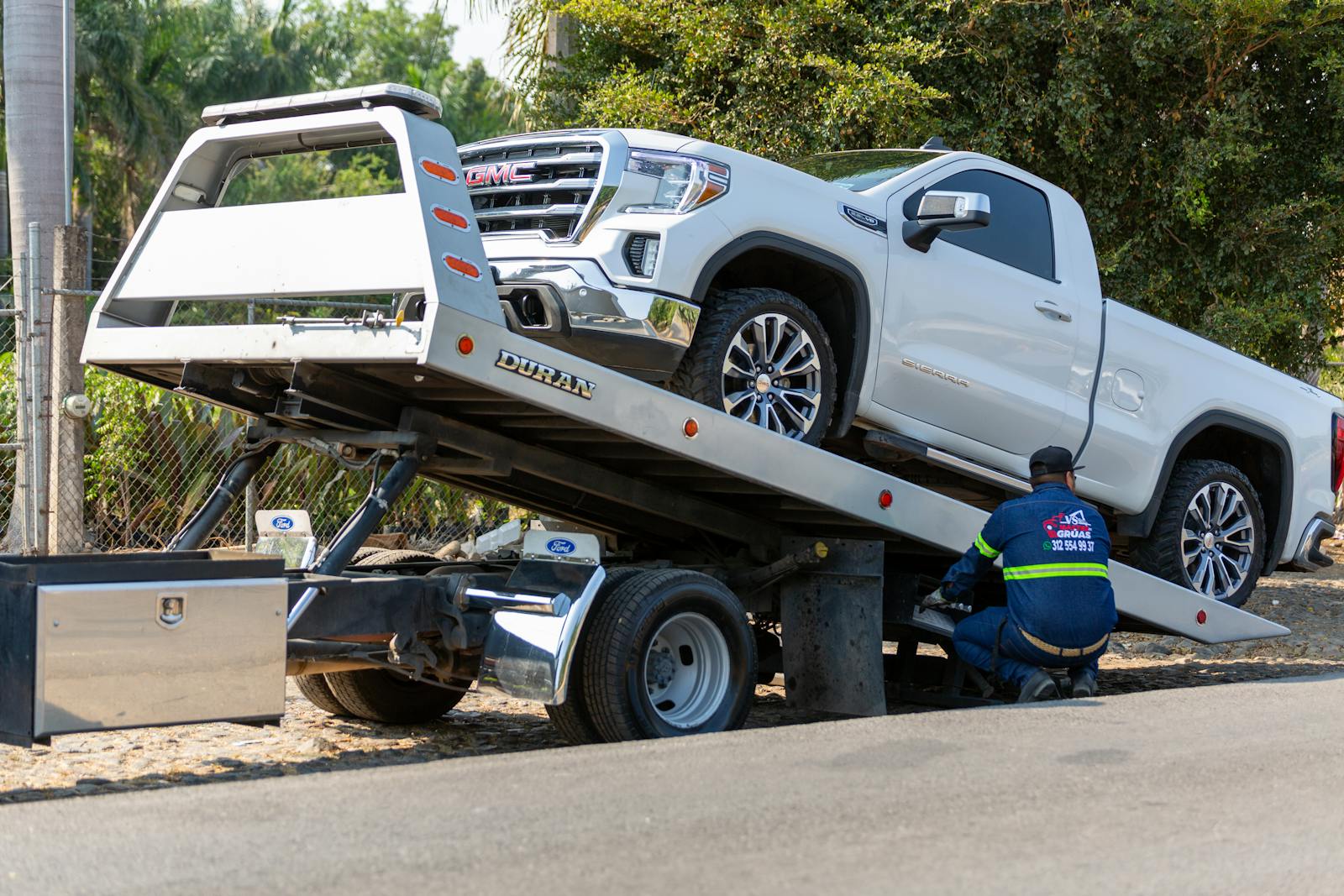

Across the country, drivers who already feel squeezed by car payments, insurance, and repairs are discovering a new financial shock when their vehicles vanish from curbside spots and private lots. They insist the tows are illegal or at least unfair, but the contracts and local ordinances that govern those removals are written with brutal precision that often leaves motorists with little recourse. As cities and states start to rewrite the rules, the fight over what counts as “predatory” towing is exposing just how much power the fine print gives to the companies that haul cars away.
The growing backlash against “legal” but predatory tows

Complaints about towing rarely hinge on whether a truck physically hooked up a vehicle, but on whether the company had any right to take it in the first place. Drivers describe returning from a short errand to find an empty space, then learning their car was removed from a lot with confusing or barely visible signs, or from a curb where the rules changed without clear notice. When they arrive at the yard, they are handed a bill that can rival a month’s rent, and are told that every fee, from hookup to storage, is authorized by local law or by a contract they never saw.
That tension between what is technically allowed and what feels like an ambush is fueling a wave of political pressure. Lawmakers are hearing from residents who say they followed the spirit of parking rules but were trapped by obscure clauses and aggressive enforcement. In response, some states are starting to define “rogue” or “predatory” towing in statute, not just as outright illegal conduct, but as a pattern of behavior that exploits gaps in regulation and the information imbalance between companies and ordinary drivers.
Illinois targets “rogue” tow truck operators
Illinois is one of the clearest examples of a state trying to close those gaps by going after what officials describe as rogue tow truck operators. New legislation is designed to rein in companies that patrol private property, scoop up vehicles with minimal notice, and then demand hundreds of dollars before releasing them. The law focuses on the kinds of practices that have generated the most outrage, such as towing from lots where drivers believed they were legitimate customers or from spaces that were not clearly marked as restricted, and then layering on steep storage charges that escalate by the day.
Supporters argue that the measure gives regulators sharper tools to distinguish between legitimate roadside assistance and predatory removal. By tightening licensing rules and clarifying when a vehicle can be taken from private property, the state is trying to ensure that towing is tied to genuine safety or access concerns, not just profit. The reforms are also meant to make it easier for drivers to challenge a tow they believe was improper, rather than forcing them to pay first and fight later through a maze of local hearings and small-claims courts, as described in reporting on Illinois legislation.
The Chicago crackdown and the power of a receipt
Chicago has become a focal point in the Illinois debate, because the city’s dense parking environment and heavy reliance on private lots have made it a magnet for aggressive towing. Lawmakers and advocates have highlighted cases where drivers say their cars were taken even though they were on site, had paid for parking, or were only briefly out of view. In response, the new rules require more transparency at every step of the process, including what information must be given to the vehicle owner at the moment they reclaim their car.
One of the most concrete changes is a mandate that tow companies list a specific address, 330 N. Wabash Avenue, on every receipt they issue. That address is where drivers can go to file a formal complaint or seek help if they believe their vehicle was taken improperly, a detail spelled out in coverage by reporter By Sabrina Franza. The requirement turns what used to be a simple payment slip into a roadmap for accountability, signaling that the city expects companies to operate under closer scrutiny and that drivers should not be left guessing about where to turn when they suspect abuse.
When a car “might not have been taken” at all
Some of the most troubling stories emerging from Illinois involve vehicles that, according to officials, might not have needed to be towed in the first place. Lawmakers have cited examples where cars were removed from lots even though the driver was a paying customer, or where the alleged violation was so minor or ambiguous that a warning would have sufficed. In a few cases, authorities reviewing complaints have suggested that a car might not have been taken at all if the tow operator had followed best practices or clearer rules, a concern reflected in reporting that notes vehicles that might not have under stricter standards.
These incidents highlight how much discretion tow truck drivers and dispatchers have in the moment, and how opaque those decisions can be to the public. A property owner’s blanket authorization to “remove unauthorized vehicles” can be interpreted broadly, especially when a company is paid per tow. Without clear statutory limits, the incentive structure can tilt toward hauling first and sorting out the justification later. Illinois lawmakers are betting that by spelling out when a car should be left alone, not just when it can be taken, they can reduce the number of borderline removals that feel like legalized theft to the people who lose their transportation.
Kansas City rewrites the rules for 2026
While Illinois is tightening state-level oversight, Kansas City is reshaping towing rules at the municipal level, with changes that took effect at the start of 2026. City leaders framed the reforms as a direct response to years of complaints about predatory practices, particularly around downtown lots and popular nightlife districts where drivers said they were towed within minutes of parking. The new ordinance sets out detailed requirements for signage, notice, and documentation, and it narrows the circumstances under which a vehicle can be removed from private property without the owner’s consent.
One of the most significant shifts is financial. Under the updated rules, the city now caps what tow companies can charge for certain services, including daily storage fees, in an effort to prevent bills from ballooning beyond a driver’s ability to pay. Reporting on the changes notes that, now in 2026, if a car is towed in Kansas City, the price structure and restrictions are different from prior years, with storage charges capped at 30 dollars a day and other limits placed on add-on fees, according to coverage of Kansas City reforms. That ceiling is intended to keep a short-term mistake from turning into a long-term financial crisis.
New protections for Kansas City drivers on the ground
For drivers, the impact of Kansas City’s reforms is already visible in the way towing is discussed in local media and on social platforms. Community advocates have been quick to explain that, as of January 1, 2026, the city’s new towing rules are officially in place, and that residents should expect clearer signs, more consistent enforcement, and lower maximum fees. A widely shared video post emphasized that big changes are here for Kansas City drivers and walked through what motorists should look for when they park, underscoring that the reforms are not just technical tweaks but a shift in how the city expects companies to behave, as highlighted in a clip shared by KC Lifestyle Girl.
On the ground, that means a driver who parks a 2018 Honda Civic outside a downtown bar should see prominent, legible signs explaining who is authorized to tow, under what conditions, and at what cost. If the car is removed anyway, the owner is now entitled to a receipt that itemizes each charge and reflects the city’s new caps. Advocates say this transparency will make it easier to spot improper fees and to contest them through city channels, rather than relying on informal negotiations at the tow yard gate. The hope is that, over time, the combination of public awareness and enforceable limits will change the calculus for companies that once relied on confusion and urgency to extract payment.
Defining “predatory” towing in law, not just rhetoric
Both Illinois and Kansas City are grappling with the same core question: when does towing cross the line from a necessary enforcement tool into a predatory business model. Historically, the term “predatory towing” has been used loosely to describe any removal that feels unfair, but that vagueness made it difficult to regulate. By writing specific definitions into law, such as prohibiting tows from lots without clear signage, banning kickback arrangements with property managers, or limiting patrol towing without a direct complaint, policymakers are trying to turn a moral judgment into a legal standard.
The Kansas City ordinance, for example, is part of a broader package of predatory towing reforms that went into effect at the start of 2026. The legislation was approved after extensive debate about the limits of towing companies, and it explicitly aims to better protect vehicle owners from illegal and unregulated operations, as detailed in coverage of new law. By anchoring the term “predatory” to concrete behaviors, the city gives enforcement agencies a clearer mandate and gives drivers a more solid basis for complaints.
The brutal math of fees, storage, and lost time
Even when a tow is technically justified, the financial impact can feel punishing. A driver whose car is removed from a private lot might face a base tow fee, a mileage charge, a gate fee for after-hours pickup, and daily storage costs that start accruing immediately. For someone living paycheck to paycheck, retrieving a 2015 Toyota Camry can mean choosing between paying the tow yard or covering rent and groceries. The longer it takes to gather the money, the higher the bill climbs, creating a spiral that can end with the vehicle being sold at auction and the owner losing not just transportation but also the equity in the car.
Reforms like the 30 dollar per day storage cap in Kansas City are designed to blunt that spiral, but they do not eliminate the underlying vulnerability. Many drivers still lack clear information about their rights, the deadlines for contesting a tow, or the documentation they need to challenge improper charges. Consumer advocates argue that, alongside legal changes, there is a need for plain-language guides, mobile apps, and on-site signage that explain the process step by step. Without that, the fine print will continue to favor companies that navigate these rules every day over individuals who only encounter them in moments of stress.
What drivers can do before the law catches up
As Illinois, Kansas City, and other jurisdictions refine their towing rules, drivers are not powerless in the meantime. Parking experts recommend treating every lot like a contract negotiation: read every sign at the entrance and near the space, take photos of posted rules, and keep digital copies of payment confirmations from apps like ParkMobile or Passport. If a car is towed, documenting the scene with timestamps and images can be crucial evidence in any dispute, especially in places where new complaint processes, such as those tied to the 330 N. Wabash Avenue address in Chicago, are starting to take shape.
At the same time, the emerging reforms show that individual vigilance is not enough to fix a system where the fine print has long favored tow operators. The moves by Illinois lawmakers and Kansas City officials suggest a growing recognition that towing is not just a private business but a quasi-public function that affects access to work, school, and healthcare. As more cities study these early efforts, the debate is likely to shift from whether predatory towing exists to how aggressively governments should intervene to prevent it, and whether the next round of rules will finally put the burden back on companies to prove that every tow was truly necessary.
More from Wilder Media Group: