

Short, punchy TikTok clips are now telling drivers to pour household liquids into gas tanks, bypass safety systems, and “hack” their way to more power or better mileage. Auto shops say the result is not clever savings but seized engines, ruined fuel systems, and repair bills that can total more than the value of the car. I set out to trace how these viral stunts jump from a phone screen to the service bay, and why mechanics are now spending so much time undoing what a few seconds of video have encouraged people to do.
How TikTok Turned Car Hacks Into Engine Experiments
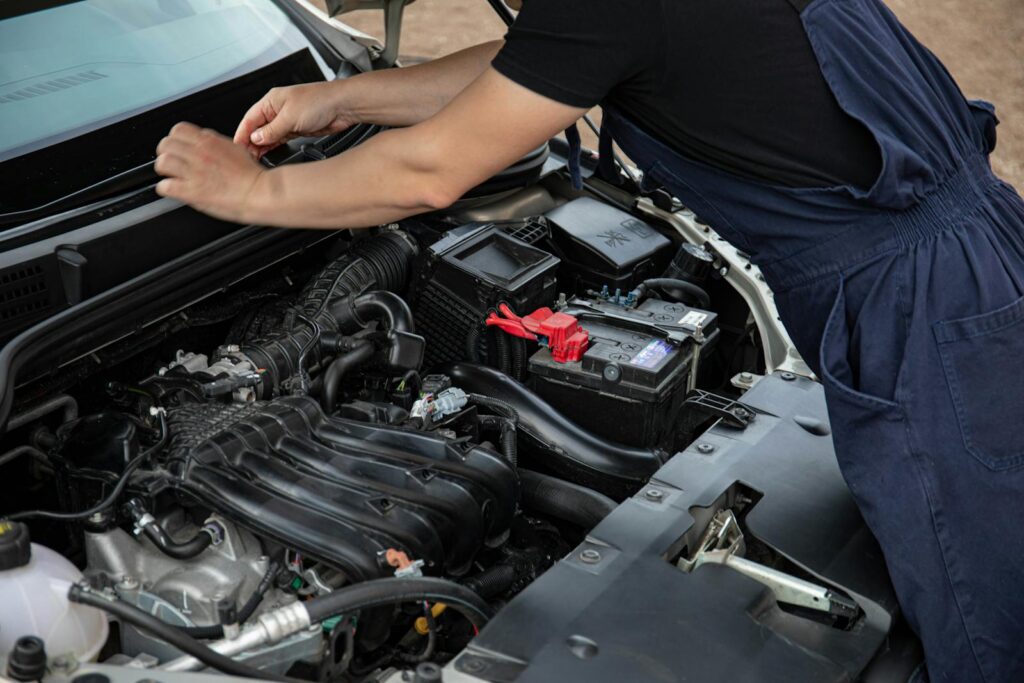
Short-form video has turned car maintenance into a kind of public experiment, where anyone with a smartphone can play expert and rack up views by promising “secret” tricks. I see the same pattern over and over: a creator claims a simple fluid, tool, or button sequence will unlock hidden performance, then thousands of viewers try it on their daily drivers. The problem is that modern engines are tightly engineered systems, and improvising with untested shortcuts can quickly turn a minor annoyance into a catastrophic failure that lands a car on a flatbed.
Local reporters have started following the fallout in real time. In Portland, a segment featuring a journalist named Ezra shows how viewers’ curiosity about viral automotive content is colliding with the reality of what shops are seeing on the ground. The piece walks through how a trend can look harmless on a screen yet leave owners stranded, and it captures the frustration of technicians who now spend much of their day explaining why a 30 second clip is not a substitute for a service manual or proper diagnostic work.
The Misleading “DIY Fixes” That Shops Keep Having To Undo
When I talk to mechanics, they describe a wave of cars arriving after owners tried to follow step-by-step TikTok “repairs” that skipped crucial context. Many of these clips show partial procedures, like loosening a sensor or pulling a fuse, without explaining that the creator is working on a specific model year or has already done professional prep work. Viewers then copy the move on a completely different engine, only to discover that what looked like a universal trick has disabled a safety system or confused the car’s computer.
That gap between what a video promises and what it delivers is now measurable. An analysis highlighted by Derek Clouthier found that nearly two thirds of car-related TikTok content contained information that professionals considered misleading or incomplete. The research, which focused on Auto Repair, Service, and Consumer trends, underscored how a small slice of accurate advice is buried under a flood of half-true shortcuts. For shops, that means more time spent undoing improvised fixes, from stripped drain plugs to engines run with the wrong fluids because a creator insisted “it’s basically the same thing.”
From Viral Challenge To Real-World Damage
Not every automotive trend is about maintenance; some are outright stunts that treat cars as props rather than essential transportation. Once a challenge takes off, the incentives are clear: more risk often means more views, and more views mean more followers and potential sponsorships. That dynamic has encouraged people to treat their engines and ignition systems as toys, even when the underlying trick involves defeating basic security or running a vehicle in ways it was never designed to handle.
The most notorious example is the wave of thefts tied to certain Hyundai and Kia models after a TikTok challenge showed how easily they could be started without a key. One victim, identified as Neal, described how The Kia that was targeted now sits in her garage, and she admits she is still nervous driving it. She told reporters she only uses the car when absolutely necessary, a stark reminder that what starts as a viral dare can leave owners with lasting anxiety and vehicles that feel permanently compromised, even after repairs.
What Mechanics Are Actually Seeing Under The Hood
In service bays, the damage from social media experiments is no longer hypothetical. Technicians describe fuel systems clogged by additives that were never meant to go near an injector, intake tracts coated in sticky residue from household cleaners, and engines that have lost compression after being run hard with low oil because a video claimed modern cars “don’t really need” frequent changes. Each of these failures has a clear mechanical explanation, but to the owner, it often looks like the car suddenly “gave up” shortly after they tried a trending hack.
Segments like the one featuring Ezra in Portland show how shops are now acting as both repair centers and reality checks. In that report, Ezra walks through cases where drivers followed online advice only to face four-figure estimates when the engine control unit or fuel pump failed. Mechanics interviewed in that piece describe a pattern: customers arrive convinced the hack should have worked because “everyone online is doing it,” then are stunned to learn that the cost of reversing the damage far exceeds whatever savings they hoped to gain by skipping a proper service visit.
The Kia Theft Wave And The Cost Of A “Simple Trick”
The theft trend involving Hyundai and Kia models illustrates how a single viral idea can ripple through entire communities. Once videos showed how to exploit the lack of an engine immobilizer on certain cars, thefts surged, leaving owners to deal not only with missing vehicles but also with the aftermath when cars were recovered in rough shape. Interiors were torn apart, ignition columns were destroyed, and engines were often abused, revved hard from a cold start or driven without regard for maintenance lights, all in the name of a few minutes of content.
For Neal, the impact has been deeply personal. She explained that The Kia now spends most of its time parked, even after security updates, because the sense of vulnerability lingers. That kind of lingering distrust affects how people use their cars, whether they invest in further repairs, and even where they feel safe parking. It also underscores a broader point: what looks like a clever “workaround” in a TikTok clip can translate into thousands of dollars in damage, higher insurance premiums, and a long shadow over an owner’s confidence in their vehicle.
How Research Shows TikTok Advice Goes Wrong
When I look at why so many of these trends cause harm, the data points to a simple problem: most viewers cannot easily tell the difference between a qualified technician and a charismatic amateur. The platform’s design rewards engagement, not accuracy, so a dramatic before-and-after shot of a “cleaned” engine bay will travel farther than a careful explanation of manufacturer specifications. That means advice that feels intuitive, like using a strong household degreaser on engine components, can spread widely even if it quietly corrodes seals or wiring over time.
The Auto Trader analysis cited by Derek Clouthier is one of the clearest attempts to quantify this. By reviewing a large sample of car-related clips, researchers concluded that nearly two thirds contained advice that professionals in Auto Repair and Service would flag as problematic for the average Consumer. Some videos skipped key safety steps, others applied niche race-track techniques to commuter cars, and many simply ignored the differences between models. For drivers, that means the odds are stacked against them if they treat TikTok as a repair manual instead of a starting point for further research.
When A “Challenge” Becomes A Crime Scene
Some of the most damaging trends do not stop at bad maintenance; they cross into criminal behavior that leaves engines and bodies damaged in equal measure. Videos encouraging joyrides in stolen cars, high speed runs on public streets, or disabling traction control for “fun” drifts have turned ordinary vehicles into props for risky content. Once a challenge format catches on, participants often escalate to stand out, pushing cars harder and taking bigger risks with both mechanical systems and public safety.
Coverage of the theft wave tied to Hyundai and Kia models has shown how a single viral idea can fuel a spike in crime from coast to coast. One widely shared report described how the TikTok challenge left owners confused that their cars could be taken so easily, and it highlighted the strain on police and insurers dealing with the surge. For the vehicles involved, the damage goes beyond broken windows and steering columns; engines are often redlined from a cold start, driven without oil checks, or crashed outright, leaving shops to sort through bent components and blown gaskets once the cars are recovered.
Why These Trends Hit Certain Drivers Harder
The impact of misleading TikTok car content is not evenly distributed. Younger drivers, first-time owners, and people with limited access to trustworthy mechanics are more likely to rely on social media for guidance. For them, a video that promises a cheap fix for a check engine light or a way to “reset” a transmission can feel like a lifeline. When those shortcuts go wrong, the resulting engine damage can be financially devastating, especially if the car is an older model that is already close to the edge of what it is worth to repair.
Stories like Neal’s show how this plays out in real life. After her experience with The Kia, she now drives the car only when she has no other choice, effectively losing the full utility of a vehicle she still has to insure and maintain. For lower income owners, that kind of disruption can mean missed shifts, lost wages, or the cost of alternative transportation. It also deepens mistrust in both technology and institutions, as people feel caught between platforms that amplify risky advice and systems that are slow to protect them from the consequences.
How Drivers Can Protect Their Engines From Viral Advice
There is no way to put social media back in the bottle, but drivers can build a simple filter before they try anything on their engines. I recommend treating every TikTok car hack as a hypothesis, not a how-to: check the owner’s manual, look up whether the advice applies to your exact make and model, and, when in doubt, call a trusted shop. If a video suggests bypassing a safety feature, mixing non-automotive chemicals with fuel or oil, or ignoring warning lights, that is a clear sign to step away.
Professionals are also starting to push back more directly. In Portland, Ezra and local mechanics have used broadcast segments to walk viewers through the real costs of copying viral trends, from damaged catalytic converters to voided warranties. Industry voices like Derek Clouthier, citing the Auto Trader analysis, are urging platforms to surface more credible Auto Repair and Service content for everyday Consumer searches. Until that happens at scale, the safest move for drivers is simple: if a TikTok trick sounds too easy, assume your engine will be the one paying the price.
More from Wilder Media Group: