
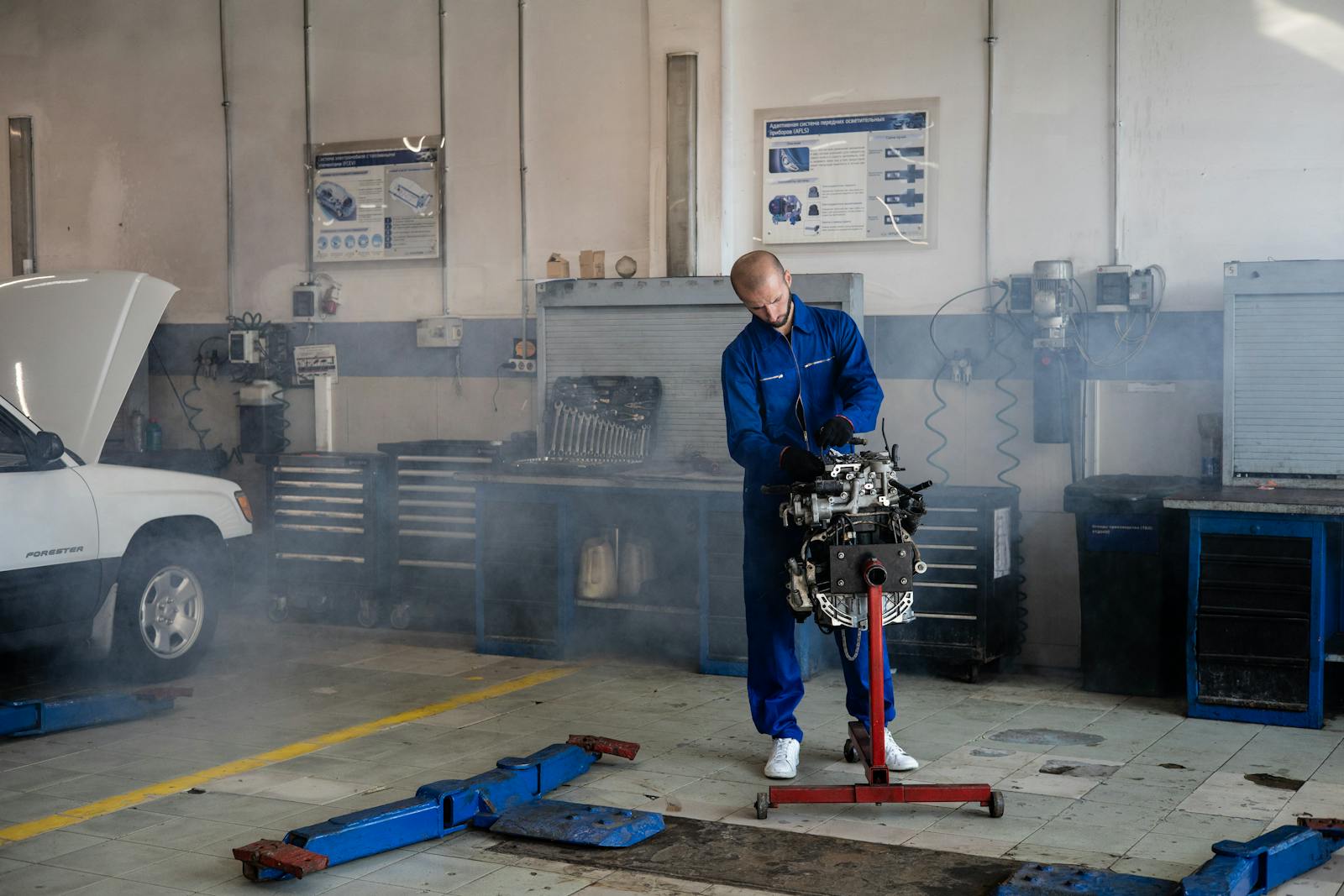

Turbocharged engines used to be the stuff of tuner forums and diesel pickups. Now they are baked into everything from compact crossovers to full-size trucks, and buyers are starting to ask a blunt question: will these boosted motors actually survive to 200,000 miles, or are they disposable hardware in a monthly-payment world. Many mechanics are quietly betting on the second option, pointing to real-world failures, tight maintenance windows, and designs that seem optimized more for emissions tests than for long-haul durability.
That does not mean every turbo engine is a ticking time bomb, or that old-school naturally aspirated motors were flawless. It does mean the ownership game has changed. Hitting 200,000 miles now depends less on blind faith in the badge and more on understanding how heat, oil, and boost pressure stress modern hardware, and how much risk a buyer is willing to carry once the warranty clock runs out.
Why mechanics are suddenly skeptical of “lifetime” turbo power

Veteran techs have watched the industry swing from big, understressed engines to smaller turbo units that squeeze out the same power with far more complexity. On paper, that is a win for fuel economy and emissions, but in the bay it often looks like a recipe for earlier wear, especially once owners stretch oil changes or ignore warning lights. Some mechanics say the new crop of turbo engines simply does not have the same margin for abuse that older, low-specific-output motors enjoyed, which makes the idea of an easy 200,000 miles feel optimistic rather than expected.
Enthusiast discussions echo that split view. In one thread, a user identified as JCC114 notes that modern boosted drivetrains “have gotten better,” but still argues that if someone compares a naturally aspirated version of a model to its turbo twin, the simpler engine is usually the safer long-term bet, a point that reflects broader doubts shared on Oct. Mechanics see the same pattern: when a high-mileage turbo car rolls in, it is more likely to be there for oil consumption, timing issues, or boost-related problems than an equivalent non-turbo engine of the past.
Turbo myths, meet 2026 reality
Part of the confusion comes from outdated myths colliding with newer engineering. Older drivers remember fragile early turbo setups that cooked oil and cracked housings, and they assume nothing has changed. In reality, modern designs use better materials, tighter tolerances, and synthetic lubricants that can handle higher temperatures, so a well-built turbo engine is not automatically doomed. The problem is that the technology is now deployed at massive scale, including in budget models where cost-cutting can nibble away at that theoretical durability.
Specialists who live and breathe boost point out that many horror stories trace back to neglect rather than the turbocharger itself. One technical breakdown notes that with regular oil and filter changes using quality synthetic oil, a turbocharged engine can have a healthy life expectancy, and that cheap or degraded oil tends to cause issues long before the hardware is truly worn out, a nuance highlighted by Jul. Another section of the same analysis stresses that reputable rebuilders only accept structurally sound cores, pushing back on the idea that every used turbo is junk and underscoring how many units actually survive long enough to be remanufactured, a point tied to Top.
Real-world owners: from “over 200k easy” to early failures
Out on the road, the story is not one-size-fits-all. Some owners report that their turbo cars have shrugged off high mileage with little drama, which keeps hope alive for shoppers who want both power and longevity. In a public group discussion, one driver casually mentions having three turbo vehicles in the past, all of which sailed past 200,000 miles without the kind of special treatment people now warn about, adding that people are used to these cars having no issues and that things are not what they used to be, a sentiment captured in a post tied to Aug. Stories like that show the ceiling is still high when the design is solid and the maintenance is at least decent.
On the other side of the spectrum, mechanics are already flagging worrying patterns in some of the newest turbo diesels and gas engines. A widely shared teardown of the latest 3 L Duramax points to thrust bearing failures and suggests that General Motors has not fully sorted out durability on that platform, with the commentator bluntly saying that General Motors “cannot seem to get their stuff straight” as these Duramax issues surface. When a supposedly cutting-edge engine starts chewing through internal components early in its life, it reinforces the feeling in many shops that the industry is still learning how far it can push small, boosted designs before reliability takes a hit.
Inside the 3.5 EcoBoost debate
Few engines capture the turbo reliability argument like Ford’s 3.5 EcoBoost V6. On one hand, it delivers big-truck torque and strong towing numbers from a relatively compact package, which is exactly what manufacturers want. On the other, independent builders keep seeing the same failure modes when these engines rack up miles, especially in trucks that work hard and do not get meticulous service. That has led some mechanics to treat high-mileage EcoBoost trucks as potential projects rather than safe bets.
One engine builder who is Rebuilding a Ford 3.5 EcoBoost lays out a familiar pattern: contamination in tiny oil passages, reduced oil pressure, and then accelerated wear on timing components and bearings. In that account, the early failures are not pinned solely on Ford’s design, but on how sensitive such a tightly wound turbo engine is to oil quality and change intervals. The takeaway for mechanics is simple. If a motor needs near-perfect maintenance to avoid expensive internal damage, the odds of it gliding to 200,000 miles in the real world are not great.
When “new and improved” engines land on the avoid list
Shoppers often assume that the newest model year is the safest choice, especially when it comes with a fresh turbo engine that promises better fuel economy. Industry watchers are starting to push back on that assumption. Some 2026 models are already being singled out as ones to avoid, not because turbocharging is inherently flawed, but because the specific implementations look rushed or unproven. That is a red flag for mechanics who know they will be the ones explaining out-of-warranty failures a few years down the line.
Consumer-focused rundowns of cars to skip in the current model year point to recurring quality problems at Ford, with one analyst, Fischer, arguing that these issues indicate systemic problems with Ford’s vehicle quality and that they are not the kind of problems that can be fixed immediately, especially around a 2.7 liter V-6 engine that has drawn scrutiny, as detailed in a report linked to Jan. Video breakdowns of the “worst” 2026 engines go further, calling out specific turbocharged models that combine complex hardware with spotty early reliability, a theme that surfaces in a critical overview tied to Nov. Mechanics watching those patterns are understandably cautious about promising 200,000 miles from engines that are already on the warning list.
High-profile trouble: Tundra turbos and luxury recalls
Even brands with strong reputations are not immune to turbo growing pains. Toyota’s move to twin-turbo V6 power in the Tundra was a major shift away from its old-school V8, and early adopters have not all been thrilled. Independent commentators have urged buyers to be careful until at least 2026, framing the current trucks as a bit of a rolling experiment while Toyota works through issues, a warning captured in a short segment labeled Toyota Tundra Bad News and Buyer Beware Until 2026 that points viewers to a Full Interview Here. When a company known for bulletproof trucks has to reassure customers about a new turbo platform, mechanics take note.
Luxury brands have had their own headaches. A reliability comparison of turbocharged and naturally aspirated engines highlights how 2019 Kia K900s and Kia Stingers were pulled into a recall for a faulty oil feed pipe that affected 36,248 units, and how the 2018 to 2020 Genesis G80 and G90 did not help the turbo reputation either, as detailed in a technical review of Kia. For mechanics, those cases underline a simple truth. When a turbo engine depends on a single oil line or gasket to stay alive, any defect in that chain can turn into a very expensive repair long before the odometer hits 200,000.
Heat, oil, and the “ignore the manual” controversy
Ask a shop foreman what kills turbo engines and the answer usually comes down to heat and oil. Spinning a turbine at six-figure rpm while feeding it exhaust gas is a brutal environment, and the surrounding engine oil has to carry that heat away without breaking down. That is why so many mechanics harp on warm-up, cool-down, and oil-change discipline. When those habits slip, the turbo is often the first part to complain, long before the block or crank shows obvious wear.
One widely shared story features a technician who argues that turbo engines actually survive longer when owners ignore the manual and change oil more often than the factory interval suggests, especially if they drive hard or tow, a claim that sits at the heart of a piece tied to Mechanic Claims Turbo. A companion analysis labeled The Real Cost of Boost spells out why, noting that when turbochargers spool they generate intense heat that drastically raises oil temperature, and that modern long-drain intervals can be a bad match for that environment, as explained under Real Cost of. Mechanics who see sludged-up turbo feed lines and coked bearings are not surprised, and they are increasingly blunt with customers who expect 200,000 miles while following the most optimistic maintenance schedule in the owner’s manual.
What the numbers say about turbo lifespan
Beyond anecdotes, there are some hard numbers that frame expectations. Parts suppliers and rebuilders who see thousands of units move through their warehouses estimate that, on average, turbos last up to 150,000 miles, and that with good care they may last up to 200,000 miles or have a life expectancy of 30 years in low-use scenarios, figures laid out in a detailed guide that starts with the question But. That range lines up with what many independent shops see: some turbos die early, some go the distance, but the statistical midpoint is shy of the 200,000-mile mark that buyers like to imagine.
Another technical explainer on how long a Turbocharger Typically Last Under Normal Use emphasizes that a Turbocharger is a critical component designed to boost power and efficiency, but that its lifespan is tightly linked to oil quality, driving style, and heat management, a relationship unpacked in a piece titled How Long Does. Enthusiast discussions back that up, with one long-running thread pointing out that a Turbocharger merely increases the atmosphere of pressure in the combustion chamber and intake system, and that on an engine designed for boost, the bottom end can be as strong as a naturally aspirated counterpart, but that owners are still likely to replace the turbo before they hit 200k, a reality check captured in a debate tied to Jun. For mechanics, those numbers and experiences translate into a simple message for customers: plan for at least one major turbo-related repair if the goal is to keep a boosted car deep into six-figure mileage.
How to stack the odds in your favor if you still want boost
Despite the warnings, plenty of drivers are not giving up on turbo power, and mechanics are not telling them to. Instead, the smarter shops are laying out ground rules. That starts with picking engines that have a few years of real-world data behind them rather than chasing the first model year of a brand-new turbo design. It also means paying attention to patterns, like the thrust bearing problems on some Duramax diesels or the oil-feed recalls on certain Kia and Genesis models, and steering clear of those specific combinations if long-term ownership is the goal.
More from Wilder Media Group: