

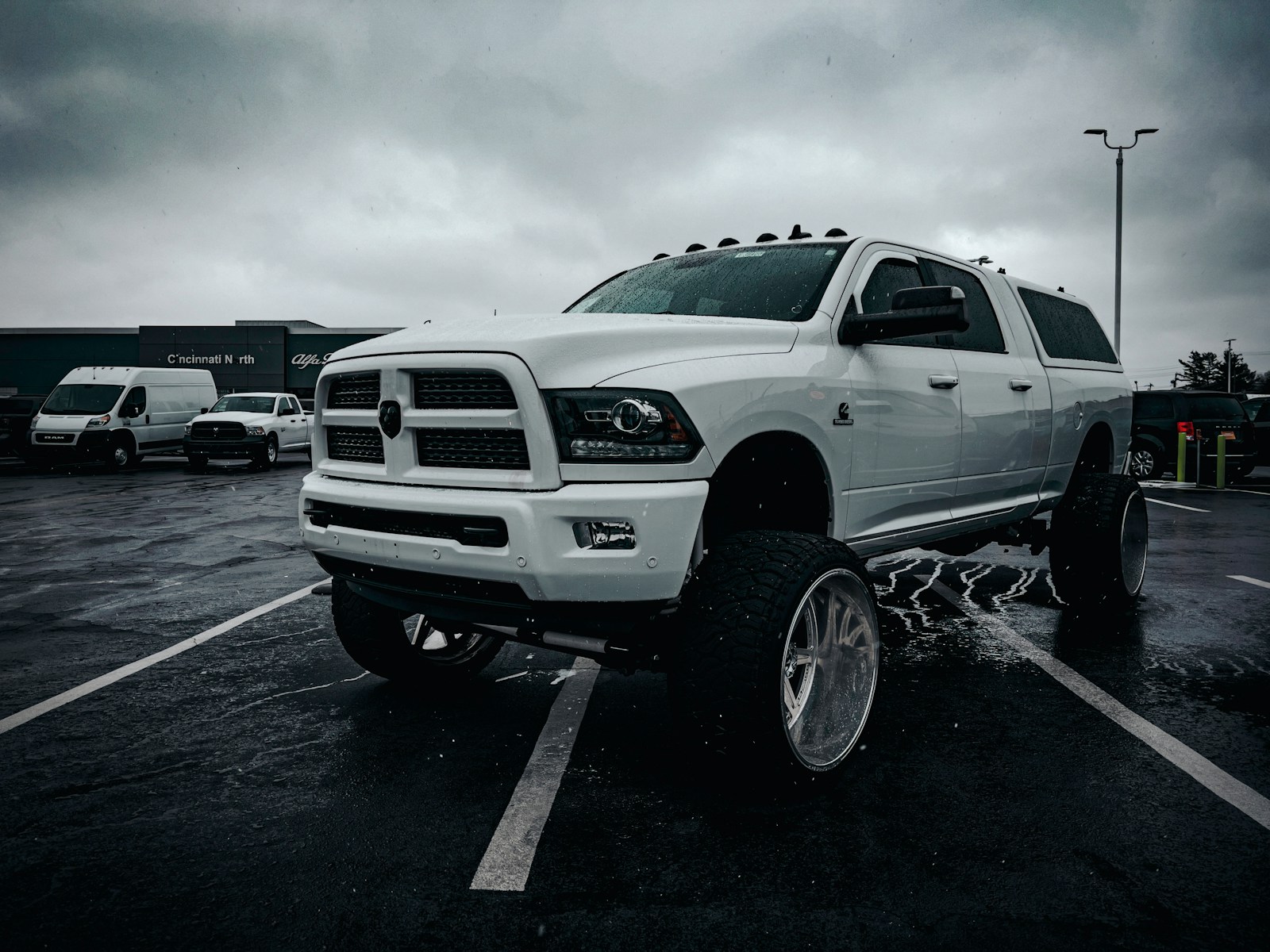
Parking lots did not change much in the last 40 years, but the trucks trying to squeeze into them absolutely did. What used to be a work tool that fit neatly between the lines has turned into a rolling wall of steel that hangs over curbs, blocks sightlines, and sparks arguments in grocery store aisles. Drivers say the new rigs are simply too big for the spaces they are given, and everyone from city planners to injury lawyers to annoyed neighbors is fed up.
The fight is not just about convenience. Oversized pickups now collide with old infrastructure, household budgets, and basic safety in ways that are hard to ignore. The result is a culture clash where some owners defend their giant trucks as essential, while others see them as a daily hazard that the rest of the country is forced to work around.
The trucks grew, the parking lots did not
Modern pickups have quietly outgrown the asphalt built for them. Standard parking spaces in many cities were laid out decades ago, and a 40-year old template is still guiding how wide and long those painted rectangles are. When local reporters followed drivers trying to park full size pickups in Chattanooga, they watched tailgates hang into traffic lanes and front bumpers creep over sidewalks as owners tried to wedge their trucks into spots that simply were not designed for this footprint, a problem city staff documented in When it is to park.
That mismatch shows up everywhere from strip malls to downtown garages. Drivers report circling lots because the only open spaces are boxed in by concrete pillars that a long crew cab cannot clear without a three point shuffle. Others simply give up and straddle the line, which then sets off a chain reaction of half centered cars and angry notes under wipers. The geometry is simple: trucks got taller, longer, and wider, but the white lines stayed the same, so every errand now comes with a small spatial negotiation.
Why pickups ballooned in the first place
The size creep did not happen by accident. Automakers leaned into a market where buyers wanted more capability, more presence, and more comfort, and they built trucks that delivered all three. Analysts point out that American companies have long dominated the large truck segment, and that protectionist policies helped them do it. Tariffs on imported light trucks, often called the chicken tax, made it harder for foreign rivals to compete, which let domestic brands stretch their designs without as much pressure to keep them small, a pattern critics tie directly to U.S. tariffs.
There is also the simple fact that many buyers really do use these trucks hard. As Lila Claybourne notes, Meeting Work Demands and Hauling Stuff and Towing Heavy Loads are still core reasons people sign on the dotted line. Bigger frames and stronger suspensions make it easier to pull heavy trailers, and a taller cab lets families treat a pickup like a roomy SUV. On top of that, Supporting Big Trucks With Roomy Roads and Cheap fuel in much of the United States removed some of the natural friction that might have kept sizes in check, so the trucks kept growing until they started to overflow the spaces around them.
Owners say they need the size, critics say it is overkill
Talk to truck owners in job sites or rural towns and they will insist the bulk is not a flex, it is a tool. They point to long wheelbases that keep a trailer stable at highway speeds and high payload ratings that let them haul equipment that would crush a compact car. Enthusiast outlets argue that when you compare a modern half ton to older models, the increase is not as dramatic as the online outrage suggests, and that a short bed half ton still fits into most real world spaces if the driver is paying attention, a case laid out in detail by All over the truck internet.
Critics, though, look at the same vehicles and see pure excess. They note that a large share of these trucks spend their lives commuting solo or hauling nothing more than a bag of mulch, while still taking up more than their share of curb space. Commenters in tech forums have joked that if regulators did nothing, the market might eventually correct itself when trucks get so big they literally cannot use existing infrastructure, a point raised in one Feb thread about American cars getting too big for parking spaces. That tension between practical need and social cost is exactly what plays out every time a lifted pickup noses into a compact spot.
Parking lots as the new battleground
Nowhere does the culture clash feel more personal than in crowded lots. When a full size pickup swings into a space at the grocery store, the drivers on either side suddenly discover they can barely open their doors. One columnist described the particular rage of having a lifted truck with blinding LED headlights pull up inches from a bumper at night, then watching the driver hop out while everyone else in the row contorts themselves to escape their cars, a scene captured in an Oct opinion that framed the whole phenomenon as compensating rather than practical.
Local TV crews have watched similar drama unfold in real time. In one segment, a 40 year auto industry veteran tried to guide a driver into a downtown space and still ended up with the truck sticking out into the lane, a visual reminder that the basic grid of American parking was drawn for smaller vehicles. The result is a low level arms race of frustration: truck owners feel judged for using the spaces that exist, while everyone around them feels like the asphalt has been quietly reallocated to the biggest vehicles in the row, as seen in big trucks parking segments.
Safety problems that start in the front seat
The argument is not just about door dings. As hoods got taller and cabs sat higher, the view from the driver seat changed in ways that can be deadly. Safety testers who climbed into a range of new pickups and SUVs found that some front end blind zones were so large that a child or even an adult could stand directly in front of the vehicle and disappear from sight. In a campaign urging manufacturers to Tell Automakers to Fix front end blind zones, researchers shared a View From Inside that showed how the combination of high hoods and long dashboards can hide entire crosswalks, a problem documented in a detailed Aug analysis of big pickups.
Law firms that handle crash cases are blunt about what that means on the street. They note that Bigger Blind Spots Like all cars exist, but that Pickup trucks with tall hoods and long beds can create zones where pedestrians, cyclists, and even smaller cars vanish until it is too late. One South Carolina practice warns that a modern pickup can be several feet longer than a sedan’s, which changes how it moves through intersections and parking aisles and increases the chance of low speed but high consequence impacts, concerns they spell out in a Mar briefing on hidden dangers.
Garages, driveways, and the home front squeeze
The parking crunch does not stop at the mall. Oversized trucks are now too long for many suburban garages, which were built for sedans and compact SUVs. Owners end up leaving tailgates poking out under half closed doors or abandoning the garage entirely and parking in the driveway, where the truck can block sidewalks or spill into the street. Reports on how SUVs and pickups interact with American housing note that even already gigantic garages are being outmatched by the latest heavy duty rigs, which can stretch well past the dimensions builders assumed when they poured those slabs, a mismatch explored in a Mar feature on big vehicles.
That same reporting points out that the financial footprint grows along with the physical one. In addition to the higher sticker price, owners of big cars pay hundreds if not thousands of dollars more every year in gas because it takes a lot of fuel to move a 6,000 pound vehicle to the mall. Insurance premiums and tire costs climb too, which means the decision to daily drive a full size truck instead of a smaller car shows up in household budgets as well as in the driveway. Neighbors, meanwhile, are left navigating around a wall of sheet metal that may block sightlines when they back out, turning a private purchase into a shared risk.
Everyone else is forced to adapt
For people who do not own these trucks, the adaptation is constant and mostly involuntary. Pedestrians learn to edge out past parked pickups to see around them at crosswalks, cyclists swing wider to avoid doors that open from high cabs, and compact car drivers pick their spots carefully to avoid being boxed in by vehicles that tower over them. One automotive analyst quoted in a widely shared critique of truck bloat argued that drivers who choose vehicles so large that existing infrastructure cannot accommodate them are being selfish and disgusting, because their choice effectively rewrites how everyone else uses shared space, a sentiment captured in a blunt Mar rant about oversized trucks.
Online, the backlash has turned into its own genre. Social feeds fill with photos of trucks sprawled across two spaces, or of compact cars dwarfed by lifted rigs on either side, with captions that oscillate between jokes and genuine anger. At the same time, truck owners share their own frustrations about tight parking garages and narrow drive thrus that scrape their mirrors, arguing that the built environment is lagging behind what people actually drive. The result is a stalemate where nobody feels particularly accommodated, and everyone feels like someone else should be the one to compromise.
What it would take to shrink the problem
Fixing the mismatch between trucks and parking lots would require changes on several fronts, and none of them are simple. Cities could redraw parking standards to create longer and wider spaces, but that would often mean fewer total spots, a tradeoff that businesses and drivers in smaller cars might resist. Automakers could lower hood heights and improve visibility without sacrificing capability, as safety advocates urge when they call on companies to add more advanced driver assistance and redesign front ends, but those changes cost money and might clash with the aggressive styling that sells so well.
Policy makers also have levers they have barely touched. The same government choices that helped big trucks flourish, from tax breaks on light trucks to the tariff structures that shielded domestic giants, could be revisited if the political will existed. Analysts who argue that the current situation is not a market failure but a government failure point to how those incentives nudged buyers toward larger vehicles and away from smaller imports, a dynamic laid out in Feb critiques of truck policy. Any serious attempt to dial back the size of the average pickup would have to grapple with that history, and with the millions of drivers who have built their routines around vehicles that no longer fit neatly between the lines.
Living with big trucks in a tight world
For now, the country is stuck in a kind of uneasy truce. Light trucks like pickups and SUVs remain wildly popular, and even today, light trucks like these are marketed as the default choice for families who want comfort and capability on their vehicle every day, a pitch that keeps sales high according to Even today industry explainers. At the same time, the physical world they move through is still shaped by older, smaller cars, which means every school pickup line, downtown garage, and grocery run becomes a small exercise in spatial politics.
More from Wilder Media Group: