

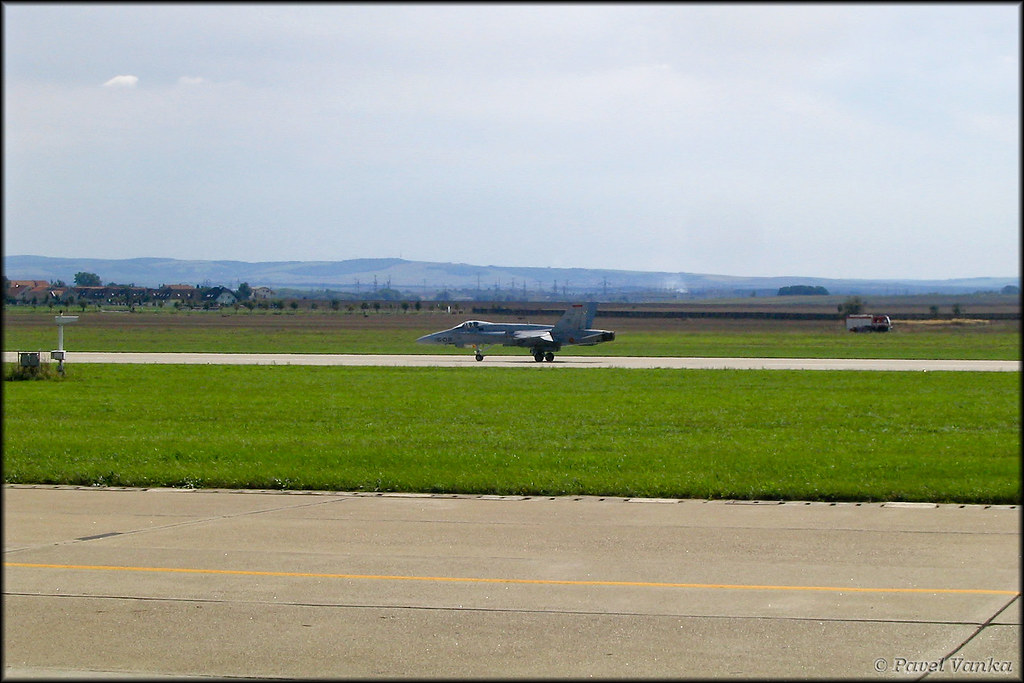
On a cold Baltic morning, the pilots of Spain’s 15th Wing are strapping into EF-18 Hornets and calling them exactly what every alliance planner wants to hear: “perfect” for the job. The American-made jets, flown hard for decades, are now sitting at the sharp edge of NATO’s air policing mission, intercepting unknown aircraft and watching a tense frontier. For a fighter that predates smartphones, the Hornet is having a very modern moment.
What makes this aging design so well suited to patrolling Europe’s most sensitive airspace is not just nostalgia or sunk cost. It is a mix of rugged engineering, pilot familiarity, and a mission profile that rewards reliability over flash. As the alliance leans on everything from brand-new Dassault Rafale fighters to Finnish F/A-18s, the Spanish EF-18s are quietly proving that the right jet for air policing is not always the newest one on the ramp.
Hornets on the Baltic frontline
Spain’s 15th Wing has taken its EF-18 Hornets far from home, deploying to Šiauliai Air Base in Lithuania to help guard NATO’s northeastern flank. The unit is on constant alert, ready to launch at short notice whenever unidentified aircraft approach allied airspace, a routine that has turned the Baltic region into one of the busiest proving grounds for frontline patrols. For the Spanish pilots, the Hornet’s blend of speed, endurance, and sensor coverage has made it a natural fit for this high-tempo environment.
Those pilots have been blunt about their preference, describing the EF-18 as “perfect” for the air policing mission and saying it works better for them than any other aircraft they could be flying. Their confidence is not just about performance on paper, it is about how the jet behaves when they are racing to intercept a radar contact over the sea or escorting a slow-moving aircraft away from sensitive airspace. That trust in the platform, captured in reporting that features images by Joan Valls of Urbanandsport for Getty Images, underpins why Spanish pilots are so vocal about the Hornet’s strengths.
Why “perfect” matters for NATO air policing
Calling a jet “perfect” is not about flattery, it is about how well it matches a very specific job. NATO air policing is a standing mission that keeps fighters on alert around the clock to protect allied skies, a task that demands aircraft that can scramble quickly, climb fast, and then loiter long enough to identify and shadow unknown traffic. The EF-18’s twin engines, robust radar, and comfortable cockpit layout give pilots the tools they need to do that work repeatedly without the aircraft becoming a maintenance burden.
For Spain’s 15th Wing, perfection looks like a jet that can launch in minutes, handle both high-speed intercepts and slower escort profiles, and then turn around for the next sortie with minimal fuss. The EF-18’s avionics and flight controls are mature and predictable, which matters when pilots are juggling radio calls, radar tracks, and visual identification in crowded skies. That is why the same reporting that highlights the “perfect” label also notes how the Hornet’s systems and handling qualities line up so neatly with the demands of NATO Hornets on patrol.
Life on 15‑minute scramble alert
Perfection on paper does not mean much if a jet cannot be airborne in time, which is why the scramble clock rules everything at Šiauliai Air Base. Spain’s 15th Wing is working under a tight standard: pilots on quick reaction alert have roughly a quarter of an hour to go from resting in a ready room to climbing through the clouds in full afterburner. That sprint includes suiting up, running to the aircraft, completing checks, and coordinating with controllers as the Hornets taxi and take off.
The base itself sits close to Russia’s doorstep, which means those 15 minutes can be the difference between intercepting an aircraft in international airspace or watching it skirt dangerously close to allied territory. The Spanish detachment has adapted its routines to this pressure, keeping crews on rotating shifts and jets prepped with fuel and weapons so they can launch at a moment’s notice. Reporting from Lithuania describes how Spain’s 15th Wing manages that tempo at Šiauliai Air Base, including night operations that push both pilots and maintainers to stay sharp around the clock.
Inside the cockpit when the call comes
Once the scramble order hits, the mission shifts from routine to intensely choreographed. Pilots race through their start-up sequence, then climb to meet the unknown aircraft guided by ground controllers who feed them bearing, range, and altitude. In the cockpit, the Hornet’s displays and controls are laid out in a way that lets pilots manage radar, radios, and navigation without losing situational awareness, a design choice that becomes critical when they are closing on a target at high closure rates.
When they reach the intercept, the job is part detective work, part deterrence. The Hornets slide into position to visually identify the aircraft, confirm its type and markings, and check whether it is following air traffic control instructions. If it is a military aircraft flying without a flight plan or transponder, the Spanish pilots may escort it along the edge of NATO airspace until it turns away. Accounts from Lithuania describe how visiting reporters watched pilots responding to potential threats, highlighting how the Hornet’s systems support that delicate mix of firmness and restraint.
What NATO air policing actually does
Behind those individual scrambles sits a broader alliance framework that has been running for decades. NATO air policing is a collective mission in which Allied air forces keep fighters on standby 24 hours a day to intercept unidentified or suspicious aircraft that approach or enter allied airspace. The goal is not to shoot first but to maintain the integrity and security of the skies, reassuring member states that someone is always watching the radar and ready to respond.
That mission has grown in importance as more allies have joined the alliance and as airspace around Europe has become busier and more contested. Countries without their own high-end fighter fleets rely on others to rotate in and provide that protective umbrella, which is why Spanish EF-18s are flying out of Lithuania and why other nations send their jets to similar deployments. NATO itself describes how Allied air forces stand ready around the clock, underscoring that the Hornets are one piece of a much larger, permanently switched-on system.
From crewed jets to drones and everything in between
The air policing mission is also evolving as the types of aircraft in the sky change. Traditional intercepts of crewed bombers or reconnaissance planes are now mixed with encounters involving slow-flying drones and other unconventional platforms. That variety forces pilots to adapt quickly, since the tactics for approaching a large, fast-moving aircraft are very different from the techniques used to shadow a small unmanned system that might be loitering near a border.
Spanish EF-18 crews have had to be ready for that full spectrum, from high-speed chases to patient escorts of aircraft that barely register on radar. The Hornet’s flexibility, with sensors and weapons that can handle both ends of that range, has made it a useful tool as NATO officials worry about incursions that do not fit the old playbook. One account of recent airspace incidents notes how those incursions reinforced concerns inside NATO that the alliance can no longer focus solely on traditional crewed aircraft, a shift that plays directly to the Hornet’s multi-role design.
Hornets in other NATO skies
Spain is not the only ally leaning on Hornets for this kind of work. Finland has also deployed its F/A-18 Hornets to Romania for air policing duties, plugging into NATO’s broader Air Shielding initiative that covers the eastern flank. Those Finnish jets are tasked with quick reaction alert, often shortened to QRA, and patrol missions under the alliance’s Integrated Air and Missile Defence, or IAMD, command structure, which coordinates sensors and shooters across multiple countries.
For Finland, the deployment is a way to integrate its long-serving Hornets into alliance routines while it transitions to newer aircraft. The jets typically operate from bases in Finland’s Lapland region, but sending them to Romania shows how flexible the fleet can be when the alliance needs extra coverage. Reporting on that deployment explains how the Air Shielding tasks include both QRA and patrol duty under NATO IAMD, and notes that Finnish choices about future fighters, including the F-35 and comparisons with types like Super Hornet or Gripen, are shaped by exactly these kinds of missions.
Rafales, Hornets, and a mixed NATO fleet
While Hornets are grabbing attention in Lithuania and Romania, other allies are bringing different hardware to the same shared mission. Croatia, for example, has turned to the Dassault Rafale, buying an additional 12 of the French-built fighters along with training and spare parts. That package is designed to give Zagreb a modern, fully supported fleet that can patrol Eastern Europe and plug into NATO’s air policing rotations with a jet that was built from the start for multi-role operations.
The Rafale’s arrival in Croatian service highlights how the alliance is comfortable fielding a patchwork of aircraft types as long as they can talk to each other and meet common standards. Some countries will rely on American-made Hornets, others on French designs, and still others on newer stealth platforms, but the core tasks of intercepting and escorting remain the same. Coverage of Croatia’s purchase notes that Croatia bought those 12 Dassault Rafale fighters from France as part of a broader package, underlining how serious smaller allies are about contributing modern jets to the shared air policing pool.
Why an older American jet still sets the standard
For all the new metal joining NATO’s inventory, the EF-18 story shows how an older American design can still define what “good enough” looks like for air policing. The Hornet’s age is actually part of its appeal: decades of operational use have ironed out quirks, spare parts pipelines are mature, and pilots know exactly how the jet behaves in bad weather or at the edge of its performance envelope. When Spanish crews say the aircraft is perfect for their mission, they are really saying that predictability and simplicity beat novelty when the scramble klaxon sounds.
That is why the EF-18s at Šiauliai Air Base feel less like museum pieces and more like seasoned workhorses. They are not the flashiest jets on the flight line, but they are the ones that can be counted on to launch in 15 minutes, intercept an unknown contact, and come back ready to do it again. The reporting that highlights how Spanish EF‑18s handle everything from fast jets to slow-flying drones captures that quiet reliability, and it is that quality, more than any single performance metric, that explains why so many NATO pilots still swear by the Hornet.
More from Wilder Media Group: