

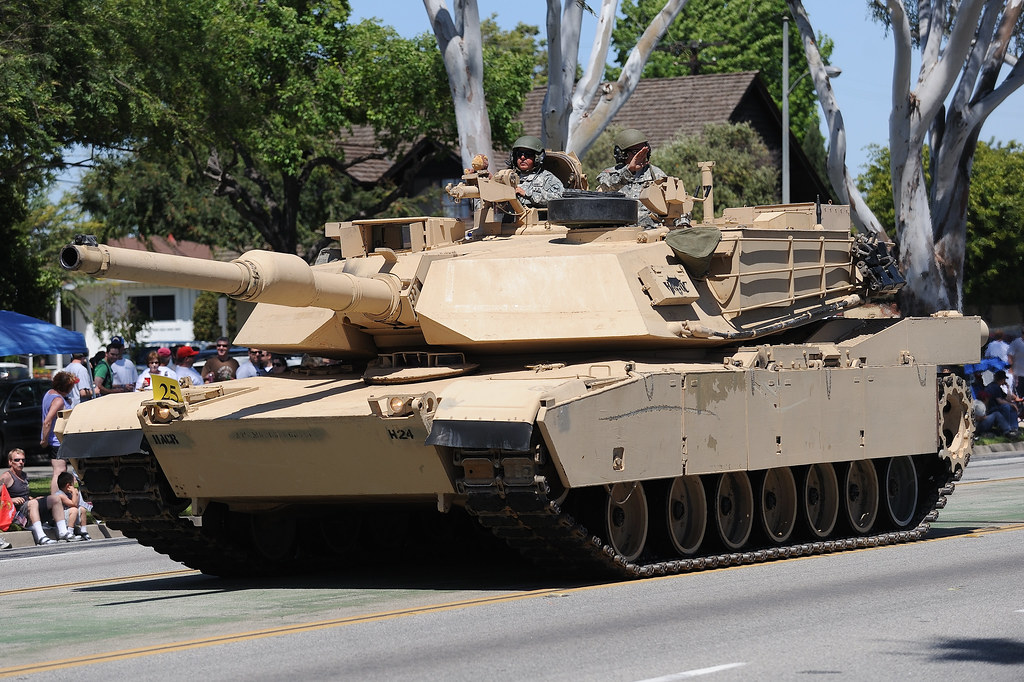
The U.S. Army used the glitz of the Detroit auto circuit to roll out something very different from a concept SUV: an early M1E3 Abrams prototype with a video‑game style control setup and a cockpit that looks closer to a Formula 1 car than a Cold War tank. The pre‑production vehicle is still years away from the battlefield, but its public debut signals how seriously the service is rethinking what a main battle tank should be in the 2040 era. From lighter armor to Xbox‑style controls, the M1E3 is meant to feel as familiar to a new recruit as a gaming rig, while still carrying the firepower of an Abrams.
That mix of pop‑culture aesthetics and heavy‑metal lethality is exactly why the Detroit showcase matters. The Army is not just refreshing an old platform, it is trying to prove to industry, Congress, and future crews that armored warfare can be both more survivable and more intuitive to fight from. The early prototype on the show floor is a test bed for that argument.
The Detroit debut that turned a car show into a tank show
Visitors who came to see electric pickups in DETROIT, Mich, instead found themselves lining up to peer into a 70‑ton conversation starter. The Army parked its first M1E3 Abrams early prototype at the North American International Auto Show in Detroit, positioning the tank among chrome‑polished concept cars to underline that this is a design pivot, not just another incremental upgrade. Service officials described the vehicle as an “early prototype,” a pre‑production configuration meant to preview how armored units could operate globally in the coming decades, rather than a finished product ready for deployment, and they framed the display as a way to connect with a civilian audience that rarely gets this close to front‑line hardware.
The choice of venue was deliberate. By rolling the M1E3 onto the same floor where automakers unveil their next‑generation platforms, the Army signaled that it sees the Abrams lineage as a living program that must keep evolving rather than a museum piece. The service highlighted that this first public display in Detroit is part of a broader effort to show how the Abrams family will shape how armored units operate globally, tying the tank’s future to the same innovation narrative that drives the auto industry around it.
From Cold War beast to 2040‑era concept
The M1 Abrams has been the backbone of U.S. armored forces for decades, but the Army is blunt about the fact that the original design was built for a different era. Heavy armor and a gas‑guzzling turbine made sense when the priority was surviving massed Soviet formations in Europe, less so in a world where logistics, drones, and long‑range precision weapons define the fight. The M1E3 label signals a shift from stacking more armor and electronics onto the same chassis toward a rebalanced design that trades some weight for smarter protection and better mobility, with the goal of staying relevant into the 2040 timeframe that planners now talk about explicitly.
That future focus is why officials describe the Detroit vehicle as a preview of a next‑generation tank rather than just another block upgrade. On January 14, 2026, the Army publicly identified the M1E3 Abrams prototype at the Detroit Auto Show as a bridge to a 2040‑era main battle tank, using the event to outline how the platform will evolve over the next decade instead of locking in a final configuration today. The service framed the early prototype as the first step in a longer modernization path, with the Detroit display giving the public a look at what the 2040 era might look like from inside a turret.
Why the Army is chasing “lighter and faster”
Under the familiar silhouette, the M1E3 is meant to fix a problem the Army has wrestled with for years: the Abrams has become so heavy and maintenance intensive that moving it around the world is a campaign in itself. The new prototype is pitched as lighter and faster, with a focus on reducing weight while preserving protection so that units can deploy more quickly and maneuver more freely once they arrive. That shift is not just about convenience, it is about survivability in an environment where being able to reposition rapidly to avoid long‑range fires or drone swarms can matter as much as raw armor thickness.
Officials have described the M1E3 as a radical new tank prototype designed to be lighter, faster, and AI‑enabled, with the Detroit showcase used to underline that this is not a minor tune‑up but a rethink of how a main battle tank should move and fight. Reporting on the reveal emphasized that the Army wants a platform that can keep up with more agile formations and exploit new sensing and targeting tools, framing the M1E3 as a response to lessons from recent conflicts where heavy armor struggled against cheap precision threats. The push for a lighter and faster prototype is central to that argument.
The “Formula 1” cockpit and Xbox‑style controls
What really grabbed attention in Detroit was not just the armor package, it was the driver’s seat. Senior leaders have compared the M1E3’s crew stations to a Formula 1 cockpit, with digital displays and streamlined controls replacing the analog clutter that defined earlier Abrams variants. The idea is to give crews a cleaner, more intuitive workspace that reduces cognitive load in combat, much like a modern race car wraps critical information around the driver instead of scattering gauges across the dash. That design language is meant to signal that the tank is as much a high‑performance machine as any supercar parked nearby.
To drive the point home, the Army also highlighted that the prototype can be controlled with an Xbox‑style remote, a detail that instantly resonated with younger visitors at the Detroit Auto Show. A prototype U.S. Army tank was shown in DETROIT with a controller that looked like it came straight from a living room console, underscoring how the service is leaning into familiar gaming ergonomics to shorten the learning curve for new operators. Coverage of the event noted that the Army used the Detroit Auto Show to reveal this Xbox‑style control concept, presenting it as a way to make complex armored systems feel more approachable to the generation that grew up with Xbox controllers in their hands.
Inside the early prototype: armor, sensors, and AI
Beneath the show‑floor polish, the M1E3 is still very much a work in progress, but the Army has been clear about the direction of travel. Officials describe the tank as combining advanced protection, reduced weight, and a smaller logistical footprint, a trio of goals that would have sounded contradictory in the Abrams’ early days. The protection piece is expected to blend traditional armor with active systems that can intercept incoming threats, while the reduced weight and logistics demands are meant to ease the burden on supply lines that have struggled to keep older Abrams variants fueled and maintained in extended operations.
Service leaders have called the M1E3 Abrams a bold step forward in modern vehicle design, emphasizing that the prototype is being used to test how to integrate advanced protection with a more efficient support tail. In official material, the Army highlighted that the vehicle represents a combination of advanced protection, reduced weight, and a smaller logistical footprint, language that underscores how central sustainment is to the design brief. Those themes were echoed in the Detroit rollout, where the early Abrams prototype was presented as a test bed for smarter armor and more efficient support rather than a final blueprint.
How the M1E3 fits into the Abrams family tree
For all the futuristic talk, the M1E3 is still an Abrams at heart, and the Army is careful to frame it that way. The service has invested heavily in the platform over the years, and the new prototype is meant to extend that lineage rather than replace it overnight. By labeling the Detroit vehicle as an M1E3 instead of a clean‑sheet design, officials are signaling continuity with the existing fleet, which matters for everything from training pipelines to industrial base planning. Crews who cut their teeth on earlier M1 variants are expected to find familiar systems alongside the new digital cockpit and control schemes.
At the same time, the Army is using the M1E3 designation to mark a clear break from the incremental upgrade path that produced the latest M1A2 configurations. Reporting from the auto show stressed that the M1E3 Abrams tank made its debut as a pre‑prototype in Detroit, with senior leaders describing it as a next‑generation tank that will require new tactics and updated training. Coverage noted that the Army’s M1E3 Abrams tank appeared at the Detroit Auto Show as a pre‑prototype, reinforcing that this is an early look at where the Abrams family is headed rather than a finished endpoint.
Industry, engines, and the Detroit backdrop
Showing off a tank in the Motor City is not just about optics, it is about industry signaling. The Abrams program has long been tied to the American industrial base, and the M1E3’s appearance alongside new cars and trucks is a reminder that the same ecosystem of suppliers and engineers underpins both. The Army used the Detroit Auto Show to emphasize that the new prototype is part of a broader modernization push that will rely on close cooperation with manufacturers, from armor modules to powertrains, as it works out how to balance performance, protection, and cost in the next production run.
Reporting on the display highlighted that the U.S. Army unveiled a new version of its Abrams tank, the M1E3 Abrams, at the Detroit Auto Show, with attention on how the vehicle’s design interacts with existing engine technology such as Honeywell International Inc.’s AGT1500 turbine. That detail matters because it hints at the tradeoffs the Army faces between sticking with proven propulsion systems and exploring alternatives that might better support the lighter, faster concept. By putting the M1E3 in front of an audience steeped in automotive engineering, the service invited scrutiny of those choices and signaled that the next steps in the Abrams program will be shaped in part by the same industrial forces that drive the Detroit Auto Show itself.
Public reaction and the recruiting subtext
On the show floor, the M1E3 did what the Army clearly hoped it would: it stopped people in their tracks. Families who came to check out the latest electric crossovers found themselves queuing to climb up on a tank, while teenagers who might normally scroll past a defense press release were suddenly posting photos of a turret controlled with something that looked like their home console. The mix of a Formula 1‑style cockpit and gamepad controls played directly into that reaction, making the tank feel less like a distant piece of war footage and more like a machine that fits into the tech landscape they already know.
That buzz has a practical angle. The Army has been open about the fact that it needs to connect with a generation raised on smartphones and gaming, and the Detroit reveal gave recruiters and public affairs teams a ready‑made talking point. Coverage of the event noted that the Army used the Detroit Auto Show to reveal a tank controlled by an Xbox‑style remote, a detail that quickly became the hook in social media clips and local news segments. By leaning into that image, the service turned the M1E3 into a kind of recruiting billboard, using the Detroit Auto Show as a stage to pitch high‑tech military service to a crowd that might not show up at a traditional base open house.
More from Wilder Media Group: