

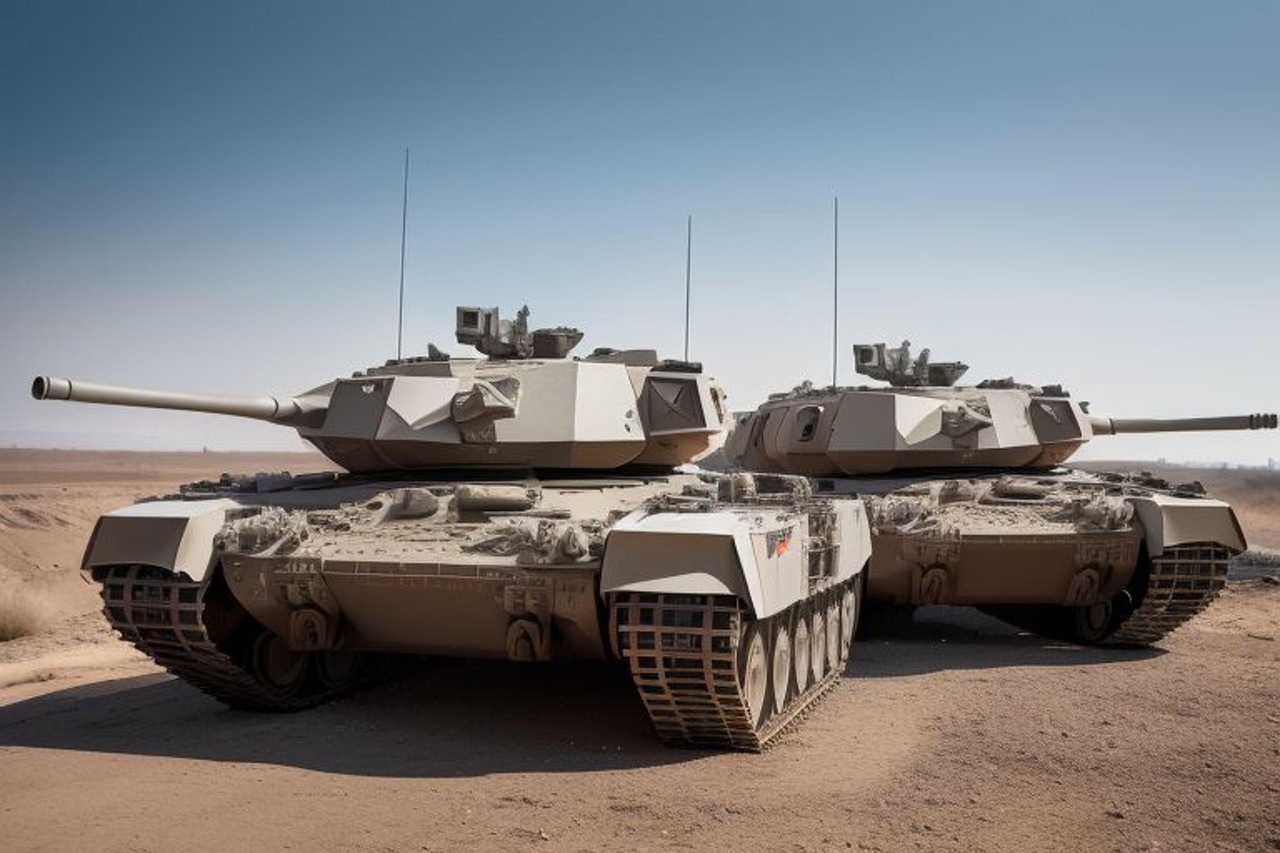
The U.S. Army is ripping up its own timeline for the next-generation M1E3 Abrams, hustling early prototypes into soldiers’ hands years sooner than planned. Instead of waiting for a perfectly polished tank, leaders want crews experimenting with a lighter, smarter, hybrid-ready Abrams in real field conditions. The move signals a big shift in how the service buys armored vehicles, and it is happening in full public view, from the Detroit Auto Show floor to training ranges that will start seeing the new machines as soon as this summer.
For a platform that has defined American heavy armor for decades, the M1E3 is more than a tune-up. It is a bet that agility, digital brains, and plug-and-play upgrades will matter more in the 2040 era than simply stacking on more steel. And by fast-tracking prototypes, the Army is inviting its own soldiers to help finish the design.
The Abrams legacy and why the Army is changing course
The M-1 Abrams Tank was built to do one thing better than anything else on the battlefield, maneuver under fire and destroy enemy armored forces. That basic mission has not changed, but the environment around it has, from cheap drones to precision artillery and loitering munitions that hunt from above. A congressional brief on the M-1E3 modernization effort notes that the Abrams, shown in Figure 1, remains the backbone of U.S. armored formations, yet its weight, fuel demands, and aging architecture are now hard limits rather than nice-to-have tradeoffs, which is why the Army is pivoting to a new configuration of the platform in the first place, as detailed in a recent Abrams Tank overview.
That same analysis explains that the M-1E3 program is meant to carry the Abrams into the 2040 era, not by starting from scratch, but by rethinking how the tank is built and upgraded. Instead of locking in a single configuration for decades, the Army wants a more modular design that can absorb new sensors, armor packages, and power systems as threats evolve. The shift reflects lessons from Ukraine and other modern conflicts, where heavy armor survives only if it can adapt quickly, a theme that runs through the Army’s broader modernization program.
From 2030s plan to this summer: a schedule flipped on its head
Originally, the M1E3 Abrams was supposed to be a slow-burn project, with operational units not seeing the new tank until well into the next decade. Reporting on the program notes that the design was initially scheduled to be operational in 2030, a timeline that fit the usual pattern of long, linear development cycles for major combat systems, as described in coverage of how The US Army framed the effort.
Instead, the Army is now pushing M1E3 prototypes to soldiers this summer, five years ahead of that original schedule. Leaders have decided that waiting until every subsystem is locked down would leave them behind the threat curve, so they are embracing an approach where crews will “plug and play” components in the field rather than inheriting a finished, frozen design. That philosophy is spelled out in reporting that explains how, instead of waiting until all the tank’s fixings meet every requirement, the service wants soldiers to experiment with different armor, sensors, and even the transmission to meet those specs, a shift captured in multiple Instead of focused accounts.
Detroit’s auto show becomes a tank lab
The decision to roll out the M1E3 in public did not happen in a vacuum. The US Army chose Detroit, the heart of American car culture, to unveil the new Abrams as a pre-prototype, turning the North American International Auto Show into an impromptu armored-vehicle lab. Official descriptions of the event highlight that the early Abrams prototype was shown at the North American International Auto Show in Detroit, where the service used the venue to talk directly with industry and the public about where the tank is headed, as detailed in an early prototype announcement.
Observers noted that the US Army’s M1E3 Abrams tank was unveiled in Detroit with four pre-prototypes planned for 2026, a sign that what appeared on the show floor is only the first wave of hardware. Accounts of the reveal emphasize that this was the first public unveiling of the future M1E3, with the display focused on survivability and modernization of armored vehicles, a theme that runs through detailed Reading notes and broader coverage of how The US Army is using public showcases to preview the tank’s future.
Formula One cockpit and Detroit know‑how
What grabbed the most attention in Detroit was not just that a tank was parked among concept cars, but how it looked and felt inside. Senior leaders and visitors alike compared the crew station to a Formula 1 cockpit, with wraparound digital displays and controls that feel closer to a racing simulator than a Cold War-era turret. One account quotes a top general describing the M1E3 Abrams cockpit as “Formula 1,” with By Hope Hodge Seck reporting that the Army’s next-gen tank made its debut as a pre-prototype at the Detroit Auto Show and that the interior is designed to be updated over time, a detail captured in a piece by Hope Hodge Seck.
The Army is not shy about saying it tapped Detroit know-how and even Formula 1 expertise to shape the new tank’s ergonomics and performance. Reports from the Detroit Auto Show describe how the Army showed off an updated M1E3 Abrams battle tank with a sleek new profile, explaining that the service leaned on local automotive engineering and high-end racing design to refine the hull and turret, as noted in coverage of the Detroit Auto Show appearance. Another account underscores that the US Army unveiled an Abrams tank with a Formula One cockpit and video game-style controls, reinforcing how far the crew experience has shifted from analog gauges to digital interfaces, as described in detail when Formula One style design cues were first highlighted.
Lighter, hybrid, and built for a hotter battlefield
Under the skin, the M1E3 is a direct response to the reality that the old Abrams is simply too heavy and too thirsty for the kind of dispersed, fast-moving fights the Army expects. The service has been unusually open about what it is disclosing, with an Army spokesperson, Ashley John, explaining that the new design aims to cut weight, improve mobility, and reduce the tank’s heat signature, while also preparing for a hybrid powertrain. That description appears in a technical preview that lays out “What the Army Is Disclosing,” including how the hybrid system is expected to support silent watch and lower fuel consumption, as detailed in a breakdown quoting Ashley John.
Another early look at the program spells out just how big that efficiency jump could be. The first M1E3 Abrams tank prototype, unveiled at the Detroit Auto Show, is described as promising a “50%” bump in efficiency compared with the current gas-turbine setup, a figure that would radically change how far armored formations can move without refueling. That same report notes that the legendary Abrams powertrain is being rethought so it can be serviced everywhere in the world, a nod to the logistical headaches of the existing engine, as laid out in a feature on how the Abrams is going hybrid.
Survivability, drones, and a different idea of “heavy”
Weight is not just about fuel; it is about how a tank survives in a world full of smart munitions. The Army has been clear that the M1E3 is meant to be lighter and faster, but also more survivable, with a focus on active protection, better sensors, and integrated drone defense. One detailed look at the prototype notes that the Army tank includes enhanced survivability and drone defense features, describing how the M1E3 Abrams early prototype was showcased at the North American International Auto Show in Detroit with systems aimed at spotting and defeating small unmanned aircraft, as outlined in a technical rundown of the Army tank prototype.
Analysts who Saw This Tank Upclose at the Detroit Auto Show came away with the impression that the M1E3 Abrams is being built around “teaming” with other systems rather than trying to be invulnerable on its own. A separate deep dive describes how the U.S. Army has unveiled the M1E3 as a radical new tank prototype designed to be lighter, faster, and AI-enabled, emphasizing that the concept prioritizes sensor fusion and manned-unmanned teaming over sheer armor thickness, as explained in a feature that was Showcased in Detroit. Another on-the-ground account, titled M1E3: 19FortyFive Saw This Tank Upclose (Summary and Key Points), reinforces that impression, describing a prototype of the Army’s next-generation main battle tank that feels more like a node in a network than a lone heavyweight, as captured in a Summary and Key style review.
Inside the “Formula One” crew experience
The cockpit is where all of these ideas meet the human beings who have to fight from inside the hull. Reports from Detroit describe a Formula One-Style Cockpit Emerges as New Detail on Next-Gen M1E3 Abrams Tank, with a prototype displayed at the North American International Auto Show that features a central driving position, panoramic screens, and controls that look more like a high-end racing rig than a traditional yoke. That description of a Formula One style cockpit emerging as a new detail on the next-gen Abrams Tank underscores how seriously designers took crew workload and situational awareness, as laid out in a feature on the Next Gen interior.
Another detailed account of the Army’s next-gen tank, again By Hope Hodge Seck, notes that the M1E3 Abrams tank made its debut as a pre-prototype at the Detroit Auto Show and that the crew stations are designed to be updated over time, with software and hardware refreshes baked into the layout. That same reporting explains that the Army wants the cockpit to feel intuitive for soldiers who grew up on video games, which is why the US Army unveiled an Abrams tank with a Formula One cockpit and video game-style controls, a point reinforced in coverage of how Army leaders talk about the design and in technical write-ups that highlight how Abrams crews will interact with the new controls.
How many tanks, how fast, and who gets them first
Behind the flashy debut is a very specific production and fielding plan. A congressional research note explains that the Army plans to build four tank prototypes in 2026, with early December 2025 decisions setting the stage for when those prototypes are to be delivered. That same document outlines how the new tanks will be fielded to units as older Abrams are retired, giving a sense of how the M1E3 will phase into the force over time, as spelled out in the Figure referenced plan.
On the ground, the first public prototype has already been shown, and more are queued up. One detailed report notes that the US Army’s M1E3 Abrams tank is unveiled in Detroit with four pre-prototypes planned for 2026, emphasizing that the display in Detroit is just the start of a broader test fleet that will feed data back into the design. Another Washington Report explains that The Army pulled back the curtain on the first M1E3 Abrams prototype earlier this month at the Detroit Auto Show, framing it as a preview of how the tank will protect both the crew and the mission, as described in the The US Army focused write-up and the Washington Report summary.
Soldiers as co‑designers: the plug‑and‑play gamble
The most radical part of the M1E3 story is not the hybrid engine or the Formula One cockpit; it is the idea that soldiers will help finish the tank. Multiple accounts of the program stress that the Army will push M1E3 prototypes to soldiers this summer, five years ahead of schedule, and that Instead of waiting until all the tank’s fixings meet every requirement, the service wants crews in the field to “plug and play” different components. That approach is laid out in detail in reporting that describes how the Army will let units swap armor packages, sensors, and even transmissions to meet evolving specs, a philosophy captured in the Instead of framing and reinforced in a separate breakdown of how the transmission could change.
More from Wilder Media Group: