

By the time travelers hit the final payment screen, many feel like they are checking out at a grocery store where every bag, aisle, and cashier suddenly costs extra. Screenshots of those ballooning totals are now all over social feeds, turning private frustration into a very public shaming of airline “junk fees.” The backlash is not just about money, it is about trust, and about whether the price people thought they agreed to is even real.
Behind those viral receipts sits a much bigger fight over how airlines disclose fees, how regulators try to rein them in, and how far companies will go to protect a revenue stream worth billions. As the rules keep shifting and passengers keep posting, the gap between what travelers expect and what they actually get at checkout is becoming the industry’s biggest turbulence.
From bargain fare to sticker shock in three clicks
For a lot of travelers, the journey from “great deal” to “how did it get that high?” happens in the space of a few screens. The base fare looks reasonable, then the system starts nudging people to pay for seat selection, early boarding, carry-on space, and change flexibility, until the final total bears little resemblance to the price that lured them in. That creeping escalation is exactly what has pushed passengers to share screenshots of their checkout totals, using those images as proof that the advertised fare is only the opening bid.
Researchers studying airline pricing have a name for this pattern. In a field experiment on drip pricing, economists documented how customers who start with a low fare are gradually exposed to add-ons as they move through the booking flow, both on airline sites and online travel agencies. Each extra charge may be optional on paper, but the way it is presented, especially for families who want to sit together or travelers who need a carry-on, makes it feel less like a choice and more like a toll. By the time the last “continue” button is clicked, the total can easily jump by triple digits, which is exactly the kind of shock that fuels those viral posts.
Why “junk fees” became a political lightning rod
The anger over those surprise totals did not stay confined to group chats. It moved into politics, where “junk fees” became shorthand for charges that feel sneaky or unavoidable. The Biden Administration framed many airline add-ons as exactly that, arguing that families should not have to decode a maze of seat and baggage charges just to know what a trip will really cost. That push led the Department of Transportation to finalize a rule requiring airlines and ticket agents to show key fees up front, including charges for checked bags, carry-ons, and seat selection for families traveling with children.
The final rule was pitched as a way to protect consumers from surprise airline costs by forcing clearer disclosure before people click “buy.” It was part of a broader campaign against what the White House called hidden or unavoidable fees across the economy, from concert tickets to hotel resort charges. In aviation, the idea was simple: if airlines want to charge for bags or for sitting together, they can, but they have to show those numbers early enough that travelers can compare real prices instead of chasing an illusion of a cheap fare that only exists without luggage or a seat assignment.
Courts, rollbacks, and a regulatory tug-of-war
That transparency push ran straight into a wall of legal resistance from the industry. Major carriers and trade groups argued that the Department of Transportation had overstepped, saying the agency was dictating how they present prices rather than just ensuring accuracy. A federal court sided with the airlines and blocked the transparency rule, a decision that effectively grounded the government’s attempt to standardize how fees appear at checkout.
The court fight did not happen in a vacuum. Advocates point out that The Biden Administration had already faced pushback as it tried to require airlines to disclose fees together with their fares and taxes, and that the new Trump White House has been more sympathetic to industry complaints. A separate analysis of the court decision on the Controversy Over Airline notes that the blocked regulation was part of a larger effort to curb surprise costs, which critics say are now more likely to keep catching travelers off guard. With the rule on ice, the tug-of-war over how honest the checkout screen has to be is far from settled.
Billions at stake in seat and baggage fees
Behind the legal arguments sits a blunt financial reality. Optional fees are not a side hustle for airlines, they are a core business line. A congressional investigation described how unbundling, the practice of stripping out services that used to be included in the ticket price, has turned seat selection and baggage into a gold mine. The 55-page report found that airlines make billions of dollars charging what lawmakers labeled “junk fees,” and it quoted passengers who felt they were being “stealing” from the airline if they tried to avoid them.
Another summary of that same investigation highlighted that a new November 2024 found that seat selection and baggage fees alone have generated billions in revenue for the different airlines. A separate breakdown of airline economics noted that carriers have pulled in roughly $12 billion in seat fees alone, a figure that helps explain why they are so eager to keep those charges front and center in the booking flow. When that much money depends on persuading people to pay extra for where they sit and what they bring, any rule that might slow down or simplify those choices becomes a direct threat to the bottom line.
How checkout tricks quietly steer traveler behavior
What frustrates passengers most is not just the existence of fees, but the way they are presented. Behavioral economists have long warned that drip pricing and complex menus can nudge people into paying more than they planned, simply because the path to a clean, fee-free option is buried or confusing. In the airline context, that can mean defaulting to paid seats, highlighting “recommended” bundles, or warning that overhead bin space is limited unless travelers pay for priority boarding.
The field experiment on Highlights of airline drip pricing showed how costly search can become when customers have to click through multiple pages to see the full cost of a trip. The researchers found that when fees are scattered across steps, people are more likely to accept them rather than restart the process with another carrier or online travel agency. That design choice is not accidental. It is a way to turn friction into revenue, and it is exactly the kind of experience that has travelers posting side-by-side screenshots of the “from” fare and the final total, with a caption that usually boils down to: this is not what I signed up for.
Trust, loyalty, and the screenshot era
Those screenshots are not just venting, they are receipts in a broader argument about trust. As 2026 approaches, analysts note that airline trust is being driven less by slogans and more by what travelers experience at checkout and during disruptions. One review of consumer sentiment pointed out that 2026 approaches, airline is increasingly shaped by whether the price on the first screen matches the price on the last, and whether customers feel nickel-and-dimed when something goes wrong.
The same analysis stressed that Unexpected charges damage trust because travelers feel they agreed to one price and later discovered another, and that once that trust is broken, they assume future promises will shift too. In a world where a single viral post can reach millions, that erosion of confidence spreads quickly. People are no longer just comparing frequent flyer programs, they are comparing screenshots of checkout pages, and using those images to decide which airlines deserve their money and which ones get muted in the search filters.
When “extras” stop feeling optional
Airlines like to describe many of these charges as optional, but passengers often experience them as mandatory. Families who want to sit together, older travelers who need aisle seats, or anyone carrying more than a small backpack can feel boxed into paying for add-ons that used to be included. That tension is especially visible when carriers change long standing policies that customers saw as part of the brand’s identity.
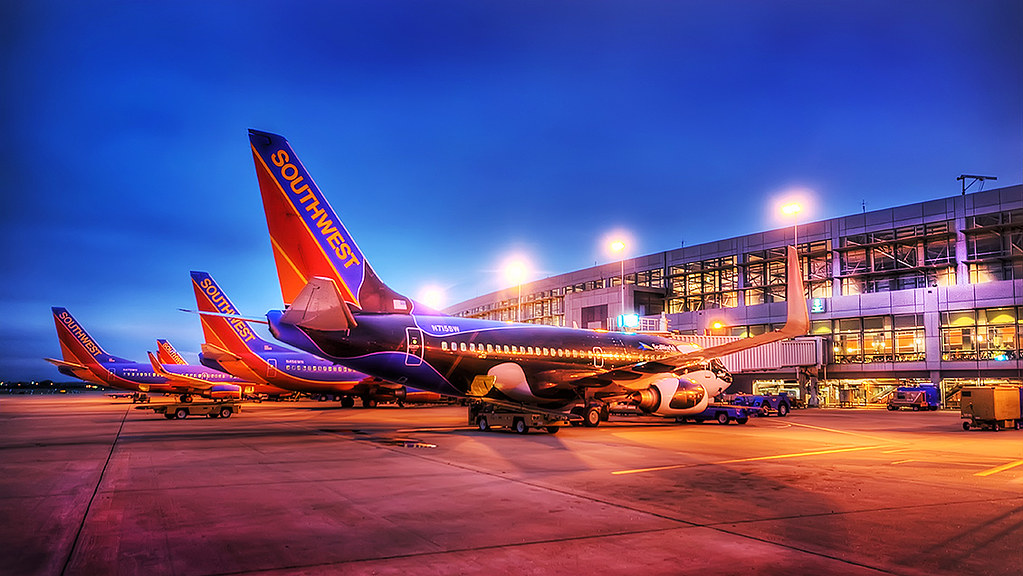
One of the clearest examples is Southwest’s shift away from its open seating tradition. The company is rolling out a new assigned seating model that allows passengers to pay in advance to select their seats, with fees that can reach $25 for the first checked bag and $45 for the second. That move has already sparked backlash from customers who saw the old system as a rare pocket of simplicity in a fee heavy landscape. At the same time, a viral clip noted that United and Delta airlines are facing separate class action suits for allegedly not warning passengers that a window seat they are booking might not actually have a window, a reminder that even the definition of what people are paying for can be contested.
Refunds, delays, and the fine print after things go wrong
The fee story does not end once the ticket is bought. It continues when flights are delayed, canceled, or changed, and travelers try to get their money back. Consumer advocates warn that it is getting harder to secure refunds from airlines, especially for nonrefundable tickets and add-ons. One watchdog report noted that protections tied to the previous administration’s crackdown on “junk fees” have been weakened, and that passengers may now face more difficulty seeking refunds from airlines when schedules change.
Another policy shift that flew under the radar involved compensation for delays. A detailed breakdown of a major rule change explained that, What This Means is that there will be No Mandatory Cash Compensation For Delays. If the rule had not been withdrawn, airlines might have been required to provide automatic cash when they were at fault for significant disruptions. Instead, passengers are often left to navigate vouchers, credits, and customer service mazes, even as they keep paying separate fees for bags, seats, and priority services that may not deliver much when the operation melts down.
New rules, new programs, and what to watch in 2026
Even as some protections are rolled back, new rules are coming online that will change the airport experience in other ways. One of the most notable is the expansion of identity verification requirements, including the TSA Confirm.ID initiative. A recent overview of Program Details laid out a table where each Aspect and Details line spelled out how the Confirm system will work, including an effective date and a requirement that certain information be provided 10 days from first flight. While that program is framed as a security and efficiency upgrade, travelers are already wondering whether it will come with its own set of fees or premium tiers.
On the regulatory front, the fight over fee disclosure is far from over. Airlines have already sued DOT over new rules requiring disclosure of baggage, change and cancelation fees up front, arguing that the agency is micromanaging their websites. At the same time, consumer advocates continue to press for clearer pricing and stronger refund rights, even as a separate analysis warned travelers to expect more difficulty getting their money back. In the middle of all that, passengers keep doing the one thing they can control: screenshotting their checkout totals, sharing them widely, and hoping that public pressure will succeed where regulation so far has struggled.
How travelers are adapting, one screenshot at a time
Faced with a system that seems designed to surprise them, travelers are getting more strategic. Frequent flyers swap tips on social media about which carriers charge the most for bags, which ones still allow free family seating, and how to dodge the worst of the add-ons. Some have started treating the first fare they see as a rough draft, mentally adding a cushion for bags and seats before they even click through. Others lean on credit card perks or elite status to claw back some of the value that used to be baked into the ticket price.
More from Wilder Media Group: